
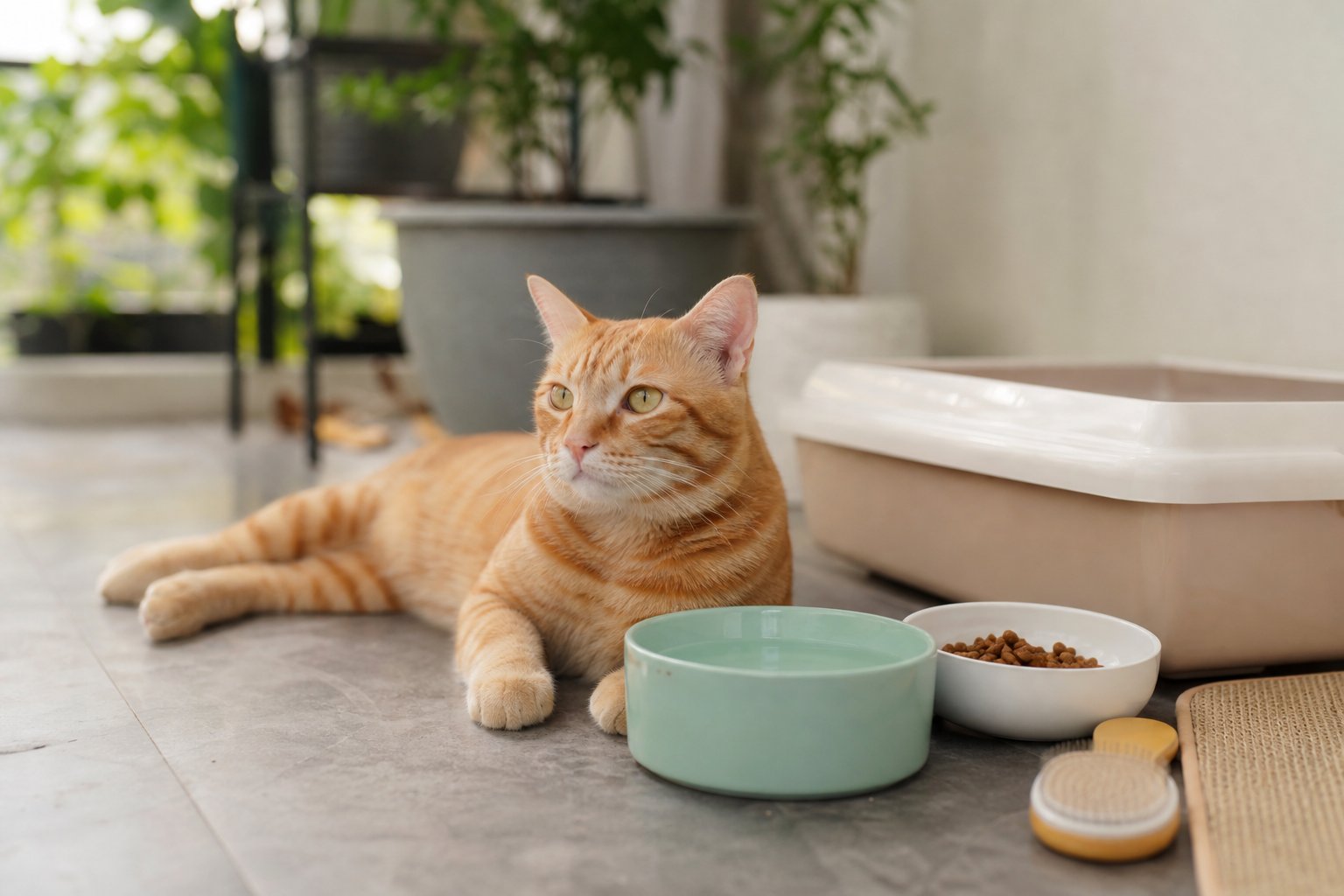
In short: the Balinese is the long-haired version of the Siamese — pointed colouring, blue almond eyes, silky semi-long hair with almost no undercoat, and a personality that follows you from room to room. Grooming is easier than most people expect: brush once or twice a week. The real challenge is company, because these cats do not tolerate long empty days. Keep yours indoors, manage humidity, and learn the warning signs for breathing, kidney and eye trouble.
What a Balinese cat actually is
The breed began as a long-haired mutation turning up inside Siamese lines, and breeders developed it into a distinct variety from the 1950s onward. The name was chosen for the cats' elegant, dancer-like movement and has nothing to do with Bali. In registration terms it stands as its own breed, not a coat option attached to the Siamese.
The look is familiar: darker colour on the face, ears, legs and tail against a lighter body, with blue almond-shaped eyes. The difference is entirely in the coat — semi-long, fine and silky, sitting on a single layer with virtually no undercoat. That one fact explains most of the grooming story later on, because without a dense woolly base layer, mats form far less readily than in Persian-type longhairs.
The build is medium, long and muscular, with a wedge head, large ears and long legs. They are agile climbers and quick movers, which is why vertical space matters indoors. Owners often call them long-haired Siamese, but in breed terms the two are separate — useful to know if you are searching breed information or buying from a breeder.
Personality: chatty, clingy, and not for absent households
Balinese cats sit near the top of the scale for social demand among domestic cats. They follow people between rooms, want to be involved in whatever is happening, and they talk. The vocalisation is varied and frequent — squeaks, trills and drawn-out calls delivered as if a reply is expected — rather than one flat meow. They are clever and playful, take well to interactive toys and puzzle feeders, and learn simple cues faster than average.
The flip side is weak tolerance for being alone. Hours with no company and no activity commonly turn into excessive calling, destructive chewing or scratching, and toileting outside the tray: the classic signature of separation anxiety in a sociable breed.
Some Balinese also develop a suckling habit, nursing on blankets, clothing or even their own tail. It is usually a harmless self-soothing behaviour. If it escalates into pulling out hair or swallowing fibres, involve both a vet and a cat behaviour professional.
Be honest before committing: how many hours will this cat realistically spend with someone around? If most days are empty, a calmer or more independent breed may suit your household better.
Indoor living in a Malaysian home
A Balinese should live indoors. They are height-seekers, and an open window or balcony on a high floor is a real risk. Fit window grilles or screens, secure balcony mesh, and give the cat a tall cat tree or wall shelves so it can claim vertical territory safely.
A practical setup for a typical Kuala Lumpur condominium or a Johor terrace house looks like this:
- A tall cat tree or wall shelves near a window, plus a screened viewing perch — birds and street activity are free entertainment.
- Interactive play twice a day for 10 to 15 minutes, at roughly the same times daily.
- Puzzle feeders or a timed feeder so the day is not one long stretch of nothing.
- A predictable routine for meals, play and attention; sudden changes hit social breeds harder than most.
- Rotating toys kept partly out of sight and brought back weekly, so novelty lasts.
If nobody will be home for long stretches, consider a calm, cat-compatible companion, a timed feeder and a steady supply of enrichment. Not every cat accepts a second cat, so introductions must be slow and supervised.
Noise is the other practical issue. Balinese vocalise loudly and often, and with shared walls that can become a neighbour problem. If your reason for wanting a cat is that you want a quiet cat, this is the wrong breed. If you want a cat that greets you and keeps up a conversation, it is one of the best choices available. Before bringing one home, check your building's pet and noise rules and think honestly about how much sound the people next door will accept.
Grooming the coat in humid weather
Good news for busy owners: the Balinese coat is genuinely low-maintenance for a long-haired breed. The single-layer, undercoat-free fur resists matting, so brushing once or twice a week is normally sufficient, increasing during seasonal coat changes.
Work on the places mats start — the plumed tail (the longest hair on the body), the chest, and the inside of the hind legs. A wide-tooth comb followed by a soft bristle brush is the simplest kit; a sturdy metal comb is the single most useful tool you can own.
Humid stretches change the arithmetic. When indoor humidity stays high for weeks, as happens during the Penang rainy season, the coat stays damp longer, and damp fur on warm skin raises the risk of fungal skin problems and irritated patches. Practical steps:
- Run a dehumidifier or air-conditioning in the cat's main resting area during persistently wet periods, and keep air moving with a fan or open windows on dry days.
- Never let a wet cat air-dry. Towel off after any bath or soaking and dry the coat thoroughly on a low heat setting.
- Brush only once the coat is completely dry; combing damp fur pulls and breaks hairs.
- Bathe rarely. Cats self-groom, and frequent washing strips the skin's protective oils.
Ears need a weekly look. Oriental-type cats produce more earwax than average, and a waxy, smelly ear with scratching or head-shaking belongs at the clinic rather than being cleaned with cotton buds at home. Dental care matters too: brush several times a week with a cat-safe toothpaste and watch for red gums, drooling or a dropped appetite.
Feeding and weight
Balinese cats are obligate carnivores, so animal-based protein should lead the diet, and wet food helps water intake in a warm climate. Feed measured meals at set times instead of leaving food out all day, and count treats into the daily total — a chatty cat that learns begging earns extra food will simply get louder.
Indoor life in a compact home limits activity, so obesity risk is not trivial, and extra weight feeds into heart, joint and metabolic problems. Weigh your cat periodically or have the clinic weigh it at visits, and check that you can feel the ribs without pressing hard and that a waist is visible from above.
Water intake deserves attention: a sudden rise in drinking or urination is a classic early clue to kidney or metabolic trouble, not a quirky phase. Note the change and get bloodwork done promptly.
Switch foods over seven to ten days, mixing old and new in rising proportions; soft stools mean slow down. Supplements never replace treatment prescribed by a vet.
Health: what to watch for
The Balinese shares the Siamese family health profile. Conditions raised most often include:
- Amyloidosis — abnormal protein deposits in organs such as the liver, kidneys or pancreas that can impair organ function; assessed with blood tests and imaging, with supportive treatment.
- Progressive retinal atrophy (PRA) — an inherited condition producing night blindness first, then gradual vision loss. DNA testing can identify carriers before breeding.
- Respiratory sensitivity and asthma — Oriental-type cats are considered more prone to coughing, wheezing and breathing difficulty.
- Heart disease (including HCM) and dental problems — both appear more often in this family of breeds.
Squinting (strabismus) and flickering eye movements (nystagmus) do occur in the breed and are regarded as normal variation rather than disease: they do not affect vision and need no treatment. Any genuinely new eye change still deserves a professional assessment.
Home warning-sign chart
| Situation | What you can see at home | What to do |
|---|---|---|
| Breathing or asthma | Coughing, wheeze, open-mouth breathing, rapid breaths | Open-mouth breathing is an emergency — go immediately |
| Vision change (PRA) | Bumping into things at night, hesitating before jumps, pupils staying wide | Book a veterinary eye assessment |
| Liver or kidney (amyloidosis) | Weight loss, sudden shift in drinking or urination, yellow gums, low energy | Blood tests and imaging |
| Mouth and teeth | Bad breath, drooling, off food, red gums | Ask about a dental assessment; never self-medicate |
| Skin and ears | Head shaking, scratching, ear odour, patchy fur loss | Check for fungus or parasites |
| Behaviour (separation anxiety) | Excessive calling, destruction, tray accidents, compulsive suckling | Rule out illness first, then adjust routine and enrichment |
One principle runs through every row: rule out physical illness before treating a behaviour problem. Toileting outside the litter box, for example, is frequently the first sign of a urinary tract or kidney issue and should never be written off as spite.
When to see a vet
Go the same day for open-mouth breathing, collapse, repeated coughing fits, refusing food for more than a day, sudden blind-looking behaviour, unrelenting vomiting, or a dramatic jump in drinking and urination. Any of these can escalate fast.
Book a routine appointment for slower signs: weight drifting down, a dull coat, tartar or red gums, recurring ear odour, hair loss, or litter tray habits that have shifted over weeks. Ask your clinic about a baseline check for a newly adopted adult, annual checks as the cat ages, and whether DNA screening for PRA is sensible if you ever plan to breed.
In Malaysia, veterinary services and clinics are overseen nationally — the Department of Veterinary Services and the Malaysian Veterinary Council publish information you can use to confirm a clinic's registration before you commit. For adoption routes and responsible ownership guidance, the SPCA is a useful starting point. Consultation fees, bloodwork, dental procedures and grooming tools vary by clinic and area, so ask your own vet or retailer for a current quote instead of trusting figures found online. The same applies to food, supplements and insurance: get local pricing first.
Four mistakes first-time owners make
- Buying for the coat, ignoring the company. The hair is the easy part. Owners who work long hours and discover the vocal, needy side a week later are the ones who end up rehoming the cat.
- Under-furnishing the home. A short scratching post and a floor bed are not enough for an agile climber. Height, a window view and daily play are the actual essentials.
- Skipping health checks because the problem looks behavioural. Runoff urination, sudden aggression or refusal to jump can all be pain-driven. Check the body first, then work on habits.
- Panicking about the eyes. Squinting and eye flickering are breed-typical and harmless — but a cloudy eye, injury or discharge is not, and needs a check.
Also worth noting: a cold, dry air-conditioned room in hot months needs a warm, draft-free resting spot, and a cat that spends the day indoors needs its litter, water and feeding spots well away from each other.
Frequently asked questions
Is the Balinese the same as a Siamese? No. The Balinese is the long-haired line that emerged from Siamese cats and was developed as a separate breed from the 1950s. Both share pointed colouring and blue almond eyes, but the Balinese carries a silky, semi-long single coat with no undercoat, so it mats far less than other longhairs.
Is the long coat high maintenance? Surprisingly not. Without an undercoat, tangles are uncommon: brush once or twice a week and more during moult, paying attention to the tail plume, chest and inner hind legs. In humid weather, control indoor humidity and always dry a wet coat completely.
Can I leave one alone during work hours? Not for long stretches. High social needs mean loneliness often shows up as constant calling, destruction and toileting accidents. Provide a companion, a timed feeder, puzzle toys and a fixed routine — or pick a breed with more independence.
Will the noise upset neighbours? It can. Frequent, loud vocalising is a breed characteristic. In shared-wall housing, confirm building pet and noise rules before buying, then cut boredom-driven calling with a set routine, daily interactive play and a good window viewing spot.
Which genetic issues matter most? Watch for amyloidosis affecting liver, kidneys or pancreas, progressive retinal atrophy, respiratory sensitivity or asthma, plus heart and dental problems. Squinting and eye flickering are normal breed traits that do not affect vision and need no treatment.
How do I handle humid weather? Use a dehumidifier or air-conditioning where the cat rests, keep air circulating, brush weekly and never leave a damp coat to air-dry. Check ears weekly too, since Oriental-type ears accumulate wax and can harbour infection if odour, scratching or head-shaking appears.
Key takeaways
- The Balinese is a single-coat, undercoat-free long-haired Siamese: brush once or twice a week, more during moult and wet spells.
- The biggest challenge is companionship, not grooming — long empty days invite separation anxiety and loud complaints.
- Keep the cat indoors with secured windows, height to climb and a fixed daily routine.
- Watch for breathing trouble, weight loss, drinking changes, dental pain and ear odour, and rule out illness before treating behaviour.
- Local prices for vet visits, dental work, food and grooming tools vary — ask your own clinic or retailer.
This article is for general information only and does not replace a veterinary diagnosis. If your cat develops open-mouth breathing, stops eating, shows sudden behavioural changes or appears in pain, please see a licensed veterinarian promptly.
Related reading
- Pet Care Guide Malaysia: Norwegian Forest Cat — Grooming, Climbing Space and Health
- English Springer Spaniel in Malaysia: Exercise, Ear Care and Health
- Beagle in Malaysia: A Practical Care Guide for Our Climate and Homes
- Belgian Malinois in Malaysia: A Complete Guide for High-Drive Working Dogs
- Blue-Tongue Skink Care in Malaysia: Enclosure, UVB, Diet and Handling
- Border Collie in Malaysia: Exercise, Training and Care Guide
- Budgie Care in Malaysia: Cage, Diet, Sleep and Safety Guide
- Corn Snake Care in Malaysia: Heat Gradient, Substrate and Refusing Food