
The short answer
Rainy season cat care in Malaysia is mostly about managing the indoor environment. When cats stay in more, litter gets wetter and smellier, paws stay damp, skin folds and toes become hospitable to fungus, and parasite pressure does not disappear just because the cat is inside. The fix is a routine: scoop more often, dry what gets wet, enrich the indoor space, and keep preventive care on schedule.
Why rainy season changes cat care
Malaysia's climate is warm and humid year-round, and the wetter months add extra moisture to homes. Cats that normally roam may stay in for days. That has knock-on effects:
- Litter trays are used more often, so they get soiled faster.
- Floors near doors and windows stay damp, and cats lie on cool, wet surfaces.
- Paws pick up mud, grit and moisture from balconies, corridors and gardens.
- Indoor air feels stuffy, so odour builds up faster.
- Cats get less physical and mental stimulation, which can lead to boredom behaviours.
None of this is an emergency on its own. But small problems compound over weeks of wet weather, so a simple routine is worth more than a one-off deep clean.
Indoor enrichment when cats cannot go out
A bored indoor cat is more likely to over-groom, vocalise, spray, scratch furniture or pester other pets. Enrichment is not a luxury; it is part of preventive health.
Build a vertical territory
Cats cope with confinement better when they can climb and survey. Use sturdy cat trees, wall shelves, window perches and cleared tops of cupboards. In a Kuala Lumpur apartment, a window perch facing a corridor or tree gives a cat hours of watching. In a Johor terrace house, a secured balcony or window grille area can work if it is fully enclosed and dry.
Rotate toys rather than buying more
Keep a small box of toys and swap them every few days. Wand toys, crinkle balls, puzzle feeders and cardboard boxes all work. Rotating keeps novelty high without clutter.
Feed some meals as a game
Scatter dry food in a snuffle mat, use a puzzle feeder, or hide small portions around a clean, dry room. This mimics foraging and slows fast eaters.
Keep a daily play slot
Two short sessions of active play, morning and evening, are usually enough. End with a meal or a treat so the cat settles.
Protect the quiet spaces
Rain and thunder can unsettle cats. Give them a covered bed, a quiet room and somewhere high to retreat. Do not force interaction during a storm.
Enrichment checklist
| Need | Practical option | How often |
|---|---|---|
| Climbing | Cat tree, wall shelf, window perch | Daily access |
| Hunting | Wand toy, laser pointer with a real toy finish | Twice daily |
| Foraging | Puzzle feeder, snuffle mat, scattered food | Daily |
| Scratching | Vertical and horizontal scratchers | Always available |
| Hiding | Covered bed, box, quiet room | Always available |
| Novelty | Rotated toys, new box | Every few days |
Litter damp, odour and hygiene
Litter is where rainy-season problems show up first. Damp litter clumps poorly, sticks to the tray and holds odour. Cats are fastidious, and a wet, smelly tray is a common reason for avoiding the box.
Scoop more, not less
Aim for at least twice a day, and more with multiple cats. Remove solids and urine clumps promptly. If the litter is visibly wet but not clumped, remove that section too.
Dry the litter, not just the tray
Stir the litter daily so moisture can escape. Keep the tray away from damp walls, leaking windows and wet floors. In humid rooms, a small fan or dehumidifier helps. Avoid sealing a wet tray in a closed cupboard, which traps moisture and smell.
Choose the right box setup
- One tray per cat plus one spare is a common guideline.
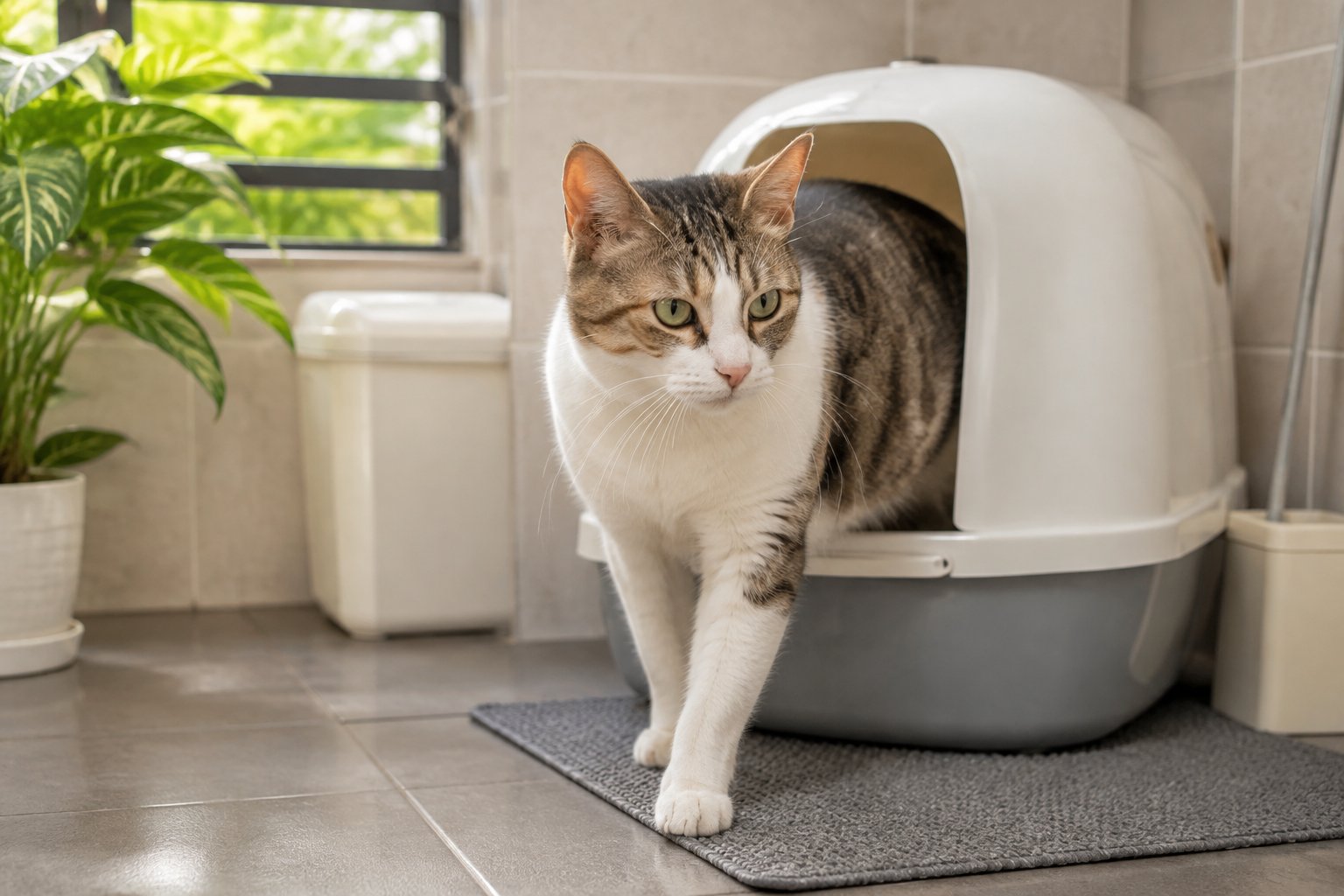
- Covered boxes reduce tracking but trap odour; choose one with good ventilation.
- Place trays away from food and water.
- Use unscented litter if your cat is fussy; scent is for humans, not cats.
Wash the tray properly
Empty, wash with mild unscented soap and water, rinse well and dry fully before refilling. Avoid harsh disinfectants that can irritate paws and airways. Replace badly scratched trays because scratches hold bacteria and odour.
Odour control that actually works
| Problem | Better approach | Avoid |
|---|---|---|
| Smell in a flat | Scoop twice daily, ventilate, use a dehumidifier | Air fresheners and scented candles near the tray |
| Wet clumps | Remove wet litter, stir daily, top up dry litter | Topping up over wet litter |
| Tracking | Mat outside the tray, trimmed paw fur | Deep pile mats that stay damp |
| Tray avoidance | Clean tray, quiet location, unscented litter | Moving the tray near noisy appliances |
If a normally reliable cat starts urinating outside the box, treat it as a health question first. Cystitis and blockages are emergencies in male cats, so call a vet promptly.
Paw cleaning after wet weather
Cats that go onto balconies, corridors or gardens bring back moisture, mud and grit. Paws are the first place problems appear.
A simple paw routine
- Check all four paws, including between the toes and the pads.
- Wipe with a damp cloth or pet-safe wipe.
- Dry thoroughly with a towel, especially between toes.
- Look for cuts, swelling, redness, matted fur or foreign objects.
- Trim fur around the pads if it stays wet and matted.
What to avoid
Do not use human antiseptics, alcohol, tea tree oil or medicated creams unless a vet has prescribed them. Cats lick their paws, so anything applied can be swallowed. Do not leave paws damp; moisture between toes encourages skin irritation and fungal problems.
When paws need a vet
Limping, persistent licking, swelling, discharge, a bad smell or a wound that will not heal all warrant a check. Nail-bed problems and foreign bodies are common and painful.
Ringworm and skin risk in humid weather
Ringworm is a fungal skin infection, not a worm. It is more likely to spread where cats are in close contact, and damp, humid conditions plus shared bedding can help it move between animals and people.
What to look for
- Circular patches of hair loss, often with scaly edges
- Broken or stubby hairs
- Crusty or red skin
- Patches on the head, ears, paws or tail
What to do
Ringworm needs veterinary diagnosis, sometimes with a lamp examination or a culture. Treatment may include topical products or oral medication, and some cases need prescription-only drugs. Do not rely on home remedies, and do not use human antifungal creams on cats without veterinary advice.
Reduce spread at home
- Wash bedding and blankets in hot water and dry fully.
- Vacuum floors and furniture regularly; dispose of the bag or empty the canister outside.
- Keep infected cats separate from other pets and from children where practical.
- Wash hands after handling.
- Ask your vet when the cat is no longer considered infectious.
People can catch ringworm from pets, so anyone with a new circular rash should see a doctor and mention the cat.
Parasite control when cats stay indoors
Indoor cats are lower risk, not no risk. Fleas and worm eggs can come in on shoes, clothing, other pets and damp ground near doors. Mosquitoes can also bite indoor cats.
Keep prevention on schedule
Ask your vet which product suits your cat's age, weight and health, and how often it should be applied. Do not skip doses because the cat has not been outside. If you have dogs that go out, treat them too.
Check for fleas properly
Part the fur along the back and near the tail base. Flea dirt looks like small dark specks that turn reddish when wet on a white tissue. Persistent scratching, scabs and hair loss can be signs.
Manage the home environment
- Wash pet bedding regularly and dry it fully.
- Vacuum carpets, rugs and sofa seams.
- Keep damp areas dry; fleas and their larvae prefer humid conditions.
- Store food sealed so it does not attract pests.
Deworming and mosquitoes
Worms are often invisible, so a routine schedule matters more than visible signs. In Malaysia, mosquitoes are present year-round, and heartworm can affect cats; ask your vet whether prevention is appropriate for your cat's lifestyle.
A rainy-season daily and weekly routine
| Task | Daily | Weekly |
|---|---|---|
| Scoop litter | Twice or more | — |
| Stir and top up litter | Yes | — |
| Wash tray | — | Full wash and dry |
| Paw check | After any wet contact | Full check |
| Play and enrichment | Twice | Rotate toys |
| Skin and coat check | Quick look | Thorough check |
| Bedding wash | — | Hot wash and dry |
| Parasite prevention | — | Check schedule |
When to see a vet
Contact a vet promptly if you notice:
- Straining to urinate, especially in male cats, or no urine produced
- Blood in urine or frequent small urinations outside the box
- Persistent scratching, hair loss, scabs or circular skin patches
- Limping, paw swelling or constant licking of a paw
- Vomiting, diarrhoea or loss of appetite lasting more than a day
- Lethargy, hiding or breathing changes
- Any wound that is not healing
For skin and parasite questions, ask for a written plan so you know what to apply and when. Prices for consultations, tests and medicines vary by clinic and location, so ask for an estimate before treatment begins.
Local context for Malaysian homes
In a Kuala Lumpur apartment, rainy-season cat care often means managing humidity in a small space: a covered tray in a bathroom, a dehumidifier in the living room, and a window perch for enrichment. Check with your JMB about by-laws before installing grilles, shelves or balcony netting.
In a Johor terrace house, wet weather brings mud in from the garden and damp corridors. Keep a towel and paw cloth by the door, dry the floor near the tray, and check the cat's paws after any time on the porch. If you are unsure about local rules on keeping or rehoming animals, contact the relevant council or the Department of Veterinary Services for guidance.
Final thoughts
Rainy season cat care is not complicated, but it is repetitive. Scoop more often, dry what gets wet, enrich the indoor space, check paws and skin, and keep parasite prevention going. If something changes in your cat's behaviour or skin, get it checked rather than waiting for the weather to clear.
This article is general information only and is not a substitute for veterinary advice. Diagnosis and treatment should come from a licensed veterinarian who has examined your cat.
Related reading
- Pet Life in Malaysia: The Seven Practical Decisions Before You Get a Pet
- Cat and Newborn Baby in Malaysia: A Practical Prep Guide
- Microchip Cat Malaysia: What the Chip Does, the Vet Visit, and How to Update Owner Details
- Pet Ambulance Malaysia: What to Do Before Help Arrives
- 24 Hour Vet KL: How to Find Genuine Emergency Care Before You Need It
- AirAsia Pet Policy: What You Can and Cannot Fly With
- Animal Welfare Act 2015 Malaysia: What Ordinary Pet Owners Must Know
- Bringing a Cat on a Flight from Malaysia: Cabin vs Checked Baggage, Approvals & Paperwork
- Cat Carrier Car Safety in Malaysia: Securing Your Cat in Traffic
- Cat Colony Management in Malaysia: A Long-Term Caretaker's Playbook
- Cat-Proofing a Malaysian Apartment: Windows, Grilles and Balcony Nets That Actually Hold
- Cat Proof Balcony Malaysia: Weather-Proof Netting, No-Drill Fixings, JMB Approval & Inspection Routine

