
Budgerigar
Budgerigar · Small pet · Malaysia
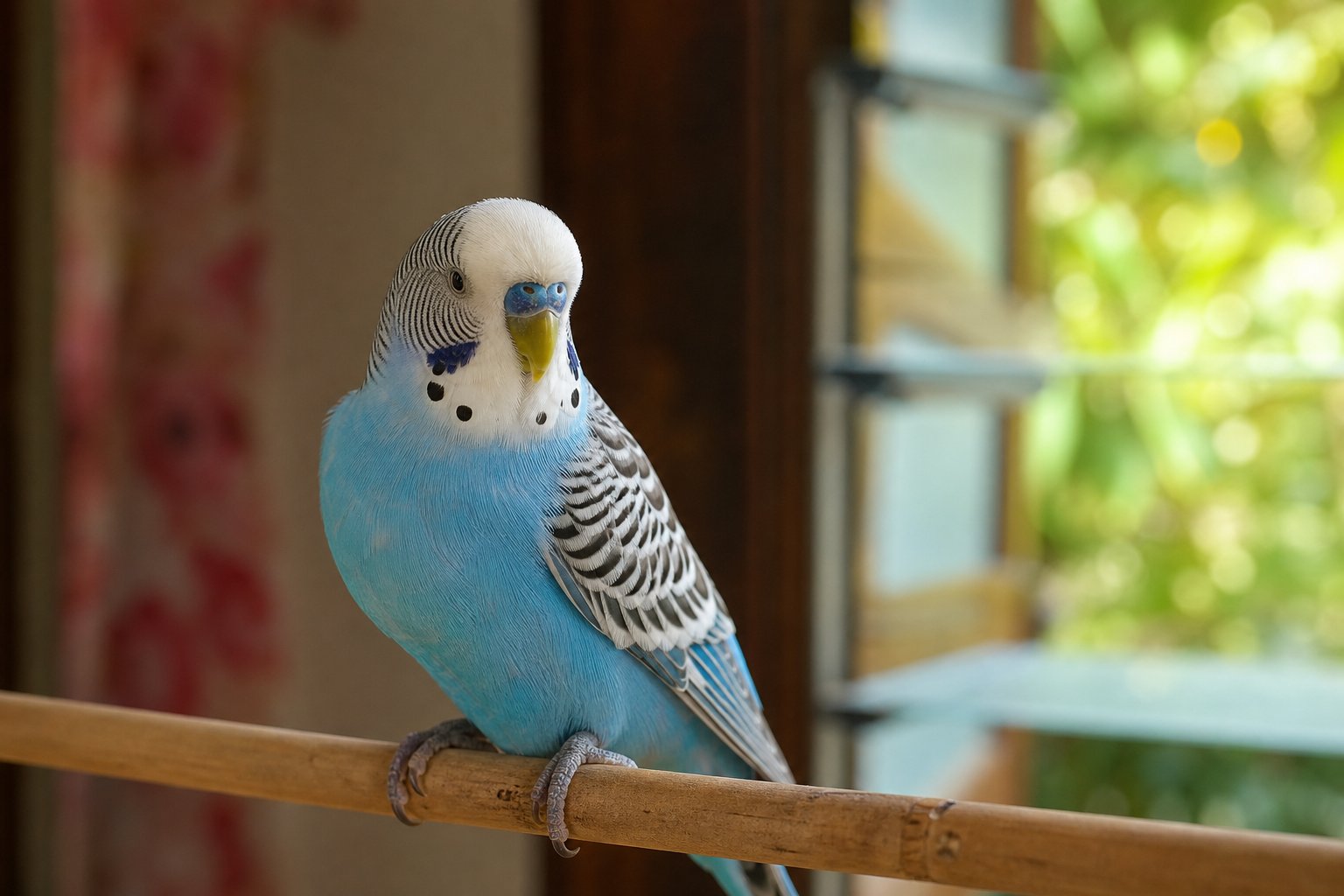
Quick answer
Budgerigars are small, highly social parrots that suit Malaysian apartments when kept in pairs, given daily out-of-cage time, a wide horizontal cage, 10-12 hours of quiet sleep, and a pellet-based diet with fresh greens.
Quick facts
- Origin
- Australia
- Size
- Small
- Lifespan
- 5-10 years
- Weight
- Small; roughly 30-40 g as an adult
- Coat
- Feathers in green, blue, yellow or white colour varieties
- Price guidance
- Ask local breeders for a current quote; prices vary with age, colour and hand-taming.
Personality
- Social
- Curious
- Gentle
- Active
- Chatty
Budgerigars, often called budgies, are small Australian parrots that adapt well to Malaysian condo and apartment living when their social and environmental needs are met. They are active, chatty flock birds that thrive on company, routine and a cool, well-ventilated space away from kitchen fumes. This guide covers practical care for budgie owners in Malaysia's hot, humid climate.
Temperament in a Malaysian Home
Budgerigars are gentle, curious and highly social flock birds. In a Malaysian apartment they are happiest with a budgie companion, since a single bird can become lonely and noisy when left alone for long workdays. They are rarely aggressive and usually bond through chirps, head bobs and gentle nibbling. Their small size makes them less intimidating for children, but they still need calm, supervised handling. Budgies can be chatty at dawn and dusk, so place the cage away from bedroom walls shared with neighbours. They enjoy routine and predictable interaction, and a pair kept together will groom and preen one another, which supports wellbeing in humid weather.
Daily Life in Malaysia's Climate
A budgie's day should follow a steady rhythm: waking, feeding, social time, exercise and a long quiet sleep. In Malaysia's hot, humid climate, position the cage in a well-ventilated room away from direct sun, air-conditioner drafts and kitchen fumes. Aim for 10-12 hours of quiet, dark sleep so birds rest properly and stay calm. Covering the cage at night helps. Give fresh water daily and check that seed and pellets are dry, since humidity can make food spoil quickly. Rotate simple toys and perches to prevent boredom. Because many Malaysian households live in condos, keep noise and cage placement considerate of neighbours, and schedule out-of-cage time when doors and windows are closed.
Grooming and Hygiene
Budgerigars groom themselves well, but Malaysian humidity means owners should watch hygiene closely. Offer a shallow dish of room-temperature water for bathing a few times a week, or mist lightly in warm weather, and remove the dish afterwards. Keep the cage dry: damp seed hulls and droppings encourage mould and bacteria in humid conditions. Clean food and water dishes daily and refresh cage liners often. Provide a cuttlebone or mineral block for beak condition. Nails usually wear down on varied perches, but check them and seek a vet if overgrown. Never use scented sprays, aerosols or strong cleaning chemicals near the cage, as budgies are sensitive to fumes. Regular gentle inspection of feathers, feet and vent helps catch problems early.
Exercise and Cage Setup
Budgies are active flyers and need space to move, not just to perch. Choose a wide horizontal cage rather than a tall narrow one, with room for short flights between perches. In Malaysian apartments, a cage placed in a busy family room gives birds company while they exercise. Offer daily supervised out-of-cage time in a closed, bird-safe room, removing ceiling fans, open water and toxic plants first. Rotate ladders, swings and foraging toys to encourage movement. Avoid overstocking the cage with toys, which limits flight. Because the climate is warm, ensure good airflow without direct drafts. A pair will chase and flutter together, which supports fitness and reduces boredom-related feather problems.
Training and Bonding
Budgerigars respond well to short, calm training sessions using patience and small food rewards. Start with simple step-up and target training, keeping sessions to a few minutes and ending on a positive note. Speak softly and move slowly, especially with new birds. In a Malaysian home with children, teach everyone to approach the cage calmly and never grab. A pair may bond more to each other than to people, so daily one-to-one interaction keeps them tame. Budgies can learn to whistle and mimic simple sounds, but avoid repeating household noises you do not want copied. Never punish with shouting or spraying water; reward desired behaviour instead. Consistent, gentle handling builds trust over weeks.
Feeding a Budgie in Malaysia
Base a budgie's diet on quality pellets, supplemented with fresh greens and a measured amount of seed. In Malaysia's heat, offer fresh food in small portions and remove leftovers within a couple of hours so they do not spoil. Safe greens include leafy vegetables and small pieces of carrot or capsicum. Avoid avocado, chocolate, caffeine, alcohol and salty or sugary human foods. Never leave the kitchen unattended with a bird out, as fumes from non-stick cookware can be dangerous. Fresh water must be available at all times and changed daily. Introduce new foods gradually, mixing them with familiar items, and monitor how much your bird actually eats to avoid overfeeding seed.
Health Watch in Humid Weather
Budgerigars hide illness well, so daily observation matters. In Malaysia's humid climate, watch for fluffed feathers, lethargy, changes in droppings, breathing difficulty, sneezing or discharge around the nostrils and eyes. Keep the cage dry and well ventilated to reduce respiratory and fungal risks. Overgrown beaks or nails, feather plucking and obesity are also common concerns. Identify a local veterinarian who treats birds before you need one, and ask about their experience with small parrots. Quarantine any new bird before introducing it to an existing pair. Avoid fumes from sprays, cooking and cleaning products. If you notice persistent changes, seek professional advice promptly rather than waiting.
Respiratory infections
Watch for: Sneezing, nasal discharge, tail bobbing, open-mouth breathing or clicking sounds.
Care: Keep the cage dry, well ventilated and free of fumes; consult a bird-experienced vet promptly if breathing changes persist.
Feather plucking
Watch for: Bare patches, damaged feathers or repeated chewing at the chest, wings or vent.
Care: Review company, cage space, sleep and enrichment; rule out health causes with a vet before changing routine.
Obesity
Watch for: Reduced activity, laboured movement, visible fat around the belly or difficulty flying.
Care: Measure seed portions, base the diet on pellets, encourage daily flight and foraging, and seek vet guidance.
Overgrown beak and nails
Watch for: Curling beak, difficulty eating, snagging nails or an uneven stance.
Care: Provide varied perches and a mineral block; have a vet trim if growth is excessive rather than cutting at home.
Choosing a Budgie in Malaysia
When choosing a budgie in Malaysia, look for an alert, active bird with clear eyes, smooth feathers, clean nostrils and a dry vent. Avoid birds that sit fluffed, breathe heavily or seem listless. Ask how the bird has been housed and fed, and whether it has been handled. Consider taking a pair, since budgies are flock birds and company supports wellbeing. Check the cage setup before bringing a bird home: wide horizontal space, safe perches, dishes and a quiet sleep area. Confirm you have access to a bird-experienced vet. Plan for daily interaction and a routine that fits condo living. Choose a calm, reputable source and avoid impulse purchases.
Caring in Malaysia
- Highly social flock birds: keep a pair or give daily out-of-cage interaction and company.
- A wide horizontal cage with room to fly, plus 10-12 hours of quiet sleep, keeps them healthy.
- Base the diet on quality pellets with fresh greens and seeds; avoid avocado and fumes.
Frequently asked questions
Can budgies live in a Malaysian condo?
Yes, budgies suit condo living because they are small and quiet compared with larger parrots. Keep a pair for company, place the cage away from shared walls and give daily out-of-cage time in a closed room. Manage dawn and dusk chirping by covering the cage for 10-12 hours of quiet sleep.
Should I keep one budgie or two?
Two budgies are usually better because they are highly social flock birds. A single bird needs substantial daily interaction and can become lonely or noisy when left alone. A pair keeps each other company, grooms together and is generally calmer, though you should still handle them daily to maintain tameness.
How do I keep a budgie cool in Malaysia's heat?
Place the cage in a well-ventilated room away from direct sun and air-conditioner drafts. Offer a shallow bathing dish in warm weather and ensure fresh water is always available. Never leave a bird in a hot car or a stuffy room, and avoid covering the cage fully during the day.
What should I feed my budgie?
Base the diet on quality pellets with fresh greens and a measured amount of seed. Remove fresh food within a couple of hours in Malaysia's heat so it does not spoil. Avoid avocado, chocolate, caffeine, alcohol and salty or sugary foods, and change drinking water daily.
How much sleep does a budgie need?
Budgies need about 10-12 hours of quiet, dark sleep each night. Cover the cage in the evening and place it away from televisions, kitchens and busy areas. Good sleep supports calm behaviour, healthy feathers and a stronger immune response in humid weather.
When should I see a vet for my budgie?
See a bird-experienced vet if you notice fluffed feathers, lethargy, changed droppings, breathing difficulty, sneezing or persistent feather loss. Budgies hide illness, so act early rather than waiting. Identify a local vet who treats birds before a problem arises so you are prepared.
Related breeds
Cat breed guides →
Related articles
- Budgie Care in Malaysia: Cage Setup, Diet, Toxic Foods and Daily Routine for New Owners
Quick answer: three things decide whether a budgie thrives — a cage wide enough for horizontal flight, a pellet-based diet with seeds only as treats, and daily company plus 10 to 12 hours of dark, quiet sleep. Never offer avocado, chocolate, onion, garlic or anything mouldy.
- Budgie Care in Malaysia: Cage, Diet, Sleep and Safety Guide
Budgies are small but busy, social birds. This guide covers the cage, a pellet-first diet, foods to avoid, 10–12 hours of sleep, flock needs and Malaysian humidity storage tips.
Related products at PetChill


Sources
Last reviewed: 2026-11-16
For health concerns, consult a licensed veterinarian in Malaysia.