
Corn Snake
Corn Snake · Small pet · Malaysia
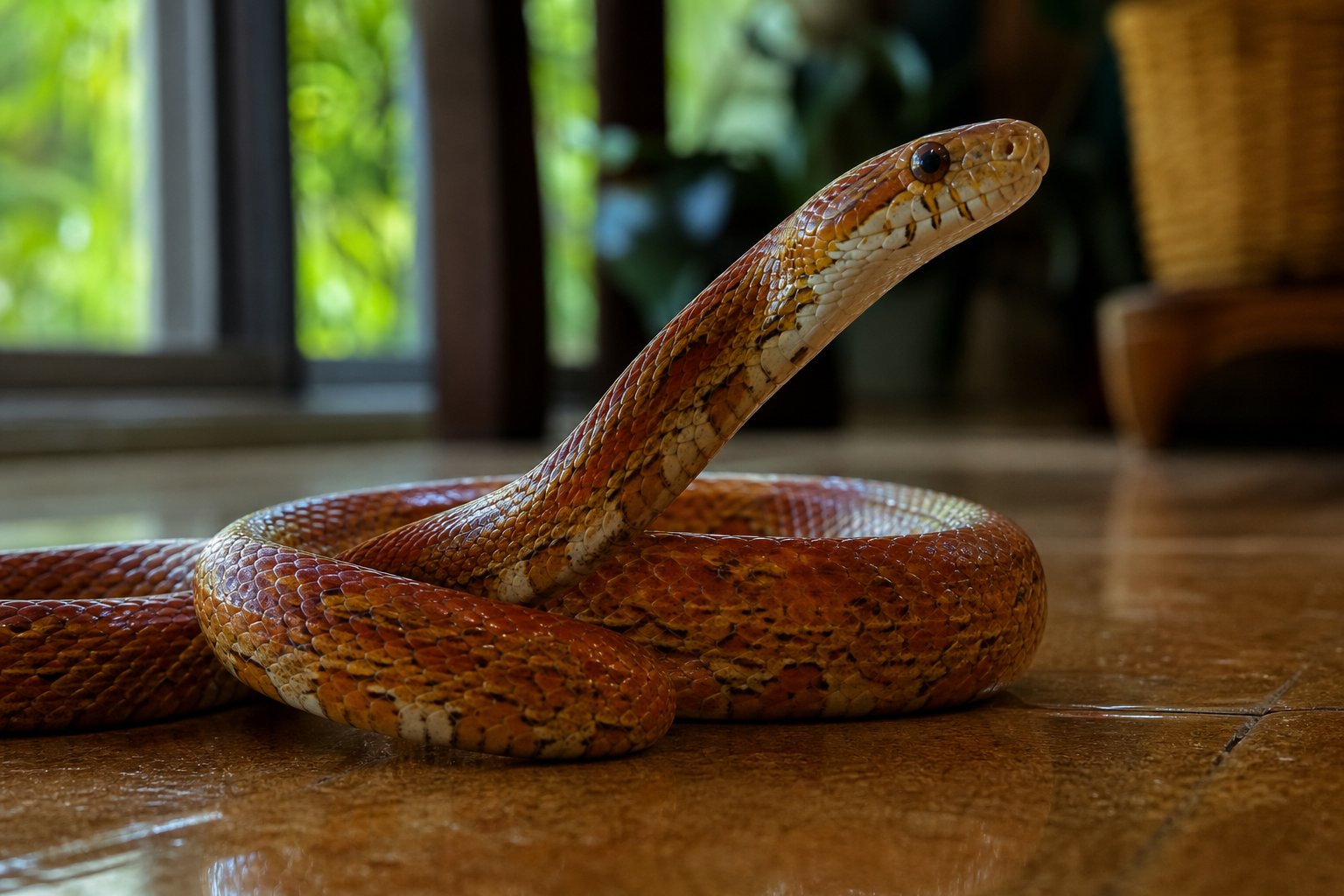
Quick answer
A corn snake is a medium, hardy snake suited to Malaysian homes when kept in an escape-proof enclosure with a thermostat-controlled warm-to-cool gradient, fed frozen-thawed prey, and checked by a reptile-experienced vet.
Quick facts
- Origin
- Southeastern North America
- Size
- Medium
- Lifespan
- 8-12 years
- Weight
- Medium-sized snake; body weight varies with age and feeding, so track condition rather than a fixed number.
- Coat
- Dry, keeled scales in varied colours and patterns; skin health shows through clean, complete sheds.
- Price guidance
- Ask local breeders for a current quote; prices vary with morph, age and papers.
Personality
- Calm
- Curious
- Manageable
- Solitary
- Escape-prone
Corn snakes are medium-sized, generally docile snakes from southeastern North America, popular with Malaysian keepers for their manageable size and calm handling. In Malaysia's hot, humid climate, success depends on controlling enclosure temperature and humidity rather than relying on room conditions. This guide covers practical care for apartments and condos, including local vet access and feeding routines.
Temperament in a Malaysian Home
Corn snakes are widely described as calm, curious and manageable, which suits keepers in apartments and condos where space is limited. Most settle quickly when given hiding spots and gentle, consistent handling, though hatchlings can be defensive until they grow. They are solitary, so house one snake per enclosure to avoid stress. In Malaysia's warm rooms, a relaxed snake may still become restless if temperatures are unstable, so provide a proper thermal gradient and quiet retreats. Avoid frequent handling during shedding or after feeding. Because they are escape artists, temperament only stays calm when the enclosure is fully secure; a loose lid or gap quickly turns a docile snake into a lost one.
Daily Life and Routine
Daily care is simple but consistent. Check the enclosure each day for security, fresh water and signs of activity, and spot-clean waste as soon as you see it. Confirm the thermostat is holding the warm side steady and that the cool side stays comfortable, since Malaysian room heat can push temperatures too high if the enclosure sits in direct sun. Feed on a fixed schedule rather than daily, and leave the snake undisturbed after meals. Weekly tasks include deeper substrate cleaning and checking hides and water bowls. Keep a simple log of feeds, sheds and behaviour so you can spot changes early. In condos, place the enclosure away from windows and air-conditioning vents to avoid swings.
Grooming and Shed Support
Corn snakes do not need brushing or bathing routines; grooming means supporting healthy sheds and cleanliness. Provide a humidity hide with damp sphagnum or similar safe substrate, especially when the eyes turn cloudy before shedding. In Malaysia's humid climate, monitor enclosure humidity rather than assuming room air is enough, and avoid making the whole enclosure wet, which invites skin and respiratory problems. Check that the shed comes off completely, including the tail tip and eye caps, and never peel skin off by force. Clean water bowls and replace substrate when soiled. Keep handling minimal during the shedding phase, and consult a reptile-experienced vet if retained shed or repeated difficult sheds occur.
Exercise and Enrichment
Corn snakes get exercise through climbing, exploring and muscular movement inside a secure enclosure. Offer branches, cork bark and lightweight decor for climbing, plus hides at both the warm and cool ends so the snake can move between zones. In Malaysian apartments, floor space is limited, so use vertical space in the enclosure rather than letting the snake roam the home, where escape and temperature risk are high. Short, supervised handling sessions provide gentle activity, but avoid overhandling. Rotate simple enrichment items and rearrange decor occasionally to encourage exploration. Never use heat rocks, and ensure all climbing structures are stable so the snake cannot fall or wedge itself.
Training and Handling
Corn snakes are not trained like mammals, but they learn routines and become easier to handle with patience. Use slow, calm movements, support the body with both hands, and keep sessions short, especially with young snakes. Tap or approach training is not necessary; instead, establish a predictable feeding routine using tongs so the snake does not associate hands with food. Handle gently and return the snake to its enclosure before it becomes restless. In Malaysia's warm rooms, watch for overheating during handling and keep sessions away from direct sun. Never handle during shedding or right after a meal. Consistent, quiet interaction builds a calm, manageable snake over time.
Feeding Frozen-Thawed Prey
Feed appropriately sized frozen-thawed prey on a fixed schedule, and never feed live prey. Choose a prey size roughly matching the widest part of the snake's body, and thaw safely before offering with tongs. Hatchlings and juveniles eat more frequently than adults, so adjust the interval as the snake grows rather than following a rigid daily plan. Provide fresh water at all times. In Malaysia's heat, do not leave thawed prey sitting in the enclosure; remove uneaten prey and discard it. Avoid handling for a day or two after feeding. If the snake refuses food repeatedly, check temperatures, shedding status and enclosure security before seeking advice from a reptile-experienced vet.
Health Watch in Malaysia
Corn snakes are generally hardy, but Malaysian keepers should watch for shedding problems, respiratory signs, regurgitation and mites. Stable temperatures and clean substrate prevent many issues, while unstable heat or a wet enclosure can cause trouble. Locate a reptile-experienced vet before you need one, since not every small-animal clinic treats snakes. Weigh and observe your snake regularly, and record sheds and feeds so changes are obvious. Quarantine any new snake away from existing reptiles. Never attempt home diagnosis or medication; seek professional advice for persistent symptoms. Keep the enclosure escape-proof, as lost snakes in a condo face temperature and dehydration risks.
Retained shed (dysecdysis)
Watch for: Patchy shed, skin left on the tail tip or eye caps, or repeated difficult sheds.
Care: Provide a humidity hide, keep the enclosure clean, avoid forcing skin off, and consult a reptile-experienced vet if shed is retained.
Respiratory infection
Watch for: Wheezing, bubbling around the nose or mouth, open-mouth breathing, or lethargy.
Care: Check that temperatures are stable and the enclosure is not damp or drafty, and seek veterinary advice promptly.
Regurgitation
Watch for: Food brought back up shortly after feeding, often linked to stress, handling too soon, or incorrect temperatures.
Care: Review prey size, feeding schedule and thermal gradient, avoid handling after meals, and consult a vet if it repeats.
Mites
Watch for: Tiny moving specks on the snake or in the enclosure, excessive soaking, or restless behaviour.
Care: Isolate the snake, clean and replace substrate and decor, and follow veterinary guidance for safe treatment.
Choosing a Corn Snake
Choose a captive-bred corn snake that is alert, free of visible mites, and has clean skin and clear eyes. Ask about its feeding history on frozen-thawed prey and its shedding record. Handle the snake briefly if possible to gauge temperament, but avoid choosing purely on colour. Confirm the seller keeps records and can answer care questions. Before bringing one home, set up and test the enclosure with a thermostat, hides and a water bowl. In Malaysia, plan for stable temperatures away from direct sun and identify a reptile-experienced vet in advance. Avoid wild-caught snakes and impulse purchases, and house the new snake alone.
Caring in Malaysia
- A secure, escape-proof enclosure with hiding spots and a warm-to-cool thermal gradient.
- Feed appropriately sized frozen-thawed prey on a fixed schedule; never feed live prey.
- Malaysian heat needs stable temperatures: use a thermostat and avoid direct sun on the enclosure.
Frequently asked questions
Is a corn snake a good pet in Malaysia?
Yes, a corn snake can be a good pet in Malaysia when its enclosure is escape-proof and temperatures are thermostat-controlled. Its medium size suits apartments and condos, and it is generally calm to handle. Success depends on managing heat and humidity rather than room conditions, plus access to a reptile-experienced vet.
How hot is too hot for a corn snake in Malaysia?
Too hot is when the enclosure cannot offer a cool retreat and the warm side is not thermostat-controlled. Malaysian room heat plus direct sun can push temperatures dangerously high. Use a thermostat, place the enclosure out of direct sun, and always provide a cooler zone so the snake can regulate itself.
What should I feed a corn snake?
Feed appropriately sized frozen-thawed prey on a fixed schedule, and never feed live prey. Choose prey roughly matching the widest part of the snake's body and thaw it safely. Adjust frequency as the snake grows, remove uneaten prey, and avoid handling for a day or two after feeding.
How often should I handle my corn snake?
Handle in short, calm sessions and not every day, especially with young snakes. Avoid handling during shedding or right after a meal. Gentle, consistent interaction builds a calm snake, while overhandling causes stress. Keep sessions away from direct sun and return the snake before it becomes restless.
Do corn snakes need a humidity hide in Malaysia?
Yes, a humidity hide is useful in Malaysia, particularly before shedding. Local humidity can be high, but air-conditioned condos and dry setups may still leave the snake needing a damp retreat. Use safe damp substrate in the hide, keep the rest of the enclosure from becoming wet, and check sheds come off completely.
Where can I find a vet for my corn snake in Malaysia?
Look for a reptile-experienced vet before you need one, as not every small-animal clinic treats snakes. Ask local reptile keepers for recommendations and confirm the clinic handles reptiles. Keep contact details ready, and seek advice early for repeated regurgitation, breathing changes, retained shed or mites.
Related breeds
Cat breed guides →
Related articles
- Corn Snake Care in Malaysia: Heat Gradient, Substrate and Refusing Food
Quick answer: corn snakes are gentle, non-venomous snakes that suit first-time keepers, but they only thrive when the enclosure has a proper hot-and-cool gradient, a secure lid and steady humidity. Tropical heat, air-conditioning drafts and rainy-season damp are the usual trouble spots for Malaysian homes.
Related products at PetChill
Sources
Last reviewed: 2026-11-16
For health concerns, consult a licensed veterinarian in Malaysia.