The short answer
Pet insurance in Malaysia is a contract, not a standard product. Two owners with similar pets can buy plans that behave very differently when a claim arises. The headline percentage on a brochure — "up to 90% cover" — tells you very little on its own. What matters is what is covered, what is excluded, how long you must wait, what your excess is, and what documents the insurer needs before it pays.
This guide walks through how pet insurance generally works for Malaysian dog and cat owners, the categories of cover you will see, the exclusions and waiting periods that catch people out, the paperwork claims require, and a practical way to compare policies without being dazzled by big numbers.
Insurance terms are contractual. Always confirm coverage and exclusions with the insurer, in writing, before you commit.
What pet insurance typically covers
Most plans sold to Malaysian pet owners cluster around a few core categories. Names differ between insurers, but the building blocks are fairly consistent.
Accident and injury cover. This is the most common entry-level benefit. It usually responds to traumatic events — road traffic accidents, falls, bites, swallowed foreign objects, fractures. Accident cover often has the shortest waiting period, which is why it is frequently the first thing a new policyholder uses.
Illness cover. This responds to sickness rather than trauma: infections, gastrointestinal problems, skin disease, urinary issues, cancer and so on. Illness cover is where the detail lives. Some plans list covered conditions; others cover all illness except a defined exclusion list. The second approach is usually broader, but only if the exclusions are reasonable.
Surgery and hospitalisation. Often a separate sub-limit or an add-on. Surgery can be the single largest vet cost a Malaysian owner faces, so check whether surgical benefits are capped per condition, per year, or per lifetime.
Diagnostics. X-rays, ultrasound, blood tests and other investigations. Some plans pay for diagnostics as part of an illness claim; others cap them separately. If diagnostics are excluded or tightly capped, an illness benefit can look generous on paper but pay little in practice.
Third-party liability. Less common but available on some dog plans. It responds if your dog injures someone or damages property. This matters more for owners in landed property or condos with shared spaces, where a loose dog can create a real liability exposure.
Optional add-ons. These vary by insurer and may include dental illness, hereditary conditions, cremation or burial costs, advertising rewards for lost pets, or travel cover. Add-ons are where plans become genuinely different from one another, so read each one as its own mini-contract.
What is usually not covered at all. Routine and preventive care — vaccinations, deworming, neutering, annual check-ups, grooming — is normally excluded because it is predictable. If a plan advertises "wellness benefits", treat that as a marketing feature and check whether it is a reimbursement, a discount, or a capped allowance.
Exclusions and waiting periods: where claims go wrong
Most unhappy pet insurance stories in Malaysia do not come from insurers refusing to pay for no reason. They come from a mismatch between what the owner assumed and what the policy actually says. The usual culprits are exclusions and waiting periods.
Common exclusions
- Pre-existing conditions. Anything that existed, showed symptoms, or was diagnosed before cover started. Insurers may ask for your pet's history, and a vet note from months earlier can be enough to link a later claim to a pre-existing issue.
- Hereditary and congenital conditions. Some plans exclude these entirely; others cover them only after a long waiting period or with a sub-limit. Breeds prone to hip, elbow, heart or eye problems need this checked carefully.
- Dental disease. Often excluded or capped, and frequently subject to an extended waiting period.
- Pregnancy, breeding and whelping. Almost always excluded.
- Cosmetic or elective procedures. Tail docking, ear cropping, declawing and similar procedures are typically outside cover.
- Behavioural problems and training. Rarely covered.
- Parasites and preventable disease. Some plans exclude conditions linked to missed vaccination or parasite control.
- Cruciate ligament issues. Frequently subject to a long waiting period or a bilateral exclusion, meaning if one knee goes, the other may not be covered later.
- Age limits. Many plans will not start cover above a certain age, and some reduce benefits for senior pets. Renewal at older ages is worth confirming in writing.
Waiting periods
A waiting period is the time between the policy starting and cover becoming active for a given category. Accident cover may activate quickly; illness cover usually takes longer; specific conditions such as cruciate disease or dental illness may take much longer. Waiting periods restart if you let a policy lapse and reapply, and they can differ between a new policy and a renewal.
Ask the insurer to list, in writing, the waiting period for each benefit you care about. "Cover starts immediately" on a landing page rarely means every benefit starts immediately.
How claims work: documentation and process
Pet insurance claims in Malaysia generally follow one of two models.
Reimbursement. You pay the vet, then claim back from the insurer. This is the more common model and gives you freedom to use your regular clinic. The trade-off is that you must front the cost and wait for reimbursement.
Panel or direct billing. The insurer works with selected clinics and settles directly, or you pay a smaller portion at the counter. Convenient, but your preferred vet may not be on the panel.
Either way, the paperwork is similar. A typical claim pack includes:
- A completed claim form, signed and dated.
- An itemised invoice from the vet — not just a total, but each treatment, drug and procedure listed.
- Medical records or a clinical summary covering the consultation, diagnosis and treatment.
- Proof of payment: receipt, card slip or bank transfer confirmation.
- Any additional documents the insurer requests, such as lab results or imaging reports.
Practical habits that reduce claim friction:
- Tell your vet early that you may claim. Ask for itemised invoices and a written diagnosis at the time of treatment, not weeks later.
- Keep a simple pet health file. Vaccination records, previous consultations and any chronic issues, all in one place.
- Submit promptly. Policies set claim deadlines; missing them is one of the most avoidable reasons for a rejected claim.
- Photograph everything before you send it. Keep digital copies of every form and invoice.
- Declare honestly at application. If your pet had a skin issue at the first check-up, say so. Non-disclosure is the fastest route to a disputed claim.
Comparing policies without being misled by percentages
A "90% cover" headline is a reimbursement rate, not a promise to pay 90% of your bill. It usually applies after an excess, inside a benefit limit, for covered conditions only, and sometimes only at panel vets. The real comparison is a set of numbers and rules read together.
| Feature to compare | What to ask | Why it matters |
|---|---|---|
| Reimbursement rate | What percentage is paid, and on what base amount? | A high rate on a low limit can pay less than a lower rate on a higher limit |
| Annual limit | Is it per year, per condition, or per lifetime? | Per-condition limits can run out fast on chronic illness |
| Excess | How much do I pay before the insurer pays? | A large excess can wipe out small claims entirely |
| Waiting periods | How long for accident, illness, dental, cruciate? | Determines when you are actually protected |
| Exclusions | Which conditions are excluded outright? | Hereditary and dental exclusions are the most common surprises |
| Age rules | Maximum entry age and renewal rules for seniors | A plan that stops renewing at older ages may fail when you need it most |
| Vet access | Panel only, or any licensed vet? | Affects convenience and your relationship with your clinic |
| Claim deadline | How many days to submit? | Late claims are rejected regardless of merit |
| Premium stability | How often can premiums change? | Cheap entry pricing can rise sharply later |
A useful exercise: take one realistic scenario — say, a dog needing knee surgery, or a cat with repeated urinary blockage — and ask each insurer how that scenario would be handled. The answers will separate plans far faster than any brochure comparison.
Costs, budgeting and what to ask before you buy
Premiums vary by species, breed, age, location and plan level, and they change over time. Rather than anchoring on a single figure, budget for the principle: insurance is for costs you could not comfortably absorb in one go. If you could pay a large vet bill from savings without stress, insurance is optional. If a major surgery would force a loan or a delay in treatment, it is worth serious consideration.
Before signing, ask the insurer:
- Can I see the full policy wording, not just the summary?
- What is the excess, and how is it applied per claim or per year?
- Are hereditary conditions covered, and after what waiting period?
- Is my regular vet on the panel, or can I claim from any licensed vet?
- What exactly must I submit for a claim, and by when?
- How are pre-existing conditions assessed, and what records do you need?
- What happens at renewal as my pet ages?
Get the answers in writing. Insurance terms are contractual, and a written answer is far easier to rely on than a phone conversation.
When to see a vet
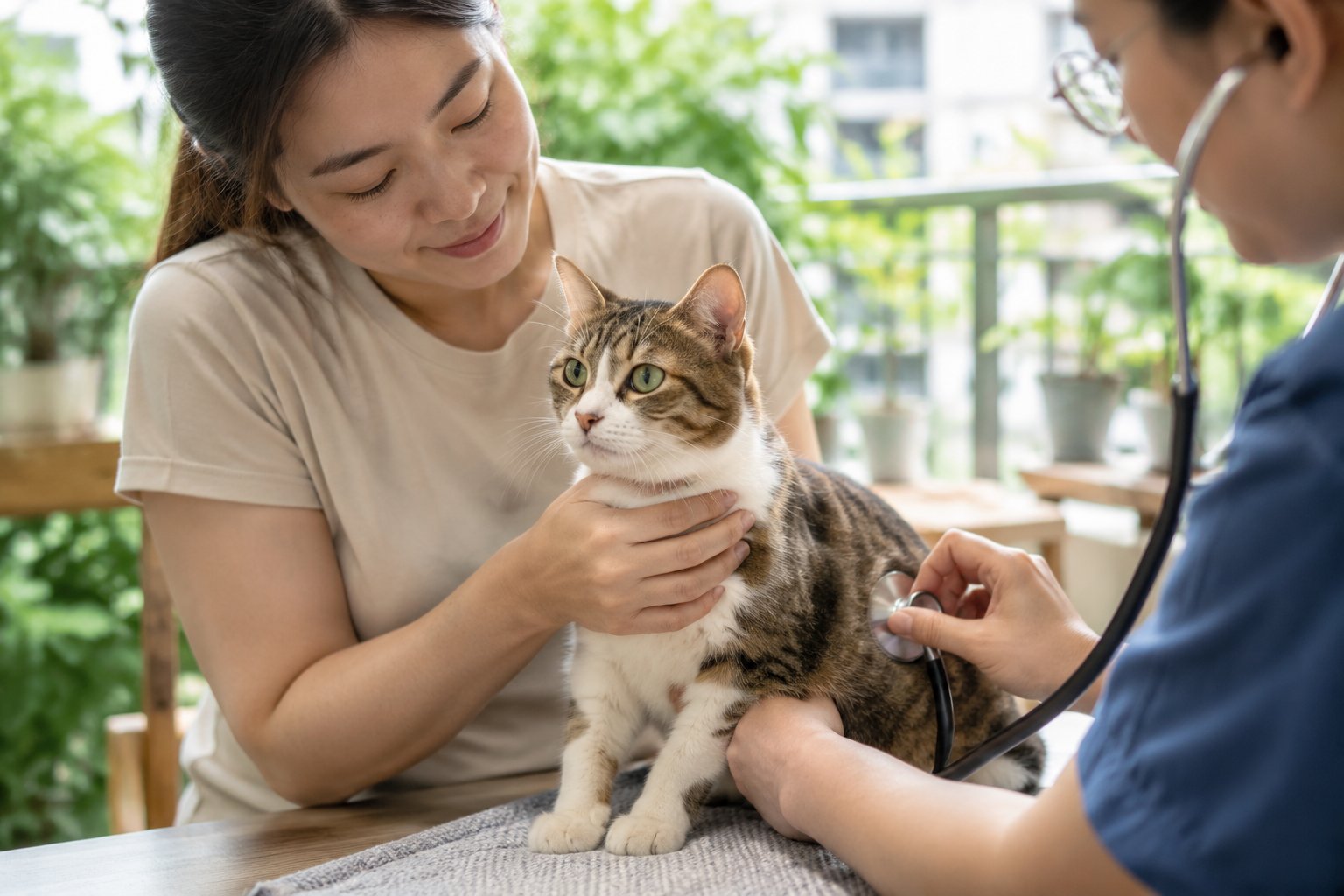
This article is about insurance, not diagnosis, but insurance decisions often surface at the clinic. See a vet promptly if your pet shows signs such as repeated vomiting or diarrhoea, difficulty breathing, straining to urinate (especially male cats — this can be an emergency), sudden lameness, loss of appetite lasting more than a day, unexplained weight loss, or any wound that is not healing. Early treatment is usually better for the animal and simpler for any claim, because the clinical record is clear from the start.
If you are about to make a claim, tell the vet at the first visit. Ask for an itemised invoice and a written diagnosis, and keep every record.
A practical checklist for Malaysian owners
- Confirm your pet's age and breed are eligible before applying.
- Gather vaccination and medical records; declare known conditions honestly.
- Read the exclusion list line by line, especially hereditary, dental and cruciate clauses.
- Write down the waiting period for each benefit you care about.
- Check whether your regular vet is panel or reimbursement-based.
- Set a reminder for the claim deadline and keep a digital folder for invoices.
- Review the policy annually and compare it against your pet's changing health needs.
Pet insurance can be a useful financial tool, but only when you understand the contract. Compare the rules, not the percentages, and confirm everything with the insurer before you buy.
This article is general information, not veterinary or financial advice. For medical concerns, consult a licensed veterinarian; for policy terms, consult the insurer.
Related reading
- Pet Life in Malaysia: The Seven Practical Decisions Before You Get a Pet
- 24 Hour Vet KL: How to Find Genuine Emergency Care Before You Need It
- Bringing a Cat on a Flight from Malaysia: Cabin vs Checked Baggage, Approvals & Paperwork
- Flood Preparation for Pets in Malaysia: A Practical Readiness Guide
- Lost Cat in Malaysia: The First 72 Hours (Search Grid, Scent Stations & Posters)
- Multi-Cat Household in Malaysia: A Practical Guide to Resources, Space and Peace
- Pet Travel to Malaysia: Import Permit, Rabies Timing, Health Certificate & Quarantine Risk
- Pet Taxi Malaysia: How to Choose a Safe Pet Transport Service
- Taking Your Cat Outside in Malaysia: Safe Harness Training, Risks and Rules
- Thunderstorm Fear in Dogs: A Malaysian Owner's Guide to Storm Phobia
- AirAsia Pet Policy: What You Can and Cannot Fly With
- Animal Welfare Act 2015 Malaysia: What Ordinary Pet Owners Must Know