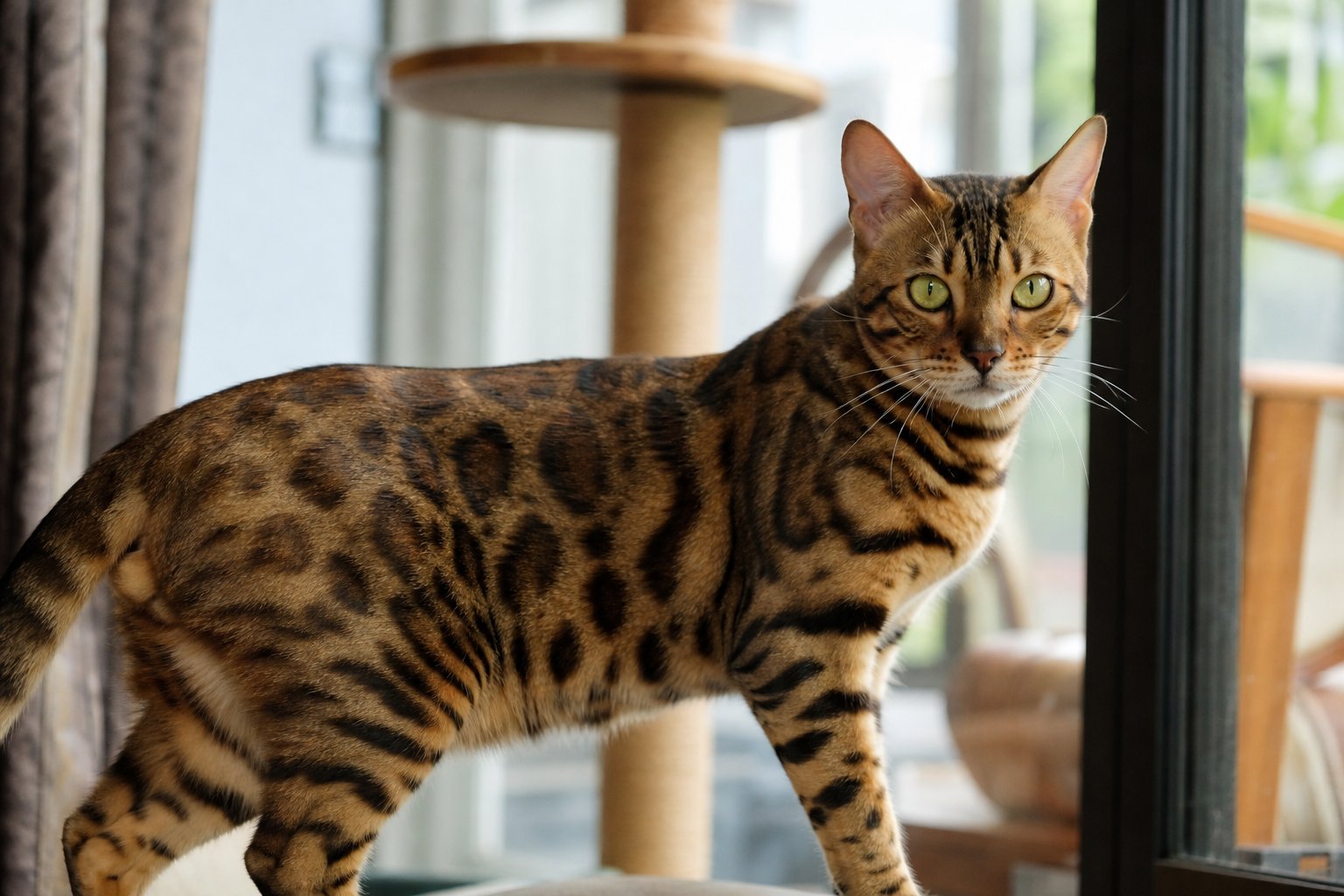
What is the Bengal cat personality really like?
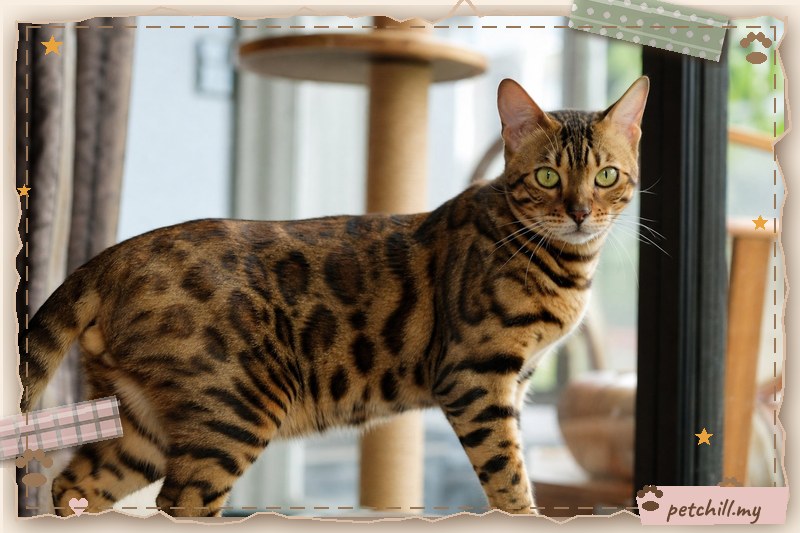
Bengal cats are curious, confident, high-energy and highly interactive. They are not lap cats that blend into the furniture. They want to inspect every new object, follow you from room to room, and turn daily life into a joint project. For Malaysian owners, that means the breed suits homes where someone is around for a good part of the day and can commit to structured play. If you want a quiet, decorative cat, a Bengal will frustrate you. If you want an engaged companion that learns quickly and participates in everything, the breed is a strong match.
The breed standard describes the Bengal as alert, confident and curious. Those words translate into three everyday realities: they investigate everything, they want to be included in everything, and they treat games as hunting practice. Understanding that trio is the foundation of living well with a Bengal in Malaysia.
The four pillars of the Bengal personality
1. Curiosity that never switches off
A new shopping bag, a delivery box, a rearranged shelf or an open cupboard is an invitation. Bengals check new things first and ask questions later. In a Malaysian apartment, this means you need to manage hazards before the cat finds them: keep medicines and cleaning products in closed cabinets, secure balcony screens, and check that windows have sturdy mesh. Give the curiosity a legal outlet with cardboard boxes, paper bags, puzzle feeders and rotating toys.
2. Confidence that borders on boldness
Bengals are not easily intimidated. They will greet visitors, investigate the vacuum cleaner and claim the highest shelf. Confidence is charming, but it also means they will test boundaries. A confident cat that learns it can open a cupboard will keep opening it. Manage the environment rather than relying on verbal scolding.
3. Energy that needs a schedule
This is a high-energy breed. Without daily physical outlets, Bengals invent their own games, often using your curtains, plants or breakables as props. Plan for at least two or three structured play sessions a day, each around ten to fifteen minutes. Wand toys that mimic prey are ideal. In a Malaysian terrace house, a secure catio or supervised outdoor enclosure can add valuable climbing and watching time.
4. Strong social needs
Bengals bond closely with their people. They follow you, listen to conversations, sleep near you and want to be involved. That sociability is rewarding, but it also means long periods alone can lead to boredom and stress. If your household is out all day, consider a second compatible cat or arrange a midday play session. Two Bengals do not cancel each other out; they double the energy, so plan space, food stations and playtime accordingly.
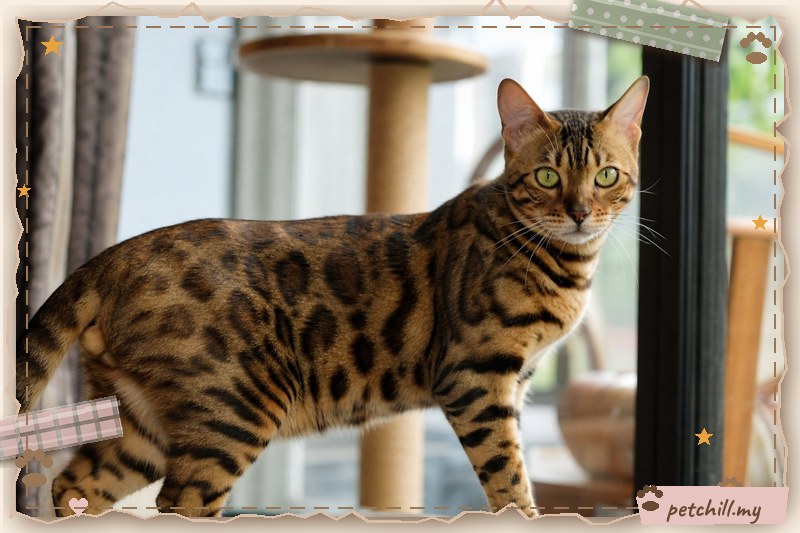
How smart is a Bengal cat?
Bengals are widely regarded as fast learners with high motivation. Owners commonly report that their cats can open lever doors, turn on taps, play fetch, respond to their names and solve puzzle feeders. Cat cognition research suggests that learning speed and motivation matter more than a single intelligence score. Bengals score well on both: they learn quickly and they are willing to work for rewards.
That intelligence is a double-edged sword. A bored Bengal will design its own entertainment, and the props are usually your belongings. The solution is to feed the brain as well as the body. Puzzle feeders, scent games, clicker training and new climbing routes keep a clever cat occupied. Rotate toys weekly and increase difficulty monthly so the challenge does not become stale.
It is also worth remembering that intelligence and obedience are not the same thing. A Bengal may understand exactly what you want and still choose not to comply. Training works best when it feels like a game with a clear reward, not a formal obedience drill.
Bengal personality traits at a glance
| Trait | Typical daily behaviour | Practical response for Malaysian homes |
|---|---|---|
| Intense curiosity | Inspects new bags, boxes and furniture first | Store hazards safely; provide boxes and puzzle toys |
| High energy | Chases, pounces, sprints around the house | Two to three structured play sessions daily |
| Strong social need | Follows you, joins conversations, sleeps nearby | Include the cat in family time; avoid long isolation |
| Fast learning | Opens doors, learns cues, solves puzzles | Positive reinforcement; turn mischief into tricks |
| Water interest | Plays with taps, water bowls, wet towels | Use a flowing water fountain; manage bathroom doors |
| Sensitive memory | Avoids a place or person after a scare | Never punish; rebuild trust with distance and food |
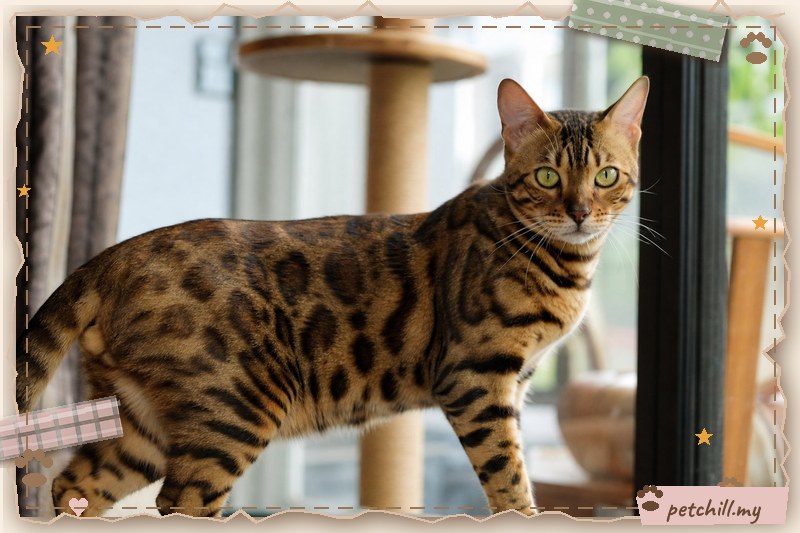
Living with children and other pets in Malaysia
Bengals often do well in multi-pet homes. Their play style, which involves stalking, pouncing and chasing, overlaps with how many dogs invite play. Many owners report cats and dogs playing together. The key is a gradual introduction. Use a separate room, swap bedding for scent, and allow supervised meetings through a gate before full access. Watch the other animal for signs of stress: hiding, flattened ears, refusal to eat or avoiding the room.
With children, the basics matter more than the breed. Teach children not to pull tails or ears, not to disturb a sleeping cat, and not to put hands near food bowls. Choose a cat with a good socialisation history and always keep high shelves or cat trees available so the cat can escape. In a Kuala Lumpur apartment, a tall cat tree near a window gives the cat vertical space and a safe retreat when family life gets busy.
Shy resident cats may find Bengal play overwhelming. If your existing cat is timid, plan a slow introduction and be prepared to separate them during high-energy sessions. A second confident cat is often a better match than a nervous one.
Male vs female Bengal cats
General observations, not rules: male Bengals are often larger, more outgoing and more boisterous. Females tend to mature earlier, be more independent and have stronger opinions about social contact. Individual differences are far greater than sex differences. When choosing a cat, spend at least fifteen minutes interacting: call the cat, use a toy, and see whether it approaches you. That live assessment is more useful than any personality chart.
If you adopt an adult Bengal, ask the previous owner about learned skills. A cat that can open doors or windows will keep doing so in your home. Those skills transfer with the cat, so check your home security and balcony screens before bringing the cat home.
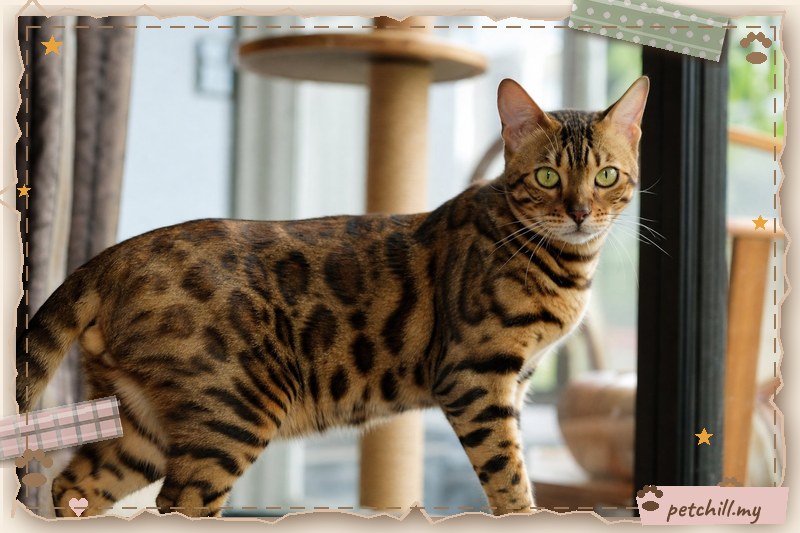
Daily routine for a Bengal in a Malaysian home
A predictable routine helps channel energy. Here is a practical example for a household in Petaling Jaya or Johor Bahru:
- Morning: Ten minutes of wand-toy play before breakfast. Use a food puzzle or scatter feeding to slow eating and engage the brain.
- Midday: If you are home, a short training session of five minutes. Practise name recall or a simple trick. If you are out, leave a puzzle feeder or a frozen treat toy.
- Evening: Fifteen to twenty minutes of active play, followed by grooming and quiet time. Bengals often settle better after a proper hunt-style play session.
- Night: Provide a comfortable sleeping area near the family, not isolated in a utility room. Bengals are social sleepers and may protest if shut away.
In a Malaysian terrace house, watch for open windows and doors during rainy season. Bengals are agile and curious, so mesh screens and secure balcony netting are essential. In apartments, check management rules on pets and balcony safety before you bring a Bengal home.
Training a Bengal cat: what works
Positive reinforcement is the only approach that works well with this breed. Use treats, play and praise to reward behaviour you want. Never punish: Bengals remember unpleasant experiences and may avoid the person or place involved. Keep sessions to five or ten minutes and end while the cat is still interested.
Start with simple behaviours: coming when called, sitting, touching a target stick, and entering a carrier voluntarily. Then progress to puzzle toys and tricks. Clicker training can work well because it marks the exact moment of success. If you want to train leash walking, use a well-fitted harness rather than a neck collar, start in a quiet area, and only go outside after reliable recall is established.
The socialisation window is roughly eight to sixteen weeks. During that period, positive exposure to different people, household sounds, handling of paws and ears, and friendly strangers shapes the adult cat's confidence. Ask breeders and rehoming organisations what socialisation they provide. That history is the real personality starting line.
Common Bengal behaviour challenges and fixes
| Challenge | Why it happens | What to do |
|---|---|---|
| Opening cupboards | High intelligence and curiosity | Use child locks; provide puzzle alternatives |
| Knocking items off shelves | Play and attention-seeking | Secure breakables; schedule play before you leave |
| Play biting | Hunting drive and overstimulation | End play calmly; redirect to toys; never hit |
| Night activity | Natural crepuscular rhythm | Intense evening play; feed a small meal before bed |
| Climbing curtains | Need for vertical space | Provide tall cat trees and wall shelves |
| Following you into the bathroom | Strong social bond | Accept it or provide a nearby perch |
When to see a vet
Bengals are generally robust, but their curiosity can lead to accidents. See a veterinarian promptly if your cat shows any of the following:
- Vomiting, diarrhoea or refusal to eat for more than a day
- Straining to urinate, especially male cats, which can be an emergency
- Sudden hiding, lethargy or reluctance to move
- Difficulty breathing, coughing or open-mouth breathing
- A fall from a height, a cut, or a suspected poisoning
- Persistent scratching, hair loss or skin changes
- Behaviour changes such as aggression or withdrawal that are unusual for your cat
For routine care, ask your Malaysian vet about vaccination schedules, parasite prevention and dental checks. Costs vary by clinic and location, so request a written estimate before non-urgent procedures. If behaviour problems persist despite enrichment and training, ask your vet about a referral to a qualified cat behaviourist.
Checklist before bringing a Bengal home
- Confirm your housing allows pets and that balcony screens are secure.
- Budget for a tall cat tree, puzzle feeders, wand toys and a water fountain.
- Plan two to three play sessions daily and decide who covers them.
- Identify a nearby vet and ask about emergency hours.
- Decide whether a second compatible cat is right for your household.
- Bengal-proof cabinets, bins and hazardous products.
- Set aside time for training and socialisation, especially with children.
Final thoughts
The Bengal is a brilliant, busy, affectionate cat that thrives on interaction. In Malaysia, the breed can do well in apartments and terrace houses alike, provided owners invest in vertical space, daily play and secure windows. The reward is a companion that participates in family life and learns astonishing things. The cost is your time and attention, which is the real entry ticket for this breed.
This article is general information only and is not a substitute for veterinary advice. Always consult a licensed veterinarian for health concerns.
Related reading
- Cat Breeds in Malaysia: A Practical Guide to Choosing the Right Cat (2026)
- American Shorthair Lifespan in Malaysia: How Long Do They Live and How to Help Them Get There
- Bengal Cat Guide Malaysia: Personality, Energy Needs and Health Care
- Bengal Cat Disadvantages in Malaysia: 8 Real Challenges and How to Manage Them
- Bengal Cat Lifespan in Malaysia: How Long Do They Live and How to Add Years
- Abyssinian Cat Disadvantages in Malaysia: 7 Honest Truths Before You Adopt
- American Shorthair Colours in Malaysia: Tabby, Bicolour and What Actually Matters
- American Shorthair Disadvantages in Malaysia: 7 Honest Trade-Offs Before You Adopt
- Birman Cat Disadvantages in Malaysia: 8 Real Costs Before You Adopt
- British Shorthair Disadvantages in Malaysia: Weight, Shedding and What to Budget
- British Shorthair Price in Malaysia: What You'll Actually Pay (2026 Guide)