
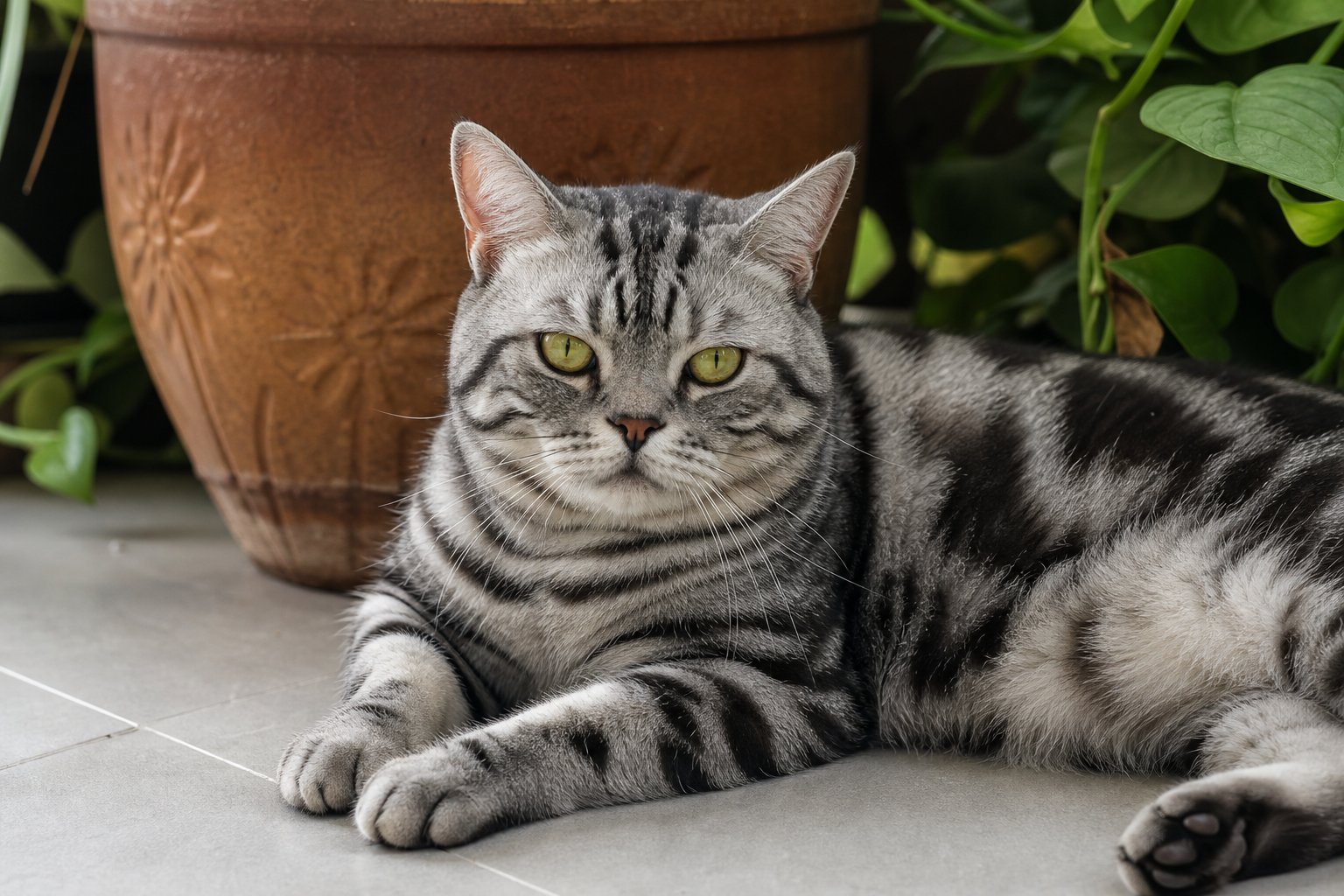
American Shorthair colours are mostly a labelling and pricing issue, not a health issue. In Malaysia the cats you will actually meet are silver tabby, brown tabby and bicolour 'add-white' cats; solid blue, cream and white exist but are less common. Colour affects grooming visibility and photos far more than temperament, and pedigree papers matter more than symmetry.
What 'American Shorthair colours' actually covers
Breed registries recognise dozens of colour and pattern combinations for the American Shorthair. The breed standard describes classic tabby (the 'butterfly' shoulder mark and bullseye side pattern), mackerel tabby (vertical stripes), and various bicolour combinations where white patches sit over a tabby or solid base. That long list is why search results can feel confusing: most people asking about 'American Shorthair colours' really want to know two things — which colour is most typical, and which colour is most sought after.
For a Malaysian buyer, the practical shortlist is smaller than the registry list:
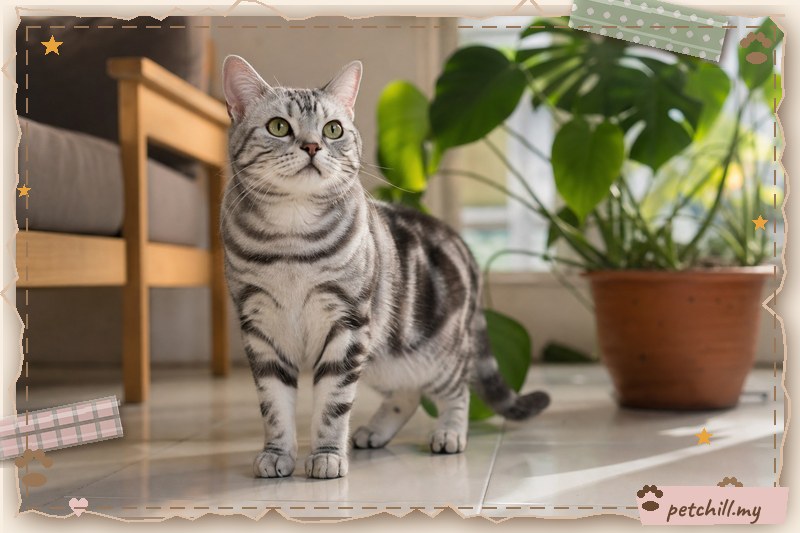
- Silver tabby — silver-white ground with dense black markings and dark 'eyeliner'.
- Brown tabby — warm brown ground with black markings, a more natural, wild look.
- Tabby and white (bicolour) — tabby body with white chest, belly, paws or face markings.
- Blue or dilute tabby — grey-blue ground with softer markings.
- Solid colours — blue, cream, black or white with no pattern.
- Calico or tortoiseshell-and-white — mixed black, orange and white.
- Silver shaded or tipped — pale coat with coloured tips, often confused with British Shorthair lines.
If you are still deciding whether the breed suits your home, read a full American Shorthair breed profile before you fall in love with a colour.
Colour, pattern and commonness at a glance
The table below compares the main colour groups on the things that matter to an owner: how often you will see them, how they photograph, and what extra grooming detail they bring. It deliberately avoids prices, because local pricing varies by breeder, state and paperwork.
| Colour group | Appearance | Commonness in Malaysia | Grooming detail | Photo behaviour |
|---|---|---|---|---|
| Silver tabby | Silver-white ground, black classic or mackerel markings, dark eye rims | Most common | Shed black hairs show on light sofas; white undercoat shows on dark clothes | High contrast, looks striking in warm wood interiors |
| Brown tabby | Brown ground, black markings | Common | Shed hair blends into dark wood and brown fabric | Softer contrast, very photogenic in natural light |
| Tabby and white | Tabby body plus white chest, belly, paws, face blaze | Common and popular | White areas show food stains and tear marks; needs wiping | Very high visual contrast, popular for photos |
| Blue or dilute tabby | Grey-blue ground, soft markings | Moderate | Markings can look washed out under warm indoor light | Calm, muted look |
| Solid blue or cream | Single colour, no pattern | Less common | Dense plush coat; shed hair very visible on dark clothing | Texture shows well in side light |
| Solid white | Pure white coat | Less common | Ear skin is thin and pale; check ears regularly | Can look overexposed in phone photos |
| Calico / tortie-and-white | Black, orange and white patches | Less common | White areas stain easily; coat pattern is individual | Unpredictable but distinctive |
| Silver shaded / tipped | Pale coat with coloured hair tips | Uncommon, often mislabelled | Needs confirmation of pedigree, not just appearance | Can be confused with British Shorthair |
A simple rule: colour changes what you see on your furniture and in your camera roll. It does not change the basic care routine.
Why 'add-white' bicolours are so popular
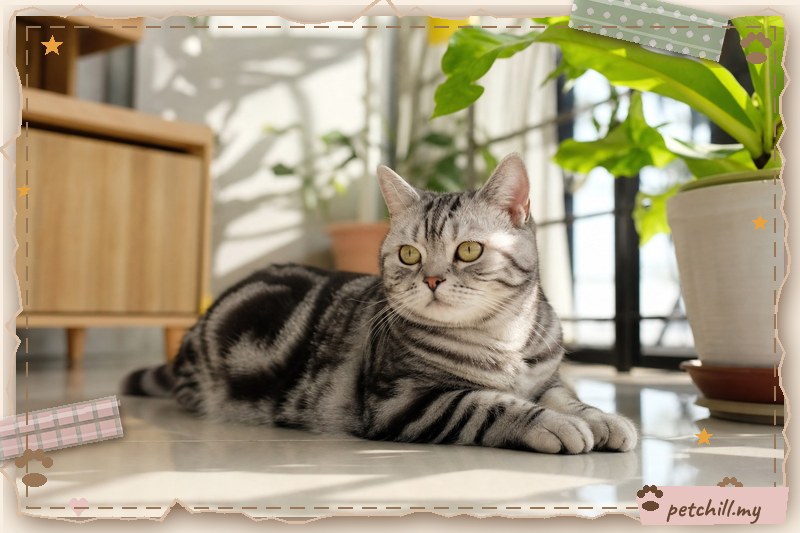
A bicolour American Shorthair has a tabby or solid base with white patches — typically a white chest, white belly, white paws ('gloves') and sometimes a white blaze on the face. This is a normal dominant coat pattern, not evidence of crossbreeding. Breed standards describe an ideal white distribution, usually even white on chest, belly and legs with symmetrical facial markings, but that is a show-ring ideal. For a pet, symmetry is optional.
The popularity is easy to understand: white markings create contrast, and contrast photographs well. But two things are worth separating in your mind:
- Bicolour is a pattern, not a grade. A bicolour cat is not 'better' than a tabby, and a tabby is not 'more pure'. Purity is a paperwork question.
- Symmetry is aesthetic. A slightly uneven face blaze does not affect health, temperament or breed status. Some sellers charge more for symmetry; that premium is a beauty-market premium, not a health premium.
If you are choosing between two kittens from the same litter, watch how each one behaves with a toy and how each one reacts to being handled. That tells you more about the next fifteen years than the width of a white blaze.
American Shorthair or British Shorthair? Look at the body
Searches for American Shorthair colours often overlap with British Shorthair colours, because both are short-haired, round-faced breeds and blue-and-white appears in both. The reliable way to tell them apart is structure, not colour:
- British Shorthair: round head, round face, broad ears, heavy cobby body, coat that feels like carpet.
- American Shorthair: squarer muzzle, visible muscle and angularity, classic tabby markings common.
A blue-and-white cat could belong to either breed on colour alone. Photos on social media are not proof. If pedigree matters to you, ask for registration documents that state the breed, colour code and parent details. If you are adopting, judge the cat by health and temperament rather than by a label.
What colour means for grooming and daily life
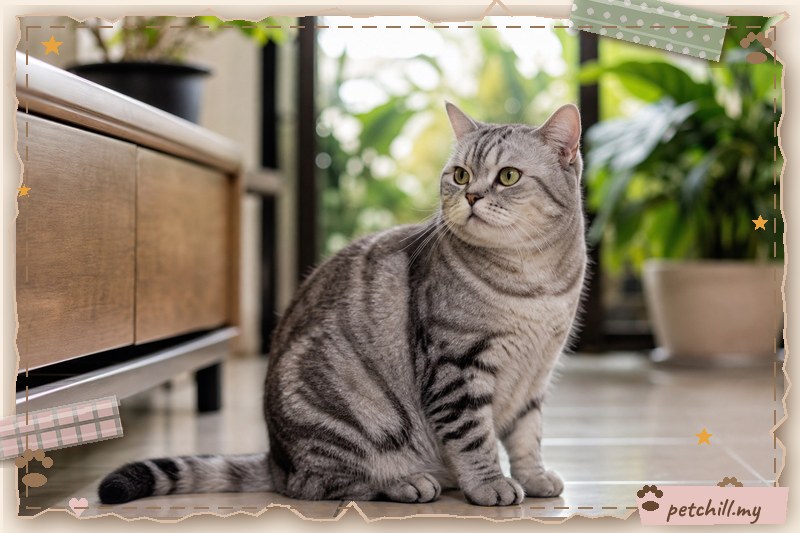
The coat itself is the same short, dense coat across colours, so brushing once or twice a week is enough for all of them. The differences are in visibility and small daily habits:
- Silver tabby: the black markings shed onto light-coloured sofas, and the pale undercoat sheds onto dark clothing. Neither is a problem, but your furniture colour affects how often you notice hair.
- Brown tabby: shed hair disappears against dark wood and brown fabric. If you want the lowest-visibility option, this is the quiet winner.
- Bicolour with a white chest: food drips, drool and tear stains show up quickly. Wiping the chest and face after meals with a pet-safe wipe or a damp cloth takes under a minute.
- Cream and calico: pale-skinned areas such as ear tips and nose leather can be sensitive to long sun exposure. Provide shade options near windows.
- Solid white: ear skin is thin and pale, so check the ear canal regularly and keep up with routine vet checks.
- Silver shaded or tipped: if a seller markets a 'silver shaded American Shorthair', confirm the pedigree first. Shaded coats are strongly associated with British Shorthair lines, and cross-breed marketing is common.
A useful habit for white-chested cats: raise the food bowl slightly so the chest does not brush the food, and use a wide water bowl so the chin stays drier. These are small, cheap changes that slow down staining.
How to evaluate a kitten in person
When you visit a breeder or foster home, use the same five checks regardless of colour. None of them require expert knowledge.
| Check | Good sign | Warning sign |
|---|---|---|
| White marking borders | Clear boundary between white and coloured hair | Very fuzzy borders with lots of stray hairs (not a health problem, but affects the 'symmetry' sales pitch) |
| Nose and paw pads | Moist nose, even colour | Dry cracked nose, discharge |
| Eyes and ears | Clean, no heavy tear staining, no dark earwax | Heavy tear stains, dark brown earwax (possible mites) |
| Belly skin | Pink and clean under the fur | Red spots, bald patches (possible ringworm) |
| Energy | Chases a toy, responds to handling | Sits still, unresponsive, noisy breathing |
Two documents matter more than appearance:
- Pedigree registration — a bicolour is a recognised pattern, so legitimate papers will state the colour code and parent details.
- Vaccination and deworming record — dates on the card should match what the seller says. A verbal 'already vaccinated' is not enough.
Also ask to see the kitten in natural daylight and under indoor lighting. Phone cameras often exaggerate the reflective silver layer of a silver tabby, so the cat in person can look different from the online photo. This is one of the most common complaints from new owners.
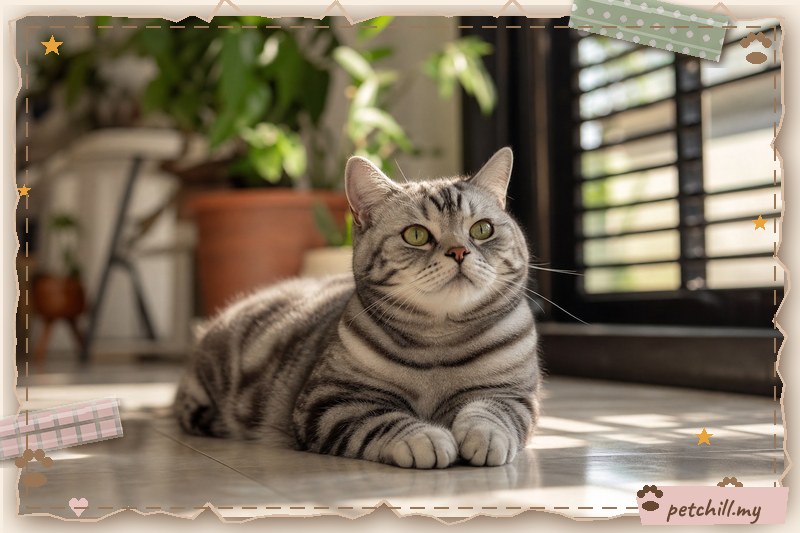
Common myths about American Shorthair colours
| Myth | Reality |
|---|---|
| Bicolour means mixed breed | White markings are a normal dominant pattern recognised in breed standards; breed status comes from registration |
| The more symmetrical the face, the purer the cat | Symmetry is aesthetic and unrelated to pedigree; papers decide pedigree |
| White areas grow larger with age | White distribution is set at birth; what changes is tabby marking depth |
| Bicolour cats are more affectionate | Coat colour genes have no stable link to personality; judge the individual cat |
| Rare colour means better health | Rarity affects supply and price, not health |
A related myth worth knowing: two tabby parents can produce bicolour kittens, and two bicolour parents can produce fully tabby kittens. White markings can be hidden genetically, so 'both parents have white, so the kittens must' is not a safe assumption.
Colour genetics in plain language
Three facts explain most of what sellers talk about:
- Tabby is always there. All cats carry tabby genetics; solid and bicolour patterns mask it rather than remove it. That is why tabby markings sometimes show faintly through a solid coat in certain light.
- Orange is linked to sex. The orange gene sits on the X chromosome, so orange tabby and orange-and-white cats are more often male. Female orange cats exist but are less common.
- Silver is a suppression effect. The silver ground in a silver tabby comes from a gene that suppresses the warm brown ground colour. Silver and brown tabbies share the same underlying pattern; the difference is how the background is coloured in.
Understanding these three points makes colour marketing much easier to see through. A seller who claims a kitten is a 'rare disappearing tabby' is describing something that does not exist.
Colour and your home in Malaysia
Coat colour affects your daily visual experience more than most guides admit. In a Kuala Lumpur apartment with warm wood flooring and a light fabric sofa, a silver tabby's black hairs will be obvious on the sofa, while its pale undercoat will be obvious on dark clothing. A brown tabby blends into dark wood and brown fabric, making it the lowest-visibility choice for many homes. A bicolour with a white chest looks striking but needs a quick wipe after meals, especially in humid weather when drool and food residue sit on the coat.
In a Johor terrace house with a covered patio, afternoon sun can be strong. Pale-skinned cream or calico cats benefit from having a shaded sleeping spot away from direct window sun. During the Penang rainy season, indoor humidity rises and white chest fur can stay damp after grooming, so dry the coat properly after a wipe-down to avoid a musty smell.
None of this is a reason to reject a colour. It is a reason to match the colour to your furniture, your lighting and your willingness to wipe a chest once a day.
Buying and adoption checks in Malaysia
Prices for American Shorthairs vary widely by breeder, state and paperwork, so this guide does not quote figures. Ask a local veterinarian or a reputable breeder for current local pricing, and treat any online price as a rough starting point only. What you can check is process:
- Ask about commonness. A genuinely uncommon colour will have fewer local litters and a higher price. 'Rare, cheap and available today' is logically inconsistent.
- Ask for the colour code and registration number in writing. Paperwork first, price second. Verbal claims about 'limited edition' colours are marketing.
- Do not finalise appearance before three months. Kitten markings and white distribution are still settling; evaluate at three to six months and write an appearance clause into any agreement.
- Check vaccination and deworming dates against the card, and ask which vet clinic issued them.
- For adoption, contact local welfare groups and shelters. A bicolour adult occasionally appears, and temperament matters more than pattern.
If you are bringing a kitten into a multi-cat household, plan a separate room for the first week regardless of colour, and book a vet check within the first few days.
When to see a vet
Colour itself is not a health condition, but some colour-related concerns deserve a vet visit:
- Sun-damaged ear tips or nose leather on pale-skinned cats — ask your vet to check for lesions.
- Persistent dark earwax or head shaking in a white-eared cat — possible mites or infection.
- Heavy tear staining that does not improve with daily wiping — could indicate blocked tear ducts or eye irritation.
- Bald patches or red rings on the belly or face — possible ringworm, which is common in humid climates.
- A white kitten that does not respond to loud sounds — ask your vet about a simple hearing check.
- Any kitten with lethargy, poor appetite or noisy breathing — see a vet promptly, whatever its colour.
Bring the vaccination card and any pedigree papers to the appointment so your vet has the full history.
Quick checklist before you choose a colour
- Decide whether you care more about photo contrast or low-visibility shedding.
- Match the colour to your sofa, flooring and clothing, not to a trend.
- Accept that white markings mean daily wiping.
- Confirm pedigree and vaccination paperwork before paying.
- Meet the kitten in person under natural light.
- Judge temperament with a toy and gentle handling.
- Wait until three to six months before treating the pattern as final.
- Budget for routine vet care, which is the same for every colour.
This article is general information for pet owners and is not veterinary advice. Coat colour and pattern are not diagnoses. If your cat shows skin, ear, eye or breathing problems, consult a licensed veterinarian in Malaysia.