
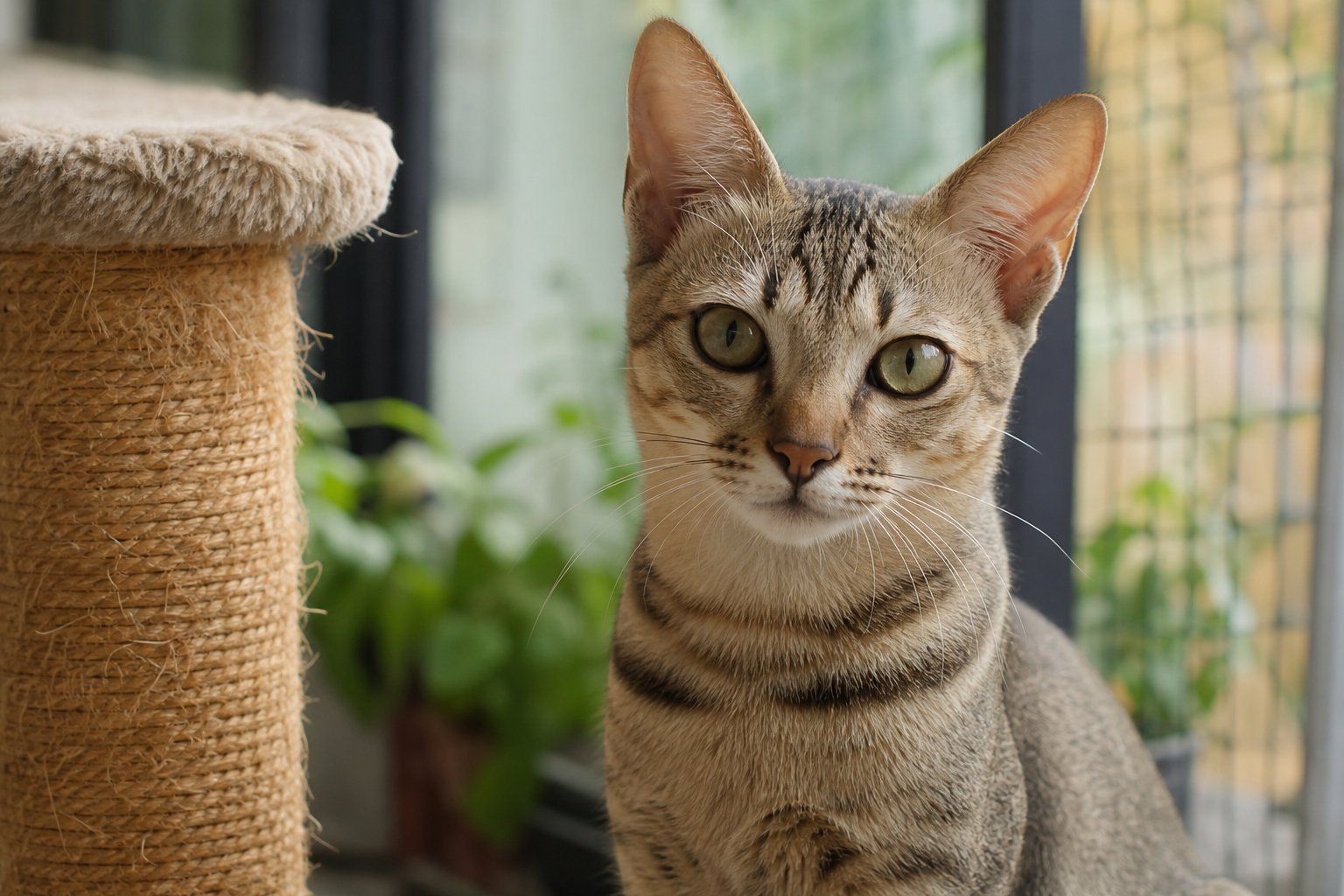
Quick answer: A Ragdoll's appearance is built from six registered body colours (seal, blue, chocolate, lilac, red, cinnamon) multiplied by three patterns — point, mitted and bicolor — with a lynx overlay available on any combination. Every Ragdoll starts life almost white and colours up over one to two years. Pattern changes your grooming routine slightly; it never changes health or personality.
What a Ragdoll Colour Actually Is
New owners often confuse two separate ideas. The body colour is the base hue of the darker areas — seal is a deep brown-black, blue a cool slate grey, chocolate a warmer soft brown, lilac a pinkish grey-violet, red an orange-gold, and cinnamon a light warm ginger. The pattern is where the pigment and the white appear on the body.
Only by multiplying the two do you get a full name. "Seal" alone is incomplete; "seal bicolor" is a full description. Add the lynx (tabby) overlay — visible as an M marking on the forehead and barred legs — and you get names like seal lynx mitted.
| Body colour | What you see on the points | How commonly seen |
|---|---|---|
| Seal | Deep brown-black face, ears, legs, tail; cream body | Most common |
| Blue | Slate grey-blue points; pale grey-white body | Very common |
| Chocolate | Warm mid-brown points with softer contrast | Moderate |
| Lilac | Cool pinkish grey with a delicate tone | Uncommon |
| Red | Orange-gold points; warm cream body | Less common |
| Cinnamon | Light warm ginger, the palest warm tone | Uncommon |
On any of these, the body stays lighter than the points, and the contrast sharpens as the cat matures.
The Three Patterns: Point, Mitted, Bicolor
Point (colourpoint) is the classic look: coloured face mask, ears, legs and tail, a pale body, and no white anywhere. It is the breed's original appearance and still the easiest to maintain, because there are no pale patches to stain.
Mitted adds white on all four feet — neat "socks" — plus a white chin, and often a white tail tip. The back usually stays free of white. Sock symmetry is judged in the show ring, but for a pet it makes no difference to wellbeing.
Bicolor has the largest white area: an inverted V on the face, a white chest, belly and legs. Blue bicolor and seal bicolor are the most photographed Ragdoll looks today, and the ones buyers ask for most.
| Pattern | White markings | Visual impression | Grooming extra |
|---|---|---|---|
| Point | None at all | Darkest, most traditional | Minimal — wipe eye area |
| Mitted | Four white socks, white chin | Neat, balanced | Wipe socks and chin daily |
| Bicolor | Inverted V face, white belly and legs | Brightest, highest contrast | Wipe face and paws daily |
A simple memory aid: white increases from point → mitted → bicolor.
Why Ragdolls Are Born Pale and When Colour Settles
Ragdolls carry a temperature-sensitive form of albinism. The enzyme that produces melanin is inactive at core body temperature but works on the cooler extremities. A kitten therefore develops pigment first on the face, ears, paws and tail, and only later on the trunk.
Three practical consequences follow:
- Colour is a moving target. At two to three months you can read the direction — deep brown or cool grey — but not the final depth. At six months the points are usually clear enough to judge trend. Full evaluation only makes sense at around two years, and chocolate or cinnamon lines can keep deepening until three or four.
- Weather shifts the shade. A cat sleeping through a cooler spell, or near an air-conditioned spot, may show noticeably deeper points. This is physiology, not illness.
- Illness can lighten the coat. Fever, surgery under anaesthesia and pregnancy are all associated with temporary paling. Recovery normally brings the colour back.
Ask the breeder for recent photos of both parents — parental images predict the adult far better than the kitten's current coat.
Matching Pattern to Your Household
| Your situation | Consider | Why |
|---|---|---|
| First cat, low-maintenance priority | Seal or blue point | No white patches; deep points hide everyday marks |
| Dark sofas and dark clothing at home | Seal or blue anything | Light shed hair shows less on matching tones |
| Loves a striking photo | Seal or blue bicolor | High-contrast white V reads clearly on camera |
| Wants something rarer | Chocolate, lilac or cinnamon | Scarcer, so expect a higher price and the same health questions |
| Tight budget | Adoption of a Ragdoll-type crossbred | Most shelter cats are already neutered and vaccinated |
Three honest questions before you commit:
- Can you comb for five to ten minutes every day, rising to fifteen during moulting?
- Are you comfortable that the kitten you collect will not look like the cat at two years old?
- Will you set aside a monthly medical sum regardless of which pattern you chose?
If you answered "no" to two or three, the safest route is the most common colour — or adoption. Pattern is one of the most common reasons buyers later regret a choice, because it is the only factor with no bearing on how the cat lives with you.
Grooming Differences by Pattern
Combining frequency never changes: daily, five to ten minutes, extended to fifteen in the two moulting waves. What differs is spot cleaning.
| Pattern or colour | Do daily | Do weekly | Watch for |
|---|---|---|---|
| Bicolor | Wipe the white face and paws with a damp pad | Extra combing through the undercoat | White fur dulling near sunny windows |
| Mitted | Wipe socks and chin after meals | Check socks for trapped litter | Chin blackheads from plastic bowls |
| Seal/blue point | Wipe eye discharge | Gentle cleanse of the oily face mask | Grease shine; skip scented human wipes |
| Lilac/cinnamon | Normal combing | Check for yellowing | Prolonged direct sunlight |
Product notes worth following: use a stainless steel or ceramic bowl rather than plastic, since scratched plastic harbours bacteria that can contribute to chin acne. Use cat-specific cleansers — human wipes carry fragrances and a pH unsuitable for feline skin. A wide-tooth comb plus a mat splitter covers every pattern; keep a slicker brush for the dense ruff behind the ears.
In a Kuala Lumpur apartment with the air conditioner running most of the day, points may stay slightly lighter than in cooler climates, and shedding will be steadier rather than sharply seasonal — so a short daily comb is easier to keep up than a long weekly session.
In Penang's rainy season, humidity plus a white-faced bicolor is a recipe for damp, musty chin fur. Wipe the face after meals, dry the coat fully after any outdoor exposure, and keep the litter area dry so socks do not pick up grit and moisture.
What You Are Actually Paying For
Local prices vary enormously between breeders, pet shops and regions, so treat any figure you read online as a starting point only — confirm current rates directly with a Malaysian breeder, retailer or veterinary clinic before committing.
What does not vary is the logic of pricing:
- Supply drives the premium. Seal and blue point are produced most often, so they are the easiest to find and the easiest to negotiate on. Bicolor and the rarer body colours attract a premium purely because fewer are available.
- Rarity is not a health signal. A cinnamon kitten has no heart, kidney or joint advantage over a seal point. The genes that make a colour uncommon are unrelated to the genes that cause disease.
- Colour premiums do not cover screening. Whichever pattern you choose, you should still see evidence of parent health checks — particularly for the heart and kidney conditions the breed is known to be prone to.
- Adoption changes the maths entirely. Shelter and rehoming cats, often Ragdoll mixes, usually arrive neutered and vaccinated, which removes several startup costs in one go.
A realistic budget also includes the recurring items: quality food for a large-framed cat, low-dust litter, a steel comb and mat splitter, ceramic bowls, dental care, annual vaccinations, deworming, neutering if not done, and a medical reserve. Build the reserve before you build the toy collection.
Terminology You Will Meet When Buying
| Term | What it really means | What to do |
|---|---|---|
| Blue bicolor | Blue body colour + bicolor pattern | Ask for the full registered name in writing |
| Seal bicolor | Seal body colour + bicolor pattern | The highest-contrast classic look |
| Lynx / tabby overlay | Tabby markings added to any colour | Look for the M on the forehead |
| High white | Informal description, not a registered class | Insist the contract states the official term |
| Flame / red point | Informal name for the red colour | Confirm which colour is meant |
| Mitted with uneven socks | A show-ring fault only | No effect on health; ignore for a pet |
| Incomplete points | Points not yet fully developed | Normal under two years; never judge early |
Put the complete official name — for example "seal bicolor" — into the contract. Verbal nicknames are not a specification.
Red flags worth walking away from: an all-black cat labelled a Ragdoll; large random white patches combined with non-blue eyes; a kitten with no point colouring at all at an age when it should be obvious; refusal to show parent health information. Registration documents, not resemblance, are the proof of breed.
The correct order of priorities: health screening first, temperament second, colour last. Reversing that order is the single most common cause of buyer regret.
When to See a Vet
Coat colour change alone is usually harmless. Book a veterinary consultation if you notice any of the following alongside a colour shift:
- Lethargy, hiding, or a noticeable drop in appetite
- Vomiting, diarrhoea, or drinking and urinating far more than usual
- Sudden patchy hair loss, crusting, scaling or intense scratching
- Dull, brittle fur that does not improve with combing
- A pale or yellowish gum, weight loss, or any breathing difficulty
- Eye discharge with squinting, redness or swelling
Also arrange a check if the coat lightens dramatically and does not recover after the illness passes, or if white patches appear where none existed before. Prompt examination matters more than waiting to see whether the colour returns.
Frequently asked questions
Q: How many colours can a Ragdoll have? A: Six body colours — seal, blue, chocolate, lilac, red and cinnamon — times three patterns: point, mitted and bicolor. A lynx overlay can be added to any of them, giving dozens of registered names. Seal and blue remain the most commonly encountered.
Q: Are Ragdolls born white? A: Yes, and it is completely normal. The point gene only works on cooler body areas, so kittens are almost colourless at birth. Points begin developing within weeks and settle around one to two years, sometimes later for chocolate and cinnamon lines.
Q: Can a Ragdoll be pure black? A: No registered Ragdoll is solid black. Seal point comes closest, with very dark points against a cream body. An entirely black cat sold as a Ragdoll is almost certainly a crossbred or mislabelled — request registration documents before paying.
Q: Is a changing coat colour a medical problem? A: Usually not. Cool weather deepens points, and fever, anaesthesia or pregnancy may temporarily lighten them. See a vet if the change is abrupt and comes with low energy, appetite loss, vomiting, scratching or dull fur.
Q: Which pattern is easiest to care for? A: Point, because it has no white patches to stain. Mitted and bicolor need their white chin, face and socks wiped daily and a ceramic or stainless bowl. Combing time is identical across all patterns.
Q: Does buying a rarer colour mean a healthier cat? A: No. Rarity reflects gene frequency and demand only, and has no connection to heart, kidney or other health outcomes. Ask for parent screening records whichever colour you choose, and confirm current local pricing with a Malaysian breeder or retailer.
Related reading
- Cat Breeds in Malaysia: A Practical Guide to Choosing the Right Cat (2026)
- Cat Breeds in Malaysia 2026: 12 Popular Breeds, Personalities and Costs Compared
- Ragdoll in Malaysia: The 8 Real Costs Before You Bring One Home
- British Shorthair Disadvantages in Malaysia: Weight, Shedding and What to Budget
- British Shorthair Price in Malaysia: What You'll Actually Pay (2026 Guide)
- Calico Cats in Malaysia: Is Calico a Breed, and How Do You Tell a Calico, Tortie and Torbie Apart?
- Cat Breeds in Malaysia: 12 Popular Breeds Compared (2026)
- Siamese Cat Malaysia: Temperament, Colours, Care and Costs
- Siamese Cat Downsides in Malaysia: Loud Voice, Clinginess and Separation Anxiety
- Siamese Cat Colours in Malaysia: The Four Point Colours, Pattern Variants and Care by Shade