
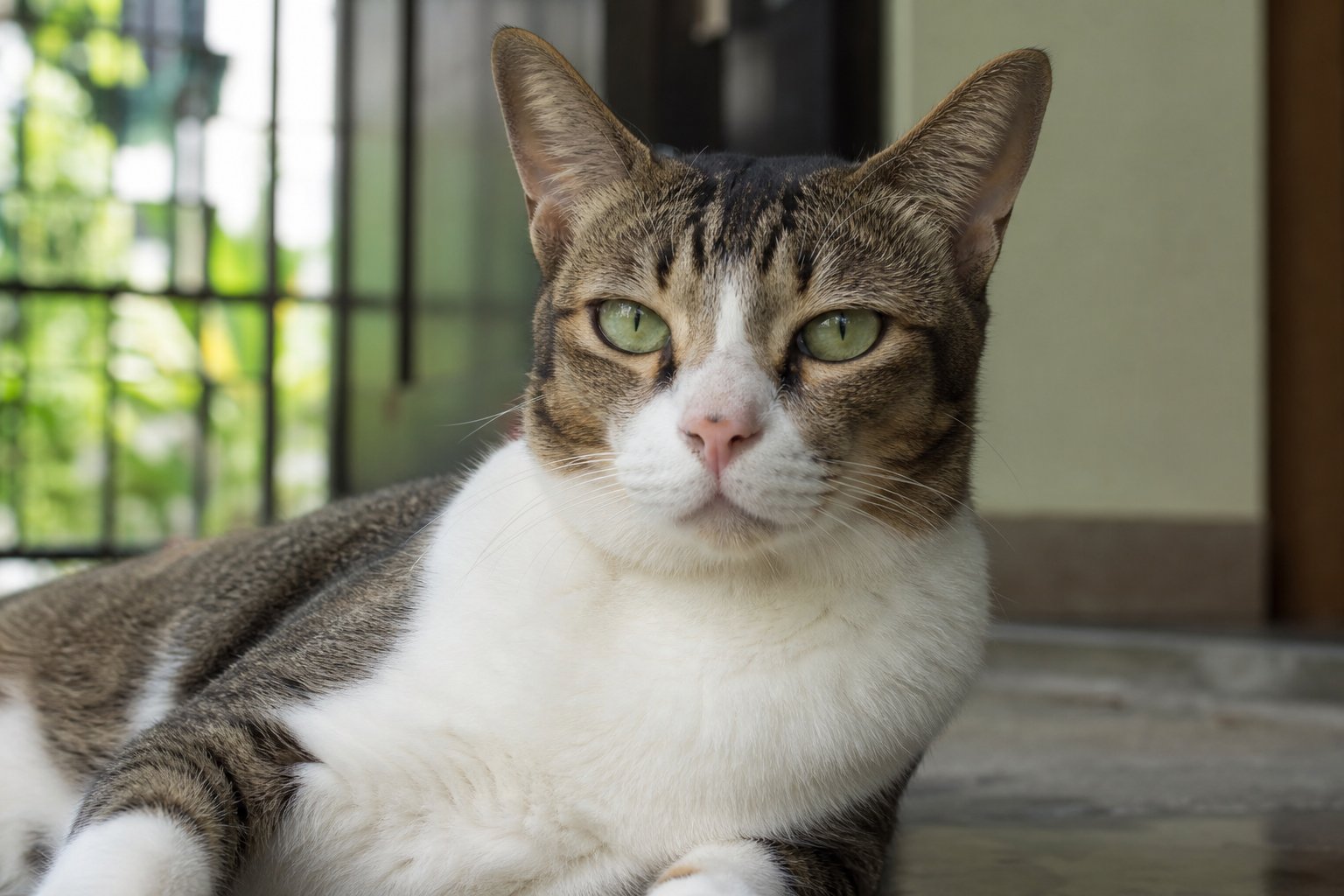
Quick answer: The Abyssinian comes in four recognised colours — Ruddy, Sorrel, Blue and Fawn — and each shows the ticked tabby pattern: no stripes or rings, just several bands of colour along every individual hair, giving the warm "wild rabbit" glow. Ruddy is the most common, Fawn the rarest. Kittens only settle into their adult colour at three to six months, and a pure black Abyssinian does not exist. Buying costs in Malaysia vary by breeder, so ask locally.
What makes an Abyssinian coat different
Most tabby cats advertise their pattern: neck rings, bracelets on the legs, dark bars along the flank. The Abyssinian carries none of that. Its pattern lives inside each individual hair rather than across the body, a trait breeders call ticked tabby. Each hair is banded — light, dark, light again — usually in three to four distinct zones, so the coat reads as one even, warm wash of colour from a distance and as a fine shimmer up close.
Genetically, the effect comes from the agouti signalling gene working with the ticked allele. The result is a coat that catches light almost metallically, which is why the breed is often compared to a wild rabbit or a small cougar. It is also why ticked tabbies turn up in mixed-breed populations: the pattern expresses strongly even without pedigree, and a shelter cat with a banded coat and no stripes may look convincingly Abyssinian.
If you are checking whether a cat truly fits the breed type, three markers matter more than colour: the number of bands along each hair, the absence of striping or chest markings, and the correct nose leather and paw pad colour for that shade. Colour preference is personal; those three markers are the standard.
The four recognised colours at a glance
All four shades share one pattern and differ only in base colour and banding. That makes comparison straightforward:
| Colour | Coat appearance | Nose leather and pads | Availability |
|---|---|---|---|
| Ruddy | Warm brown base with black bands and a copper glow | Brick-red nose with a dark rim, black pads | Most common; the classic look |
| Sorrel | Cinnamon-red base with chocolate bands | Pink nose, pink pads | Second most common |
| Blue | Pale grey base with deep grey bands and a silver sheen | Grey nose, mauve-grey pads | Growing in popularity |
| Fawn | Warm cream base with soft lilac-toned bands | Lilac-pink nose | Rarest; often ordered in advance |
Two practical notes. First, registries do not all stop at the same list — some also recognise silver variants of these shades — so confirm which registry the breeder is registered with before comparing a kitten against any checklist. Second, colour tells you nothing about temperament or health. Every shade is the same energetic, curious, people-focused cat underneath.
Why some colours are rarer
The four shades are really two base colours plus two dilutions:
| Colour | Genetic relationship | What that means for supply |
|---|---|---|
| Ruddy | Base colour | Widest gene pool, steady supply |
| Sorrel | Ruddy with a cinnamon modifier | Fairly steady supply |
| Blue | Diluted Ruddy | The dilution must come from both parents, so fewer kittens |
| Fawn | Diluted Sorrel | Two recessive conditions to line up, so the rarest |
Because a dilute shade requires both parents to carry the dilution gene, Blue and Fawn kittens will always be less frequent than Ruddy and Sorrel. Breeders accordingly tend to keep waiting lists for them.
The practical lesson for buyers: a premium paid for rarity is a supply decision, not a health decision. If you are choosing between two kittens, put your money behind documented parent health screening — including genetic testing for conditions such as pyruvate kinase deficiency and a heart assessment — rather than behind an unusual shade. Screening records can save you far more over the cat's life than any colour premium ever will.
Kitten colour development: the coat you buy is not the coat you keep
Abyssinian colour has a timeline, and buyers who ignore it routinely end up disappointed. Between roughly three and six months, the kitten's baby coat is replaced hair by hair. Before that replacement, the coat is paler, greyer and unevenly banded, and a kitten can genuinely look like an ordinary domestic shorthair with a washed-out coat.
The same applies to the "accessories": nose leather and paw pad colours firm up later, and in Ruddy cats the brick-red nose with its dark rim only becomes obvious after six months. Two habits solve the problem:
- Ask the breeder for photographs of both parents and grown littermates, ideally in daylight, so you can see where the line settles.
- If you are adopting an adult, the opposite applies — the colour is already fixed, so what you see in front of you is what you will live with for the next decade.
Coat colour also keeps shifting slightly in adulthood. Tips exposed to strong sun can oxidise towards copper, especially on Blue and Fawn, and this is reversible once the hair is shaded. Nutrition shows up in the coat too: a glossy, banded sheen usually signals adequate protein and a parasite-free system, while a sudden dullness is a prompt to review diet and deworming rather than to panic about genetics.
What people mean by a "black Abyssinian"
There is no recognised pure black colour in this breed. Two explanations cover almost every search result:
- A very dark Ruddy. Some individuals carry a heavier proportion of black banding, so indoors they read as near-black-brown. In daylight the banding and sheen are still visible, and the shade sits within the normal Ruddy range.
- A Bombay. A separate breed that was developed for a solid black coat with copper eyes and an Abyssinian-like muscular frame — essentially a black-coated cat in the same body style.
The same logic rules out a white Abyssinian: if you see one, it is a mix or a mislabelled cat. When in doubt, ask to see the pedigree registration document and read the English breed name on it.
Care by colour: grooming, sunlight and coat gloss
Structurally, all four colours need the same routine. The coat is short and single-layered, so it mats little and sheds moderately. A weekly pass with a rubber grooming comb removes dead hair and spreads the natural oils that make the banding shine; baths are rarely needed because the breed keeps itself clean.
Colour creates only two visual differences:
- Sun-oxidised tips. Lighter shades show coppery ends more readily after sun exposure. It is harmless and reversible — a sheer curtain or a window perch out of direct midday light is enough management.
- Shedding visibility. Darker hairs show on pale floors and pale hairs on dark furniture. If you have a dark fabric sofa, Blue and Fawn will look tidier between combings; if your home is light timber, Ruddy and Sorrel tend to disappear less.
More important than either is coat gloss. The metallic sheen across a healthy Abyssinian coat functions like a status report: good protein intake, clear skin, no heavy parasite load. If the gloss fades while diet and parasite control are unchanged, treat it as a signal to book a check-up rather than to buy a supplement.
Matching colour to your home and your lifestyle
Colour choice is partly an interior decision. Lighting changes how a shade reads more than most buyers expect:
| Home condition | Better-matching shades | Why |
|---|---|---|
| Warm-toned lighting, light timber, cream walls | Ruddy, Sorrel | Red-brown tones sit in the same family and photograph well |
| Cool white light, north-facing windows, dark sofas | Blue, Fawn | Grey-silver and cream stay clean; warm browns can look muddy |
| Mixed lighting across rooms | Ruddy | Mid-tone shades hold up in both warm and cool light |
| Want the coat sheen in photos | Ruddy | Highest contrast between banding and base |
Ask the breeder for photos of the same kitten under different light — one Sorrel can look like two different cats under a warm lamp versus morning daylight.
The lifestyle fit question matters more, though. Abyssinians are high-energy, interactive cats that want to participate in whatever you are doing:
- Great fit: owners who can offer 20–30 minutes of genuine play daily, homes with vertical space (a tall cat tree, wall shelves, a window perch), and families with children who have been taught not to grab or squeeze.
- Poor fit: homes empty for long stretches, anyone wanting a quiet lap ornament, or apartments with no room for climbing furniture. An Abyssinian with no outlet will invent its own — bookshelves and curtain rails are popular choices.
If you are weighing this breed against others, here is how it compares:
| Breed | Activity level | Vocalness | Coat appeal | Notes |
|---|---|---|---|---|
| Abyssinian | High | Medium | Four ticked tabby shades | Needs vertical space and daily interaction |
| Bengal | Very high | Medium-high | Rosetted spotted pattern | Strongest visual impact, most demanding |
| Siamese | High | High | Pointed colour | Very social, least tolerant of solitude |
| Oriental Shorthair | High | High | Extremely wide colour range | Similar energy to Abyssinian |
| Russian Blue | Medium | Low | Single blue-grey coat | Calmer choice for quieter homes |
A simple self-check before committing: can you play with the cat daily, can you fit a full-height cat tree, and can you accept a 6 a.m. breakfast call? If two of the three answers are no, a calmer breed will suit you better.
Buying, adopting and budgeting in Malaysia
Prices in Malaysia differ widely between breeders, lineages and regions, and rare shades usually sit at the top of the range — so treat any figure you see online as a starting point and request current quotes directly from Malaysian breeders, clinics and pet retailers.
Adoption deserves equal consideration. Tick-patterned mixed-breed cats appear regularly in shelters, most with a Ruddy-like base, and they often look around eighty per cent like a pedigree Abyssinian at a fraction of the cost. Colour selection is basically off the table when adopting, but temperament matching is not — and temperament is what you will live with for twelve to fifteen years.
Budget in layers rather than as one number:
| Budget item | What to plan for |
|---|---|
| Acquisition | Breeder purchase, or shelter adoption fee; rare shades usually cost more |
| First-year veterinary care | Core vaccinations, deworming, microchipping and registration, then annual boosters |
| Neutering or spaying | A one-off cost around six months; ask your clinic for current fees |
| Food | High-protein diet; gloss and banding depend on it |
| Litter | Clumping or tofu litter, ongoing |
| Enrichment | Toys, puzzle feeders, tunnels — these are consumables for this breed |
| Environment | A tall cat tree, wall shelves and a window perch are near-essentials, not luxuries |
| Medical savings | A monthly reserve for dental care and age-related checks |
| Insurance | Optional; read exclusions carefully, especially dental cover |
Two budgeting habits pay off. Set up the veterinary savings as an automatic monthly transfer so the money exists before you need it, and buy the climbing furniture within the first few months of bringing a kitten home. An Abyssinian that learns early where to climb will use that instead of your shelving.
A useful local angle: a Kuala Lumpur apartment with limited floor space makes vertical planning non-negotiable — wall shelves and a tall tree buy back the floor area you do not have. In a Penang terrace house during the rainy season, long wet spells keep everyone indoors, so rotate toys and schedule extra play sessions; a bored Abyssinian with nowhere to run is a chewed-cable risk.
When to see a vet
Routine care keeps most problems small. A sensible timeline for the breed:
| Age | What to arrange |
|---|---|
| 2–4 months | Core vaccination course and deworming |
| Around 6 months | Pre-surgery bloodwork, then neutering or spaying |
| 1 year | Full check-up, vaccine booster, oral examination |
| 2–6 years | Annual check-up; add baseline bloodwork from about three years |
| 7 years and older | Twice-yearly visits covering bloodwork, kidney function and blood pressure |
Ask your Malaysian vet for current fees when you plan these visits, as costs vary by clinic and location.
Book a visit promptly if you notice any of the following:
- Red, swollen or bleeding gum lines — periodontal disease is common in mature Abyssinians.
- A clear change in drinking or urinating quantity, which can signal kidney trouble.
- Hesitation before jumping, stiffness, or a reluctance to use the cat tree.
- Weight loss of more than five per cent within a month — weigh your cat monthly to catch this.
- Coat gloss that fades despite unchanged diet, or any skin scaling or excessive scratching.
- Sudden behaviour change, vomiting, diarrhoea, reduced appetite or lethargy.
Early dental treatment and routine bloodwork are far cheaper than the conditions they prevent from developing unnoticed.
Frequently asked questions
How many colours does an Abyssinian have? Four main colours are recognised under the CFA framework: Ruddy, Sorrel, Blue and Fawn. All four use the same ticked tabby pattern, differing only in base shade and banding. Some registries also list silver variants, so check which registry the breeder is registered with.
Which colour is most common? Ruddy is the most available and is the classic look most people picture. Sorrel is second. Blue has been gaining popularity, while Fawn is the rarest and is frequently sold on a waiting list at a higher price.
Why does my kitten look different from the photos? The adult colour only settles between three and six months. The baby coat is paler and greyer with incomplete banding, and nose and pad colours firm up later. Ask for photos of the parents and grown littermates before deciding.
Is there a black Abyssinian? No recognised pure black shade exists. You are either seeing a very dark Ruddy with heavy black banding, or a Bombay, a separate solid black breed built in a similar body style. Genuine Abyssinians always show banding and sheen.
Does grooming differ by colour? No. All four are short-coated with no dense undercoat and need about one weekly combing. Lighter shades show sun-oxidised coppery tips more clearly, which is reversible with shade. Watch coat gloss rather than shade for health clues.
How much does an Abyssinian cost in Malaysia? Prices vary by breeder, lineage, colour rarity and documented health screening, so ask Malaysian breeders, clinics and retailers for current figures. Ruddy is typically the most affordable; Blue and Fawn often carry a premium and a wait. Adoption is the cheapest route.
This article is general information about the Abyssinian breed and is not veterinary advice. For health, vaccination, dietary or breeding decisions, consult a licensed Malaysian veterinarian.
Related reading
- Cat Breeds in Malaysia: A Practical Guide to Choosing the Right Cat (2026)
- Cat Breeds in Malaysia: 12 Popular Breeds Compared (2026)
- Exotic Shorthair Price in Malaysia: Buying, Adoption and First-Year Costs
- Sphynx in Malaysia: The 7 Real Downsides, Care Routine and Costs Before You Buy
- British Shorthair Colours in Malaysia: Blue, Blue-White, Silver Shaded and Gold, Explained
- British Shorthair Disadvantages in Malaysia: Weight, Shedding and What to Budget
- British Shorthair Price in Malaysia: What You'll Actually Pay (2026 Guide)
- Calico Cats in Malaysia: Is Calico a Breed, and How Do You Tell a Calico, Tortie and Torbie Apart?
- Cat Breeds in Malaysia 2026: 12 Popular Breeds, Personalities and Costs Compared
- Kucing Kampung Care in Malaysia: The Complete Guide to Feeding, Health and Living With a Local Cat
- Maine Coon Genetic Health Screening in Malaysia: HCM, SMA, PKD and GALC Explained