
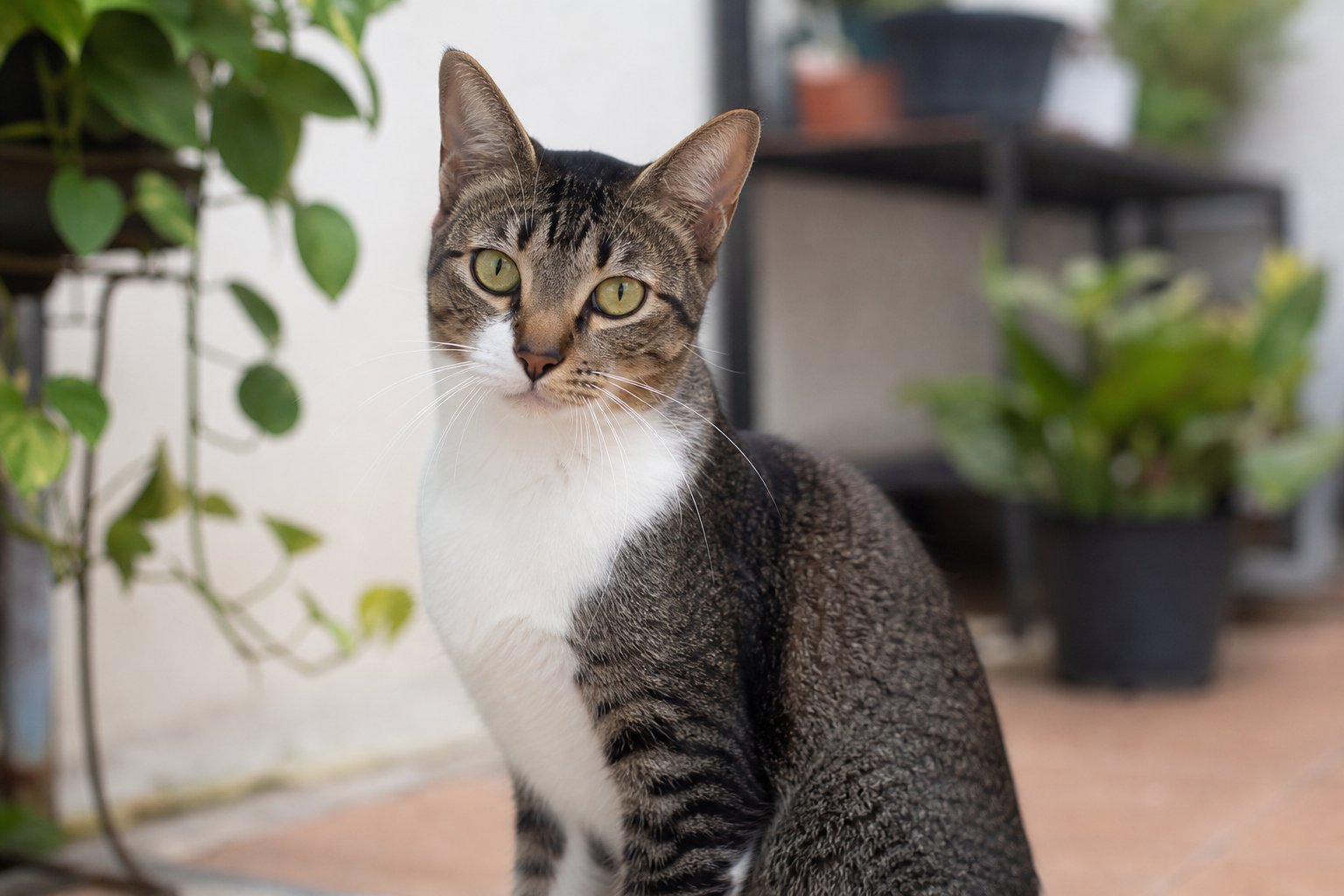
Quick answer: The British Shorthair comes in more than a hundred registered colour and pattern combinations, with solid blue the most common, followed by blue-white bicolor and the tabbies. Silver shaded and gold shaded are popular tipped patterns, not separate breeds. Before paying any premium for a colour, check the parents' health screening and pedigree documents: colour is taste, screening is longevity.
What a silver shaded British Shorthair actually is
A silver shaded cat is not its own breed. It is a colour pattern inside the British Shorthair breed: each hair is close to white along the shaft and carries dark pigment only at the very tip, which produces the soft frosted look people describe as a silver mist. Green eyes framed by a dark rim of pigment around the lids are the classic finishing touch. On a pedigree certificate the breed column reads British Shorthair; the colour column reads silver shaded.
Typical adult weights run about 5 to 8 kg for males and 3.5 to 5.5 kg for females, and the breed is commonly quoted as living 12 to 15 years. The coat is short but double-layered: a dense undercoat beneath a crisp outer coat. That is why shedding season feels far heavier than most people expect from a short-haired cat.
Two points catch buyers off guard. First, tip colour and eye depth take time to settle. Shaded individuals are often two to three years old before the final pattern stabilises, so a kitten photo is unreliable evidence of the adult result. Second, "blue" is a colour description, not a breed label. Russian Blues, Chartreux and ordinary domestic shorthairs can all be blue-grey, so a seller who equates blue fur with pedigree is cutting corners.
The British Shorthair colour map
Registries such as CFA and GCCF accept a very wide range of solid colours, bicolors, tabbies, shaded and smoke varieties. What you actually find in the market is narrower: availability, breeder interest and fashion decide which colours are common in practice. Use this map as your orientation before you start viewing kittens.
| Colour | What you see | Practical availability | Typical eye colour |
|---|---|---|---|
| Solid blue | Even blue-grey all over, dense velvet look | Highest, usually the baseline option | Orange to gold |
| Blue-white bicolor | Blue patches plus white, often an inverted V on the face | High | Orange to gold |
| Silver shaded | Silver-white base with dark hair tips | Moderate, popular with enthusiasts | Green, with dark eye rim |
| Gold shaded | Warm golden base with dark hair tips | Lower, fashion-driven demand | Green or gold |
| Silver tabby | Clear stripes and swirls over a silver ground | Moderate | Gold or green |
| Cream, blue-cream, tortoiseshell | Warm pastel mixes; tortoiseshell is almost always female | Lower | Orange to gold |
| Solid black, white, fawn | Single flat colour, each with its own following | Low to moderate | Varies by colour |
Note the pattern behind the table: solid blue sets the price baseline, blue-white sits slightly above it, shaded and gold colours trade on rarity and trend, while the rarer pastels depend heavily on the individual bloodline rather than the colour name alone.
Blue, blue-white, gold and silver: how they differ
| Point | Solid blue | Blue-white bicolor | Silver shaded | Gold shaded |
|---|---|---|---|---|
| Base colour | Uniform blue-grey | Blue with white patches | Near-white silver | Warm golden |
| Hair tips | Same colour throughout | Same as base | Dark | Dark |
| Eyes | Orange-gold | Orange-gold | Green with dark rim | Green or gold |
| Main care quirk | Loose hair shows on dark fur | White areas stain at chin and eyes | Dense undercoat tangles if ignored | Dense undercoat tangles if ignored |
| Market position | Baseline, best value | Slightly above baseline | Mid to high, enthusiast demand | Usually highest, trend-led |
Blue is the reference point. A well-coloured blue cat with an even coat, round head and deep orange eyes can outshine flashy patterns, and colour uniformity matters more than the colour name itself.
Blue-white earns its popularity for a simple reason: white makes a round face read as even rounder. The three checks are symmetry of the white inverted V across the nose, matching white socks on all four legs, and clean blue patches free of stray spotting. Be aware that bicolor markings adjust as a kitten grows, so a neat pattern at three months is not a guarantee of the adult pattern. Reputable breeders say this plainly in writing.
Silver versus gold comes down to the base coat. Silver has a cold white-silver base; gold has a warm golden base, both with dark tips. Gold currently attracts the strongest demand and therefore the highest asking prices. The premium reflects market mood and aesthetic preference, not superior health or a better constitution. Both colours have identical grooming needs, and both still need cardiac and kidney screening.
What really drives the price in Malaysia
Local prices vary widely between breeders, pet shops and regions, so treat the factors below as the list of questions to ask rather than a figure to expect. Request a written quotation from the breeder you are dealing with, and ask a Malaysian veterinarian or pet retailer for current local rates on food, litter, grooming tools and routine procedures.
| Price factor | What raises the price | What does not |
|---|---|---|
| Documents | Registered pedigree, verifiable parentage | A verbal claim of "purebred" with nothing to show |
| Health screening | Parent heart ultrasound and kidney test reports on file | "The parents are healthy, trust me" |
| Coat quality | Even tip distribution, clean base colour, complete eye rim | A heavily filtered kitten photo |
| Adult reference | Photos of parents at two years or older | Kitten photos only, parents withheld |
| Bloodline | Proven show or breeding line with consistent results | Colour alone, with no lineage information |
| Sex | Sometimes a modest difference within the same line | Sex outweighing coat quality in the quote |
Adoption is a legitimate route, though shaded British Shorthairs rarely appear in shelters, so patience is required if that is your preference.
On the running side, budget for food, litter, deworming spread across the year, grooming tools purchased once, and a monthly medical reserve for heart and kidney checks. Ask your vet for local rates before you commit, and remember that desexing, vaccination and emergency care are separate line items on top of the purchase price.
Which colour suits your home and lifestyle
Colour is the fun part; fit is the part that determines whether the next fifteen years are enjoyable. British Shorthairs are calm, independent and loyal without being clingy, which suits a lot of households. Use this table as a quick filter.
| Household type | Fit | Why |
|---|---|---|
| Nine-to-six working household | Good | Tolerates being alone well; six to eight hours alone is generally manageable |
| First-time cat owner | Very good | Steady temperament, low destructiveness, well-understood health profile |
| Family with young children | Good with guidance | Patient but not keen on being carried; teach children to play instead of hug |
| Someone wanting a lap cat all day | Poor match | This breed prefers being nearby rather than on top of you |
| Household with strong cat allergies | Poor match | The dense double coat sheds heavily during moulting season |
Three-question self-test. Can you accept ten minutes of brushing a day for several weeks each moulting season? Are you comfortable with visible loose hair on dark furniture year-round? Do you want a quiet companion in the same room, or a cat that sits on you constantly? If two answers point toward constant contact, or you cannot commit to the grooming, choose a more interactive or lower-shedding breed instead.
Two local situations worth thinking through. In a Kuala Lumpur apartment, limited floor space plus a dense-coated cat means hair on the sofa is a daily reality, so a good vacuum and a fixed brushing spot matter more than an elaborate toy collection. During the Penang rainy season, humidity rises, undercoats hold moisture longer, and litter trays stay damp; a well-ventilated litter area and thorough drying after any outdoor exposure help prevent skin irritation.
Care differences by colour
| Colour group | Care focus |
|---|---|
| Solid blue | Dark fur shows loose hair quickly; brush several times weekly in moulting season and check that coat shine is even, since patchy dullness can signal a problem |
| Blue-white or mostly white | Wipe the chin daily to prevent grease buildup, clean tear stains gently around the eyes, and check ears regularly |
| Silver or gold shaded | Dense undercoat mats if neglected; brush at least twice a week and keep the skin dry |
| Tabby patterns | Clear markings look best on a complete, protein-appropriate diet; good nutrition shows in coat gloss |
| Cream, fawn and other light shades | Prolonged direct sun through a window can yellow pale fur, so provide shaded resting spots |
Choosing a breeder: health before colour
Shaded colours have attracted casual and backyard breeding in several markets, so screening matters. Walk through these five checks before paying any deposit.
| Check | What passes | Red flag |
|---|---|---|
| Pedigree registration | Registration with a recognised cat registry, breed listed as British Shorthair | Verbal "purebred" claim, no paperwork |
| Parent screening | Heart and kidney test reports you can actually read | Only verbal assurances about health |
| Adult parent photos | Parents photographed at two years or older, supplied willingly | Kitten photos only, parents hidden |
| Colour expectation in writing | Written note that tip colour stabilises around two to three years | A guarantee that the current kitten colour is final |
| After-sales terms | A written health guarantee period with clear terms | No commitment once the cat leaves |
If three or more of these fail, walk away regardless of the price. A premium for a shaded or gold cat should be built on documents and screening, not on a sales pitch.
Four myths worth clearing before you commit. First, shaded is a colour, not a breed, so sellers who advertise a "purebred silver shaded" as though it were a breed should be asked which registry issued the papers. Second, a darker eye rim does not prove purity; it varies between individuals and has no bearing on pedigree. Third, short hair does not mean low maintenance, because the undercoat is thick and moulting season produces plenty of loose hair. Fourth, a dark or pale kitten coat tells you little, since colour settles late and eye colour deepens over time.
Your first ninety days at home. This window is when you build the baseline record that every later health judgement will be compared against.
| Timeframe | Action | Notes |
|---|---|---|
| Week one | Settle the cat in one quiet room, keep the original food unchanged | No abrupt diet switches |
| Weeks two to four | Transition to new food gradually over about seven days; first deworming and faecal check | Ask your vet for the local schedule |
| Month one | Complete vaccination and open a vet record | Keep all certificates in one folder |
| Month two | Establish a brushing routine two to three times a week; watch for tear staining | Buy a pin slicker and an undercoat rake |
| Month three | First baseline health check; discuss a desexing timeline | Note appetite, water intake and litter habits daily |
When to see a vet
Contact a registered veterinarian promptly if you notice any of the following: a sudden drop or spike in appetite, noticeably increased or decreased drinking, vomiting or diarrhoea lasting more than a day, straining or crying in the litter box, squinting or discharge from the eyes, persistent sneezing, excessive scratching or hair loss, unexplained weight change, pale or yellow gums, or a cat that hides and refuses to interact. Eye and skin problems are common in white-patched and heavily coated cats, and early treatment is simpler and cheaper than waiting. For general guidance on responsible pet ownership and animal welfare, you can also refer to the Department of Veterinary Services and the Malaysian Veterinary Council, while the SPCA maintains useful advice on adoption and rehoming.
Colour decides how much you enjoy the cat every day; screening decides how many years you enjoy it for.
This article is general information on cat colours and care. It is not a substitute for professional diagnosis or treatment. For any health concern, consult a registered Malaysian veterinarian.
Related reading
- Cat Breeds in Malaysia: A Practical Guide to Choosing the Right Cat (2026)
- Cat Breeds in Malaysia 2026: 12 Popular Breeds, Personalities and Costs Compared
- Siamese Cat Personality in Malaysia: The Talkative, Clingy, Clever Truth
- Siamese Cat Colours in Malaysia: The Four Point Colours, Pattern Variants and Care by Shade
- Calico Cats in Malaysia: Coat Colour, Not a Breed (2026 Guide)
- Calico Cats in Malaysia: Is Calico a Breed, and How Do You Tell a Calico, Tortie and Torbie Apart?
- Cat Breeds in Malaysia: 12 Popular Breeds Compared (2026)
- Exotic Shorthair Price in Malaysia: Buying, Adoption and First-Year Costs
- Kucing Kampung Care in Malaysia: The Complete Guide to Feeding, Health and Living With a Local Cat