
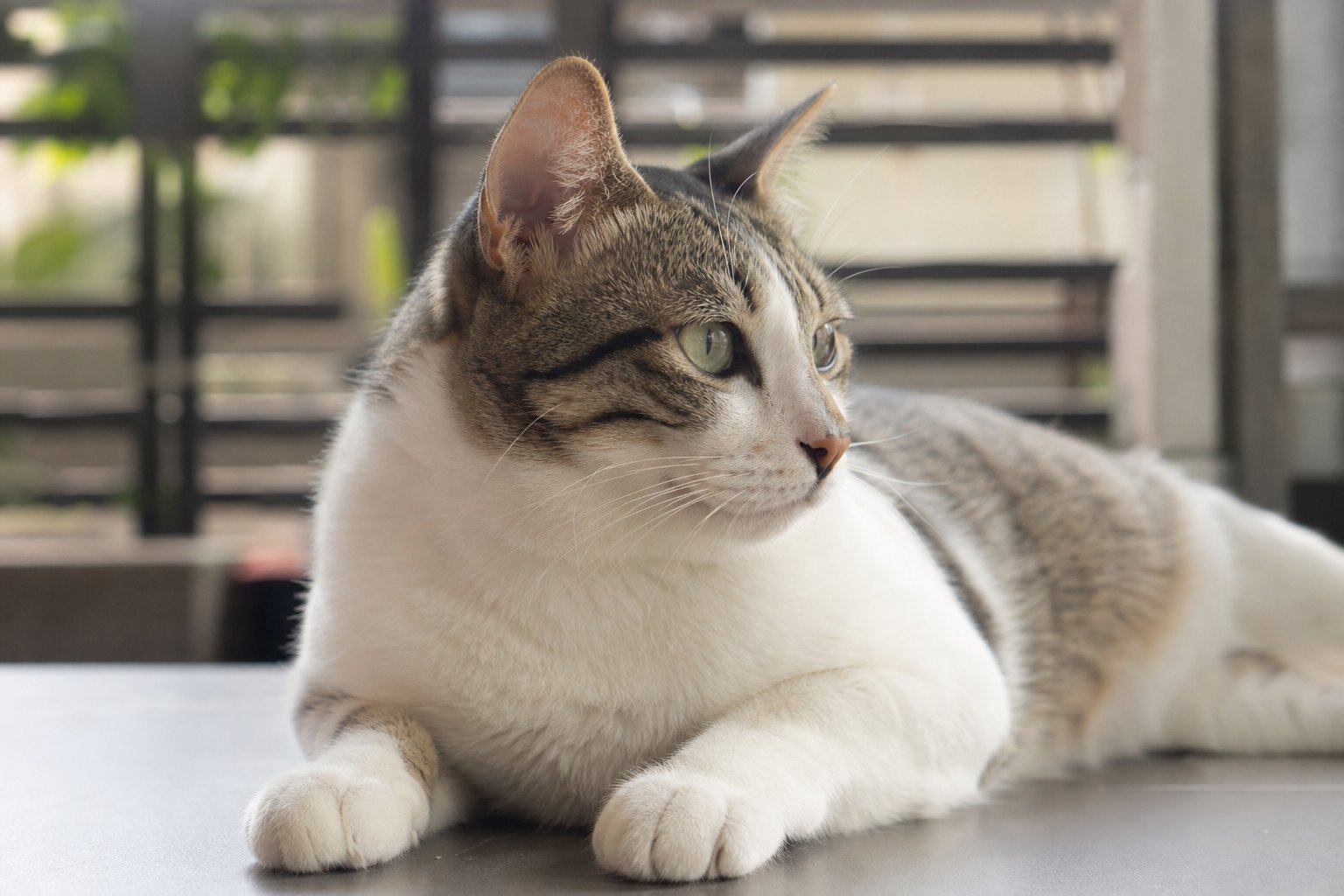
Quick answer: Siamese cats come in four traditional point colours — seal, blue, chocolate and red lynx — plus pattern variants such as lynx point and tortie point. A temperature-sensitive enzyme makes the ears, nose, legs and tail darken as kittens grow and in cooler weather. Colour changes looks only: temperament, grooming and health needs are identical across every shade.
What point colour actually means
A Siamese's pale body with dark ears, a dark face mask, legs and a dark tail comes down to a quirk of chemistry. The enzyme that builds melanin — tyrosinase — works poorly at normal body heat and well at lower temperatures. The trunk of the cat runs warm, so it stays cream or ivory; the extremities run cooler, so they darken. The pattern is written by temperature, not by a separate gene for dark fur.
That single mechanism answers most of the questions new owners ask. Kittens are born almost entirely white or cream, because the womb is uniformly warm and nothing has had the chance to darken yet. Points begin to show within roughly the first week and are broadly settled by two to three months. Later on, a cool, rainy stretch of weather or a room that runs cold air conditioning all afternoon can deepen the coat; that is normal physiology, not a health problem. The same logic explains why a bandaged or shaved patch may lighten for a while — the skin underneath stayed warmer.
One consequence matters before anyone buys: pointed colouring is not exclusive to the Siamese. Balinese, Oriental Shorthair, Snowshoe and plenty of domestic shorthairs carry the same temperature-sensitive pattern. Confirming a Siamese means looking at the wedge-shaped head, the slender body, the almond eyes and ideally registration or pedigree paperwork — never just black ears on a pale body.
The four traditional colours, and the variants on top
Breed registries recognise four core point colours. Everything else is a pattern or a dilution layered onto those four.
| Colour | English name | Body colour | Point markings | Nose leather and paw pads |
|---|---|---|---|---|
| Seal point | Seal Point | Cream to light fawn | Deep brown, almost black; strongest contrast | Dark brown |
| Blue point | Blue Point | Cool grey-white | Blue-grey with a silver cast | Slate grey |
| Chocolate point | Chocolate Point | Ivory | Warm milk-cocoa brown | Pale pink with a brick-red rim |
| Red lynx point | Red Lynx Point | Cream with a warm cast | Orange-red tabby striping | Pink |
Seal point is the classic image most people already carry — the look that reads instantly as "a Siamese". Blue point is cooler and softer, with grey rather than brown in the mask and tail. Chocolate point is warmer and lighter than seal, and it is the pair people confuse most often. Red lynx point combines two things at once: the orange colour gene, and tabby striping inside the points, which is exactly what the word "lynx" signals.
On top of those four, registries also accept pattern variants. Lynx point means tabby striping confined to the points, usually with a clear "M" mark on the forehead; seal lynx point is the most commonly seen version. Tortie point and torbie point add cream or orange patches mixed into the points — because the orange gene sits on the X chromosome, these cats are almost always female. Blue cream point and other dilute tortie combinations are rarer still.
Two practical notes follow. First, these variants change appearance only: temperament, grooming, shedding and health expectations stay exactly the same as any other Siamese. Second, if a seller promotes a "rare colour" at a marked-up price, ask which registry recognises it and what the paperwork actually says. Smoke and shaded silver remain experimental or non-traditional in most standards, so treat any premium attached to them with extra caution. Rare affects scarcity, not health or personality. All four base colours share the same deep blue eyes — eye colour alone never confirms a breed.
How the colour settles over a lifetime
Expect three stages. Kittenhood: nearly white at birth, points appearing in the first week or two, broadly settled around two to three months but still far shallower than an adult's. Young adulthood: colour stabilises with modest seasonal variation — cooler months tend to produce deeper points, and a cat living in constant cold air conditioning may darken all over. Middle and senior years: gradual, permanent deepening of both the points and the body colour. A Siamese that was pale ivory at two can look distinctly darker at eight.
Owners sometimes panic at this and assume something has gone wrong. It hasn't. What does deserve attention is a change in the opposite direction: points that suddenly fade, patchy depigmentation, or white patches appearing at the site of an old injury or a fever. Coat colour shifts should always be read together with appetite, energy, thirst and litter box habits, rather than on their own.
Eyes are worth checking on the same routine. Cloudiness, squinting, discharge, or one eye changing colour all warrant a prompt vet visit instead of a wait-and-see approach.
Telling seal point from chocolate point
This pair is hardest to separate in kittens, so use two checkpoints together: the depth of the point colour, and the colour of the nose leather and paw pads.
- Seal point: points run deep brown toward near-black; nose and pads are solid dark brown. Highest contrast against the pale body.
- Chocolate point: points are a warm milk-cocoa; nose and pads are pale pink with a brick-red or coral rim. Softer and lighter overall.
Identification tips that save arguments later:
- Photograph in daylight. Warm indoor bulbs make chocolate look like seal and wash out blue's silver cast.
- Include the nose and pads in the shot. Body colour on its own is unreliable.
- Wait until about three months. A kitten's colour is still moving, so a confident call at eight weeks is a guess.
- Ask to see both parents. Offspring colour can be roughly predicted from the parents' colours and nose leather, though never guaranteed.
- Use a light when checking dark coats. Skin problems hide in deep seal points, so shine a light during grooming rather than trusting a glance.
Does colour change the care routine?
Not the fundamentals: every Siamese has a short single coat with moderate shedding and needs brushing once or twice a week, plus nail trims, dental care and routine parasite control. What differs is observation — which flaws show up against which background.
| Colour | What shows up first | Practical routine |
|---|---|---|
| Seal point | Dark oil and loose hair against the pale body | Brush 1–2 times weekly; check the light undercoat for grease |
| Blue point | Dandruff and dry flakes against the silver-grey undercoat | Brush 1–2 times weekly; watch skin hydration in dry, heavily air-conditioned rooms |
| Chocolate point | Tear staining and reddish saliva oxidation on the pale face mask | Dry-wipe eye corners daily; wet-wipe the chin after meals |
| Red lynx point | Sun-bleached, faded patches in the warm orange tones | Limit prolonged direct sun at the window; brush weekly |
The staining routine matters more than it sounds. A damp cotton pad wiped along the eye corners each morning, and along the chin after wet meals, takes seconds and prevents the rust-coloured marks that become stubborn if left for months. Staining that will not wipe off, or discharge that turns yellow or green, is an infection signal rather than a cosmetic one — that belongs to a vet, not a grooming kit.
Malaysian conditions add one local habit worth forming. In a Kuala Lumpur apartment running the air conditioner through the afternoon, the cooler indoor air can gradually deepen a Siamese's points; that is expected and harmless. During the Penang rainy season, higher humidity means the coat stays damp longer after grooming, so allow extra drying time and check the skin for flakiness or irritation instead of assuming a damp coat is a clean one. Keep a simple monthly weight log at the same time — it costs nothing and catches problems early.
Before you pay: a practical checklist
Local prices vary considerably with breeder reputation, lineage, registration papers and whether health screening documents are included, so treat any figure you see quoted online as a starting point only and ask a Malaysian vet or reputable retailer what the current going rate is in your area. What does not vary is the priority order.
Check before committing:
- Health screening paperwork for both parents, not just the kittens
- Vaccination and deworming records with dates
- Where the cat has been raised, and how well it is socialised to people, handling and household noise
- Whether neutering is included or planned, and at what age
- The seller's willingness to let you meet the kitten in daylight and see the parents
- A written agreement covering what happens if a congenital problem appears
- Ongoing costs: quality food, litter, parasite prevention, grooming tools and a monthly veterinary reserve
Spend your money on documented health and honest sourcing rather than on a rare shade. A slightly higher price for a colour variant buys nothing in temperament, longevity or vet bills; the same amount directed at genetic screening and a solid start in life pays back every day.
Adoption remains a legitimate route. Shelters and rehoming groups frequently have pointed domestic shorthairs — cats with the pale body, dark points and blue eyes but mixed ancestry — and they are usually already neutered, vaccinated and assessed. If you want a specific registered colour, lower your expectations of the adoption route; if you want the look and the companionship, the pointed cats on rescue lists offer plenty of choice without a rarity premium.
Four colour myths worth dropping
| Myth | Reality |
|---|---|
| Darker points mean a better-bred cat | Depth depends on temperature, age and season; it says nothing about pedigree |
| Siamese are inherently aggressive | They are intensely social and vocal; biting usually traces to over-stimulated play, poor socialisation or pain |
| Any blue-eyed cat is a Siamese | Blue eyes arise from several genetic routes; breed confirmation needs head, body, eye shape and papers |
| Short hair means low maintenance | Shedding still peaks seasonally, so weekly brushing remains necessary |
| White feet mean the cat isn't pure | White spotting is a separate pattern; it affects registration classification, not health |
Colour has no reliable link to personality. Every shade is the same breed standard: chatty, people-focused, and poor at tolerating long solo stretches. If you want a quiet, independent cat, switching from seal to blue will not help — you need a different breed or a different temperament altogether. Households that are out from morning to night should weigh the constant vocal demand against their routine and their neighbours before the coat colour enters the conversation. And remember that "black ears, white body" is a pattern, not a breed: confirm the wedge head, the slender body, the eye shape and the paperwork.
When to see a vet
Point colour itself never needs treatment. What needs attention is a change in it, or the everyday signals sitting behind it.
See a vet promptly if you notice:
- Points or body colour fading suddenly, or patchy white areas appearing where there were none
- Eye discharge that is yellow or green, crusty lids, squinting, or a change in eye clarity
- Tear staining that keeps returning despite daily cleaning, especially with swelling around the eye
- Litter box trouble: frequent visits with little urine, straining, crying, or blood — treat as an emergency, not a wait
- A clear change in thirst or appetite
- Weight loss of more than roughly five percent in a month — weigh monthly and keep a simple log
- Any limping, hiding, or sudden drop in interaction
Routine care is cheaper and calmer than emergency care. Keep a simple schedule: the kitten vaccination series and deworming while young, a health check and booster annually through adulthood, and a more frequent visit pattern — including blood and urine testing — once your cat reaches the senior years. Your vet will set the actual intervals for your cat's own age and condition.
Vet disclaimer: This article is general information about Siamese coat colours and routine care, not a diagnosis. Any change in your cat's colour, eyes, appetite, thirst, weight or litter box habits should be assessed by a qualified Malaysian veterinarian.
Related reading
- Cat Breeds in Malaysia: A Practical Guide to Choosing the Right Cat (2026)
- Siamese Cat Personality in Malaysia: The Talkative, Clingy, Clever Truth
- British Shorthair Colours in Malaysia: Blue, Blue-White, Silver Shaded and Gold, Explained
- Cat Breeds in Malaysia 2026: 12 Popular Breeds, Personalities and Costs Compared
- Ragdoll Cat Colours and Patterns: Point, Mitted and Bicolor Explained
- Siamese Cat Malaysia: Temperament, Colours, Care and Costs
- Siamese Cat Downsides in Malaysia: Loud Voice, Clinginess and Separation Anxiety
- Abyssinian Cat Colours in Malaysia: The Four Ticked Tabby Shades, Kitten Colour Development and Buying Costs
- British Shorthair Disadvantages in Malaysia: Weight, Shedding and What to Budget