
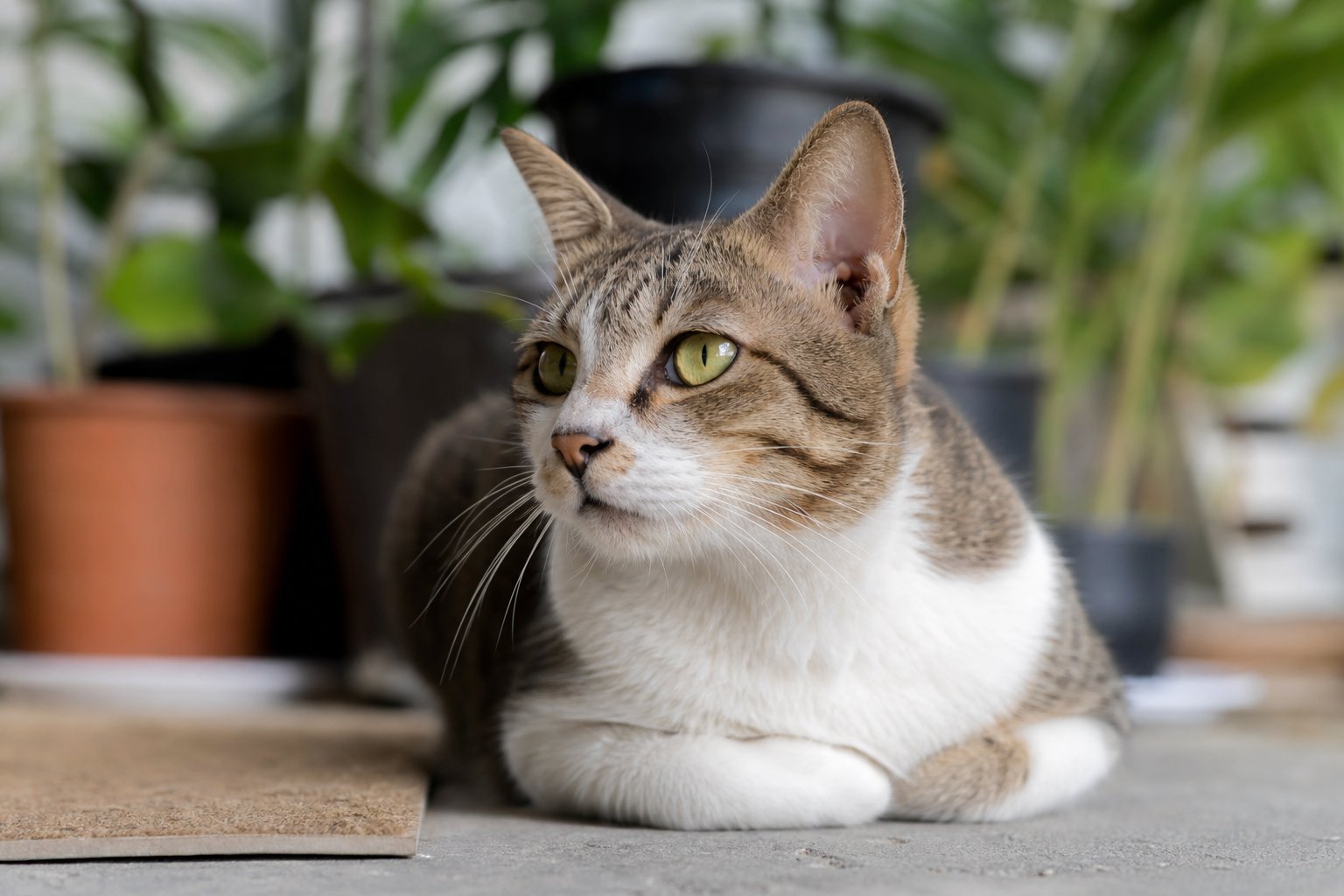
Quick answer: The Siamese is an affectionate, vocal, short-haired cat with blue eyes and colour-point markings — often called the dog of the cat world. It suits owners who are home often and enjoy interaction, but it does poorly left alone for long stretches. Budget for food, litter, routine vet care and a medical reserve; exact prices vary, so ask a Malaysian vet or retailer.
Siamese at a glance
The Siamese is one of the oldest identifiable cat breeds, tracing back to the kingdom once known as Siam, today's Thailand, where the cats lived in royal households and temples. The modern type has a wedge-shaped head, large ears, a long lean body and vivid blue eyes. What endears them to owners, though, is not the show ring — it is a close-lying coat that needs little grooming and a personality that insists on being part of the household.
| Trait | What to expect |
|---|---|
| Origin | Ancient Siam (modern Thailand); long history as a royal companion |
| Size | Medium; lean and muscular, commonly around 3–5 kg |
| Coat | Short, single layer, close-lying; low maintenance |
| Eyes | Blue, almond shaped |
| Classic colours | Seal, blue, chocolate and lilac points |
| Lifespan | 15–20 years |
| Voice | Loud, frequent and varied |
| Energy | High; stays playful well into adulthood |
| Best fit | Homes where someone is around most of the day |
| Poor fit | Long daily absences, or owners who prize silence |
The line worth remembering: the Siamese is not a cat you simply keep. It is a cat you live with.
The "dog of the cat world": personality up close
Owners reach for the dog comparison for a reason. The Siamese tends to:
- Follow you from room to room, including waiting outside the bathroom door.
- Talk constantly, using different pitches for hungry, bored, demanding and curious.
- Learn quickly — sit, high-five, fetch, and even walking on a harness are realistic with patient training.
- Get along with people and other cats, and genuinely prefer company over solitude.
- Read the room, often settling near you when you are unwell or upset.
The flip side is noise and neediness. A Siamese left alone for long, repeated stretches can become anxious, destructive or loudly demanding when you return. In a Kuala Lumpur apartment with shared walls, a midnight vocal performance is not just a household matter — it can become a neighbourly one. Owners who travel frequently, work long shifts outside the home, or want a decorative, self-sufficient pet should weigh this honestly before committing.
For orientation: a Ragdoll is similarly affectionate but far calmer and quieter, while a British Shorthair is independent, undemanding and almost silent. The Siamese sits at the top of both the activity and volume scale. First-time owners do well with the breed provided time is genuinely available; first-time owners who are often out are better served by a more self-reliant breed.
Is a Siamese right for your home?
Run your own household through this table before anything else:
| Your situation | Fit for a Siamese |
|---|---|
| Someone home most of the day, or you work from home | Strong fit |
| Out eight or more hours daily, single-person home | Poor fit unless you add a companion cat |
| You want a quiet home | Poor fit |
| Young children taught to handle gently | Usually a good fit; the breed is social and playful |
| An existing calm, cat-friendly pet | Often works, with slow introductions |
| A family member with allergies | Test first — short hair still sheds noticeably |
| First-time owner with plenty of time | Good fit |
| First-time owner who travels often | Consider a more independent breed |
Three blunt questions settle most cases:
- How many hours a day is someone actually home?
- Can you accept being woken at night, repeatedly, for months?
- Can you set aside a fixed monthly amount for routine care plus a medical reserve?
If two of the three get a no, either reconsider the breed or plan for two cats who can keep each other company. A pair raised together removes much of the separation stress — and halves the number of times a single cat must demand your attention.
Coat colours — and why your Siamese "changes colour"
The four traditional point colours run from darkest to lightest: seal (the classic dark brown mask), blue (cool grey-blue), chocolate (warm light brown) and lilac (the palest, a soft greyish lavender and the rarest of the four). Points appear on the face, ears, paws and tail, against a lighter body.
The colour shift owners notice is a genuine genetic effect. An enzyme involved in pigment production becomes more active at lower temperatures, so the cooler extremities — muzzle, ears, limbs, tail — darken while the warmer body stays pale. Rooms kept very cold by air-conditioning, cooler weather, and simply ageing all deepen the points over time. Kittens also develop their full colour gradually rather than being born with it.
Two reassurances follow. First, this is normal expression of a gene, not a symptom — a darkening face needs no treatment. Second, point depth is not a purity test. Colour intensity varies with temperature and age, even between siblings in the same litter, so it tells you nothing about whether a cat is well bred. What does tell you something: the parents' health screening, the vaccination record and the microchip documentation.
Adopting or buying a Siamese in Malaysia
Local prices vary widely with lineage, age, paperwork and seller, so treat any figure you read online as a rough pointer only. The reliable move is to ask directly — a Malaysian breeder, a pet retailer, or a shelter — and get the current figure plus what it includes in writing.
| Route | What you usually gain | What to check | Suits you if |
|---|---|---|---|
| Registered breeder | Pedigree papers, early socialisation, records on both parents | Heart screening results, vaccination card, microchip, contract terms | You want a specific colour line and full documentation |
| Pet shop or private seller | Immediate availability | Where the kitten came from, age, health, ability to see the mother and littermates | You can verify everything in person before paying |
| Shelter or rescue | Often already neutered, vaccinated and microchipped | Exactly which medical work is included, temperament notes, follow-up support | You want to give a home to a cat that needs one |
Adoption is worth seriously considering: shelters such as the SPCA list cats and kittens regularly, and an animal that arrives already neutered and vaccinated saves you both money and scheduling in the first months. Whichever route you take, prepare three questions and ask them of everyone:
- Have the parents been screened for hypertrophic cardiomyopathy (HCM), the heart condition some lines carry?
- How many vaccinations has the kitten had, and when is the next one due?
- Is there a microchip, and what paperwork comes with the cat?
The Department of Veterinary Services publishes current guidance on pet keeping and record-keeping, and the national animal passport portal explains how pet records are structured — worth checking both before you commit, since requirements and good practice can change.
What keeping one actually costs
Do not fix a figure from an article. Build the budget from quotes. Collect a price list from your vet for a health check, vaccinations, neutering and deworming, then get retail pricing for the food and litter you intend to use. From those two documents you can build a realistic monthly number.
The categories to include:
- Food (dry and wet), litter, and a small allowance for treats
- Routine deworming and flea treatment, spread across the year
- Annual health check and vaccinations
- Enrichment: wand toys, puzzle feeders, scratching posts, a cat tree
- A medical reserve for the unexpected — the single line most owners skip
- Optionally, pet insurance or a dedicated emergency savings pot
Pick your tier in advance, rather than in the middle of an emergency:
| Tier | What it includes | Choose it if |
|---|---|---|
| Basic | Standard dry food, clumping litter, annual check-up, no set medical reserve | You already hold separate emergency savings |
| Standard | Mixed dry and wet food, decent litter, annual check-up, a small monthly medical reserve | Most households |
| Cushioned | Wet-food-led diet, six-monthly checks from senior age, larger medical reserve and/or insurance | You want predictable costs and fewer surprises |
Two rules keep the budget honest: start the medical reserve on day one, not after the first crisis, and decide whether you are saving or insuring — you rarely need to do both heavily.
Daily care: food, grooming, play and company
Food. Siamese are active and lean with a fast metabolism, so they commonly eat more than a similar-weight, laid-back breed. Look for a complete food with a protein content of around 36% or higher, and include wet food for hydration. Feed measured meals two or three times a day rather than leaving food out: bored Siamese are prone to overeating, and excess weight loads both joints and heart. Weigh your cat monthly and adjust portions instead of guessing.
Coat. The short single coat is easy — brush once or twice a week, increase to most days during seasonal shedding, and check the skin for redness or bald patches while you are at it. Bathing is rarely needed; every two to three months, or less, is plenty for an indoor cat.
Play and company. This is the core of Siamese care. Budget at least half an hour of active engagement daily, split into sessions: a wand toy that mimics hunting, a puzzle feeder that slows meals down, and short training drills that burn mental energy as well as physical. A cat that has learned a new trick has had a good day.
Environment. Vertical space matters more than floor area — a sturdy cat tree gives a medium cat the height it wants in a compact home. Add a secure window perch for watching the street, and make sure window screens and grilles are sound. In a Penang rainy season, expect weeks of heavy humidity and downpours: store dry food and litter in sealed containers to stop mould and clumping, keep fresh water available in several places, and use air-conditioning or fans for comfort. The breed feels the cold in strongly air-conditioned rooms, so leave a soft bed or a safe heated mat available — never block airflow or leave heating unattended.
Health checks by age
Siamese are generally robust, but four areas deserve attention: the heart (HCM), teeth, the upper airways, and the urinary tract. Routine screening costs far less than treating an advanced problem, and a set schedule stops you relying on memory.
| Age | Typical focus |
|---|---|
| 8–12 weeks | First vaccination course and deworming; confirm microchip details |
| Around 6 months | Pre-anaesthetic blood test, then neutering |
| 1 year | Full check-up, booster vaccination, dental inspection |
| 2–6 years | Annual check including listening to the heart; weight and dental review |
| 7 years and older | Twice-yearly checks: blood, urine, blood pressure, and heart screening such as an ultrasound |
Exact timing and packages vary between clinics, so confirm the schedule with your own vet rather than assuming one size fits all.
Three free daily observations catch problems early:
- Breathing. Resting breaths that are rapid, laboured, or open-mouthed are never normal.
- Gums. Red, swollen gums or persistent bad breath usually mean dental disease starting quietly.
- Weight. Weigh monthly; a drop of more than 5% within a month warrants a visit.
When to see a vet
Do not wait on any of these:
- Fast or open-mouthed breathing, or gums turning bluish after exertion — possible heart or lung trouble
- Sudden collapse, staggering, or refusing to move
- No food for 24 hours, or repeated vomiting lasting more than a day
- Straining, crying or frequent small urinations — a urinary blockage is an emergency in cats
- Sudden weight loss, a swollen abdomen, or a noticeable change in thirst
- Hiding, growling when touched, or stiffness in the legs — pain signals
- Any eye injury, discharge with squinting, or a marked change in an existing squint
Book soon, without panic, for: gradual weight loss, worsening breath or gum redness, occasional vomiting, litter tray accidents, or fur thinning. When in doubt, a check-up is cheaper than a late diagnosis — and colour changes in the points alone are not a reason to worry.
Frequently asked questions
Q: How much does a Siamese cat cost in Malaysia?
A: Prices vary with lineage, age, paperwork and seller, so ask a Malaysian breeder, pet shop or shelter for current figures. Shelter adoption is usually far cheaper and often includes vaccination and neutering. Budget separately for the first year of food, litter and vet care.
Q: Are Siamese cats suitable for apartments?
A: Yes, if you meet their needs: a cat tree for vertical space, a secure window perch, daily play and company. They are medium-sized and short-haired, so space and grooming are not the issue — noise and loneliness are. Thin shared walls make their loud voice worth considering.
Q: Do Siamese cats meow a lot?
A: Yes. Siamese are famously vocal, with loud, varied calls for food, play and attention, often at night. If you want a quiet home, think twice. Owners who enjoy 'conversations' tend to love it; a second cat also reduces how often one cat demands your attention.
Q: How long do Siamese cats live?
A: Commonly 15 to 20 years, which is long for a cat. Keeping them lean, feeding a protein-rich diet, scheduling annual check-ups from adulthood and twice-yearly screening from around seven years all help. Watch the heart: some lines carry hypertrophic cardiomyopathy risk.
Q: Is it normal for a Siamese cat's face to darken?
A: Yes. A heat-sensitive enzyme in their fur works harder in cooler areas, so the face, ears, paws and tail deepen in colour — noticeably in heavily air-conditioned rooms. It is genetic, not illness. Sudden fur loss or redness, however, needs a vet.
Q: How much should I budget monthly for a Siamese cat?
A: Plan for food, litter, routine deworming and flea treatment, annual check-ups, grooming supplies, enrichment toys and a medical reserve for emergencies. Local prices vary, so collect quotes from your vet and a pet retailer before you commit. Decide your tier — basic, standard or cushioned — in advance.
This article is general information only and is not veterinary advice. For any health concern about your cat, consult a licensed Malaysian veterinarian.
Related reading
- Cat Breeds in Malaysia: A Practical Guide to Choosing the Right Cat (2026)
- Siamese Cat Personality in Malaysia: The Talkative, Clingy, Clever Truth
- British Shorthair Price in Malaysia: What You'll Actually Pay (2026 Guide)
- Calico Cats in Malaysia: Is Calico a Breed, and How Do You Tell a Calico, Tortie and Torbie Apart?
- Cat Breeds in Malaysia: 12 Popular Breeds Compared (2026)
- Cat Breeds in Malaysia 2026: 12 Popular Breeds, Personalities and Costs Compared
- Ragdoll in Malaysia: The 8 Real Costs Before You Bring One Home
- Ragdoll Cat Colours and Patterns: Point, Mitted and Bicolor Explained
- Abyssinian Cat Colours in Malaysia: The Four Ticked Tabby Shades, Kitten Colour Development and Buying Costs