
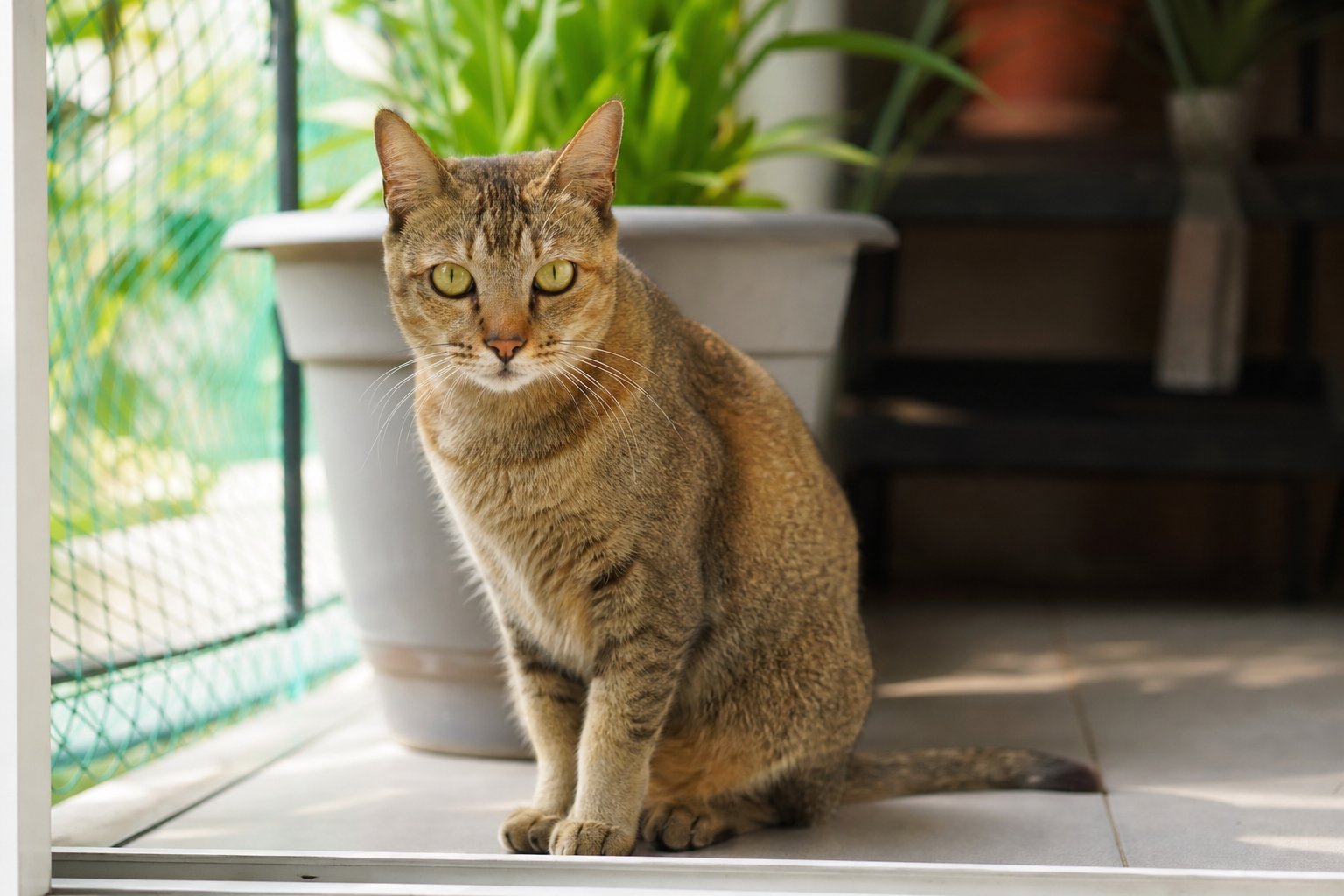
Quick answer: An Exotic Shorthair is the short-coated "easy Persian" — flat face, round eyes, dense short fur, gentle and quiet. Price bands here in Malaysia differ from breeder to breeder and depend on papers, colour and parent health screening, so request written quotes from several sellers. Whatever you pay for the cat itself, budget for supplies, vaccinations, neutering, facial care and a medical reserve as well.
What exactly is an Exotic Shorthair?
The breed was developed in the United States during the 1960s by crossing Persian lines with American Shorthair stock, and it was recognised by the Cat Fanciers' Association in 1966. Breeders often call it the short-haired version of a Persian: the same brachycephalic (flat) muzzle, big round eyes and cobby body, but a coat that needs far less daily combing.
| Trait | Detail |
|---|---|
| Origin | United States, 1960s; CFA recognised 1966 |
| Typical lifespan | 12–15 years |
| Adult weight | Males 4–5.5 kg, females 3–4.5 kg |
| Coat | Short, dense, standing away from the body |
| Facial structure | Flat muzzle; tear staining is common |
| Temperament | Gentle, calm, low activity level |
| Voice | Soft and infrequent |
Three points worth absorbing before you fall for the face:
- Short coat is not zero grooming. The fur is short but thick, so seasonal shedding still needs brushing, and daily eye wiping remains non-negotiable.
- Degree of flatness drives medical risk. The flatter the muzzle, the more likely the breathing, dental and eye problems. Judge a kitten by how smoothly it breathes, not by how cute the face looks.
- Quiet does not mean independent. Activity is low but social needs are not; a cat left alone for long stretches will get bored and gain weight.
How much does an Exotic Shorthair cost in Malaysia?
There is no single Malaysian price. Quotes differ by state, breeder reputation, lineage, colour and how much health screening has already been done — so treat any figure you see online as a starting point, not a rule. Ask at least three sellers for a written, itemised quotation and compare like with like.
| Tier | What you are paying for | What to confirm |
|---|---|---|
| Pet quality | Correct breed type, no pedigree paperwork | Whether first vaccinations and deworming are included |
| Pedigree quality | Verifiable registration number, traceable parents | Parent PKD ultrasound and heart screening results |
| Show quality or uncommon colours | Gold, silver shaded, bi-colour, pointed patterns, or offspring of show lines | What the written health guarantee actually covers |
What widens the gap between tiers: registration papers, rare or fashionable colours, documented parent screening, the breeder's track record, vaccination status at handover, and the kitten's own breathing quality. Extreme flatness is not a premium feature — it is a future vet bill.
Two scam patterns to walk away from: a "free purebred kitten, just pay transport", and a kitten offered free provided you buy a specific brand of food or supplies from the seller. Legitimate rehoming works through a proper process, not a cash transfer to a stranger.
Five documents to demand before you pay
- Pedigree registration. A verifiable registration number with parent details that match the kitten in front of you.
- Vaccination and deworming records. Signed and dated by a veterinarian, with dose dates and the next due date noted.
- Parent health screening. Polycystic kidney disease (PKD) ultrasound plus a heart screening are the critical ones for any Persian-lineage breed.
- Written health guarantee. Cover period, what conditions qualify, and the deadline for reporting problems in writing.
- A visit in person. Cleanliness, the parents' breathing, alertness and eye condition tell you more than any photograph.
Also: keep every promise — vaccination status, neutering, screening results — in a chat message rather than a verbal assurance, and book a basic check-up in the first week home (weight, teeth, eyes, breathing, faecal test). If the kitten's condition does not match the seller's description, acting inside the guarantee window gives you the strongest position.
Adoption: the quieter, cheaper route
Purebred Exotics rarely turn up in shelters, so if you are set on a specific look, be prepared to wait. The realistic alternative is a flat-faced domestic cat with similar features — plenty of local rescues see them, and temperament matters far more than paperwork.
- SPCA Malaysia runs adoption programmes with health checks, vaccination and neutering included, plus a screening process to match cats to homes.
- Local rescue groups and council-linked programmes take in community cats; availability depends on what has been rescued recently.
- Adoption fees are symbolic compared with a breeder's price and normally cover vaccination, deworming and neutering — ask exactly what is included before you commit.
Practical adoption advice: request any known history of eye discharge or noisy breathing, and have a vet assess a flat-faced rescue before finalising. Kittens should be at least 8–12 weeks old with the first two vaccine doses and deworming completed before leaving; reputable groups do not release younger animals.
The first-year budget: lines people forget
The purchase or adoption fee is only the entry ticket. Use this as a checklist when you request quotes from Malaysian vets and pet retailers, since charges vary by state and clinic.
| Budget line | What to include |
|---|---|
| Cat itself | Breeder price or adoption fee |
| Starter supplies | Shallow feeding bowl, litter tray, carrier, scratching post, brush, eye-care wipes |
| First-year vaccinations | Full kitten course plus annual booster |
| Neutering | Pre-surgery bloodwork and the procedure itself |
| First-week health check | Physical exam and faecal test |
| Genetic screening | PKD ultrasound and heart check if the breeder has not done them |
| Monthly running costs | Food, litter, facial care, toys, medical reserve |
Three budget styles. Decide before the cat arrives, not after:
| Approach | Food | Medical reserve | Suits |
|---|---|---|---|
| Lean | Dry-food dominant | Minimal — risky for a flat-faced breed | Households with separate savings |
| Standard | Dry and wet mixed | Monthly set-aside plus annual check-up | Most families |
| Secure | Wet-food dominant, higher quality | Larger reserve, more frequent screening, insurance considered | Owners who want no nasty surprises |
Insurance versus self-funding: policies exist locally, but respiratory and hereditary conditions may be excluded, so read the fine print line by line before signing. For a brachycephalic breed, a dedicated emergency fund is the safer default. Monthly running costs are also affected by where you live — a Kuala Lumpur apartment with air-conditioning and a strict indoor routine generally means more litter and grooming supply usage than a landed home with a caged garden area.
Health timeline and routine checks
Flat-faced breed problems usually arrive gradually, which makes scheduled screening far cheaper than crisis treatment. Build this schedule with your own veterinarian:
| Age | What to do |
|---|---|
| 8–12 weeks | Bring home only after first vaccine doses and deworming |
| 3–4 months | Complete the kitten vaccination course |
| Around 6 months | Pre-neuter bloodwork and neutering |
| 1 year | Annual check-up plus PKD ultrasound if never done — this is your baseline |
| 1–6 years | Annual check-up; watch breathing sounds and tear staining for change |
| 7 years onward | Twice-yearly checks including blood, urine and kidney markers |
Three things to watch daily, at no cost:
- Breathing. Louder snoring at rest, or panting during the day, signals a narrowing airway.
- Eye discharge. Darker colour or an odour suggests infection — wiping alone will not fix it.
- Eating style. Flat-faced cats often eat slowly and drop kibble; a sudden change usually means dental trouble.
Humidity matters too. During Penang's rainy season, sustained damp air can aggravate breathing and soften tear stains, so increase wiping frequency and keep the litter and feeding area dry.
When to see a vet
See a veterinarian promptly — same day or emergency care — if you notice any of these:
- Open-mouth breathing, effortful breathing, or a bluish tinge to the gums
- Breathing difficulty during sleep that wakes the cat
- Squinting, swelling, or eye discharge that is coloured or smells foul
- Repeated sneezing, nasal discharge, or a head tilt
- Sudden appetite loss, vomiting, or drinking and urinating noticeably more
- Straining in the litter box with little urine passed
- Lethargy, unexplained weight change, or a coat that stops being groomed
Do not start any eye drops, decongestants or supplements on your own advice; brachycephalic cats react badly to unauthorised medication, and a proper diagnosis needs a physical exam.
Is an Exotic Shorthair right for your home?
| Owner type | Fit | Why |
|---|---|---|
| First-time owner wanting a calm cat | Good | Steady temperament, no destructive zoomies, rarely loud |
| Working household, out most days | Workable with setup | Needs scheduled feeding, a puzzle feeder and company when home |
| Family with young children | Good | High tolerance; usually walks away rather than striking |
| Owner wanting active play sessions | Not ideal | Low drive; interest in wand toys lasts only minutes |
| Tight budget covering food only | Not advised | Flat-faced medical reserves are a necessity, not an option |
Reverse self-test — answer honestly:
- Can you commit to wiping your cat's eyes every single day for fifteen years?
- Can you set aside a fixed monthly amount for medical costs without touching it?
- When you see an extremely flat face, will you still choose the kitten that breathes most easily?
If two of the three answers are no, this breed is probably not your best first cat.
Buying versus adoption, side by side:
| Factor | Buying from a breeder | Adopting from a shelter |
|---|---|---|
| Upfront cost | High, varies with tier | Symbolic fee, usually inclusive |
| Predictability | Known lineage and type | Appearance and age vary |
| Health paperwork | You must verify it yourself | Vaccination and neutering typically included |
| Waiting time | Shorter for common colours | Longer for any specific look |
| Daily commitment | Facial care and screening either way | Same care needs if flat-faced |
A realistic daily routine: morning eye wipe and fresh water; shallow bowl feeding at set times; a short play session before your evening meal; litter check; evening wipe and a quick brush twice a week; a weekly weigh-in so creeping weight gain is caught early. Consistency, not expensive products, is what keeps a flat-faced cat comfortable.
Whichever route you take, you are signing up for more than a decade of monthly commitments. Work out that number properly before you commit — it is far easier than discovering halfway through that the budget was never there.
Related reading
- Cat Breeds in Malaysia: A Practical Guide to Choosing the Right Cat (2026)
- Cat Breeds in Malaysia: 12 Popular Breeds Compared (2026)
- Maine Coon in Malaysia: 8 Real Drawbacks and How to Handle Them
- Abyssinian Cat Colours in Malaysia: The Four Ticked Tabby Shades, Kitten Colour Development and Buying Costs
- British Shorthair Disadvantages in Malaysia: Weight, Shedding and What to Budget
- Calico Cats in Malaysia: Is Calico a Breed, and How Do You Tell a Calico, Tortie and Torbie Apart?
- Kucing Kampung Care in Malaysia: The Complete Guide to Feeding, Health and Living With a Local Cat
- Siamese Cat Downsides in Malaysia: Loud Voice, Clinginess and Separation Anxiety
- Sphynx in Malaysia: The 7 Real Downsides, Care Routine and Costs Before You Buy
- British Shorthair Price in Malaysia: What You'll Actually Pay (2026 Guide)