
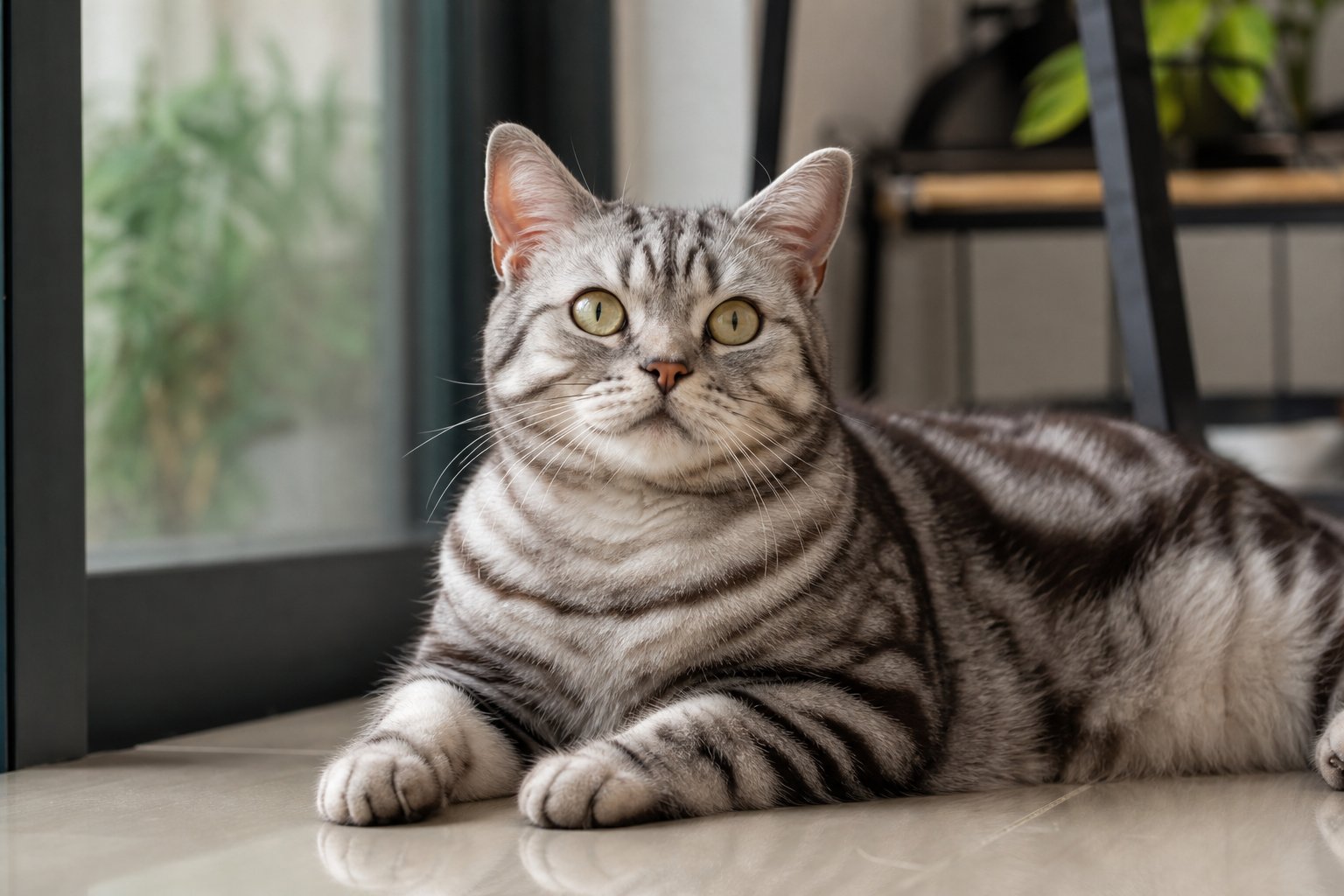
Quick answer: The American Shorthair is a hardy, low-grooming breed, but it comes with seven honest trade-offs: surplus energy, separation-anxiety tendency, easy weight gain, a need for heart screening, heavier shedding than expected, strong prey drive and a tendency to talk. Each has a practical fix, and most are time problems rather than money problems.
Why this breed's downsides are mostly behavioural
The American Shorthair descends from working farm cats in North America, bred for hunting rodents and surviving outdoors. That history gave it a sturdy frame, a thick double coat and a strong drive to stalk, chase and catch. Those are excellent genes for a working cat and good genes for a family pet too, but they come with a catch: a cat built to work needs an outlet. When the outlet is missing, the same energy turns into table-edge archaeology, curtain climbing and 3 a.m. hallway sprints.
This matters in Malaysia because many of us live in apartments and condominiums with limited floor space. A Kuala Lumpur apartment of 800 square feet can absolutely suit an American Shorthair, but only if vertical space and daily interaction replace the outdoor territory the breed was built for. Understanding that trade-off is the whole point of this article.
Disadvantage 1: Surplus energy and self-invented entertainment
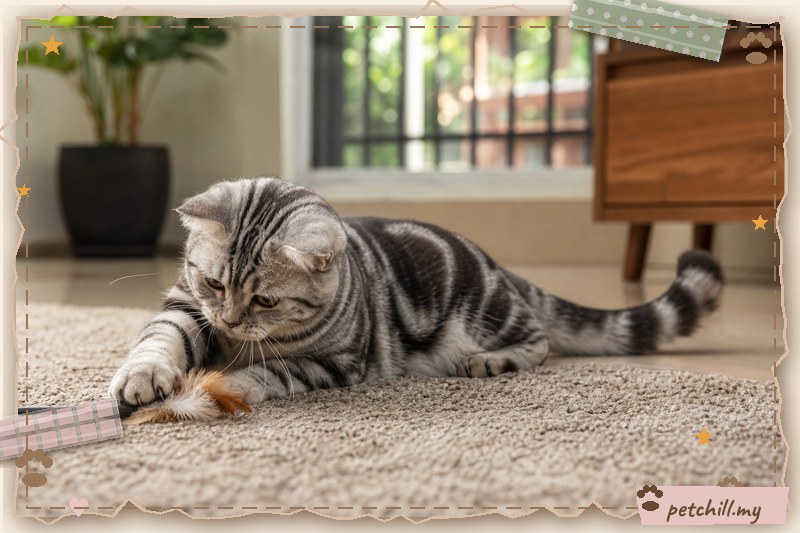
An under-stimulated American Shorthair does not sit quietly. It starts projects. Common reports include pushing objects off counters, pulling tissues from boxes, opening cupboard doors and running laps at night.
The fix: two play sessions a day of 10 to 15 minutes each, using a wand toy that mimics prey: stalk, pounce, catch. Finish with a small treat so the hunt has a conclusion. Add a puzzle feeder for mental work. Rotate toys weekly so novelty does not fade.
What it costs you: time, mostly. A decent wand toy and a couple of puzzle feeders are a one-off purchase, and prices vary, so compare local retailers. The non-negotiable cost is 20 to 30 minutes of your attention daily.
Disadvantage 2: Separation-anxiety tendency
The American Shorthair is generally more people-oriented than many aloof breeds. The flip side is that some individuals dislike long stretches alone and show it through excessive meowing, waiting at the door or inappropriate toileting.
The fix: a fixed household schedule for feeding and play. Play a session before you leave so the cat sleeps afterward. Use puzzle toys as solo entertainment. Teach short absences early, starting with 10 minutes and building up. If you work long hours, consider a second cat or a mid-day visit from a pet sitter.
In a Johor terrace house, a cat may have more space but still be alone for nine hours. Space does not replace company. If anxiety signs are severe, ask your vet about behavioural support.
Disadvantage 3: Easy weight gain that hides well
The American Shorthair is large-framed and muscular. Early weight gain is hard to see by eye because the frame carries it well. You often notice only when the scale does.
The fix: weigh monthly on the same day and track the trend. Feed measured portions based on calorie needs, not free-feeding. After neutering, metabolism drops, so reduce the portion promptly. Use a kitchen scale for food, not a scoop.
Obesity compounds joint, urinary and metabolic problems, so this is the disadvantage that makes every other disadvantage more expensive. Treat it as the foundation of the whole care plan.
Disadvantage 4: Heart screening and HCM risk
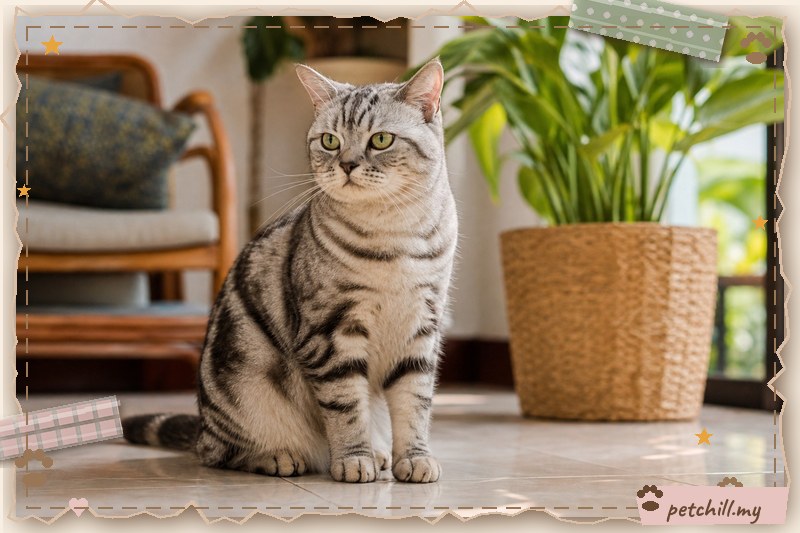
Hypertrophic cardiomyopathy, or HCM, is one of the most common heart diseases in cats. Several breeds, including the American Shorthair, have a known predisposition, and early stages often show no symptoms.
The fix: include auscultation in the annual vet check. If a murmur or rhythm abnormality is heard, ask about an ultrasound. When buying a kitten, request the parents' screening records. After age seven, consider more frequent checks.
Emergency signs: sudden reluctance to walk, weakness in the hind legs, open-mouth breathing or rapid breathing at rest. These warrant immediate veterinary attention.
Disadvantage 5: Shedding is underestimated
Short coat does not mean no shedding. The American Shorthair has a dense undercoat, and seasonal change produces a surprising amount of loose hair on clothes, sofas and in the air.
The fix: brush every two to three days during shedding season and weekly otherwise. A good slicker brush or grooming glove helps. Feed a complete diet with omega-3 support if your vet agrees. Plan vacuuming around the cat, not the other way round.
In Malaysia's humid climate, hair can also mat if the coat is not combed through, so regular grooming is about skin health as much as tidiness.
Disadvantage 6: Strong prey drive in small-pet homes
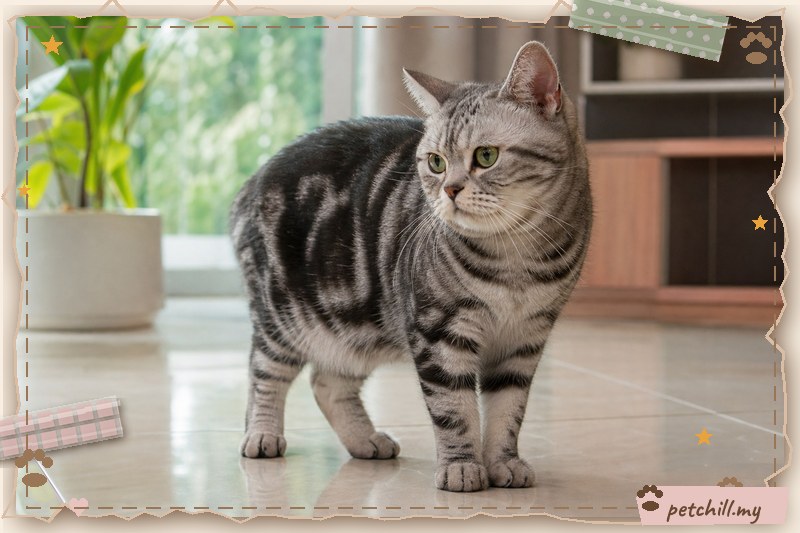
The breed's hunting drive is real. Small moving animals such as fish, hamsters and birds are at genuine risk. Coexisting with a dog is usually fine, but small pets need physical separation, not hopeful introductions.
The fix: cages with secure lids, kept in a room the cat cannot enter. Never let small birds or rodents roam on the floor. Supervise all interactions, and remember that a closed door is more reliable than a stern voice.
Disadvantage 7: Some individuals are talkative
The American Shorthair is not a noisy breed overall, but many owners report a cat that has opinions: about food, about play, about the fact that a can was opened and it was not invited. Compared with quieter breeds, the vocal range is wider.
The fix: do not reward demanding meows with immediate food or attention, because that reinforces the behaviour. Feed on a schedule, reward quiet behaviour, and treat meowing as information rather than a command.
Comparison table: disadvantage, fix and cost direction
| Disadvantage | Practical fix | Cost direction |
|---|---|---|
| Surplus energy | Two daily wand sessions plus puzzle feeders | One-off toy purchase; prices vary locally |
| Separation anxiety | Fixed routine, pre-departure play, sitter if needed | Puzzle feeder, occasional sitter fees |
| Easy weight gain | Monthly weighing, measured portions | Kitchen scale, weight-management diet |
| HCM risk | Annual auscultation, parents' screening records | Annual vet check; ask your clinic for a quote |
| Heavy shedding | Regular brushing, vacuum plan | Brush, grooming glove, vacuum running costs |
| Prey drive | Physical separation for small pets | Cage modification or a closed room |
| Vocalisation | Scheduled feeding, no reinforcement | Time and consistency |
What money can and cannot solve
Three of the seven issues can be softened with products: surplus energy with automatic toys and puzzle mats, separation anxiety with timed feeders and pet cameras, and shedding with brushes and a vacuum plan. Prices vary in Malaysia, so check with local retailers rather than assuming a figure.
What money cannot buy is the daily human interaction, the discipline of a fixed routine and the follow-through on vet screening. Buying a buffer is smart. Treating the buffer as a replacement for your presence is where owners go wrong, and it is usually the difference between a cat that feels easy three years later and one that feels like hard work.
Five honest questions before you adopt
- Can you set aside 20 minutes a day for interactive play? If not, the energy will find its own outlet.
- Does your home have lockable cupboards and surfaces that survive a curious paw? Intelligence plus curiosity is hard on open shelving.
- Is your household routine stable? Separation anxiety is partly prevented by predictability.
- Can you budget for an annual vet check and screening? Preventive care is not optional.
- Can you accept hair on the sofa? Short coat still sheds, especially in seasonal change.
If any answer is a hard no, adjust your lifestyle before adopting rather than after. If you already exercise daily, have vertical space and keep a vet budget, most of these seven issues will barely surface.
When to see a vet
See a vet promptly if your cat shows sudden reluctance to walk, hind-leg weakness, open-mouth breathing, rapid breathing at rest, or a marked drop in appetite and activity. These can signal heart or other serious disease. Also seek help for severe separation anxiety, house soiling, or sudden behavioural change, because behaviour can be the first sign of pain or illness. Annual check-ups with auscultation are the baseline for every cat, and more frequent checks are wise in older cats.
A fair summary
The American Shorthair does not carry the breathing burden of flat-faced breeds or the daily grooming routine of long-haired breeds, and its inherited-disease list is shorter than many pedigrees. Of the seven issues above, five are behaviour-management tasks that cost time, and two are routine screening that every cat should have anyway. The breed is not problem-free, but its problems are mostly manageable with planning.
This article describes general breed tendencies. Individual cats vary. Always consult a registered veterinarian about your cat's health and behaviour; severe behavioural cases may need referral to a qualified behaviourist.