
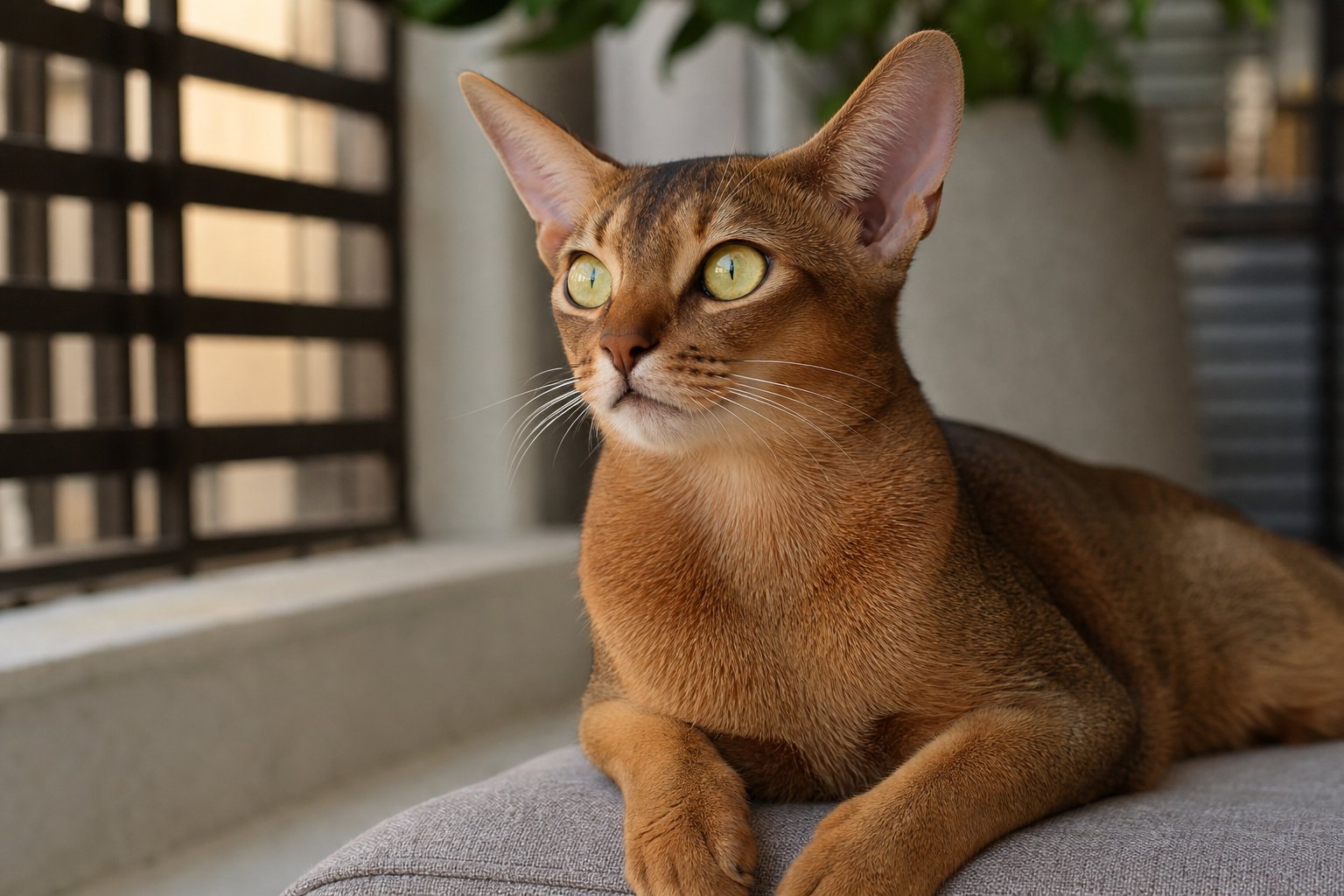
Quick answer: Abyssinian cats generally live 12–15 years, which puts them in the longer-lived, sturdier group of cat breeds. Three breed-specific defences decide whether an individual reaches the top of that range: PK deficiency screening before you buy, kidney monitoring from age eight, and daily dental care. Get those three right and the lifespan upside is bigger than for most cats.
The lifespan range: a robust breed's baseline
Breed registries such as TICA and CFA describe the Abyssinian as a medium-sized short-haired cat with a typical lifespan of 12–15 years. That is normal-to-good for a pedigree cat. The breed's physical build works in its favour: a muscular body, no flat airway problems, no cartilage defects. The basic platform is better than many popular breeds.
What separates one Abyssinian from another is not breed fate but management quality. Cats from lines where both parents were DNA-screened, kept at a healthy weight, with teeth brushed and blood tests done on schedule, often pass 15 years. Conversely, an unscreened cat that develops PK-related anaemia, or whose kidney disease is only found late, will lose both years and quality of life.
The table below maps the life stages and what to focus on at each one. Treat it as a checklist rather than a rigid timetable; your vet may adjust it.
| Life stage | Age | Health focus |
|---|---|---|
| Kitten | 0–1 year | Vaccination, neutering, watch gums and energy (anaemia warning signs), start tooth-brushing habit |
| Adult | 1–7 years | Weight monitoring, daily brushing, annual check-up, dental assessment from age three |
| Mature | 8–11 years | Annual blood test (kidney values) plus urine test, heart auscultation |
| Senior | 12+ years | Six-monthly full check, denser kidney monitoring, senior diet |
Defence one: PK deficiency and anaemia
Pyruvate kinase deficiency (PKdef) means red blood cells cannot get enough energy. The result is chronic haemolysis: red cells keep breaking down and the bone marrow keeps replacing them. Over time this causes anaemia and extra strain on the spleen; severely affected cats may need blood transfusions.
The inheritance is autosomal recessive. A cat with two copies of the mutation can become ill; a cat with one copy stays healthy for life but can pass the gene on. If both parents carry at least one copy, their kittens have a chance of being affected. The Abyssinian is one of the earliest cat breeds recorded with PKdef in the veterinary literature, and DNA testing is now widely available.
Practical steps:
- Before buying, ask the breeder for both parents' PK test records. Two clear results are the safest position.
- If records are missing, test your cat yourself after purchase. A DNA test is a simple cheek swab or blood sample; your vet can advise on cost, which varies locally.
- If your cat is affected or a carrier, avoid oxidative drugs and onion-family poisoning for life, and have blood counts rechecked periodically. A mildly affected cat that is well managed can have near-normal quality of life and lifespan.
In Malaysia, where many Abyssinians are bought from small local breeders or imported, paperwork can be patchy. Do not accept a verbal assurance. A written test result from a laboratory is the only thing that counts.
Defence two: kidneys and urinary system
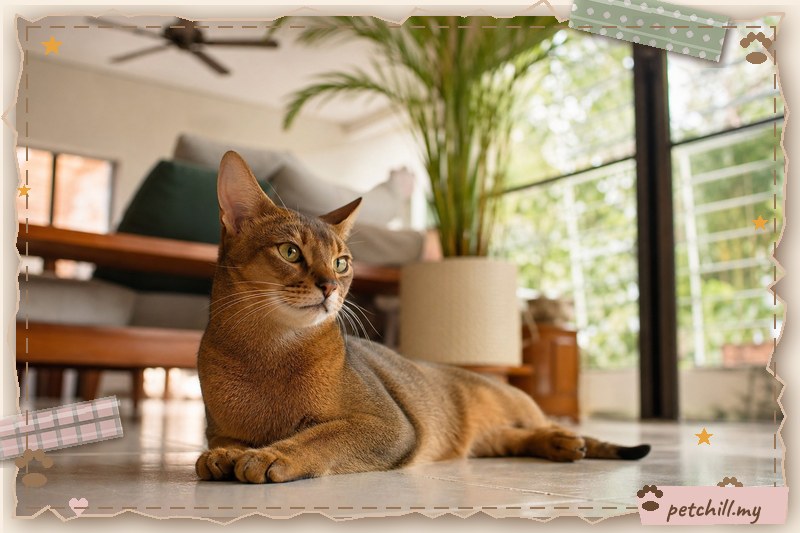
The Abyssinian has reported cases of renal amyloidosis, where abnormal protein deposits in kidney tissue and eventually impair function. It appears in some lines and tends to show up in middle to old age. On top of that, chronic kidney disease is one of the leading causes of death in older cats of every breed, and the Abyssinian is no exception.
Both problems point to the same plan: annual blood and urine tests from age eight. Blood work should include SDMA and creatinine; urine testing shows how well the kidneys concentrate. Warning signs at home include a sudden increase in drinking, larger clumps in the litter tray, reduced appetite and weight loss. Any one of these means book a vet visit now rather than waiting for the annual check.
Early detection of chronic kidney disease leaves a lot of room to manage it: prescription diets, better hydration, blood-pressure checks and regular monitoring. Late detection leaves only slowing the decline. Good water intake should start young: a flowing water fountain, a higher proportion of wet food, and several water bowls around the home all help, especially for a high-energy breed that burns through fluid.
Malaysian homes are often air-conditioned for much of the day, which can reduce spontaneous drinking. Keep water bowls away from food, refresh them daily, and consider adding a little warm water to wet food to increase intake.
Defence three: dental care and weight
The Abyssinian's small lower jaw and crowded teeth mean gingivitis tends to appear earlier than average. FORL (feline odontoclastic resorptive lesions) is reported at a higher rate in this breed. Warning signs are drooling, odd eating posture and a sudden refusal of hard food. Treatment usually means extraction under general anaesthesia, which is a significant cost. The countermeasure starts young: daily brushing with pet enzymatic toothpaste plus an annual oral check, with scaling from around age three as needed.
Weight is the other long-term lever. This is a muscular breed with a good appetite, and free-feeding easily leads to overweight. Excess weight directly increases strain on the heart and joints. Timed feeding plus body condition scoring (you should feel the ribs but not see them) is the standard approach. Both dental care and weight control are slow, steady investments that pay back in avoided vet bills later.
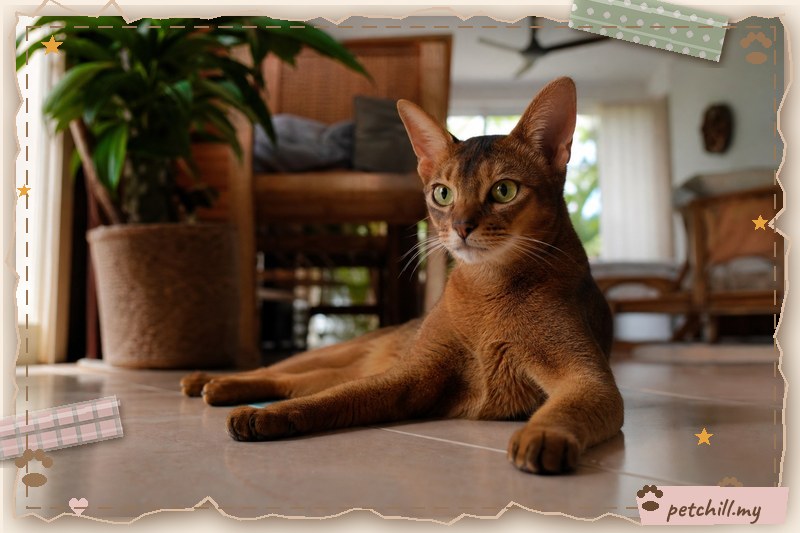
The lifespan checklist, item by item
- Screen the line at source: ask for both parents' PK records and heart ultrasound records before buying.
- Brush daily: dental disease is this breed's big long-term expense; prevention is far cheaper than treatment.
- Ensure water intake: a fountain plus wet food protects the kidneys from a young age.
- Control weight: timed feeding, measured portions, monthly body condition check.
- Keep the cat indoors: this breed is too curious for free roaming; indoors avoids road traffic, infection and accidents.
- Neuter or spay: reduces reproductive disease and behavioural stress.
- Annual health check: upgrade to six-monthly after age eight, with kidney values and early thyroid screening.
- Watch for anaemia signs: pale gums, low energy, dark urine — see a vet immediately, do not wait.
Malaysian environment: what changes the odds
Malaysia's climate and housing shape Abyssinian care in a few practical ways. The tropical heat is not a major problem for a short-haired cat, but the combination of hot afternoons and air-conditioned rooms creates temperature swings worth managing. The real local variable is heat stress: this is a top-energy breed, and midday play sessions near an unshaded window can put extra load on the heart and temperature regulation. Schedule active play for early morning and evening.
In a Kuala Lumpur apartment, floor-to-ceiling windows can turn a sunny corner into a greenhouse. Provide shade, close curtains during the hottest hours, and make sure the cat has a cool tiled area to lie on. In a Johor terrace house, the car porch and garden are tempting, but an Abyssinian should stay indoors; screen windows and secure the balcony rather than relying on the cat not to jump.
During the Penang rainy season, humidity rises and fungal skin issues become more common. Keep bedding dry, wipe down window ledges, and dry the cat thoroughly if it gets wet. None of this is exotic; it is basic tropical cat husbandry applied to a high-energy breed.
Veterinary access also varies. In the Klang Valley, most clinics can run blood work including SDMA and offer dental scaling; in smaller towns, you may need to travel for an ultrasound or a specialist. Ask your vet in advance what they can do in-house and what they refer out. Pet insurance is available in Malaysia for pedigree cats, but read the waiting periods for hereditary conditions and any pre-existing exclusions carefully. Insuring while the cat is young, before any screening results exist, is the sensible window.
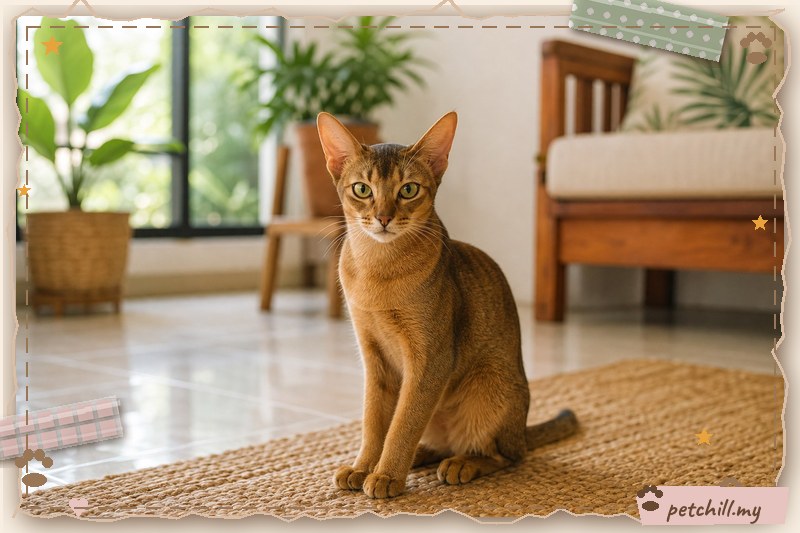
Senior Abyssinian care adjustments
After age 12, two senior traits matter for this breed. First, activity often stays higher than in other cats. Do not remove the climbing route just because the cat is old; instead add non-slip mats and intermediate steps so it can keep its vertical world safely. Second, kidney and dental monitoring need to be denser: a six-monthly blood and urine test plus an oral check.
Switch to an easily digestible senior diet while keeping protein high, because muscle loss is the enemy. Behavioural warning signs include suddenly refusing to jump to a familiar height (joint pain), a surge in drinking (kidney), and bad breath with drooling (dental). These are not normal ageing; all have room for treatment.
When to see a vet
Book a vet visit promptly if you notice any of the following:
- Pale gums, weakness or dark urine (possible anaemia)
- A sudden increase in drinking or urination, or larger litter clumps
- Weight loss despite a normal appetite
- Drooling, dropping food, or refusing hard food
- Bad breath that persists after brushing
- Sudden reluctance to jump or climb
- Any laboured breathing or reduced activity in hot weather
Do not wait for the annual check if a warning sign appears. Early presentation gives your vet far more options.
Frequently asked questions
How long do Abyssinian cats live? Breed standards generally give 12–15 years. With PK screening, kidney monitoring from age eight and daily dental care, many Abyssinians live past 15. The breed is naturally robust; individual lifespan depends mostly on screening and management.
What is PK deficiency and why does it matter for Abyssinians? PK deficiency is an inherited red-blood-cell enzyme shortage causing chronic anaemia. It is recessive, so a cat needs two copies to become ill. Abyssinians are among the earliest recorded breeds. Ask breeders for both parents' DNA test results before buying.
Are Abyssinians prone to kidney disease? The breed has reported cases of renal amyloidosis in some lines, and like all cats is at risk of chronic kidney disease in old age. Annual blood and urine tests from age eight are the standard safeguard. Early detection leaves far more room to manage.
How much should I budget for Abyssinian vet care in Malaysia? Set aside a monthly amount for annual bloodwork, dental cleaning and any genetic monitoring. Local prices vary by clinic, so ask your Malaysian vet for a quote. Screening early is far cheaper than treating advanced disease.
When does an Abyssinian count as senior? Around eight to nine years it enters middle-to-old age, and after 12 it is senior. Switch to six-monthly blood and urine checks, denser kidney monitoring and an easily digestible senior diet. Keep vertical climbing routes but make them non-slip.
How can I help my Abyssinian live longer? Five levers: choose a line with PK and heart screening records, keep weight controlled, brush teeth daily with annual dental checks, ensure good water intake, and run regular blood and urine tests from age eight. All are evidence-based, none rely on luck.
This article provides general information only and is not a substitute for veterinary advice. Breed disease statistics are indicative. If your cat shows anaemia or kidney-related signs, consult a registered veterinarian; genetic screening is always better than guesswork.