
Quick answer
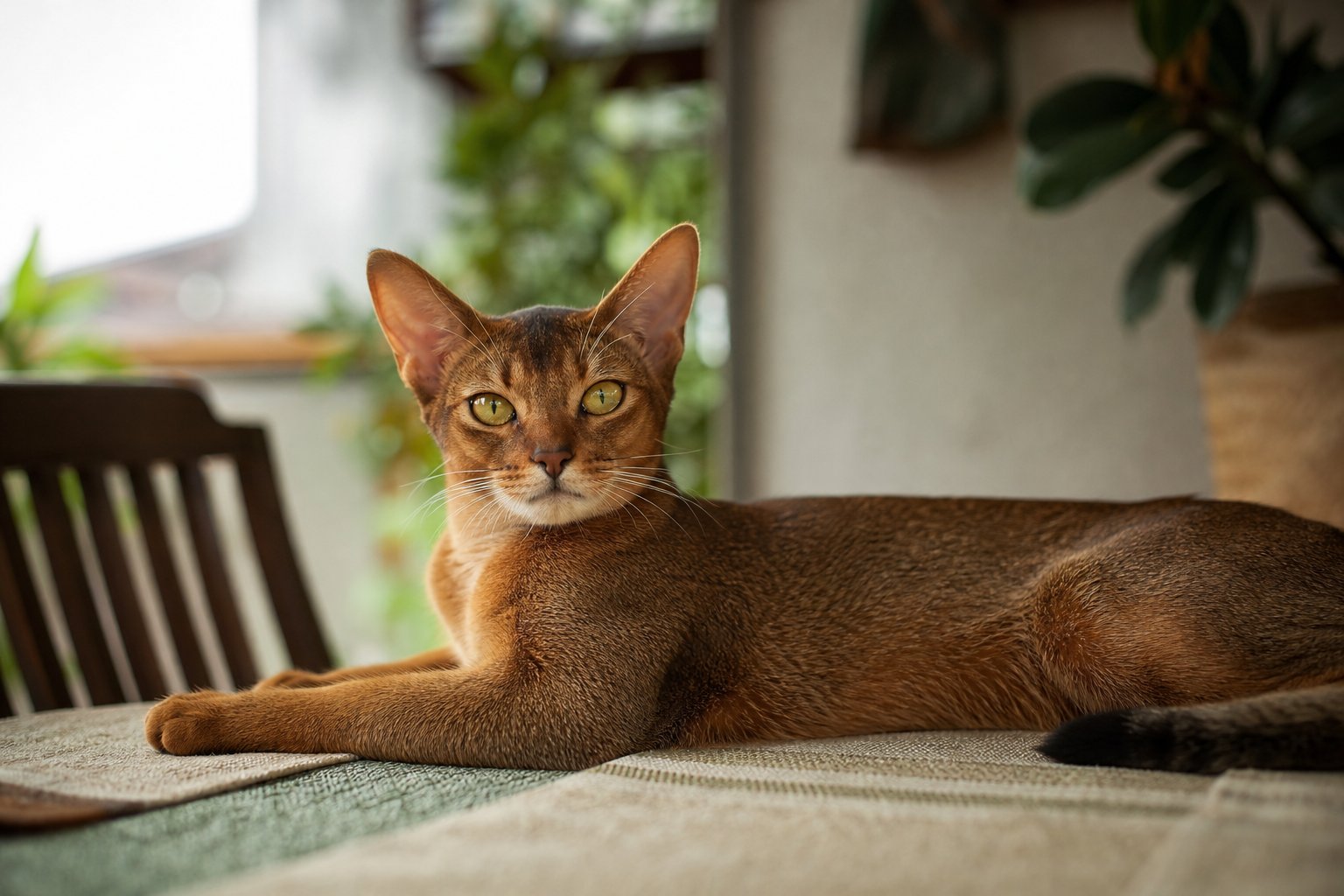
An Abyssinian is a wonderful cat for the right household and a stressful one for the wrong household. The seven real disadvantages are: relentless energy, boredom-driven mischief, early-morning parkour and chatter, PK deficiency anaemia risk, kidney and dental health lines, extreme jumping that removes all safe surfaces, and a dislike of being restrained for cuddles. Each is manageable, but only if you accept it exists.
The seven disadvantages at a glance
| Disadvantage | Severity | Root cause | Practical fix | Cost direction |
|---|---|---|---|---|
| Top-tier energy | High | Hunting-type genetics | Three 15-minute play sessions daily | Mostly time |
| Boredom-driven destruction | Medium-high | High intelligence, low boredom threshold | Puzzle feeders plus vertical routes | Ongoing toy spend |
| Early-morning parkour and chatter | Medium-high | Crepuscular activity rhythm | Pre-bed play, blackout curtains | Almost zero |
| PK deficiency anaemia | Medium | Inherited, breed-specific | Genetic testing, avoid oxidant drugs | Testing fees |
| Kidney risk | Medium | Breed reports of amyloidosis | Blood and urine tests from age eight | Annual monitoring |
| Dental problems | Medium | Small jaw, crowded teeth | Daily brushing, professional cleaning | Periodic dental fees |
| Dislikes being held | Low | Independent companion personality | Respect boundaries, close contact without restraint | Zero |
Malaysian prices for veterinary testing, dental cleaning and toys vary by clinic and retailer, so ask your local vet and pet shop for current figures rather than relying on overseas numbers.
1. Energy that does not switch off
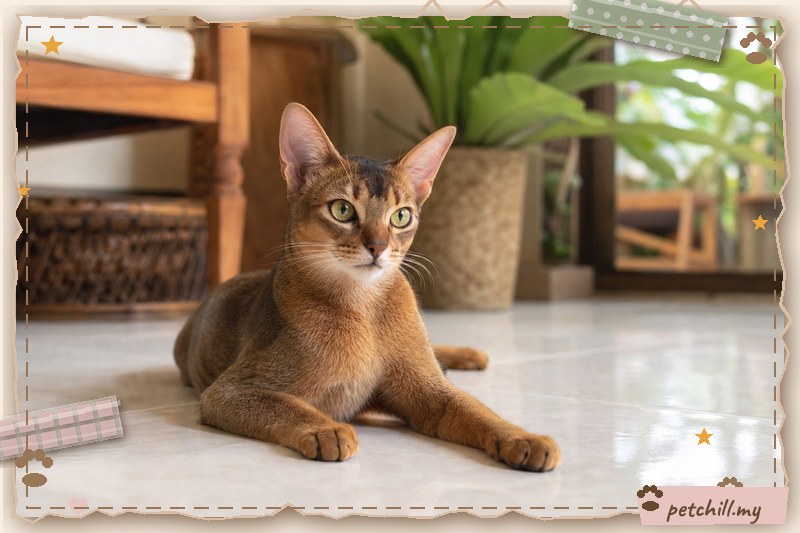
The international breed standard describes the Abyssinian as constantly in motion, and that is clinical-level accurate. They do not sleep beside you so much as on top of the cupboard, along a curtain rail or across your shoulder. They follow you from room to room and take the stairs via the banister.
What this means day to day:
- No floor-level safe zone. Ornaments, glasses and small electronics belong in closed cabinets.
- Exercise is a requirement, not a bonus. Three 15-minute hunting-style play sessions plus two puzzle feeders is a baseline. Skip it and you meet disadvantage two.
- Your living room will grow cat furniture. Minimalist decor does not survive an Abyssinian. Plan for tall climbing structures before the cat arrives.
In a Kuala Lumpur apartment, this energy can be channelled upward. A two-metre climbing route uses vertical space rather than floor area, which suits compact units. The trade-off is that thin shared walls do not block early-morning noise, so neighbours deserve consideration.
2. Boredom is the crime scene
The phrase "cats are low-maintenance" holds for placid breeds and fails completely for Abyssinians. Their mischief follows three patterns: pushing objects off surfaces to test gravity and your reaction, opening cupboards and drawers as a puzzle instinct, and a signature trick of turning on taps to play with water. The common trigger is boredom.
The counter-formula is simple: 30–45 minutes of interactive play daily, vertical routes, and rotating puzzle toys. An Abyssinian with an outlet for its energy rarely becomes destructive. Their intelligence is such that with sufficiently difficult toys you can teach fetch, sit and high-five.
If destruction suddenly worsens, rule out medical causes such as thyroid problems or pain before blaming the environment. A sudden change in behaviour is a vet question, not a discipline question.
3. The early-morning show: parkour and commentary
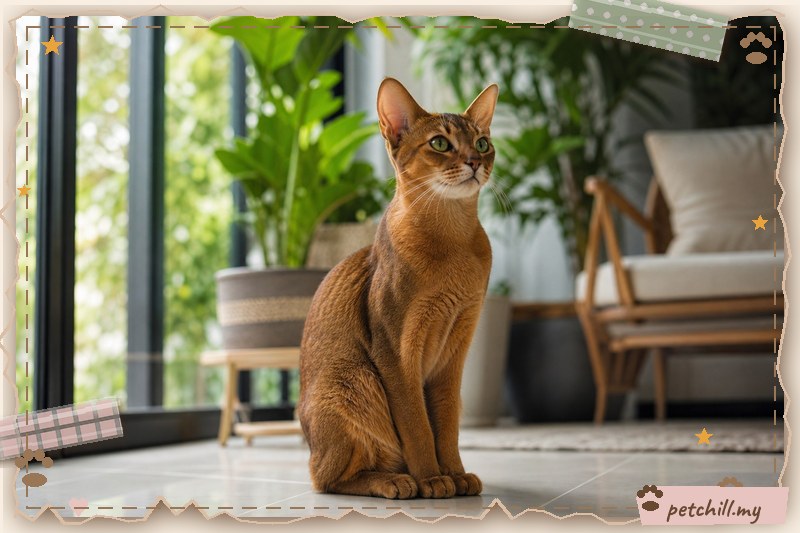
Abyssinians retain a strong crepuscular rhythm, with energy peaks around dawn and dusk. The routine of sprinting three laps from sofa to cupboard top and then standing by your pillow to chirp a sunrise report is torture for light sleepers.
Three practical measures:
- Drain the battery before bed with a 15-minute high-intensity play session.
- Separate yourself from the breakfast request using blackout curtains and an automatic feeder.
- Reward quiet, never noise. Responding to meowing reinforces it; total non-response plus rewards once quiet typically shows results within two weeks.
In fairness, their volume is usually lower than a Siamese. The annoyance is frequency and persistence. People who can tolerate it find it charming; people who cannot will see it as a noise complaint waiting to happen.
4. Medical line one: PK deficiency
Abyssinians have a breed-specific inherited condition called pyruvate kinase deficiency. A lack of the PK enzyme in red blood cells causes chronic haemolytic anaemia. It is autosomal recessive, meaning both parents must carry the gene for a kitten to be affected. Widespread screening has greatly reduced severe cases.
Before adopting, ask the breeder for the parents' PK genetic test records. A cat that carries the gene but is not affected generally lives a normal life but must avoid certain oxidising drugs and toxins; onions and similar foods are directly dangerous. Discuss any medication with your vet first.
5. Medical line two: kidneys and teeth
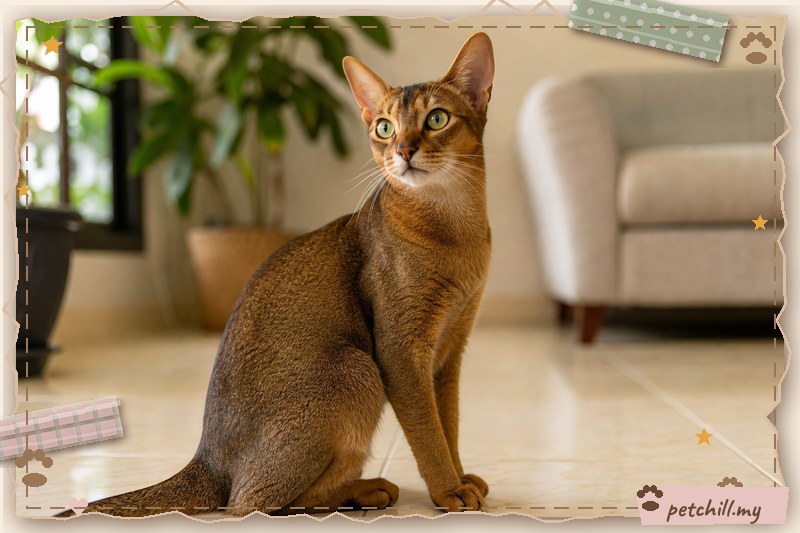
The breed has reports of renal amyloidosis, seen in some lines. Warning signs include a sudden increase in drinking and weight loss. From age eight, annual blood work plus a urine test is the standard approach.
Dental crowding from a small jaw brings a higher risk of gingivitis, and professional cleaning may be needed from around age three. Daily brushing from kittenhood makes a real difference. Some lines also carry HCM reports. With these four items combined, a medical reserve started early is the most practical financial step.
Malaysian veterinary fees for blood panels, urine tests and dental procedures vary by clinic and location. Ask your vet for a written estimate so you can plan.
6. No safe surface anywhere
A typical Abyssinian can jump 100–140 cm from a standing start. That means worktops, stove tops, the top of the fridge and bathroom windows are all within reach. Practical adjustments:
- Kitchen rules from day one. Consistent interruption when the cat enters the cooking zone works better than punishment later.
- Medication and cosmetics in closed cabinets. Never leave pills on a counter.
- Kettles and pots covered and pushed back. Hot liquids are a genuine burn risk.
The same vertical ability is why the breed suits smaller homes. Whether it is a disadvantage or an advantage depends entirely on your furniture layout.
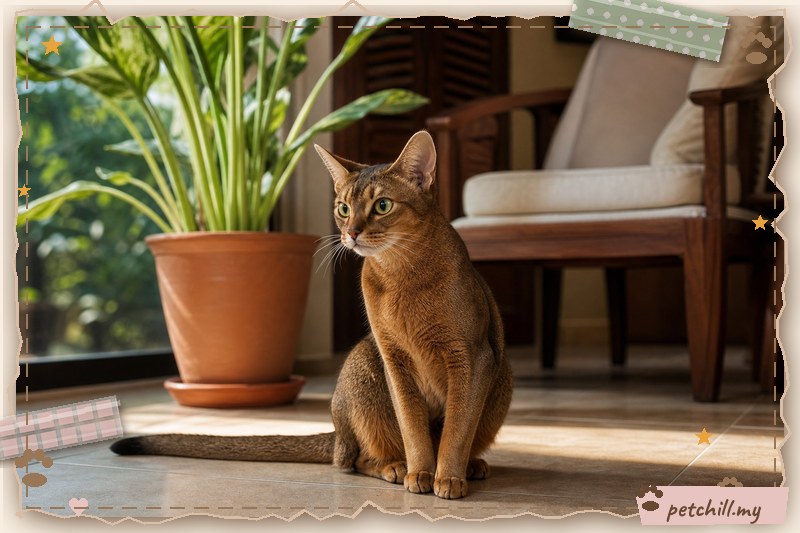
7. Affection on their terms
A common misunderstanding is that a clingy cat equals a cuddly cat. An Abyssinian's affection is the follow-you-around, sleep-on-you type. Being held tightly usually earns a squirm and a complaint. This is not rejection; choosing you as a companion is precisely why they shadow you all day.
Families with young children should teach gentle handling and allow the cat to leave. Never chase. If you want a cat that tolerates being carried like a doll, this breed may need an adjustment period.
Self-matching test: seven honest questions
Before searching for a breeder, answer these honestly. Four or more "no" answers means seriously consider another breed.
| # | Question | A "no" means | Why it matters |
|---|---|---|---|
| 1 | Can you play interactively for 45 continuous minutes daily? | No | Three play sessions are a requirement, not a mood |
| 2 | Will 4–5 am parkour make you break down or shrug? | Break down | The rhythm can be managed, not removed |
| 3 | Are you willing to put all ornaments in cabinets? | No | Surfaces will never be safe |
| 4 | Can you accept a cat that will not be held? | No | Their love is following, not being squeezed |
| 5 | Can you accept claw marks on walls and a sofa launch pad? | Absolutely not | Vertical routes are how they live |
| 6 | Can you set aside a monthly medical reserve? | Difficult | PK, kidney and dental lines need long-term saving |
| 7 | Will your life rhythm change much in ten years (migration, children)? | Yes | Abyssinians adapt poorly to upheaval compared with placid cats |
There is no score to calculate; you already know the answer. The flip side is worth stating: for people who pass all seven, the Abyssinian offers one of the highest returns of any breed. They walk the stairs with you, supervise your cooking and teach you new games, year after year. The disadvantage list sounds alarming, but it really says one thing: this breed needs a very specific type of owner. To the right person, all seven items are simply part of the charm.
When to see a vet
Contact a registered veterinarian promptly if you notice any of the following:
- Pale gums, lethargy or weakness, which may suggest anaemia.
- A sudden increase in drinking or urination, or unexplained weight loss.
- Bad breath, red gums, drooling or difficulty eating.
- Sudden behaviour change such as aggression or hiding, which can indicate pain.
- Any suspected ingestion of onions, medication or toxic plants.
Genetic screening and regular check-ups are far better than waiting for symptoms. Ask your vet which tests are appropriate for your cat's age and line.
A realistic Malaysian setup
In a Johor terrace house, the extra space is useful but the heat and humidity matter. Provide cool, shaded retreats and fresh water in several locations. In a Penang rainy season, indoor play becomes even more important because outdoor time is limited; plan puzzle feeders and climbing routes that work on wet days. Malaysian homes also vary in how much shared wall space they have, so consider noise before adopting.
Frequently asked questions
Is an Abyssinian cat easy to keep?
Only if you enjoy daily interactive play. They are short-haired and generally hardy, but they need 30–45 minutes of active play, a cat-proofed home and tolerance for early-morning activity. People wanting a quiet lap cat will find them one of the hardest breeds.
Are Abyssinian cats noisy?
Their volume is modest but their frequency is high. They chatter, chirp and comment throughout the day, and early-morning greetings are common. You cannot remove the trait, but pre-bed play and rewarding quiet behaviour can reduce it.
Do Abyssinians destroy furniture?
Destruction usually signals boredom, not aggression. High intelligence plus top-tier energy means under-stimulated cats push objects off surfaces, open cupboards and play with taps. Daily play, puzzle feeders and vertical climbing routes greatly reduce damage.
Are Abyssinians prone to illness?
They are generally robust, but four issues matter: PK deficiency (a breed-specific inherited anaemia), renal amyloidosis reports, dental crowding and some HCM reports in certain lines. All can be screened or managed; ask the breeder for parents' genetic test records.
How much does an Abyssinian cost monthly in Malaysia?
Local prices vary widely, so ask a Malaysian vet and retailer for current figures. Budget for routine care plus a medical reserve, and expect higher toy replacement and long-term dental and kidney monitoring costs than for a typical cat.
Who should not get an Abyssinian?
Three groups: people away from home more than ten hours daily without a companion cat, people wanting a calm lap cat, and light sleepers in thin-walled homes. Any one of these makes Abyssinian ownership genuinely difficult.
Vet disclaimer
This article provides general information only and is not a substitute for professional veterinary advice. Always consult a registered veterinarian in Malaysia about your cat's health, diet, medication and genetic testing.
Key takeaways
- Top-tier energy is genetic: three daily play sessions are a requirement.
- Destruction is a boredom signal; puzzle feeders and vertical routes are standard equipment.
- Early-morning parkour can be managed with pre-bed play, blackout curtains and quiet-reward training.
- PK deficiency is a breed-specific question: ask for parents' genetic test records before adopting.
- Kidney and dental care are long-term lines: annual blood work from age eight and brushing from kittenhood.
- No surface is safe: fragile items in cabinets and heat sources managed from day one.
- Their love is following you, not being held; set expectations correctly and this breed is one of the most engaging companions.