
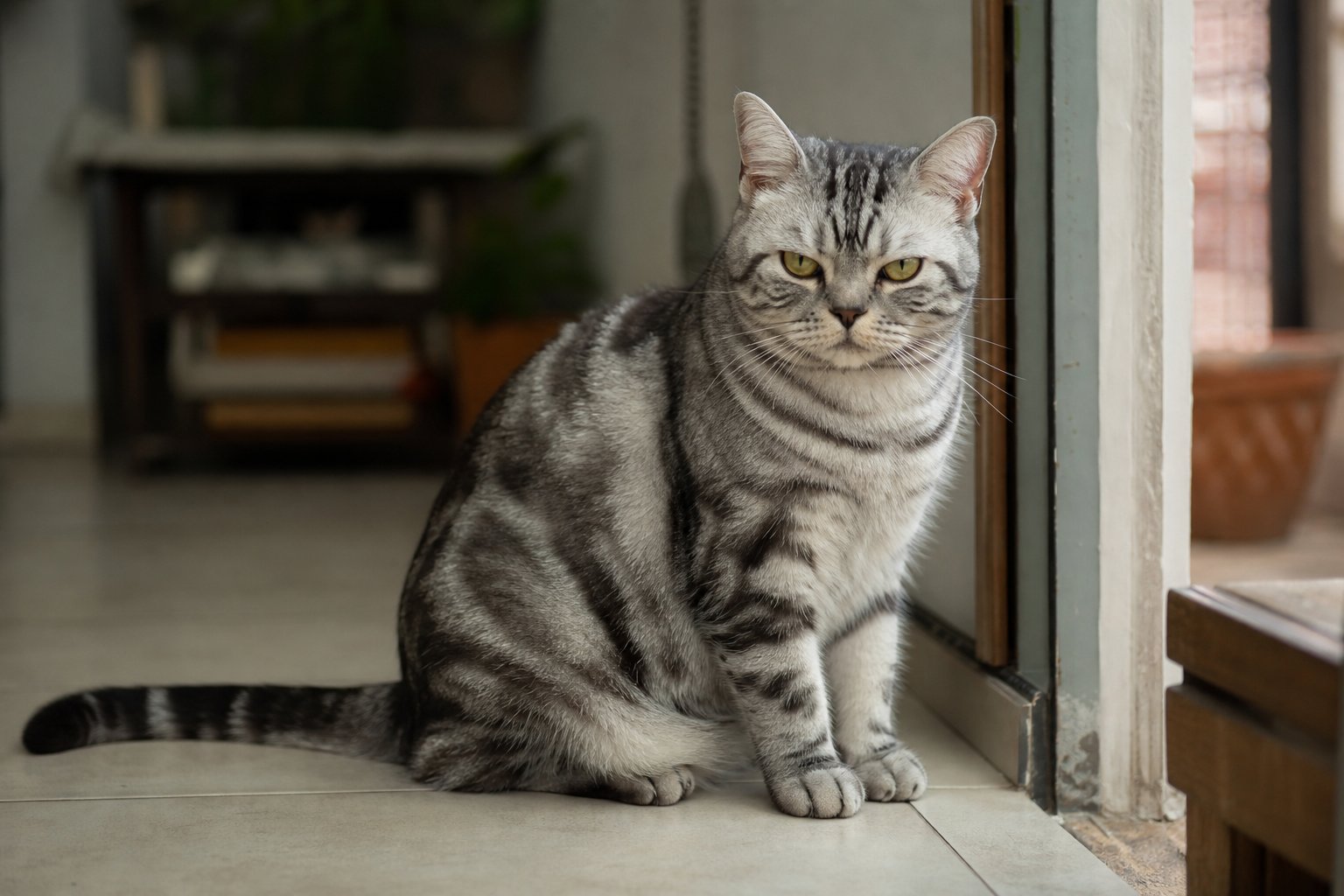
American Shorthairs commonly live about 15–20 years, which puts them among the longer-lived pure breeds. The three biggest levers are indoor living, weight control and regular heart screening. Breed alone sets the risk list; daily management decides the actual outcome.
Reading the 15–20 year range correctly
Lifespan figures are not a guarantee. They are a range built from breed records and general veterinary experience. What moves a cat from the low end to the high end is usually boring, repeatable care rather than expensive supplements.
Veterinary literature has long shown that indoor cats live longer than cats allowed to roam. Outdoors, the main risks are traffic, fights, infectious disease and poisoning. Indoors, the main risks become obesity, dental disease and age-related conditions that you can actually screen for.
The American Shorthair's background as a working farm cat gave it a sturdy, muscular build. That build is an advantage, but it also hides weight gain well. A cat can look solid and healthy while quietly carrying two extra kilos.
| Living situation | Likely lifespan direction |
|---|---|
| Indoors, measured meals, regular screening | 15–20 years, sometimes more |
| Indoors but free-fed and no screening | 12–16 years, higher risk of complications |
| Allowed outdoors unsupervised | Noticeably lower, driven by acute risks |
Breed sets the risk list; management sets the result. This logic applies whether you are comparing American Shorthairs, British Shorthairs or mixed-breed cats.
Hurdle one: obesity is the biggest controllable threat
American Shorthairs are muscular and big-boned. Fat gain is easy to miss because the cat still feels firm rather than soft. By the time the waist disappears, the cat may already be significantly overweight.
Carrying extra weight raises the risk of diabetes, lower urinary tract disease and joint strain. It also masks muscle loss, which can be an early sign of illness in older cats. A cat that is overweight and losing muscle can look stable on the scale while actually deteriorating.
What to do:
- Measure food from the first meal. Calculate a daily calorie target with your vet rather than free-feeding.
- Reduce the portion immediately after neutering or spaying, because energy needs drop.
- Weigh your cat monthly at the same time of day and record the trend.
- Use a kitchen scale for food. It is one of the cheapest longevity tools available.
- Keep treats to under 10% of daily calories.
A body condition score is more useful than a single number. You should be able to feel the ribs easily and see a waist from above. Ask your vet to show you how to score your cat at home.
Hurdle two: HCM screening
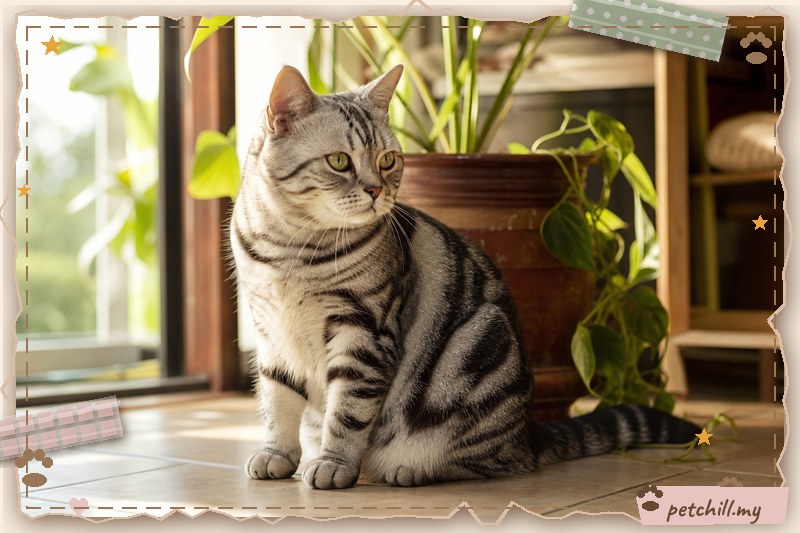
Hypertrophic cardiomyopathy (HCM) is the most common heart muscle disease in cats. It has a genetic tendency in several pure breeds, including the American Shorthair. Early HCM often causes no obvious signs, and some cats first show it as an emergency.
The practical approach is simple: include auscultation (listening with a stethoscope) in every annual check. If your vet hears a murmur, an abnormal rhythm or a gallop sound, the next step is an echocardiogram. When buying a kitten, ask to see the parents' screening records. That is the lowest-cost prevention available.
Know the emergency signs:
- Sudden reluctance to walk
- Hind-leg weakness or dragging
- Fast or laboured breathing at rest
- Pale or bluish gums
Any of these needs immediate veterinary attention. Cats with HCM can deteriorate in minutes, not days.
The six factors that shape lifespan
- Indoor versus outdoor. Falls, traffic, infectious disease and fights are concentrated outdoors. There is no compromise here.
- Weight. The single most controllable factor, as above.
- Screening density. Heart auscultation, kidney blood and urine tests, and dental checks should become more frequent with age.
- Diet and water intake. Good-quality protein and high moisture intake support urinary and kidney health. Wet food and running water sources help.
- Vaccination and parasite control. Even indoor cats need core vaccines and regular deworming on your vet's advice. Pathogens can arrive on shoes and through windows.
- Chronic stress. Long-term environmental stress is linked to lower urinary tract disease. American Shorthairs bond closely with their people, so routine and stability are part of health care.
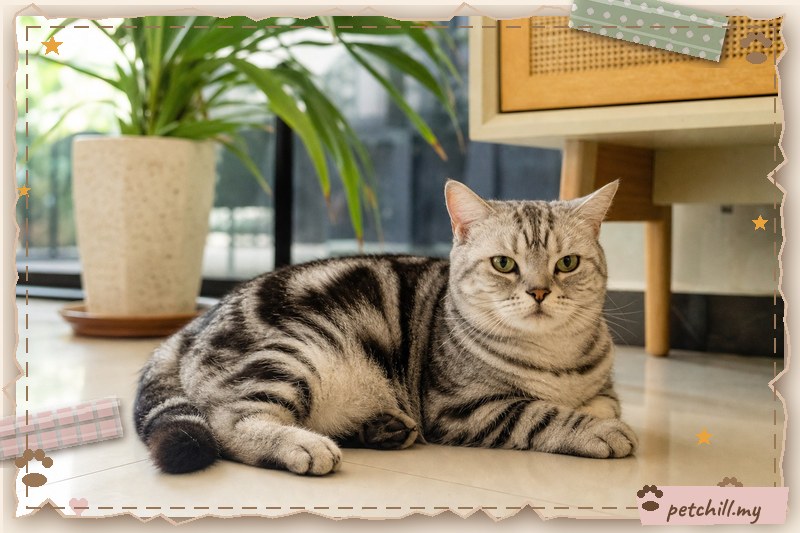
Screening schedule by life stage
| Life stage | Frequency | Focus |
|---|---|---|
| Kitten (2–12 months) | Monthly during vaccination series | Core vaccines, deworming, weight curve |
| Young adult (1–6 years) | Once a year | Weight, dental check, baseline kidney values, auscultation |
| Middle-aged (7–10 years) | Once a year, more detailed | Blood and urine tests, blood pressure, heart assessment |
| Senior (11+ years) | Every six months | Kidney function, thyroid, weight trend, mobility |
These are general guides. Your vet may adjust them based on your cat's history and any findings.
Ten things you can do now to support a longer life
- Secure all windows and keep your cat indoors.
- Feed measured meals and weigh monthly. Reduce portions after neutering.
- Play with your cat twice a day. American Shorthairs need exercise, and play also reduces anxiety.
- Increase the wet food proportion and add a running water source to support urinary health.
- Include auscultation in every annual check. Follow up with an echocardiogram if anything is abnormal.
- Check the mouth weekly and deal with tartar early.
- From age seven, run blood and urine tests yearly. From age eleven, every six months.
- Keep routines stable. During moves or new babies, provide extra hiding spots and companionship.
- Complete core vaccines and regular deworming, even for indoor cats.
- Set aside a medical fund or consider pet insurance. When screening finds a problem, you want the financial ability to choose treatment.
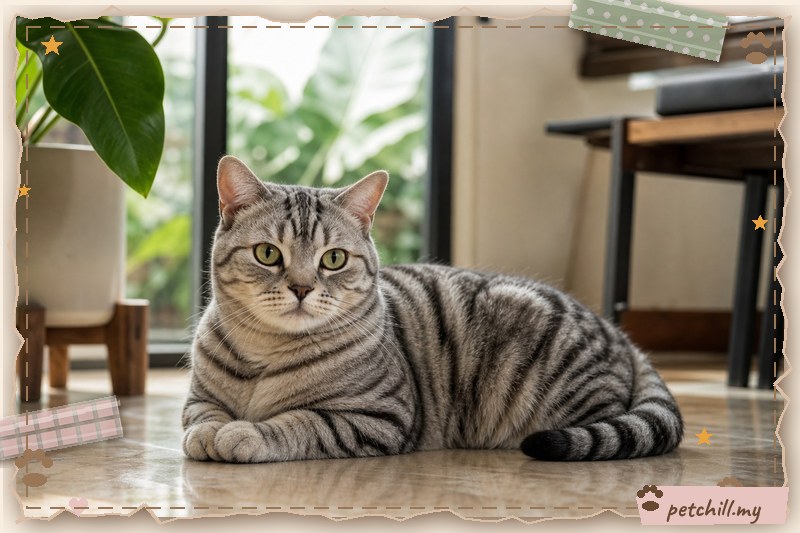
Adjusting the home for a senior American Shorthair
After around age twelve, small changes make a big difference. Lower the food bowl to protect the neck. Switch to a litter box with a low entrance. Change play to gentle floor-based games rather than high jumps. In cooler or rainy weather, watch for joint stiffness such as slow rising or reluctance to jump onto furniture.
The most commonly missed sign in senior cats is a slow decline. Drinking gradually increases, appetite gradually drops, weight quietly falls. Owners get used to it, but that curve is often the early face of kidney or metabolic disease. That is why the six-monthly senior check is not a formality: blood tests including kidney values and thyroid, plus a urine test including specific gravity, can catch problems before symptoms appear.
What about mixed-breed cats?
People often ask whether mixed-breed cats live longer. The honest answer is that genetic diversity reduces the burden of specific inherited diseases, so their expected lifespan is at least comparable and sometimes slightly better. But the main gap between cats is still created by how they are kept, not by their pedigree. That is good news for anyone considering adoption.
When to see a vet
Book a veterinary appointment if you notice any of the following:
- Drinking or urination that increases noticeably
- Weight loss despite a normal or increased appetite
- A sudden drop in activity or hiding more than usual
- Fast breathing at rest, coughing or open-mouth breathing
- Hind-leg weakness, dragging or sudden inability to walk
- Bad breath, drooling or difficulty eating
- Any sign that lasts longer than two weeks
For breathing difficulty, hind-leg weakness or collapse, treat it as an emergency and go immediately.
A realistic view of "the longest-lived cat"
Stories of cats living past 30 years are extreme outliers. They are interesting, but they are not a useful target. A reasonable goal is a well-managed 15–20 years. Focus on the factors you can control: indoor housing, measured feeding, water intake, dental care, vaccination and regular screening.
Quick comparison: American Shorthair vs British Shorthair vs mixed breed
| Factor | American Shorthair | British Shorthair | Mixed breed |
|---|---|---|---|
| Typical lifespan | 15–20 years | Similar range | Similar or slightly higher |
| Main health focus | Obesity, HCM | Obesity, HCM, breathing structure | Fewer breed-specific risks |
| Exercise needs | Moderate to high | Moderate | Varies |
| Grooming | Low | Moderate | Varies |
| Key advantage | Sturdy build, no flat-face breathing issue | Calm temperament | Genetic diversity |
This table is a general guide, not a prediction for any individual cat.
Final note
American Shorthairs are hardy cats, and a long life is a realistic expectation. But longevity is built from small, consistent habits: measured meals, indoor safety, regular play, and veterinary checks that include heart auscultation and age-appropriate blood and urine tests. Start today, and adjust as your cat ages.
This article provides general breed information and is not a diagnosis. Every cat has a different genetic background, medical history and living environment. Any decision about medication, diet changes or surgery should be made with the registered veterinarian who has examined your cat.