
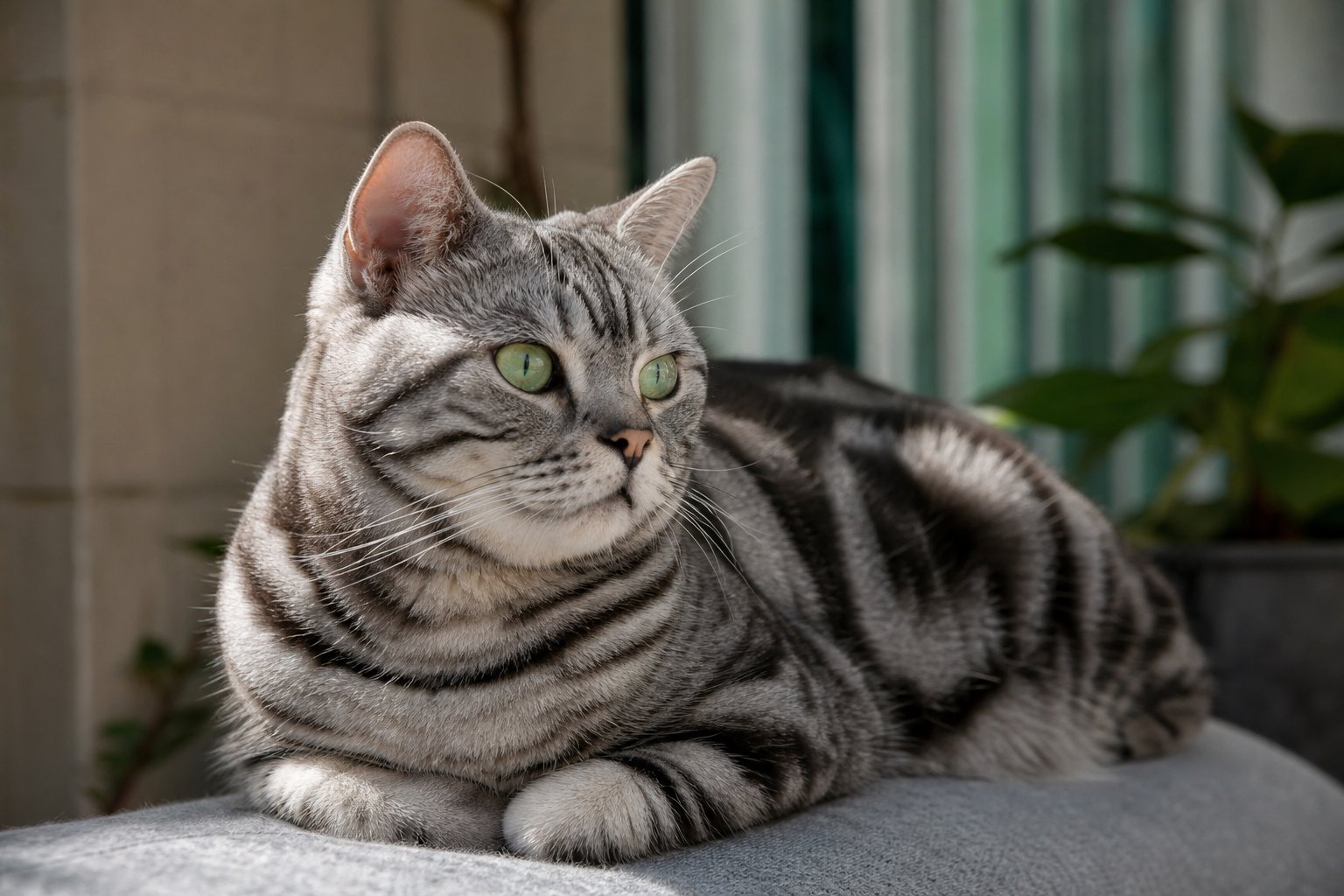
Quick answer: The American Shorthair is friendly, confident and high-energy. It is a companion cat that is smart, solves problems and fits well with children, but it needs daily interactive play. Left bored, it will invent its own entertainment. Compared with the calmer British Shorthair, the main cost is your time, not your money.
What kind of cat is the American Shorthair?
The American Shorthair descends from working farm cats in North America. It has a sturdy, balanced body and a stable temperament, which makes it one of the easier purebred cats to live with. Its personality is best described as companion-type: intelligent, active and in need of a daily programme.
| Item | American Shorthair |
|---|---|
| Origin | United States (descended from European working cats) |
| Average lifespan | 15–17 years |
| Weight | Male 5–7 kg / Female 4–5.5 kg |
| Coat | Short, dense; moderate shedding in moulting season |
| Personality keywords | Friendly, confident, high-energy |
| Vocalisation | Low to moderate; not a chatterbox |
| Tolerance of being alone | Moderate; better than a Siamese but not suited to 12-hour daily isolation |
| Intelligence / trainability | High; strong operant learning, best with food rewards |
| Price in Malaysia | Varies by breeder, pedigree and colour; ask local breeders and rescues |
| Basic monthly cost | Varies; ask a Malaysian vet and retailer for current prices |
Three things you must know:
- High energy is a need, not a flaw. Two interactive play sessions a day are basic maintenance. Skip them and your cat will find its own activities.
- Their intelligence is practical. They learn quickly, but mainly what benefits them. Training works with treats, not applause.
- A good temper is built, not guaranteed. Positive experiences between two and seven months of age set the ceiling for adult tolerance.
What does an American Shorthair cost to keep in Malaysia?
Buying or adopting the cat is the entry fee; monthly costs are the long-term commitment. Prices in Malaysia vary by breeder, pedigree, location and colour, so ask local breeders, rescue groups and your vet for current figures. Do not rely on overseas price lists.
| Item | What to ask locally |
|---|---|
| Purchase or adoption | Ask a Malaysian breeder or rescue for current fees, health records and pedigree papers |
| Vaccination | Ask your vet for the current vaccination schedule and fees |
| Neutering | Ask your vet; fees depend on sex, weight and clinic |
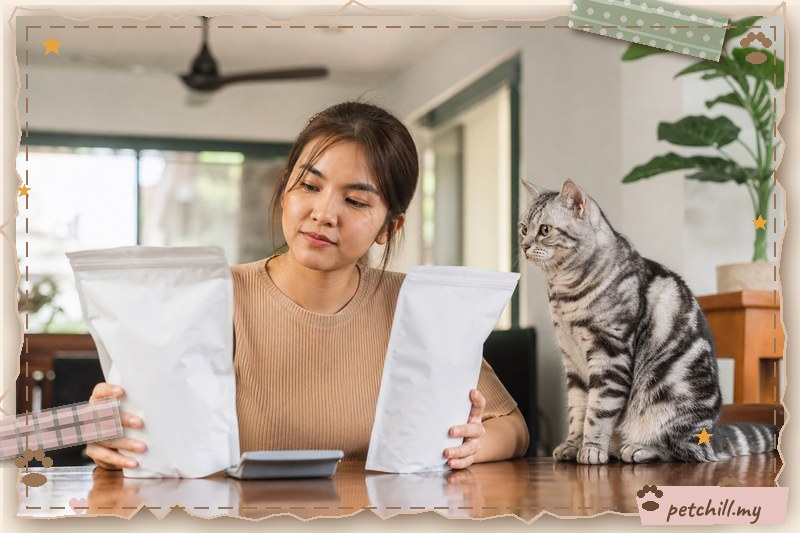
| Monthly food | Compare local retailer prices; active cats eat more |
| Monthly litter | Compare clumping or tofu litter prices locally |
| Parasite prevention | Ask your vet for a local prevention plan and cost |
| Play toys | Budget for wand toys and puzzle feeders, which wear out |
| Medical reserve | Set aside a monthly amount for accidents and dental care |
The real cost of an American Shorthair is time more than money. Two sessions of 10–15 minutes of interactive play every day adds up to more than 180 hours a year. Before you buy, check your daily schedule, not just your wallet.
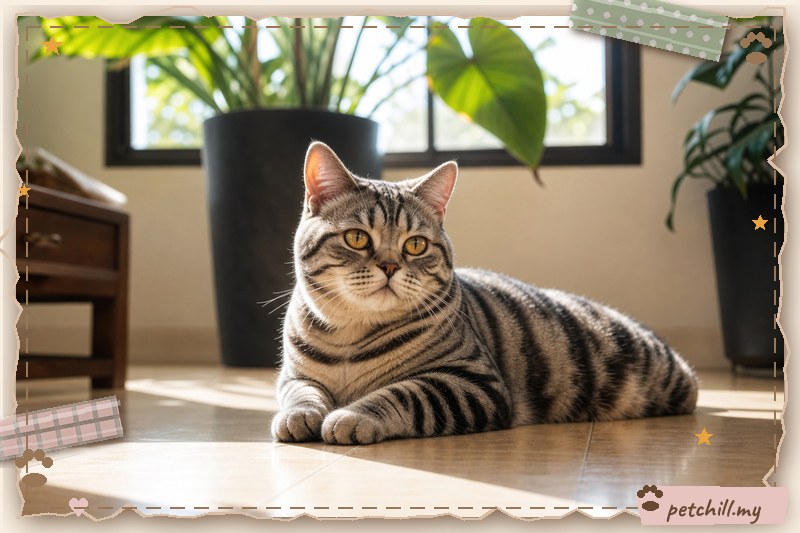
Who is a good match for an American Shorthair?
| Owner type | Suitability | Reason |
|---|---|---|
| Families with children | Very suitable | Tolerates handling, enjoys chase games, rarely scratches |
| Two working adults | Suitable | Tolerates moderate alone time; top up with play after work |
| Work-from-home owner | Suitable | Can meet the cat's interaction needs during the day |
| Single owner working long hours | Not ideal | Too much alone time; bored cats can become destructive |
| Someone wanting a quiet lap cat | Not ideal | American Shorthairs need a programme, not background company |
Three-question self-check:
- Can you reliably give 20–30 minutes of focused play every day?
- Are there cupboards or doors the cat can open that you cannot secure?
- If you travel for a weekend, does someone reliable check on and play with the cat?
If you answer "no" to two of these, the American Shorthair's intelligence will be used in ways you do not want: opening cupboards, tearing paper and midnight running. These are all signs of unspent energy.
How does the American Shorthair compare with other breeds?
| Breed | Energy level | Clinginess | Trainability | Monthly basic cost | Good for beginners |
|---|---|---|---|---|---|
| American Shorthair | High | Moderate | High | Varies; ask locally | If you have time |
| British Shorthair | Low | Moderate | Moderate | Varies; ask locally | Yes |
| Siamese | High | Very high | High | Varies; ask locally | Only if you can keep up |
| Ragdoll | Low | High | Moderate | Varies; ask locally | Yes (long coat) |
| Bengal | Very high | Moderate | High | Varies; ask locally | Not for beginners |
In short: if you want interaction without being clung to, the American Shorthair is the balance point. If you want a calm companion, choose a British Shorthair. If you want very high interaction and have experience, consider a Bengal.
What does a daily play schedule look like?
"High energy" sounds simple, but it is really a scheduling problem. Here is a workable version for a Malaysian working household, with about 30–40 minutes of interaction split into three sessions:
| Time | Activity | Purpose |
|---|---|---|
| 10 minutes before leaving for work | Wand-toy chase, then breakfast | Uses energy so the cat rests during the day |
| 15 minutes after returning home | Hunting-sequence game (stalk, pounce, bite toy) | Makes up for the day's interaction quota |
| 10 minutes before bed | Slow wand play plus a small snack | Uses the last energy and reduces midnight running |
| During alone time | Puzzle feeder, cardboard boxes, window perch | Keeps the cat busy without you |
Three practical details:
- End play with food. A complete hunt-catch-eat sequence is more satisfying than play alone.
- Rotate toys. The same wand toy for two weeks loses value; rotate them to keep interest.
- Use laser pointers only as an opener. A light the cat can never catch builds frustration, so finish with a real toy it can grab.
- Quality beats duration. Fifteen minutes of full attention is better than an hour of half-hearted wand waving while you look at your phone.
- Signs of too little play are easy to spot: midnight running, sudden ankle pouncing and chewing cables are all complaints that today's programme was too short.
What are the most common myths about the American Shorthair?
| Myth | Reality |
|---|---|
| Short hair means no grooming | The coat is dense and sheds heavily in moulting season; brush once or twice a week |
| They are so good-natured they need no socialisation | The good-temper reputation depends on positive experiences between two and seven months |
| They are smart enough to train like a dog | They learn practical behaviours well but are not highly obedient; tricks are inefficient |
| White markings make them more affectionate or naughty | Coat colour is not reliably linked to personality; observe each cat |
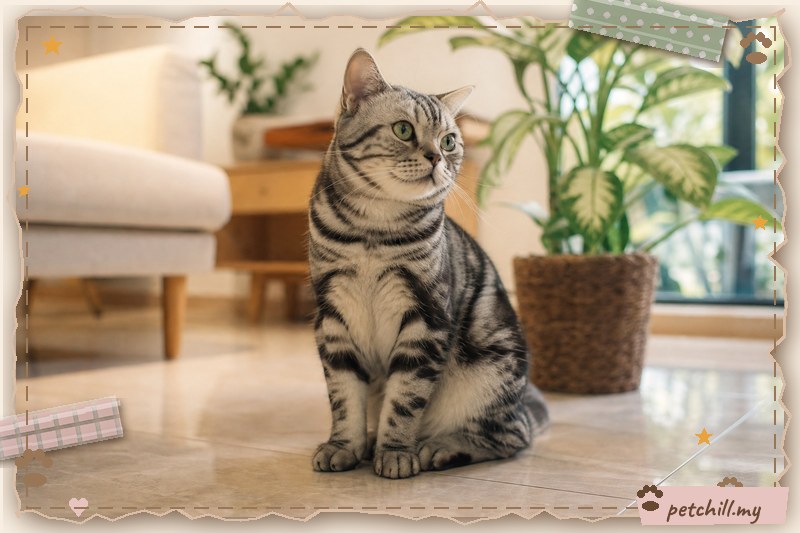
How do you set up a Malaysian home for an American Shorthair?
A small apartment in Kuala Lumpur or Penang can work well. The key is not floor area but vertical space and route design. American Shorthairs are hunting cats; they need something to watch, something to chase and somewhere high to sit.
| Setup | Approximate cost | Purpose |
|---|---|---|
| Cat tree or climbing frame (one or two) | Ask local retailers; varies | Vertical territory for play and watching |
| Window perch | Low cost | "Cat television" for daytime entertainment |
| Wall shelves or steps | Ask local retailers; varies | Three-dimensional routes, especially useful in small homes |
| Cardboard boxes and tunnels (replace regularly) | Low cost | Hiding and ambush spots |
| Secure dangerous items | No cost | American Shorthairs can open cupboards; lock away medicines and small objects |
A useful test: can the cat find its own entertainment during the day? A well-set-up home will see the cat rotating between the window perch, cat tree and tunnel. A poorly set-up home will see it using your sofa and curtains instead. The difference is whether you spent a little before or a lot after.
One more point: cat trees do not need to be expensive, but they must be stable. A wobbly tree will be used once and then avoided. Check the base weight and load rating before buying.
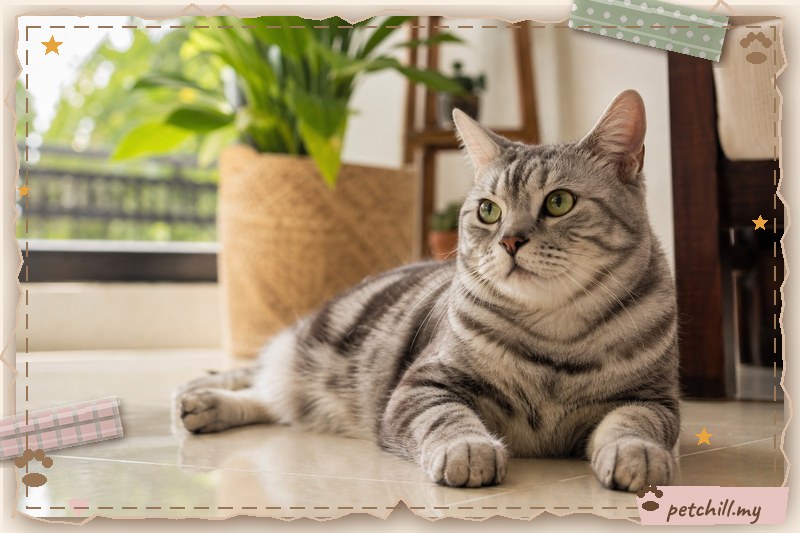
What are the three dimensions of the American Shorthair's personality?
The breed standard describes a sturdy, well-proportioned working cat with a sweet, easy-going temperament. That North American farm-cat background shows up directly in the personality:
- Friendly but not needy: Affectionate with family and welcoming to friends, but not clingy with everyone. They are alert but recover quickly and do not hold grudges.
- Confident: They explore new environments readily and usually get used to household sounds such as vacuum cleaners quickly. This separates them from more nervous breeds.
- High-energy: Their hunting drive and stamina are among the highest of purebred cats. For an American Shorthair, moving around is a need, not an option.
How intelligent is the American Shorthair?
Popular "cat intelligence rankings" are mostly owner rankings of obedience, not rigorous measurements. Animal behaviour research breaks cat cognition into problem-solving, reading social cues, observational learning and environmental memory. American Shorthairs are particularly strong in problem-solving and operant learning: they can push doors, open cupboards and learn that sitting by the food bowl makes a human serve dinner. Their intelligence is practical: they will not learn for applause, but they will learn for treats and play. Command training can use food rewards, and practical goals such as going into a carrier, getting into a car or accepting nail clipping have a much higher success rate than party tricks.
Trait, behaviour and owner response table
| Trait | Everyday behaviour | Suggested response |
|---|---|---|
| High hunting drive | Chases flies, follows light spots, plays rough | Two daily wand-toy sessions ending with food |
| Strong operant learning | Opens doors and cupboards, presses buttons | Use physical locks on places you want to keep closed; do not rely on scolding |
| Confident and low-anxiety | Settles calmly in new environments | Still provide positive experiences during the socialisation window |
| Affectionate but independent | Keeps you company without clinging | Use puzzle toys when you are busy |
| Moderate alertness | Watches strangers before approaching | Let the cat approach at its own pace |
How well do they fit with children and other pets?
People searching for "British Shorthair personality" or "American Shorthair personality" usually care most about family fit. American Shorthairs generally match well with children: they tolerate handling, rarely scratch and enjoy chase games. But the bottom line is: children under six should never be left alone with any cat; teach children to stroke the back, not the belly, and not to pull tails or carry the cat; and give the cat a high escape route that children cannot reach. With other cats, American Shorthairs are socially flexible and gradual introductions usually succeed. With dogs, choose a low-prey-drive dog, introduce them through a barrier first and expect one to two weeks to establish peace. Watch the reverse problem too: small fish tanks, hamsters and birds look like entertainment, not friends, to an American Shorthair, so keep them physically separated.
Male, female and the "white markings" myth
After neutering, male and female American Shorthairs differ little in personality. Males are sometimes described as a little more playful and relaxed, females as a little more independent and precise, but individual differences are much larger than sex differences. As for claims that white-marked American Shorthairs have a special personality: coat colour genes are not reliably linked to personality, and white markings do not change hunting drive or social style. Such claims are seller anecdotes without genetic support. Choose a cat by observing its behaviour, not by buying a personality based on coat colour.
British, American and Exotic Shorthairs: three round-faced scripts
People searching for "British Shorthair intelligence" often cannot decide between these three. An honest comparison: none of them is a "performing" intelligence, and there is no evidence that their cognitive ability differs. The real difference is energy and companionship style. The British Shorthair is calm and independent, happy to sleep most of the day. The Exotic Shorthair is quiet and attached, the least time-consuming lap cat. The American Shorthair is high-energy and interactive, needing a programme but giving the highest interaction reward. Choosing between them is really asking: how much time do I have for a cat each day?
How do you raise a cat that does not bite?
American Shorthairs are not an irritable breed. In clinical behaviour cases, defensive biting and scratching usually come from three things: a lack of positive experiences during the socialisation window (two to seven months), chronic pain (undiagnosed joint or dental problems), or being trained by rough play to see hands as prey. Prevention is straightforward: during kittenhood, use hands and tools properly and never tease the cat with hands or feet. If an adult cat's temper suddenly changes, see a vet first to rule out pain, then consider behavioural factors.
The socialisation window: the golden homework from two to seven months
The American Shorthair's good-temper reputation is not automatic; experiences during the window are the foundation. For a kitten entering a new home between two and seven months, build the following routine:
- Positive handling: Briefly touch the paws, ears and open the mouth daily, then give a treat. This desensitises the cat to future grooming and vet visits.
- Sound desensitisation: Play recordings of vacuum cleaners and hairdryers at low volume behind a door during meals, one minute at a time.
- Environmental exploration: Open one new room per day rather than letting the kitten roam the whole house before dangerous items are secured.
- Social contact with other cats: If possible, let the kitten meet a calm adult cat through a barrier to learn feline manners.
Done well, these exercises amplify the American Shorthair's confidence and low-anxiety tendencies. Missing the window is not the end of the world, but everything must be done more slowly and with more rewards.
Five things to observe at an adoption meeting
When you meet a rescue or breeder, use five details to check the personality script:
- Invitation to play: Drag a wand toy in front of the cat. The ideal response is a full sequence of staring, wiggling and pouncing. Complete disinterest should prompt questions about health history.
- Sound test: Gently shake a treat tin. Does the cat look and approach? This shows exploration motivation.
- Tolerance of touch: Stroke from the neck to the back and watch whether the tail flicks impatiently.
- Stranger desensitisation: Ask a friend the cat has not met to sit down and see how long it takes to approach. An American Shorthair should usually show curiosity within three to ten minutes.
- Interaction with other cats: If the cat is housed with others, watch whether it competes for resources.
If all five pass, you are likely looking at the friendly, confident, high-energy cat described in this article.
When to see a vet
See a veterinarian if your American Shorthair shows sudden changes in temperament, such as growling, hiding or biting when touched; if it stops eating or loses weight; if it has difficulty jumping or shows stiffness; if it develops bad breath or drools; or if it seems unusually tired and uninterested in play. Sudden behaviour changes in cats are often linked to pain or illness. Your vet can check for dental disease, arthritis, urinary problems and other conditions. Do not try to train away a sudden behaviour change before a health check.
Local context for Malaysian owners
- Kuala Lumpur apartment: Use vertical space such as wall shelves and a sturdy cat tree to make up for limited floor area. Secure cupboards because American Shorthairs learn to open them.
- Penang rainy season: Keep indoor play and puzzle feeders ready for days when outdoor exercise and window time are limited. Rotate toys to prevent boredom.
- Johor terrace house: Check that windows and balconies are securely screened. An active American Shorthair may try to explore outdoors, so keep the cat indoors and provide a safe window perch instead.
Frequently asked questions
Q: What is the American Shorthair's personality like? A: Friendly, confident and energetic. They are companion cats that enjoy family company, are usually relaxed with strangers and need daily interactive play rather than sitting still all day.
Q: Are American Shorthairs intelligent? A: Yes, especially at problem-solving and learning by doing. They can open doors, push buttons and learn that certain behaviours make humans act. Training works best with food rewards and practical goals.
Q: Do American Shorthairs have bad tempers? A: The breed generally has a good temperament. Defensive biting or scratching usually comes from poor socialisation, pain or fear, not from the breed being naturally aggressive.
Q: Are American Shorthairs good with children? A: Usually yes. They tolerate handling well, enjoy chase games and rarely scratch. Young children should always be supervised with any cat, and children should be taught not to pull tails or carry the cat.
Q: What is the biggest difference between British and American Shorthairs? A: Energy level. British Shorthairs are calm and happy to sleep most of the day. American Shorthairs are active and need daily play. Their intelligence is similar, so the choice is really about your time budget.
Q: Does an American Shorthair with white markings have a different personality? A: No. Coat colour genes are not reliably linked to personality. Claims that white-marked cats are more affectionate or more mischievous are anecdotal. Observe each cat's behaviour instead.
This article describes general breed tendencies. Individual cats vary with socialisation, health and experience. For aggression or anxiety problems, consult a registered veterinarian or an accredited behaviour consultant.