
Answer first
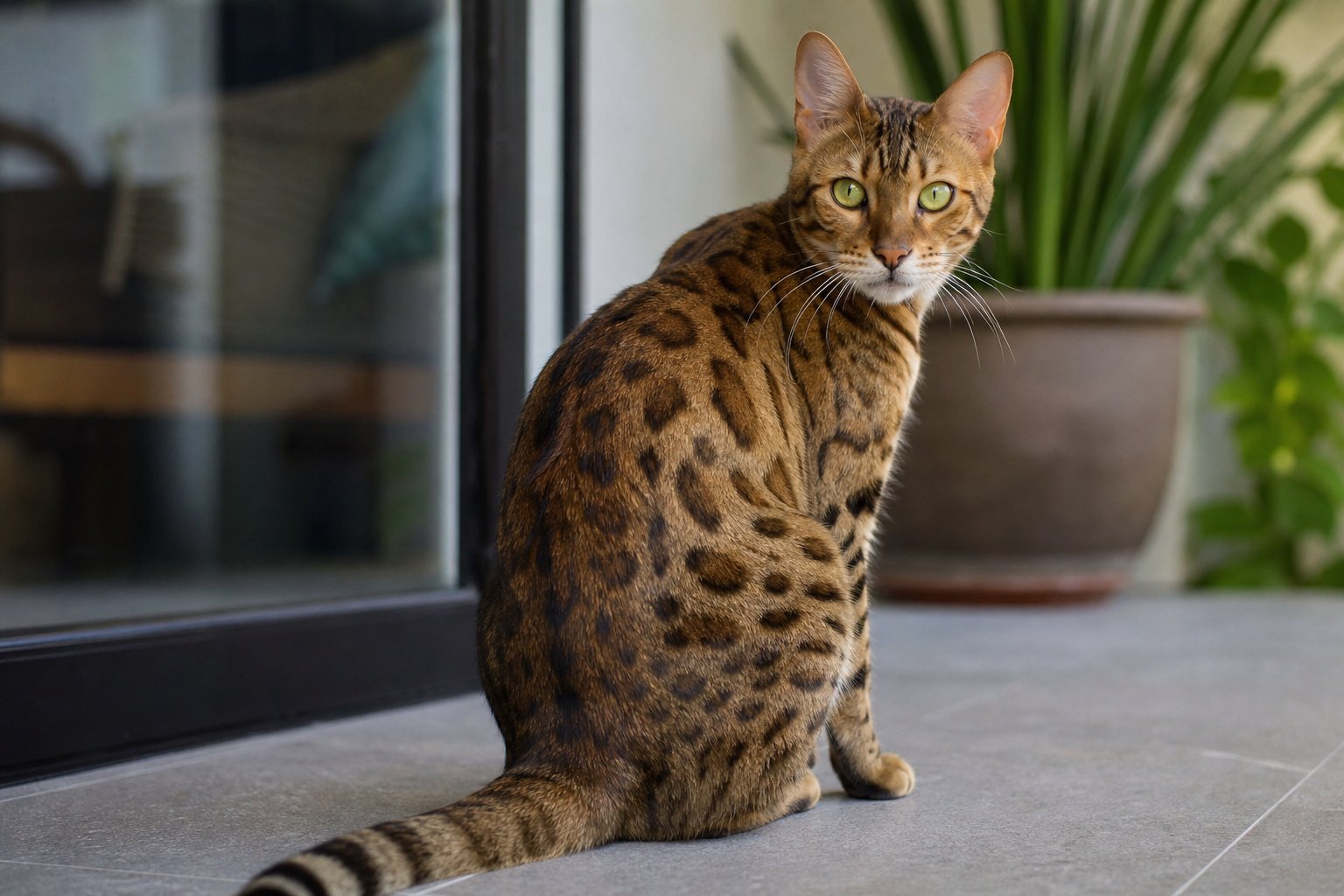
Bengal cats are a striking, muscular breed with leopard-like rosettes and energy to match. They thrive with owners who can offer daily interactive play and vertical space. In Malaysia, that often means adapting a condo or terrace house with wall shelves and a tall cat tree. They are short-haired and low-maintenance in grooming, but high-maintenance in exercise and attention. If you are out all day and want a quiet lap cat, a Bengal is probably not the right fit.
What a Bengal cat looks like
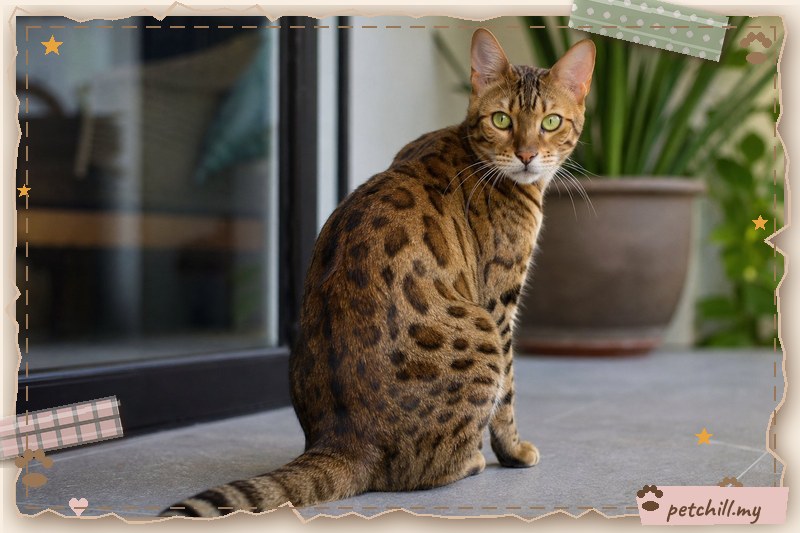
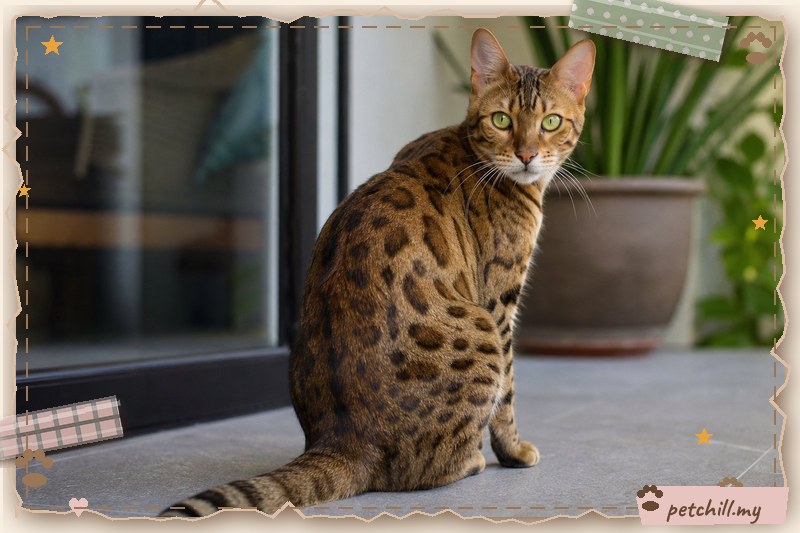
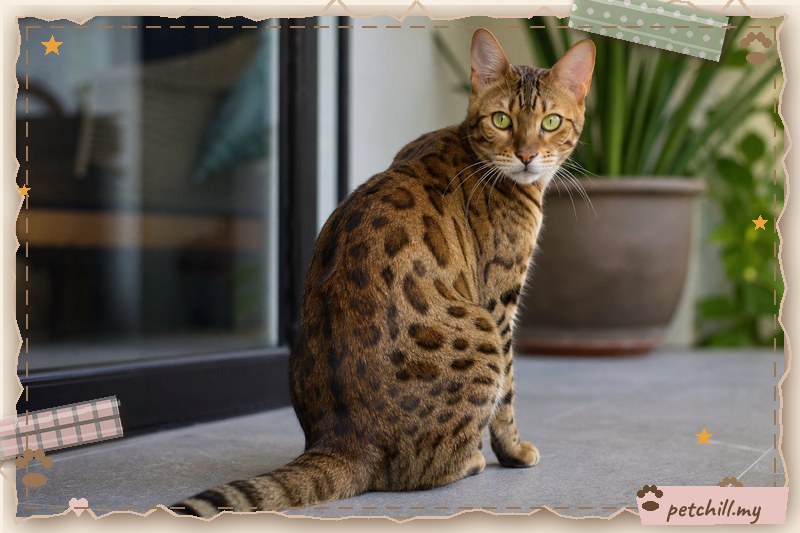
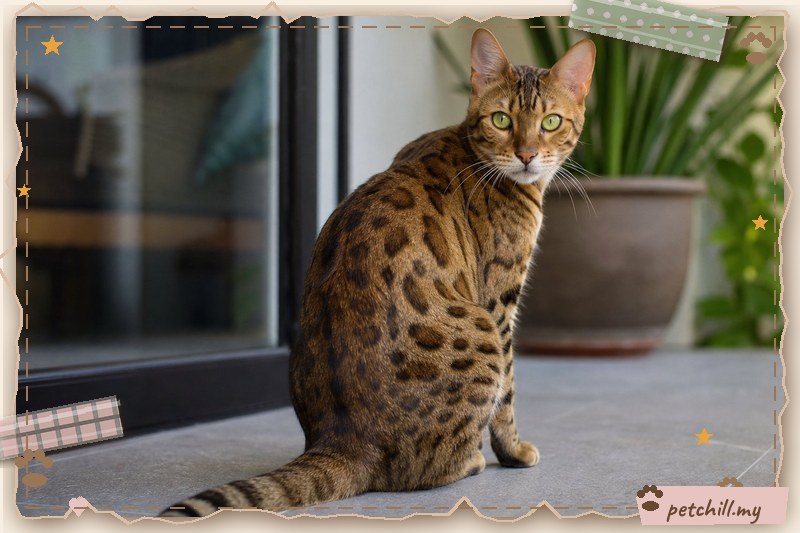
Bengals were developed by crossing the Asian leopard cat with domestic cats. The result is a short, glossy coat with bold rosettes or spots, often on a golden or copper background. Their bodies are lean and muscular, and they move with a fluid, powerful gait. Adults typically weigh around five to seven kilograms, though size varies.
The coat is the headline feature, but it is not the whole story. That athletic build signals a cat built for climbing, jumping and exploring. Understanding this helps you plan a home that meets their needs.
| Feature | Detail |
|---|---|
| Origin | Asian leopard cat crossed with domestic cats |
| Coat pattern | Rosettes or spots |
| Common colours | Golden, copper, sometimes silver |
| Coat type | Short, close-lying, glossy |
| Build | Muscular and athletic |
| Typical weight | Around 5–7 kg |
| Grooming | Weekly brushing is usually enough |
Bengal personality: the energy champion
Bengals are often described as the most active of the domestic breeds. They are curious, clever and quick to learn. Many can open cupboards, press latches and solve puzzle feeders. They also tend to be more interested in water than most cats, often pawing at bowls or following owners into the bathroom.
They are affectionate with their families but not overly compliant. A Bengal wants to be involved in whatever you are doing, and will make its own entertainment if you do not provide any. That can mean midnight sprinting, shredded paper or items knocked off shelves.
This is not a cat that will sit quietly on a cushion all day. It needs a job, or at least a good game. The good news is that this intelligence makes them rewarding to train and play with.
Exercise and environment: making a Malaysian home work
Vertical space is non-negotiable
Bengals are powerful jumpers. In a small apartment, floor space is limited, so use the walls. A tall, sturdy cat tree near a window gives them a lookout point and a climbing frame. Wall-mounted shelves at different heights can turn a corridor or living room wall into a climbing route. Even the top of a wardrobe or a bookshelf can become a favourite perch if it is safe and stable.
If you live in a Kuala Lumpur apartment, measure one wall and plan two or three levels. Fix shelves securely into studs or use appropriate anchors, and check that they can take the weight of a jumping cat. Add non-slip material to reduce the chance of slips.
Daily play routine
Aim for at least two interactive play sessions each day. Use a wand toy to mimic hunting: let the cat stalk, pounce and catch. Play before meals to mimic a natural hunt-eat-groom-sleep cycle. Ten to fifteen minutes of focused play can be enough, but some Bengals need longer.
Puzzle feeders and treat balls are useful for mental exercise. Rotate toys so they stay novel. A bored Bengal will find its own fun, and that usually involves your curtains or your neighbour's sleep.
A sample daily routine
| Time | Activity |
|---|---|
| Morning, before you leave | 10 minutes of wand-toy play, then breakfast |
| Midday | Puzzle feeder or hidden treats |
| Evening | Second play session, then dinner |
| Before bed | Short play or grooming to wind down |
This routine helps reduce night-time activity. If you have neighbours in a condo, it also helps keep the peace.
Managing a Malaysian climate
Malaysia's heat and humidity can affect any cat. Keep the indoor environment dry and well ventilated. Use air conditioning or a dehumidifier if your home feels damp, and make sure fresh water is available in several places. Change water daily. If your Bengal enjoys playing with water, dry it off afterwards, especially around the belly and ears, to reduce skin irritation.
In Penang's rainy season, when outdoor time is limited, plan extra indoor enrichment. Rotation of toys, cardboard boxes and food puzzles can help burn energy when the weather keeps everyone inside.
Grooming and diet
Grooming
A Bengal's short coat is easy to maintain. Brush once or twice a week, and a little more during shedding season. They generally do not need professional grooming. Check ears and skin regularly, especially in humid weather.
Feeding
Bengals are muscular and active, so they need good-quality protein. Portion size should match their weight and activity level. On days when they are less active, such as during a rainy spell, adjust portions to avoid weight gain. If you change foods, do it gradually over several days to avoid stomach upset.
Some Bengals have sensitive digestion. Keep an eye on stool quality and appetite. If you are unsure about diet, ask your vet for a feeding plan rather than guessing.
Health watch: skin and gut
Bengals are generally healthy, but two areas deserve attention: skin and digestion. Some individuals are prone to skin sensitivities, which can show as itching, redness or hair loss. Others have sensitive guts, with recurrent soft stools.
Regular vet checks help catch problems early. Keep a simple log of appetite, energy and litter box habits. This makes it easier to spot changes and gives your vet useful information.
When to see a vet
- Diarrhoea or soft stools lasting more than a day
- Noticeable weight loss
- Persistent itching, redness or hair loss
- Sudden lethargy or poor appetite lasting more than two days
- Reluctance to jump or unusual gait
- Any breathing difficulty or swelling
If you are worried, call your vet. Early advice is often cheaper and easier than waiting.
Buying or adopting in Malaysia
There is no single rule for finding a Bengal in Malaysia. Some people buy from breeders, while others look for rescue or rehoming groups. If you buy, ask to see health records for the parents and visit the cattery if possible. Avoid sources that cannot show paperwork or let you see the conditions. A cheap purchase can lead to expensive health problems later.
If you are open to a mixed breed, a spotted domestic cat can be just as lively and affectionate. The most important factor is not the pedigree but the time and space you can offer.
Costs vary by clinic, breeder and location. Ask for a written estimate for any planned veterinary procedure, and confirm prices directly with the clinic or seller. Do not rely on online figures.
Setting up your home: a practical checklist
- Choose one wall for shelves or a tall cat tree, and measure the height.
- Fix shelves securely and check they can hold a jumping cat.
- Place a cat tree near a window for a view.
- Buy a wand toy and at least two puzzle feeders.
- Check window screens and door seals for gaps.
- Set phone reminders for two daily play sessions.
- Keep water bowls in several rooms and change the water daily.
- Start a simple health log for appetite, energy and litter box habits.
Comparison: Bengal vs a calmer breed
| Trait | Bengal | Typical calm breed |
|---|---|---|
| Energy level | Very high | Moderate to low |
| Play needs | Two or more sessions daily | One short session may suffice |
| Vertical space | Essential | Helpful but less critical |
| Grooming | Easy, short coat | Varies |
| Trainability | High | Moderate |
| Suitability for busy households | Poor unless support is arranged | Often better |
This table is a general guide. Individual cats vary, and a calm breed can still be active.
Living with neighbours and rental rules
In Malaysia, many people live in apartments, condos or rented terrace houses. Check your building or tenancy rules before getting a cat. Some places have restrictions on pets. If you rent, get permission in writing if possible. This avoids problems later.
Noise and night-time activity can affect neighbours. A good play routine and a comfortable sleeping area away from shared walls can help. If you are in a Johor terrace house, close windows at night to prevent escapes and reduce disturbance.
Bengal cats and water
Many Bengals enjoy water. They may splash in bowls, join you in the bathroom or investigate taps. This can be fun but also messy. Use heavy bowls that are hard to tip, and dry wet patches to prevent slips. If your cat gets wet, dry it thoroughly, especially in humid weather.
Training and enrichment
Bengals are smart and can learn simple cues. Use positive reinforcement with treats or play. Short sessions work best. Teach them to use a scratching post early, and reward calm behaviour. Puzzle toys and food-dispensing balls provide mental stimulation when you are busy.
Travel and vet visits
Use a secure carrier. Practise short trips before a real vet visit. Keep a record of vaccinations and any medication. If you are travelling, arrange care in advance. Ask your vet for advice on travel and boarding.
Final thoughts
A Bengal cat is a wonderful companion for the right household. It offers intelligence, playfulness and beauty, but it asks for time and space in return. In Malaysia, that means planning for vertical space, daily play and a comfortable indoor environment. If you can provide that, a Bengal can thrive. If not, a calmer breed may be a better match.
This article is for general information only and is not a substitute for veterinary advice. Always consult a registered veterinarian for health concerns.
Related reading
- Cat Breeds in Malaysia: A Practical Guide to Choosing the Right Cat (2026)
- Bengal Cat Disadvantages in Malaysia: 8 Real Challenges and How to Manage Them
- Abyssinian Cat Disadvantages in Malaysia: 7 Honest Truths Before You Adopt
- American Shorthair Lifespan in Malaysia: How Long Do They Live and How to Help Them Get There
- Bengal Cat Personality in Malaysia: What to Expect From This High-Energy Breed
- Birman Cat Disadvantages in Malaysia: 8 Real Costs Before You Adopt
- Calico Cats in Malaysia: Is Calico a Breed, and How Do You Tell a Calico, Tortie and Torbie Apart?
- Cat Breeds in Malaysia: 12 Popular Breeds Compared (2026)
- Siamese Cat Downsides in Malaysia: Loud Voice, Clinginess and Separation Anxiety
- American Shorthair Colours in Malaysia: Tabby, Bicolour and What Actually Matters
- American Shorthair Disadvantages in Malaysia: 7 Honest Trade-Offs Before You Adopt
- American Shorthair Personality in Malaysia: Friendly, Confident, High-Energy

