
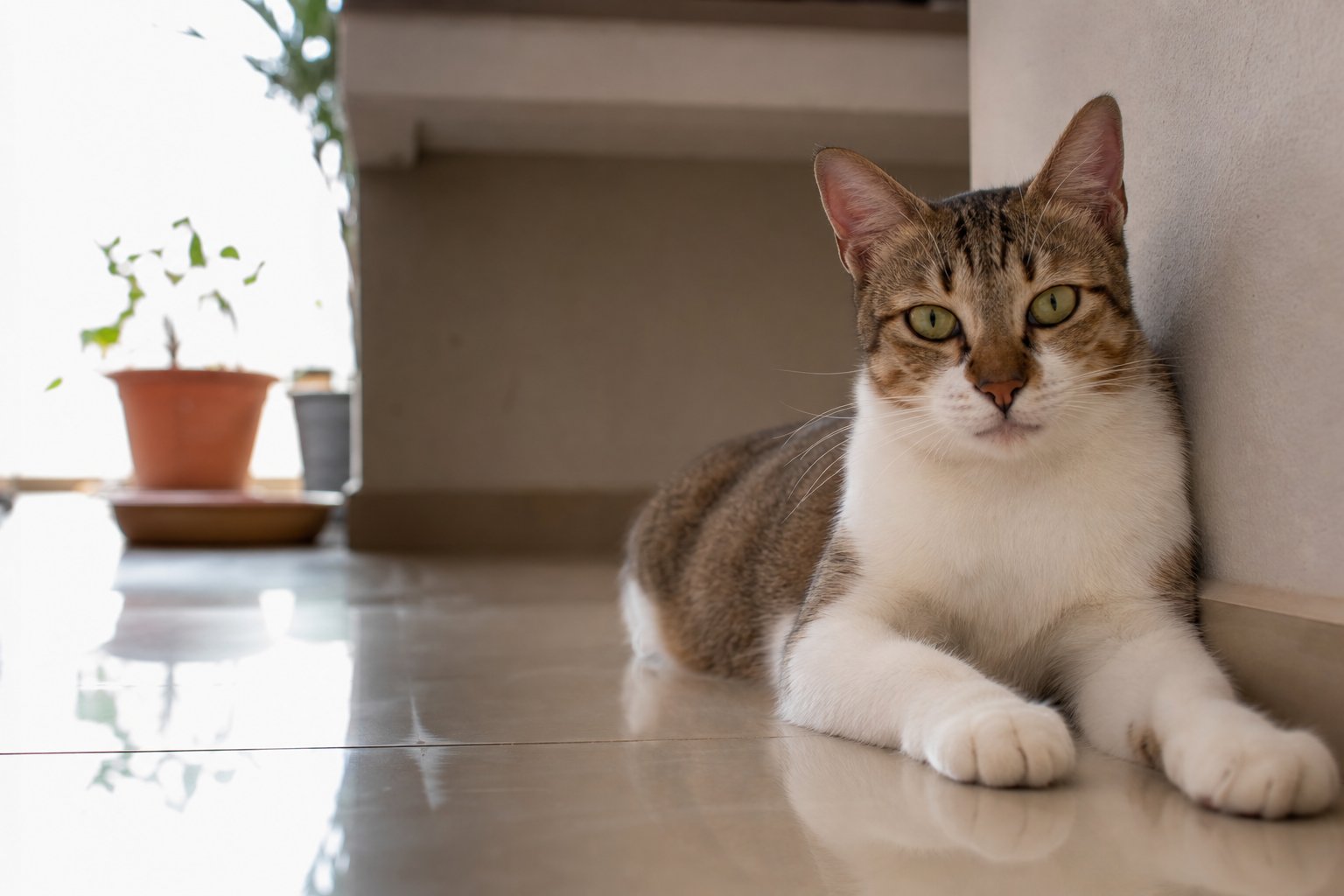
What a cat teeth cleaning actually involves
A professional cleaning for a cat is called a COHAT — Complete Oral Health Assessment and Treatment. It is not a cosmetic polish and not a grooming add-on. It is a full dental treatment performed under general anaesthesia, with a fixed order of operations that cannot be shortened without leaving disease behind.
Start with how tartar forms. Every meal leaves a soft bacterial film called plaque on the tooth surface. Within days, minerals in the saliva harden that film into tartar: the yellow-brown crust visible on a cat's back teeth. A toothbrush can stop plaque from hardening, but it cannot shift tartar that has already calcified. Neither can dental gels, chews or water additives. Only an ultrasonic scaler used by a veterinary professional can break it up.
The visible crust is only half the problem. The real destruction happens below the gumline, where periodontal pockets form and harbour infection. Reaching that area requires the cat to be completely still, which is why anaesthesia-free cleaning is a misleading service. It scrapes the crowns, leaves infected tissue untouched, and often scratches the enamel so plaque reattaches even faster. Owners who choose it usually end up booking the proper procedure later anyway.
Six signs your cat needs a dental check
Cats are expert at hiding oral pain, so owners tend to notice the consequences rather than the cause. Work through this list:
- Persistent bad breath. Foul breath is not a normal cat trait. It signals bacteria and active infection in the mouth.
- Visible tartar. Hard yellow-brown deposits, most often on the outer surfaces of the upper back teeth.
- Red, swollen or bleeding gums. Healthy gums are pale pink and sit tightly against the tooth. Gums that bleed during brushing are inflamed.
- Changed eating habits. Eating slowly, chewing on one side, picking up food and dropping it, or refusing dry food in favour of wet.
- Drooling or pawing at the mouth. Both are indirect signs of oral discomfort, sometimes with blood tingeing the saliva.
- Loose teeth or exposed roots. Already advanced periodontal disease and a sign not to wait.
Most cats develop noticeable tartar between three and five years of age, although diet, genetics and jaw structure create wide variation from cat to cat. An annual health check should include a staged dental assessment so cleaning is planned before eating becomes difficult.
Anaesthesia: separating the real risk from the fear
Anaesthesia is the concern owners raise most often, and it deserves a direct answer rather than blanket reassurance.
Modern veterinary anaesthesia is a monitored, tailored process. Beforehand, a physical examination and pre-anaesthetic blood screen check kidney and liver function and blood sugar; older cats often need additional thyroid testing and cardiac assessment, with ultrasound if a murmur is heard. During the procedure, heart rate, oxygen saturation, blood pressure and body temperature are tracked continuously, and an intravenous line supports fluid balance. Drug doses are calculated by body weight, so a small cat receives a small dose.
Age is not the barrier; assessment is. A senior cat with well-controlled chronic kidney disease or hyperthyroidism can often be anaesthetised safely using gentler drug combinations, a shorter procedure time or treatment split across two visits. What is not safe is leaving diseased teeth in a mouth for years while the cat copes with chronic pain and bacteria seeding the bloodstream, where they can damage the heart and kidneys.
The honest comparison is this: a properly monitored anaesthetic dental procedure carries far lower cumulative risk than untreated periodontal disease. Avoiding anaesthesia does not avoid risk; it only postpones and concentrates it.
Inside the COHAT: six steps from start to finish
| Step | What happens | Why it matters |
|---|---|---|
| 1. Pre-anaesthetic assessment | History, oral examination, blood work; extra tests for seniors. Fasting usually 8 to 12 hours, following clinic instructions. | Detects hidden disease before drugs are given |
| 2. Induction and intubation | Anaesthetic induction followed by a breathing tube | Stops scaling water and debris from entering the lungs |
| 3. Full oral exam and dental X-rays | Every tooth examined and imaged under anaesthesia | A cat has 30 teeth; most problems are invisible externally |
| 4. Ultrasonic scaling and subgingival cleaning | Tartar vibrated off the crowns; infected material cleared from pockets | Skipping the area below the gums means the job is unfinished |
| 5. Polishing and flushing | Tooth surface smoothed after scaling | Removes microscopic scratches so plaque reattaches more slowly |
| 6. Treatment decisions | Teeth retained, restored or extracted based on X-rays and probing | Extractions carried out in the same session with pain relief |
Afterwards, most cats return to normal behaviour the same or following day. Cats that had extractions typically eat soft food for several days up to a week, and prescribed pain medication should be finished exactly as directed. Keep the dental X-rays and treatment record — they give the next veterinarian a baseline for comparison.
Tooth resorption: the condition X-rays catch first
Tooth resorption is a painful, common feline condition in which the body's own cells begin dissolving the tooth structure, starting at the root. Studies suggest a substantial proportion of cats over three years old show signs, and many cats experience at least one affected tooth during life.
In the early stage the damage sits entirely below the gumline, and the mouth looks completely normal. Later, the gum appears to creep up over the tooth, a pinkish notch appears where enamel should be, or a crown simply crumbles. The pain is significant: the cat eats slowly, chews on one side, or resists having its mouth touched. Cats tolerate this discomfort silently, and many owners assume nothing is wrong.
There is no filling that halts resorption. Once diagnosed with meaningful damage, the standard treatment is extraction, sometimes requiring a surgical approach where the crown is removed and the site closed over the root.
This is precisely why dental X-rays are not optional. Scaling away the visible tartar leaves a dissolving root in place, still causing pain. Resorption also overlaps with chronic gingivostomatitis, an overactive immune condition of the mouth, so a cat with severe gum inflammation deserves a full assessment of every tooth rather than a surface clean.
What drives the cost, and how to compare quotes properly
There is no single standard figure for a cat dental procedure in Malaysia. Pricing differs between clinics, areas and equipment standards, and your cat's actual disease burden is the biggest unknown until the mouth is examined under anaesthesia. Treat any figure you find online as a rough guide only, and request an itemised written estimate from a registered veterinary clinic before booking.
| Factor | How it affects the bill |
|---|---|
| Body weight | Anaesthetic drug doses are calculated per kilogram |
| Extent of dental disease | Extractions are the largest single variable in the final total |
| Dental X-rays | Charged per image or as a full-mouth series; worth budgeting for |
| Pre-anaesthetic blood work | Baseline screening, with extra tests for older cats |
| Type of facility | Day clinics and 24-hour hospitals price differently |
| Package inclusions | A headline cleaning price and an all-inclusive price are not comparable |
When you collect quotes, ask three questions every time. First, does the clinic have dental X-ray equipment on site? Without it, disease below the gums and early resorption stay invisible. Second, are pre-anaesthetic blood tests and continuous monitoring included, and at what stage are they recommended? Third, how are extractions and post-operative pain relief charged, and are follow-up checks included?
Prices vary across Malaysia and between practices, so ask your own vet or a nearby retailer for current local figures rather than relying on anyone else's numbers. The cheapest headline price is often the one that excludes X-rays and extractions — the two items most likely to appear on your final invoice.
Home care that extends the gap between cleanings
Brushing is the only genuine gold standard for daily plaque control. Use a cat-sized toothbrush or finger brush with a pet-formulated toothpaste; human toothpaste is unsafe for cats because of fluoride and xylitol. Aim for at least two to three sessions weekly, ideally daily.
Progress slowly. The sequence that works for most cats: reward touching the muzzle, then let the cat lick paste off your finger, then brush the front teeth for a few seconds, then gradually reach the back teeth. Kittens accept training most easily. With adult cats, never force the issue, and never attempt brushing in a mouth that already hurts — treat the pain first, then build the habit.
Useful supporting aids include dental diets and chews carrying VOHC acceptance, water additives and oral sprays. All of them can reduce plaque build-up to a degree, and none of them can remove tartar or treat infection under the gums. Chews and chew toys are less effective for cats than for dogs, since most cats simply are not persistent chewers.
In a Kuala Lumpur apartment where a cat free-feeds on dry kibble throughout the day, plaque has uninterrupted access to the teeth and the owner sees the cat chewing normally, so problems stay hidden until a routine check. In a Penang terrace house where the family cat prefers wet food, the softer diet may hide tartar build-up while the cat quietly switches to one-sided chewing — a change worth noting before it becomes a refusal to eat.
Cleaning frequency is individual. Cats with excellent home care and resistant teeth may go several years between professional cleanings; heavy tartar builders may need one every one to two years. Let the veterinary oral examination set the schedule.
When to see a vet
Use this triage table rather than waiting for a dramatic symptom:
| Situation | Level | What to do |
|---|---|---|
| Slight breath odour, teeth look clean | Green | Start or maintain brushing; include dental check in the annual visit |
| Visible tartar and obvious bad breath | Amber | Book a dental assessment and plan a cleaning |
| Bleeding gums or a change in eating habits | Amber | Arrange a periodontal evaluation; do not delay |
| Not eating at all, holding food without swallowing, heavy drooling | Red | See a vet quickly — acute oral pain |
| Swelling of the cheek or jaw | Red | Urgent; facial abscesses progress rapidly |
| Not eating, bleeding or fever after a dental procedure | Red | Contact the clinic for post-operative review |
Cats do not announce toothache. Eating a little more slowly is already a cat working at the edge of its pain tolerance, and bad breath paired with a change in eating habits are the two signals most often dismissed as nothing. Neither should be ignored.
Veterinary disclaimer: This article is general information for cat owners and is not a diagnosis or treatment plan. Any concern about your cat's mouth, breath, appetite or behaviour should be assessed by a registered veterinarian.
Frequently asked questions
Q: Do I have to book a full anaesthetic cleaning, or is a light clean enough? A: A light clean only addresses what you can see. Disease below the gumline — the part that actually destroys the attachment holding the tooth — requires anaesthesia, probing, scaling and imaging to treat properly.
Q: My cat refuses to be brushed. What are my options? A: Build tolerance in stages with rewards, starting with muzzle touches and paste tasting. If brushing never works, combine VOHC-accepted dental products with more frequent professional assessments rather than assuming the supplements are enough.
Q: Will my cat be in pain after the procedure? A: Some soreness is expected, especially after extractions. Cats receive pain relief, usually recover appetite within a day or two, and eat soft food for several days if teeth were removed. Persistent refusal to eat needs a call to the clinic.
Q: Can kitten teeth or adult teeth be cleaned the same way? A: The process is similar, but young cats with retained deciduous teeth, crowding or early tartar benefit from assessment sooner. Early intervention also makes future home care far easier to establish.
Q: Does diet alone keep a cat's teeth healthy? A: Diet helps slow plaque accumulation, particularly certain dental formulations, but it cannot remove established tartar or treat pocket infection. It is one layer of a routine that still needs brushing and periodic professional care.
Q: What should I prepare before the appointment? A: Follow the clinic's fasting instructions, note any medications or supplements your cat takes, list changes in eating or behaviour you have observed, and confirm in writing which services are included in the quoted price.
Related reading
- Senior Cat Not Eating in Malaysia: 8 Causes, Home Fixes and Emergency Limits
- Senior Cat Dental Care in Malaysia: Anaesthesia Risk, Gum Disease and Loose Teeth
- Bully Sticks in Malaysia: A Complete Guide to Safe Chewing for Your Dog
- Dog Chewing Cables and Chargers: A Five-Step Prevention Plan for Malaysian Homes
- Dog Destructive Behaviour in Malaysia: 5 Causes and a Step-by-Step Fix
- Dog Teeth Brushing in Malaysia: A Complete 42-Tooth Care Guide for Pet Parents
- Kitten Biting in Malaysia: A 3-Step Guide to Teaching Your Cat to Keep Their Teeth to Themselves