
Quick answer: Oriental Shorthairs are prone to dental trouble because of their narrow jaw and crowded teeth, so plan for daily brushing, an annual professional check and a dental savings pot from day one. Beyond teeth, weigh four more downsides — loud vocalising, intense clinginess, boredom-driven destruction and a raised heart-disease (HCM) risk in Siamese lines. Accept them, and the breed repays you with devotion few cats can match.
The seven downsides at a glance
| Concern | Severity | Root cause | What to do | Cost direction |
|---|---|---|---|---|
| Extreme clinginess | High | Siamese-line companion drive | Fixed daily play slots; consider a second cat | Mostly your time |
| Frequent, persistent vocalising | High | Built-in chattiness | Reward quiet, never shout back | Your household routine |
| Boredom-led destruction | Medium-high | High intelligence, low tolerance for tedium | Puzzle feeders, cat tree, two play sessions | Modest monthly spend |
| HCM (heart muscle disease) | Medium | Inherited in Siamese lines | Screen from age 3, keep parent records | Annual vet cost |
| Dental disease | Medium | Small jaw, crowded teeth, resorptive lesions | Brush daily, professional cleaning as advised | Builds over a lifetime |
| Airway sensitivity | Low-medium | Relatively narrow airway | Low-dust litter, no sprays or incense | Near zero |
| Sensitivity to cold | Low | Short coat, lean frame, low body fat | Warm mat, draught-free sleeping spot | Small one-off |
The dental row is the one owners most often underestimate, so this guide spends most of its space there.
Why this breed's teeth are a bigger project
A cat's mouth is a small space; an Oriental Shorthair's is smaller than average. The jaw is fine-boned and the teeth are relatively large, which means they sit close together. Food debris and bacteria collect in those tight gaps, and the tongue cannot sweep them clean the way it does in a broad-jawed breed. Plaque mineralises into tartar within days, and once tartar sits below the gum line, the immune system starts attacking the attachment — that is gingivitis, and in this breed it can appear while the cat is still young.
The second problem is specific and under-discussed: feline tooth resorption. The body's own cells begin dissolving the tooth structure, starting at the root or the gum margin. It is painful, it is common in Siamese-line cats, and it does not resolve without treatment — usually extraction under general anaesthesia. Because cats hide oral pain so effectively, owners often discover it late.
Watch for these signals, and treat any one of them as a reason to book a check:
- Drooling, especially on one side, or drool with a tinge of blood
- Head tilting to one side while chewing, or chewing only on the opposite side
- Dropping pieces of kibble, or suddenly preferring wet food
- Pawing at the mouth, or rubbing the face against furniture after meals
- Red, swollen or bleeding gum margins; a greyish gum line near a tooth
- Bad breath that does not fade after a meal
- Picking at the mouth, or a sudden reluctance to be touched on the head
- Reduced appetite, weight loss, or hiding behaviour
A useful habit: once a month, lift the lip on both sides while your cat is relaxed and look at the back upper premolars, where tartar tends to build first. Note anything you see in your phone so you can compare month to month.
A dental timeline from kitten to senior
Planning beats reacting. This is the schedule that gives Oriental Shorthair owners the best odds of keeping all their cat's teeth.
Weeks 10 to 16 — the window. Kittens are most willing to accept mouth handling now. Rub the gums with a finger wrapped in gauze for a few seconds, then reward. No brush yet; you are building consent.
Months 4 to 6 — introduce the brush. Move to a soft cat toothbrush or a finger brush with a small smear of enzymatic toothpaste formulated for cats (products such as Virbac C.E.T. are widely available internationally). Never use human toothpaste — fluoride and xylitol are unsafe if swallowed.
Year 1 — settle into daily practice. Aim for 30 to 60 seconds a day, focusing on the outer surfaces of the upper cheek teeth where plaque accumulates. Consistency beats duration.
Year 1 — first professional assessment. Ask your vet to grade tartar and gum condition and to note any resorptive lesions. This sets your baseline.
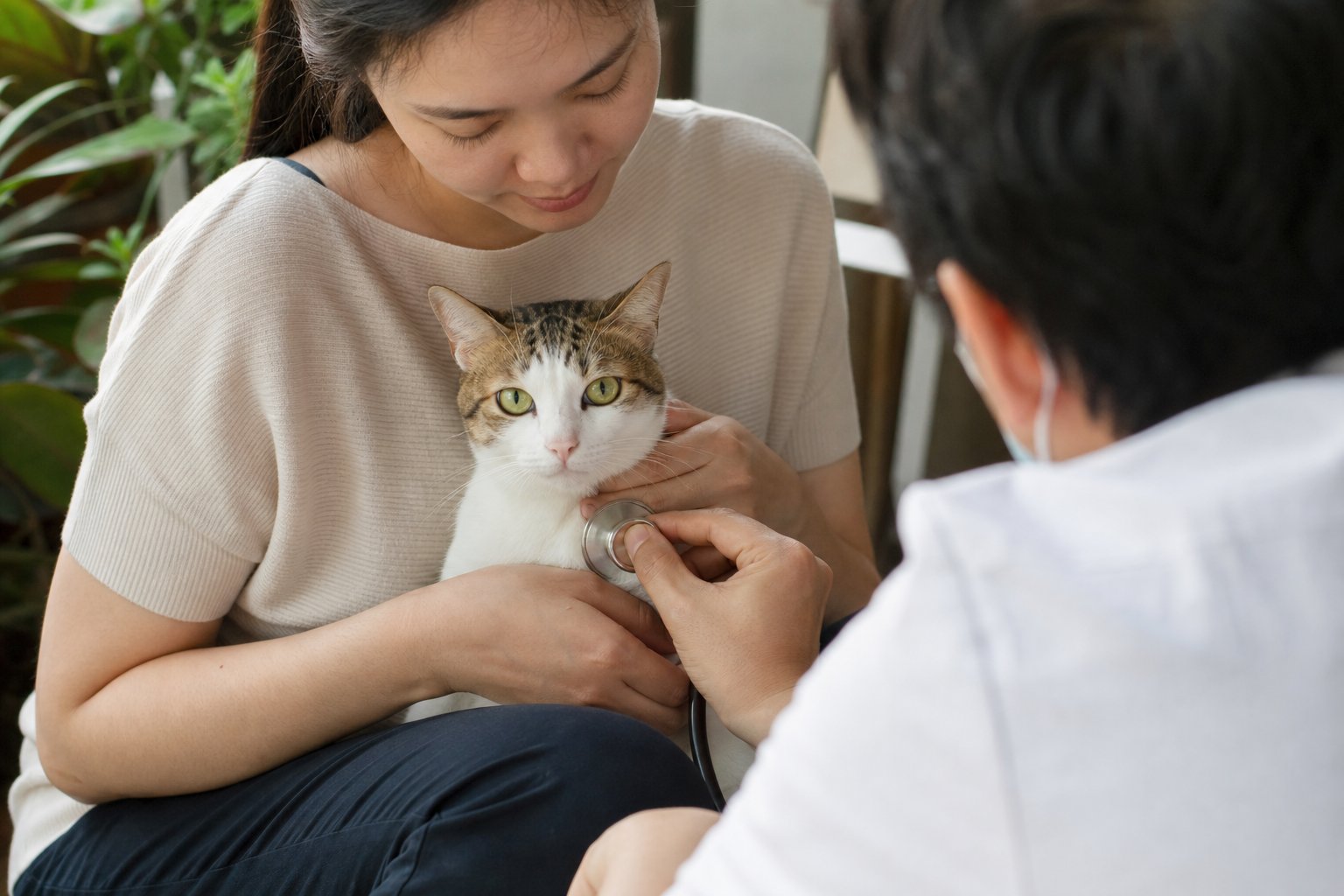
Years 3 onward — cardiac screening joins the schedule. Siamese-line cats carry a recognised HCM risk, and any cat with a heart condition needs a cardiac opinion before anaesthesia for dental work. A stethoscope check every one to two years, escalating to echocardiography if a murmur or irregular rhythm is found, is the usual pattern.
Every year — reassess the plan. Some cats stay comfortable with home brushing alone; others develop subgingival disease that no owner can reach and need a professional clean. Your vet's grading decides which camp your cat is in.
The 60-second daily routine that actually works
Most brushing fails because it starts too fast and too big. Work through this order:
- Choose the moment. After a play session or a meal, when your cat is calm and slightly tired. Avoid times when your cat is already irritated.
- Get into position. Sit with your cat on a non-slip surface, back against your body, one hand under the chin. Never pin a cat down on its back — restraint teaches avoidance.
- Start without the brush. Lift the lip, rub the gum with your finger for three seconds, then reward. Repeat for several days.
- Add paste, no brush. Let your cat taste the enzymatic toothpaste from your finger. Cat-formulated flavours usually sell themselves.
- Introduce the brush. A few strokes on the outer surface of one side only, then stop and reward. Build up over two weeks.
- Extend to both sides and both jaws. Add seconds, not drama. If your cat protests, drop back a step for a few days.
- Finish on a positive. Always end with a play or treat reward, never mid-struggle.
If a cat genuinely cannot tolerate brushing after patient attempts, tell your vet rather than giving up quietly — alternatives include enzymatic oral gels, water additives with veterinary dental accreditation, and professional cleaning intervals shortened to compensate. None of these match daily brushing, but they are far better than nothing.
Food, chews and toys: what helps, what doesn't
Owners often hope a bag of dental kibble will settle the problem. It will not, on its own. Here is an honest assessment:
| Approach | Realistic effect | Notes |
|---|---|---|
| Daily brushing | High | The only method that reaches below the gum line at home |
| Veterinary dental diets | Moderate | Larger kibble encourages chewing; useful as an add-on, not a replacement |
| Water additives and oral gels | Low to moderate | Worthwhile for cats that refuse brushing; check for veterinary dental accreditation |
| Dental chews designed for cats | Low to moderate | Supervise; hard chews can fracture teeth |
| Dry food alone | Low | Many cats swallow kibble whole; texture varies between cats |
| Raw meaty bones | Not recommended for cats | Fracture and obstruction risk outweighs any benefit |
| Ultrasonic brushes marketed for pets | Unproven | Spend the money on professional care instead |
Two hard rules for this breed: never give cooked bones, antlers, hooves or other very hard chews — an Oriental Shorthair's fine teeth are more prone to fracture than a large dog's, and a broken tooth is a dental emergency; and never use abrasive powders or human whitening products on cat teeth.
Storage matters too. In the humid weather typical of a Penang terrace house during the rainy season, dry food left in an opened bag softens and can turn stale or mouldy within weeks. Store it in a sealed container, and check that any kibble you offer is still crisp — stale, softened kibble is chewed less, which removes even the limited mechanical benefit it had.
Professional cleaning: what to expect
A feline dental procedure is not a cosmetic scale at the salon. Under anaesthesia, the vet removes tartar above and below the gum line, probes every pocket, takes dental radiographs to see the roots, and extracts any tooth that resorption or disease has compromised. Most owners are surprised to learn that a mouth which looked mildly inflamed on the outside often hides several diseased roots.
What to ask your vet before booking:
- Is there a pre-anaesthetic examination, blood panel and — given this breed's HCM risk — a heart check?
- Are dental X-rays included, or only visual scaling?
- How are extractions and pain relief handled, and what does post-procedure care involve at home?
- How long should I expect recovery, and what soft-food or feeding changes apply?
- How soon should the next check or clean be scheduled?
Fees differ substantially between clinics, cities and the complexity of the mouth, so treat any single figure you read online as a rough orientation only. Ask your own Malaysian vet or clinic for a written estimate before consenting, and ask whether payment can be staged. The practical move is to set aside a small amount every month from the day a kitten arrives — dental costs arrive as a lump sum, but they rarely arrive as a surprise if you have been saving.
After a cleaning, expect a day or two of grogginess, soft food if extractions were performed, and strict instructions to skip brushing for a set period. Follow the discharge sheet exactly; the mouth heals fast, but reopened sites and hidden discomfort are real risks.
Beyond teeth: the other four things to weigh
Vocalising. Oriental Shorthairs are among the most talkative breeds. The sound is persistent and varied rather than deafening, and the peaks tend to be early morning and the hour before you get home. You can lower the frequency — respond only when the cat is quiet, and make sure daytime energy is spent — but you cannot raise the volume ceiling. If you are a light sleeper or live in a home where carrying sound between rooms is a problem, try a trial stay with a friend's cat of similar lineage before deciding.
Clinginess. Following you room to room, sitting on the keyboard, objecting to closed doors: this is breed programming, not a training failure. The practical fixes are a scheduled 15-minute play session before you leave, food-dispensing toys to extend the day, and serious consideration of a second cat for anyone out of the house for long stretches.
Boredom-led destruction. Pushing things off tables, climbing curtains, opening drawers — all of it is an under-stimulated brain looking for input. The formula is roughly 30 minutes of interactive play split into two sessions, two puzzle feeders, and vertical territory by a window. In a Kuala Lumpur condominium with shared thin walls, redirecting that energy indoors also keeps the noise you create away from the neighbours.
Airway and cold sensitivity. The narrow airway means dust-heavy litter, aerosol air fresheners, incense and smoke are poorly tolerated — switch to a low-dust litter and drop the sprays. The lean, short-coated body chills faster than you expect in air-conditioned rooms, so provide a warm mat and a draught-free bed.
Grooming remains light but not zero: a weekly brush to lift dead hair, a look into those large ears every few weeks, and the daily dental routine above.
When to see a vet
Book promptly, rather than waiting for the next scheduled visit, if you notice any of the following:
- Drooling, bleeding from the mouth, or a sudden change in chewing side
- Refusing food, eating very slowly, or dropping food repeatedly
- Bad breath that is new or persistent
- Pawing at the mouth, face rubbing, or sudden irritability when the head is touched
- Weight loss, hiding, or a drop in play and interaction
- Laboured breathing, fainting, or collapse — treat as an emergency
- Pale or grey gums, or a rapid resting breathing rate at rest
Dental pain in cats is chronic and cumulative; what looks like a minor preference change is often weeks of discomfort. Early treatment is simpler, cheaper and far less invasive than waiting for a tooth to fail.
Who should think twice
Three profiles suit this breed poorly: anyone away from home for long stretches with no companion-cat plan; anyone who needs undisturbed sleep in a home that carries sound easily; and anyone wanting a self-sufficient, low-engagement cat. Any one of those is enough to reconsider — and the same applies to its Siamese relatives.
If none applies, the dental workload is genuinely manageable: brush daily, keep the annual check, save monthly, and screen the heart on schedule. Do that, and the downsides shrink into routine — while the affection, the conversation and the greeting at the door stay exactly as advertised.
Vet disclaimer: This article is general information only and is not a diagnosis or treatment plan. Dental, cardiac and breathing concerns in cats should be assessed by a registered Malaysian veterinarian, who can examine your pet and advise on an appropriate care schedule.
Related reading
- Kitten Biting in Malaysia: A 3-Step Guide to Teaching Your Cat to Keep Their Teeth to Themselves
- Kitten Teething in Malaysia: Timeline, Retained Milk Teeth and What to Do
- Bully Sticks in Malaysia: A Complete Guide to Safe Chewing for Your Dog
- Cat Teeth Cleaning in Malaysia: What It Involves, What Affects the Price, and the Risks to Know
- Dog Chewing Cables and Chargers: A Five-Step Prevention Plan for Malaysian Homes
- Dog Destructive Behaviour in Malaysia: 5 Causes and a Step-by-Step Fix
- Dog Teeth Brushing in Malaysia: A Complete 42-Tooth Care Guide for Pet Parents
- Kitten Teething in Malaysia: A Complete Guide to Milk Teeth, Permanent Teeth and Oral Care
- Pet Dental Care in Malaysia: Plaque, Tartar, Gum Disease and Brushing Guide