
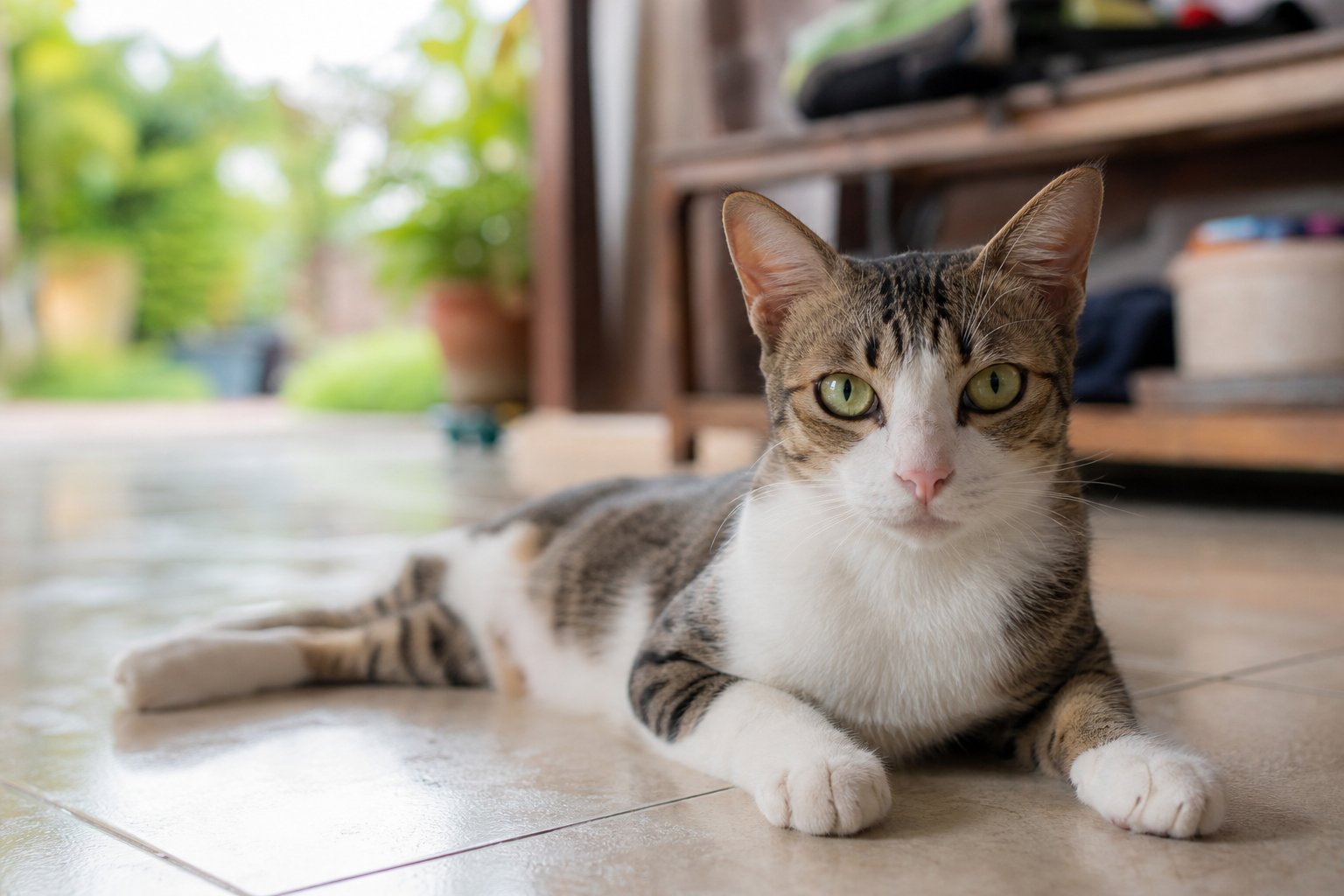
Quick answer: a senior cat that eats less almost always has a real, often treatable reason — inflamed gums, kibble pieces too large to chew, a sense of smell that has dulled with age, or an underlying illness such as kidney disease or an overactive thyroid. You can try softer, stronger-smelling, gently warmed food served in small frequent meals. But if your cat goes 24–48 hours without eating, see a vet the same day: prolonged fasting in cats can trigger fatty liver disease.
Eight common reasons an older cat eats less
1. Inflamed gums and tartar build-up. This is the single most common cause, and the easiest one to check at home. Plaque hardens into tartar over years; the gum line turns red and tender, and every bite hurts. So the cat does the sensible thing and stops eating. Lift the lip and look at the back teeth: a red line along the gums, brown crusted deposits, or noticeable breath are all reasons to book a dental check.
2. Food that is too large or too hard. Senior cats have worn teeth, receding gums and sometimes missing teeth. Big dry kibble becomes uncomfortable or impossible to break up. A simple fix: switch to a pâté or mousse texture, or moisten and soften dry food before serving.
3. A fading sense of smell. Older cats often lose scent sharpness. If food does not smell like anything, it is not worth eating — this is not stubbornness, it is a reduced signal reaching the brain. Warming food slightly and choosing strongly aromatic ingredients compensates directly.
4. Mouth ulcers, stomatitis and oral growths. Watch for drooling, chewing on one side, pawing at the mouth, head shaking or food falling out during a meal. Stomatitis is a stubborn, painful condition that needs veterinary treatment, and any persistent mouth sore should be examined rather than waited out.
5. Chronic kidney disease. As kidney function declines, waste products build up and cause nausea, which suppresses appetite early on. Supporting clues include drinking more, urinating more, and vomiting that seems to come before meals.
6. An overactive thyroid. Early on these cats often eat more yet lose weight. Later, appetite becomes erratic. The signature combination is eating plenty while still getting thinner, sometimes with loud vocalising at night.
7. Diabetes. Increased appetite with weight loss early on, then poor appetite as the disease progresses, alongside heavy drinking and urination.
8. Cancer. Many cancers announce themselves only through steady weight loss. The risk of cancer rises significantly after about seven years of age, so a senior cat that keeps losing weight deserves an investigation rather than the comment that it is simply getting old.
When to see a vet
| Situation | What to do |
|---|---|
| No food at all for 24–48 hours | Vet immediately — fatty liver risk |
| Poor appetite plus vomiting or diarrhoea | Vet the same day |
| Poor appetite plus lethargy or hiding | Vet the same day |
| Intake down more than 20% for a week | Book a check-up and bring weight records |
| Eating more but still losing weight | Book blood work: thyroid and glucose |
| Only accepts one texture, refuses lumps | Inspect the mouth and gums |
| Drooling, one-sided chewing, mouth odour | Vet for a full oral examination |
Why the urgency matters. Cats are not small dogs. When a cat stops eating, the body rapidly mobilises fat for energy and ships it to the liver faster than the liver can process it. The result is hepatic lipidosis — fatty liver disease — which can be fatal. Fasting in a cat is therefore an emergency-level signal, never a situation to manage by waiting for it to become hungry again.
A practical trigger rule: if you notice your senior cat has not finished its meal for two consecutive days, or has refused food entirely for a single day, stop experimenting at home and arrange a consultation.
Appetite boosters that actually work
Texture. Cut food into small pieces, or offer pâté, mousse or broth-style wet food that needs almost no chewing. Broth pouches score twice: high moisture and strong aroma. Hard dry food can be softened with a little warm water, but do not leave it soaking for long — wet kibble spoils quickly in warm, humid conditions.
Temperature. Gently warm food to roughly body temperature, around 35–40°C. Warmth releases volatile aroma compounds, and a cat that can barely smell cold food may suddenly find it appealing. Take food straight from the refrigerator and let it come up to room temperature first; chilled food gives off almost no scent.
Smell. Choose strongly scented proteins — fish-based recipes are usually the most persuasive for reluctant senior cats. Rotate between two or three varieties rather than buying one large pack, because preferences shift week to week in cats that are feeling unwell.
Rhythm. For cats aged ten and above, split the daily amount into three small meals instead of one or two. Smaller portions are easier on an ageing digestive system, and a regular timetable lets the body build an appetite rhythm — meals arrive on schedule, so hunger builds on schedule.
Environment. Put the bowl somewhere quiet, level and easy to reach, with no jumping required. Use a shallow, wide dish so the whiskers never touch the sides — whisker fatigue is real and it makes sensitive cats back away from deep bowls. In multi-cat homes, feed the senior separately in a closed room or a corner the younger cats cannot be bothered to reach, and only open the door once the meal is finished. Separate feeding also stops a young cat from eating the senior's higher-energy food while the senior gets nothing suitable.
A feeding setup that suits Malaysian homes
Hot, humid weather works against you when persuading a cat to eat. Wet food left down too long dries, collects moisture from the air and spoils faster than it would in a cool climate, so serve small portions and discard anything left after about 20–30 minutes. If the feeding area is stuffy, moving the bowl to a shaded, better-ventilated corner can be enough to make a difference.
In a Kuala Lumpur apartment, space is tight and food bowls often end up in the kitchen next to appliances, foot traffic and a litter box — a poor setup for a nervous older cat. Give the senior a stable feeding station away from the litter tray and away from the washing machine, ideally in a room with consistent flooring so a cat with stiff joints does not have to cross slippery tiles at speed.
In a Johor terrace house, there is usually more room but also more coming and going: a gate opening, stray cats at the fence, a younger cat guarding the bowl. The senior needs a feeding spot that is calm and defensible — a back room with the door closed during meals works well — because an older cat that is out-competed will simply walk away rather than fight for food.
What not to do
- Do not switch food in one go. Any diet change should be spread over 7–14 days, mixing in a little more of the new food daily. An abrupt change commonly results in a cat refusing to eat at all.
- Do not add human seasoning. Salt, soy sauce, oil, garlic and onion are harmful to cats, and extra sodium is particularly unhelpful when kidney function is already declining.
- Do not fill up on treats. Treats are nutritionally unbalanced and teach the cat to hold out for something tastier, making the pickiness worse.
- Do not let it fast to build an appetite. This is the most dangerous mistake owners make with cats.
- Do not assume weight loss is normal ageing. Steady slimming always has a cause worth finding.
How to record appetite properly
Vague impressions do not help anyone. When a vet asks how much less the cat is eating, you want a number. Keep a two-week record:
- Weight: weigh the cat at the same time each week — step on a bathroom scale holding your cat, then subtract your own weight — and note it in your phone.
- Dry food: weigh the daily portion on a kitchen scale and record how many grams are left at the end of the day.
- Wet food: record roughly what proportion of each serving was finished.
- Water: fill the bowl to a fixed level daily and photograph the waterline, so you can see whether drinking has increased.
- Abnormal events: vomiting, drooling, hiding, night-time vocalising — write down the date and time of each.
Two weeks of this turns into a clear trend your vet can read in under a minute. Without it, the visit is spent guessing.
Two scenarios worked through
Scenario one: a 13-year-old eating half its usual portion, still drinking and playing normally. Work in this order — lift the lip and inspect the gums for redness, tartar and odour; switch to a soft, strongly scented food for three days; weigh daily to see the trend; if nothing improves, request blood work covering kidney values and thyroid hormone. Dental pain is the most likely explanation in this pattern.
Scenario two: a 15-year-old that refuses food completely this morning and is hiding under the bed. Do not wait and see. Complete refusal combined with a change in behaviour is an emergency signal. At that age, pancreatitis, an acute kidney episode and a gastrointestinal blockage are all possibilities, and every day of delay adds fatty liver risk on top of the original problem.
Preparing for the vet visit
Bring everything that shortens the consultation:
- Your weight record, for as long as you have kept one
- The current food: brand, daily amount given, proportion actually eaten
- Any recent food changes, household moves, or new arrivals — cats or people
- Vomiting and litter tray habits; photographs of vomit or stool are genuinely useful, not embarrassing
- A short timeline of when appetite first declined
An owner who arrives with data can get far more out of a ten-minute appointment than one who describes how the cat has been 'a bit off lately'. If the vet recommends further tests, ask which findings they expect each test to confirm, so you can weigh cost against information.
Vet disclaimer: this article is for general information only and does not replace a veterinary examination. If your cat has stopped eating, is vomiting, hiding, drooling or losing weight, contact a licensed Malaysian veterinarian promptly — appetite loss in cats can become serious within a day.
Related reading
- Cat Teeth Cleaning in Malaysia: What It Involves, What Affects the Price, and the Risks to Know
- Senior Cat Dental Care in Malaysia: Anaesthesia Risk, Gum Disease and Loose Teeth
- Senior Cat Dental Care in Malaysia: Anaesthesia Fears, Gum Disease, Loose Teeth and What to Do
- Bully Sticks in Malaysia: A Complete Guide to Safe Chewing for Your Dog
- Cat Teeth Cleaning in Malaysia: Cost, Anaesthesia Risks & Tooth Resorption
- Dog Chewing Cables and Chargers: A Five-Step Prevention Plan for Malaysian Homes
- Dog Destructive Behaviour in Malaysia: 5 Causes and a Step-by-Step Fix
- Dog Teeth Brushing in Malaysia: A Complete 42-Tooth Care Guide for Pet Parents
- Kitten Biting in Malaysia: A 3-Step Guide to Teaching Your Cat to Keep Their Teeth to Themselves
- Kitten Teething in Malaysia: A Complete Guide to Milk Teeth, Permanent Teeth and Oral Care
- Kitten Teething in Malaysia: Timeline, Retained Milk Teeth and What to Do