
Doberman Pinscher
Doberman Pinscher · Dog · Malaysia
Quick answer
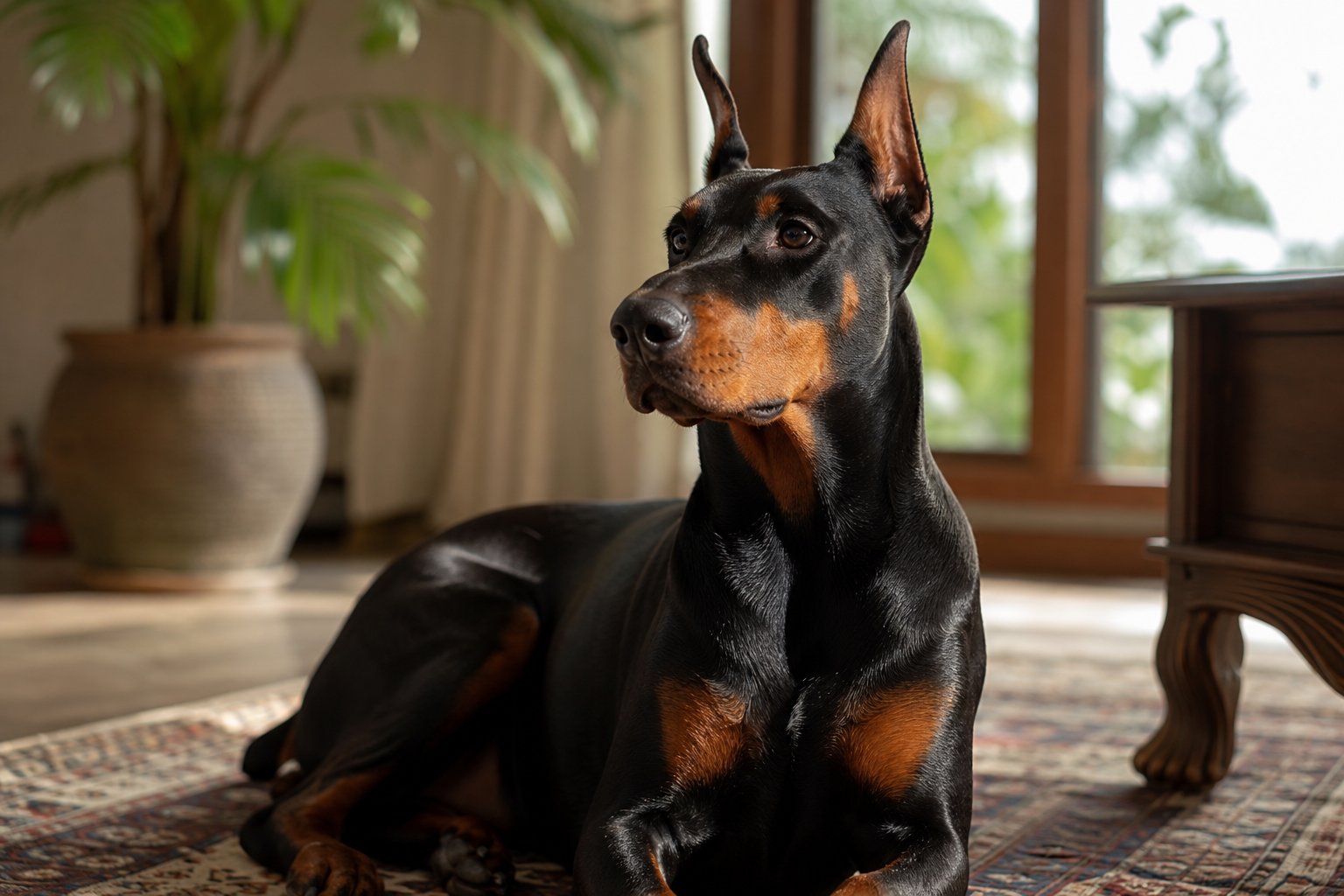
The Doberman Pinscher is a loyal, intelligent large breed that suits committed Malaysian owners with space, time for daily exercise and a cool indoor retreat from the tropical heat.
Quick facts
- Origin
- Germany
- Size
- Large
- Lifespan
- 10-13 years
- Weight
- Large breed, roughly 32 to 45 kg depending on sex and lines
- Coat
- Short, smooth, close-lying coat
- Price guidance
- Ask local breeders for a current quote; prices vary with papers, colour, size and availability.
Personality
- Loyal
- Alert
- Intelligent
- Sensitive
- Active
The Doberman Pinscher is a sleek, powerful working dog from Germany, known for its alertness and deep bond with family. In Malaysia's hot, humid climate, this short-coated breed can live comfortably with sensible heat management and consistent routine. This guide covers temperament, daily care, health watchpoints and what to consider before bringing one into a Malaysian home.
Temperament in a Malaysian Home
The Doberman is loyal, watchful and highly people-oriented, often following its favourite person from room to room. It is intelligent and sensitive, responding best to calm, consistent handling rather than harsh corrections. Many Dobies are affectionate with family but reserved with strangers, which makes early socialisation important, especially in Malaysian condos and landed neighbourhoods where visitors, guards and delivery riders are common. They are active and need mental work, or boredom can turn into barking, chewing or fence-running. With children they can be gentle when raised alongside them and supervised. Their protective instinct is real, so teach polite greeting behaviour and manage the door. In the tropical climate, a hot, tired Doberman can become irritable, so provide shade and rest and avoid pushing training during the midday heat.
Daily Life in Malaysia's Climate
A Doberman's day in Malaysia should balance activity, rest and cool-down time. Its short coat copes reasonably with warmth, but humidity and direct sun still demand care. Plan walks for early morning and evening, keep midday for indoor rest in an air-conditioned or fan-cooled room, and always leave fresh water in several spots. In apartments and condos, check building rules on large dogs and use lifts and corridors calmly. Provide a shaded toileting spot and wipe paws after walks through wet grass or hot pavement. Dobies are social and dislike long isolation, so arrange company or a midday visit if you work long hours. Keep a routine for meals, walks and training, because predictability reduces stress and helps this sensitive breed settle in a busy Malaysian household.
Low-Maintenance Grooming
Grooming a Doberman is refreshingly simple. Brush the short, smooth coat once or twice weekly with a rubber curry or soft bristle brush to remove loose hair and spread natural oils. Bathe only when needed, using a mild dog shampoo, and dry thoroughly afterwards so damp skin does not sit under humid conditions. After walks, wipe the dog down, especially the paws and belly, and check the skin for irritation, ticks or hot spots. Ears need regular checks and gentle cleaning with a vet-approved product, because floppy ear tips can trap moisture. Trim nails every few weeks and brush teeth several times a week. During rainy season, dry the coat well after outings, and inspect skin folds and armpits for redness, since Malaysia's humidity can encourage skin problems.
Exercise for Hot, Humid Days
Dobermans are athletic and need real daily exercise, but the Malaysian climate shapes how you deliver it. Aim for two walks or play sessions in the cooler hours, plus indoor games, scent work or short training bursts during the day. Avoid vigorous exercise in the midday sun, and watch for heavy panting, drooling or reluctance to move, which signal overheating. A brisk morning walk, a shaded garden session and an evening outing usually suit this breed better than one long hot outing. Mental exercise tires a Doberman as much as running, so use puzzle feeders and obedience practice. In condos, stair work and corridor training can help, but keep surfaces cool. Always carry water, choose grassy or shaded routes, and let the dog cool down gradually after activity.
Training a Sensitive, Clever Breed
Dobermans learn quickly and enjoy having a job, so short, frequent sessions beat long drills. Use positive reinforcement with food, toys and praise, and keep rules consistent across the household. Start socialisation early: gentle exposure to different people, sounds, surfaces and calm dogs in safe Malaysian settings helps prevent fear-based reactions. Basic obedience, loose-lead walking and a reliable recall are essential for a large, strong dog. Teach a settle cue so the dog can relax indoors when visitors arrive, and practise door manners to manage protective instincts. Avoid harsh methods, which can damage trust in this sensitive breed. Group classes with a qualified trainer can help, and because the climate is hot, train in the morning or evening and keep sessions brief, ending on success.
Feeding a Doberman in Malaysia
Feed a complete, balanced diet suitable for a large, active breed, and adjust portions to age, activity and body condition rather than following a fixed amount. Puppies need growth-appropriate food and controlled portions to support steady development. Split daily food into two meals, which suits the breed's deep chest and reduces the risk of gulping. Avoid vigorous exercise right before and after meals. In Malaysia's heat, food spoils quickly, so store kibble in a cool, dry, sealed container and wash bowls daily. Fresh water must be available at all times, especially after walks. Keep treats modest and use them for training. If you change diets, transition gradually over several days, and ask a local vet for advice if the dog gains or loses weight or develops digestive issues.
Health Watchpoints for Malaysian Owners
Dobermans are generally robust but have documented breed tendencies worth knowing. Dilated cardiomyopathy is a heart condition seen in the breed, so watch for coughing, fainting, weakness or reduced exercise tolerance and arrange regular vet checks. Bloat, or gastric dilatation-volvulus, is a sudden emergency: a distended belly with unproductive retching needs immediate veterinary care. Hip and elbow concerns and von Willebrand's disease, a bleeding disorder, are also reported in the breed. In Malaysia's humidity, skin and ear irritation are common, so check regularly. Keep vaccinations, parasite prevention and annual health checks current with a local vet, and mention breed-specific risks so screening can be discussed. Early attention to subtle changes makes a real difference.
Dilated cardiomyopathy
Watch for: Coughing, fainting, weakness, reduced exercise tolerance or unusual panting.
Care: Arrange regular veterinary heart checks and report any of these signs promptly; keep exercise moderate in heat.
Gastric dilatation-volvulus (bloat)
Watch for: A suddenly distended belly with unproductive retching, restlessness or drooling.
Care: Treat as an emergency and contact a vet at once; feed two smaller meals and avoid vigorous activity around mealtimes.
Von Willebrand's disease
Watch for: Prolonged bleeding from minor cuts, nosebleeds or bleeding gums.
Care: Ask a vet about screening and inform any clinic of the breed tendency before surgery or dental work.
Hip and elbow concerns
Watch for: Stiffness, reluctance to rise, lameness or reduced willingness to exercise.
Care: Keep weight healthy, choose supportive surfaces and have a vet assess any ongoing lameness.
Choosing a Doberman in Malaysia
Before choosing a Doberman, assess your home, schedule and budget honestly. This is a large, strong, intelligent dog that needs daily exercise, training and company, so long working hours or a cramped, unshaded space are poor fits. In condos, confirm building rules for large breeds and plan lift and corridor etiquette. Meet the puppy's parents if possible, ask about health screening and see the pups in a clean, calm environment. A reputable breeder will ask you questions too. Consider adopting through local rescue networks if a suitable Doberman or mix is available. Plan for a cool indoor rest area, vet access and time for socialisation. Choose a dog whose energy matches your routine, and commit for its whole life.
Caring in Malaysia
- Its short coat handles Malaysian heat well, but provide shaded, air-conditioned indoor rest, constant fresh water and avoid vigorous exercise during the midday sun.
- Grooming is low: brush the short coat once or twice weekly, wipe the dog down after walks, and check ears and skin for irritation.
- Watch for DCM signs such as coughing, fainting or exercise intolerance; a suddenly distended belly with retching is a bloat emergency — see a vet at once.
Frequently asked questions
Can a Doberman live in a Malaysian condo?
Yes, a Doberman can live in a condo if building rules allow large dogs and you provide daily exercise, training and cool indoor rest. Space matters less than routine, but confirm condo pet policies before committing, and plan walks in the cooler hours.
How much exercise does a Doberman need in Malaysia's heat?
A Doberman needs daily exercise split into cooler morning and evening sessions, plus indoor mental work. Avoid vigorous activity in the midday sun, watch for overheating, and always carry water. Two shorter outings usually suit the tropical climate better than one long hot walk.
Is the Doberman's short coat suited to Malaysia?
Yes, the short coat handles Malaysian warmth reasonably well, but humidity and sun still require care. Provide shaded, air-conditioned or fan-cooled rest, constant fresh water and avoid midday exercise. Wipe the dog down after walks and check skin and ears for irritation.
How often should I groom a Doberman?
Grooming is low: brush the short coat once or twice weekly and wipe the dog down after walks. Check ears and skin regularly for irritation, bathe only when needed, and dry thoroughly. Trim nails every few weeks and brush teeth several times a week.
Are Dobermans good with children?
Dobermans can be gentle and loyal with children when raised alongside them and supervised. Teach children respectful handling and give the dog a quiet retreat. Their size and energy mean interactions should always be calm and monitored, especially with young children.
What health signs should Doberman owners watch for?
Watch for coughing, fainting or reduced exercise tolerance, which can suggest heart concerns, and treat a distended belly with retching as an emergency. Also note prolonged bleeding or lameness. Keep regular vet checks and mention breed tendencies so screening can be discussed.
Related breeds
Dog guides →


Related articles
- Doberman Care in Malaysia: Exercise, Heart Health and Housing for New Owners
A Dobermann can work for a Malaysian first-time owner, but only with roughly two hours of daily exercise and training, annual heart screening from age two to three, and a home that clearly allows a 30–40 kg dog.
- Doberman in Malaysia: A New Owner's Guide to Exercise, Heart Health and Housing
Dobermans are loyal, intelligent working dogs that need about two hours of daily activity and lifelong heart screening. In Malaysia, the biggest new-owner hurdles are heat, housing rules and the cost of preventive vet care.
Related products at PetChill




Sources
Last reviewed: 2026-11-16
For health concerns, consult a licensed veterinarian in Malaysia.