
Chapter 1: What Role Do Treats Play — Reward or Meal?
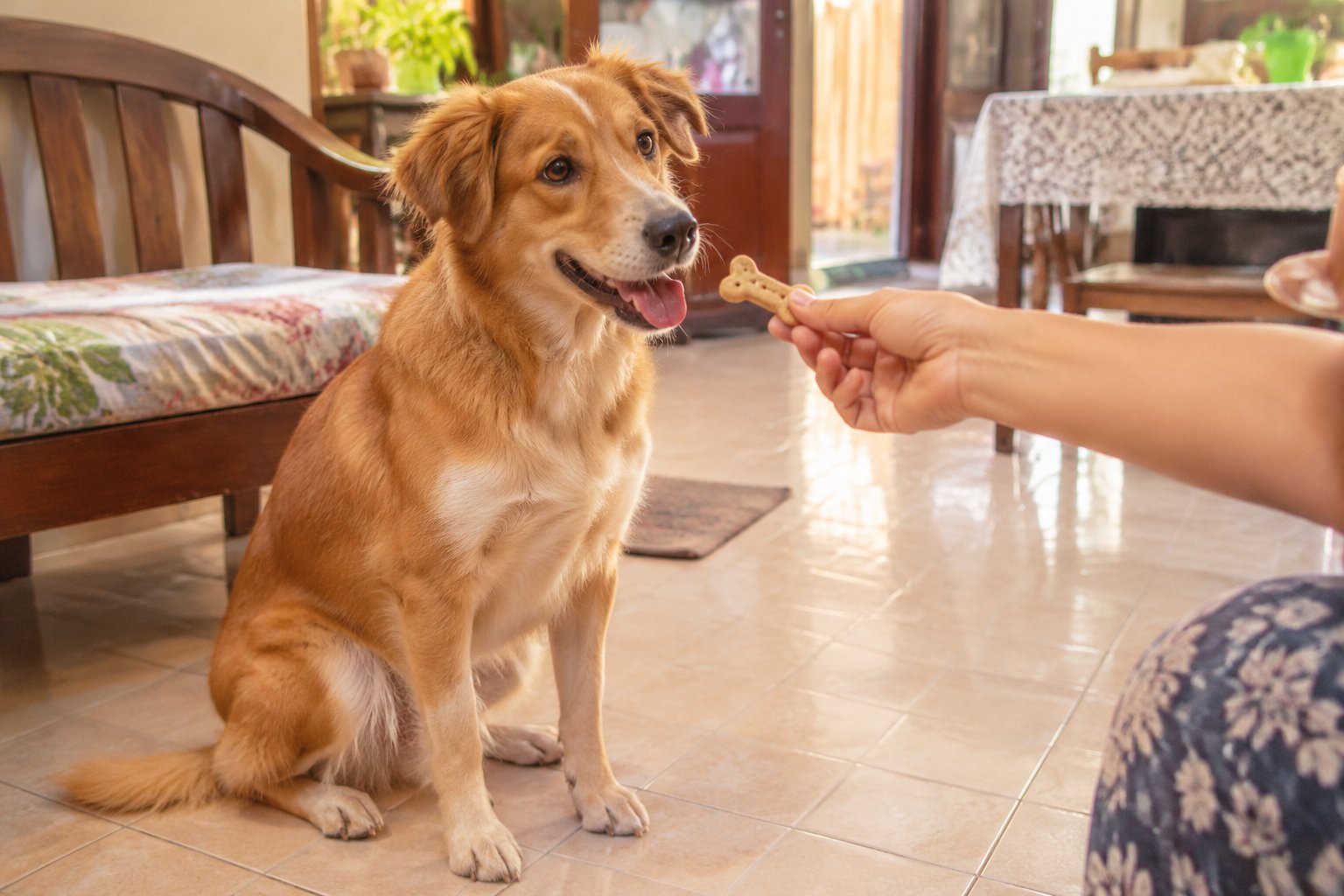
Treats are not meals. In nutritional terms, a treat is a small extra given between meals, and for most pets it should make up no more than about ten percent of daily calorie intake. The other ninety percent should come from a complete and balanced main diet. In Malaysian households, treats often sneak in through table scraps, kuih shared at gatherings, and rewards during training — and these add up quietly. Think of treats as a tool: they reinforce good behaviour, help with recall and crate training, and build trust. They are not a substitute for a proper meal, and they should never be used to make up for a poor-quality main diet. If your pet is overweight or has a health condition, ask your vet how to fit treats into the plan before you start.
This chapter is about getting the balance right. Treats do real work in training and bonding, but they only help when they stay small, deliberate, and counted. The sections below cover how to size a treat, how to handle the local situations where treats pile up without anyone noticing, and how to keep a simple record so the ten percent rule holds in practice rather than just in theory.
Sizing a Treat So It Stays "Extra"
The ten percent figure is a ceiling, not a target. For a small cat or a small dog, that ceiling is a very small amount of food, which is why portion awareness matters more than brand or type. A useful habit is to set aside the day's treat allowance in the morning — physically, in a small container — and give only from that. When the container is empty, treats are done for the day. This turns an abstract percentage into something you can see.
Treat size should match the animal, not the packet. Break larger treats into pea-sized or smaller pieces for cats and small dogs; a single large biscuit can be a meaningful share of a small pet's daily intake. For training, many repetitions matter more than size, so small pieces given often work better than one big reward. If you are using treats heavily in a training session, count them against the day's allowance and reduce the main meal slightly if needed — but do this thoughtfully, and only within the ten percent ceiling, never by cutting the main diet below what the pet needs.
Treats should also be appropriate to the species. Cat treats for cats, dog treats for dogs; human foods that are safe for one species are not automatically safe for the other. Keep treats free of bones, and avoid anything that could splinter or be swallowed whole. Fresh water should always be available, especially in Malaysia's heat, since treats — particularly dry ones — add to a pet's water needs.
Where Treats Sneak In: Local Routines
In Malaysian households, treats often sneak in through table scraps, kuih shared at gatherings, and rewards during training — and these add up quietly. Each of these deserves its own attention.
Table scraps are the biggest hidden source. A piece of chicken skin, a spoon of gravy, a bit of rice — none looks like much on its own, but across a day and across several family members, it becomes a second meal. The fix is a household rule: scraps go in the bin, not to the pet, and everyone who feeds the pet knows the rule. Visitors and children need to hear it too, because they are often the ones slipping food under the table.
Kuih and festive food are a particular trap during Hari Raya, Chinese New Year, Deepavali, and family gatherings. Kuih are typically sweet, rich, and calorie-dense, and many contain ingredients — dairy, sugar, sometimes chocolate or raisins — that are unsuitable or unsafe for pets. Chocolate and raisins are well-known hazards for dogs, and rich or fatty foods can cause digestive upset. The kindest approach is to keep festive food away from pets entirely and to give a pet-appropriate treat instead if you want the pet to feel included. Never let a guest "just give a little" without checking with you first.
Training rewards are the most legitimate use of treats, but they still count. If you train with food several times a day, measure those rewards into the daily allowance. For pets in apartments, training sessions are often short and frequent, which is good — short sessions with small rewards keep the total low. Use the treat as payment for a behaviour, delivered immediately, then move on. For recall and crate training, a high-value treat given promptly and then withdrawn works better than a handful given slowly.
Keeping a Simple Record
You do not need an elaborate system. A note on the fridge or a phone note listing the day's treat allowance and what has been given is enough. Weigh or measure the main meal so you know what the ninety percent looks like, and check your pet's body condition — ribs easy to feel but not see, a waist visible from above — every couple of weeks. In a tropical climate, pets may be less active during the hottest parts of the day, so watch for weight creeping up during rainy or hazy periods when walks are shorter. If the waist is disappearing, the treats are probably the first place to look.
Checklist
- Treats make up no more than about ten percent of daily calorie intake; the other ninety percent comes from a complete and balanced main diet.
- Set aside the day's treat allowance each morning and give only from it.
- Break treats into small pieces sized to your pet.
- Use species-appropriate treats; no bones, nothing that splinters.
- Table scraps go in the bin, not to the pet — and everyone in the household knows it.
- Keep kuih, festive food, chocolate, and raisins away from pets.
- Count training rewards against the daily allowance.
- Fresh water available at all times.
- Check body condition every couple of weeks.
- Never use treats to make up for a poor-quality main diet.
Common Mistakes
- Treating "small" as "free" — many small pieces still add up.
- Letting guests and children feed the pet without checking.
- Using one large biscuit per reward instead of small pieces.
- Feeding cat treats to dogs or dog treats to cats.
- Assuming festive food is fine because the pet "has had it before."
- Cutting the main meal to "make room" for treats without veterinary advice.
- Forgetting that training sessions across the day are still treats.
When to Ask a Vet
If your pet is overweight or has a health condition, ask your vet how to fit treats into the plan before you start. Also speak to your vet if your pet is gaining or losing weight without an obvious reason, if treats seem to cause digestive upset, if you are unsure whether a particular food is safe, or if you are managing a pet with a diagnosed condition such as diabetes or kidney disease, where treat choices need professional guidance. Your vet can help you set an appropriate allowance and choose treats that fit your pet's needs.