
Chapter 2: Types of Treats — Choose Wisely for Health
Walk into any pet shop in Malaysia and you will see soft chews, biscuits, jerky, dental sticks, freeze-dried meat, and dried fish. Each has trade-offs. Soft chews are easy to break into small pieces and good for training, but they stick to teeth. Biscuits are convenient but often high in starch. Jerky and dried meat are palatable but can be salty. Dental chews help reduce plaque but are not a replacement for brushing. Freeze-dried single-protein treats suit pets with sensitivities. In our climate, avoid treats that are sticky, sugar-coated, or sold loose from open bins where humidity and pests can spoil them. Choose sizes suited to your pet — a large chew for a small dog is a choking risk. When in doubt, pick simpler products with shorter ingredient lists and clear Malaysian labelling.
The goal of this chapter is not to memorise brands but to build a simple habit: look at what a treat is made of, how it is stored, and how it fits your pet's size and daily routine. In a hot, humid country where many of us live in apartments, those three questions prevent most treat-related problems before they start.
Matching the Treat to the Job
Treats do different jobs, and the best choice depends on what you need at that moment.
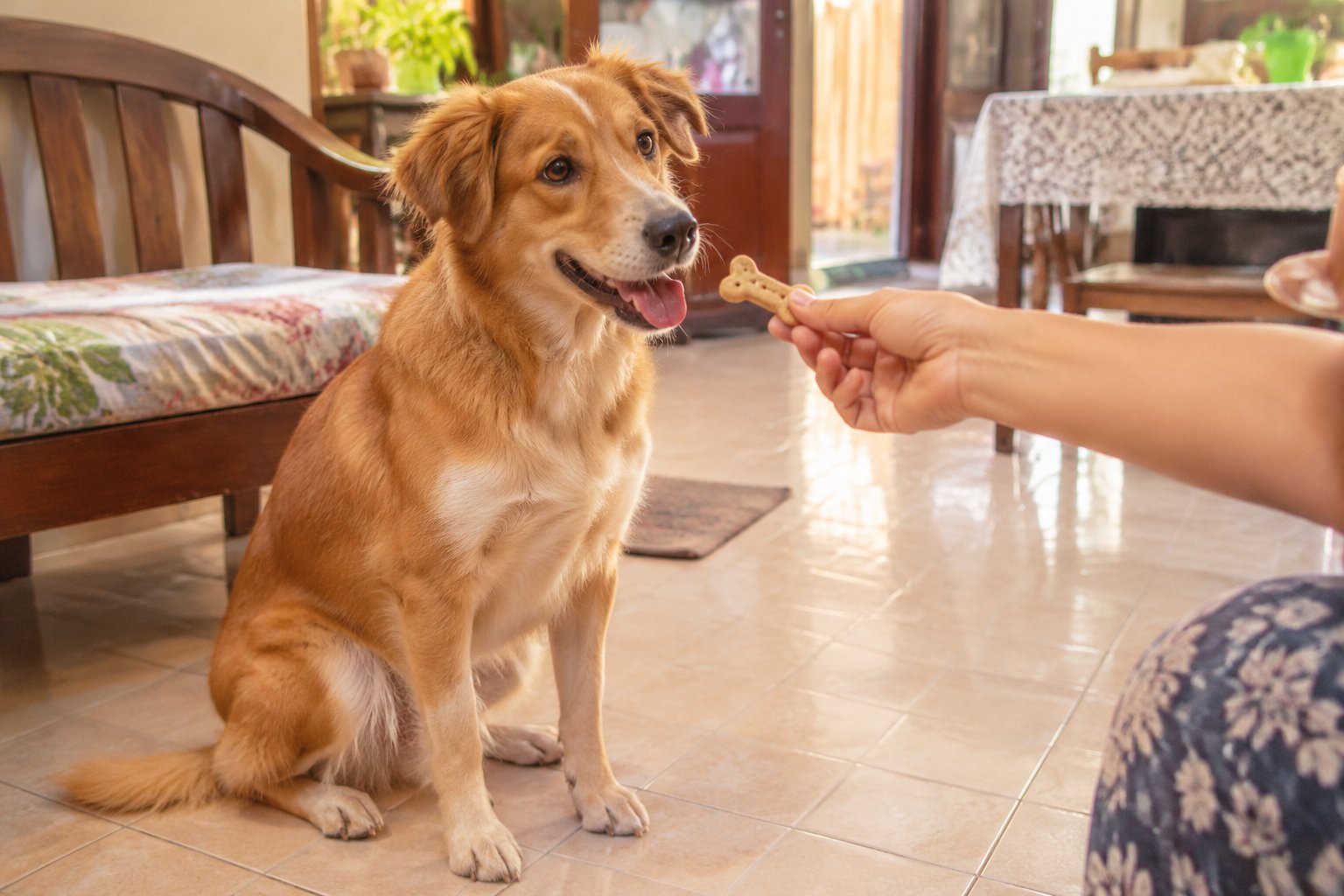
For training, you want something small, quick to eat, and easy to break. Soft chews fit this well because you can pinch off tiny pieces, and a cat or dog stays focused instead of chewing for minutes. The trade-off is that soft, sticky textures cling to teeth, so keep training treats as a small part of the day and pair them with regular brushing or dental care.
For keeping a pet occupied — say, while you are out at work or during a rainy afternoon in a flat — longer-lasting chews and dental sticks have a role. Dental chews help reduce plaque but are not a replacement for brushing, so treat them as a supplement, not a substitute. Biscuits are convenient but often high in starch, which means they add calories quickly for little nutritional benefit.
For pets with sensitivities, freeze-dried single-protein treats are a practical option because they keep the ingredient list short and the protein source clear. Jerky and dried meat are palatable but can be salty, so read the label and keep portions modest, especially for small pets and those with health conditions.
Storage and Hygiene in a Tropical Home
Heat and humidity are the quiet enemies of treats. Sticky, sugar-coated products attract pests and spoil faster, and treats sold loose from open bins are exposed to humidity, dust, and pests every time the lid is opened. Prefer sealed, clearly labelled packaging, and once opened, store treats in an airtight container in a cool, dry place — not on a sunny windowsill or beside the stove.
Watch for the signs of spoilage: dampness, clumping, a sour or musty smell, discolouration, or visible insects. If a treat looks or smells off, throw it out rather than risk your pet's stomach. Wash your hands after handling jerky and dried meat, and keep treat containers away from areas where pets sleep or where food is prepared for people.
Size, Shape, and Your Living Space
Choose sizes suited to your pet — a large chew for a small dog is a choking risk. The same applies to cats: a treat designed for a large dog is far too big. Match the treat to your pet's mouth, not to the size of the packet or the price.
In apartments, consider the mess and noise too. Crumbly biscuits and hard chews leave debris on floors and rugs, and some pets gulp chews too fast. Supervise chewing, especially with dental sticks and dried items, and remove any piece that breaks into a sharp or swallow-sized fragment. For multi-pet homes, give treats separately so a faster eater does not steal from a slower one.
A Practical Treat Checklist
- Read the ingredient list first; shorter lists with recognisable ingredients are easier to judge.
- Check the label is clear and in Malaysian labelling you can actually read — including the protein source and any stated purpose.
- Choose a size suited to your pet's mouth and weight.
- Prefer sealed packaging over loose bins.
- Store opened treats airtight, cool, and dry.
- Break soft chews into small pieces for training.
- Keep dental chews as a supplement to brushing, not a replacement.
- Offer single-protein freeze-dried treats when sensitivities are a concern.
- Supervise chewing and remove broken fragments.
- Keep portions small so treats do not crowd out balanced meals.
Common Mistakes
- Buying a large chew "to last longer" for a small pet, creating a choking risk.
- Leaving treats in a hot car boot or on a sunny balcony.
- Scooping from open bins because it seems cheaper or more convenient.
- Assuming dental chews replace brushing.
- Feeding salty jerky freely without checking the label.
- Mixing many new treats at once, making it hard to tell what upset your pet.
- Letting treats become a large share of daily food.
When to Ask a Vet
Ask your vet before introducing new treats if your pet has a diagnosed condition such as kidney, heart, or urinary issues, is on a prescription diet, is overweight, or has known food sensitivities. Seek veterinary advice promptly if your pet shows vomiting, diarrhoea, itching, swelling, difficulty breathing, or choking after a treat, or if a chew breaks and is partly swallowed. When in doubt, pick simpler products with shorter ingredient lists and clear Malaysian labelling — and let your vet guide the rest.