
Chapter 4: Training Treats — The Art of Rewarding
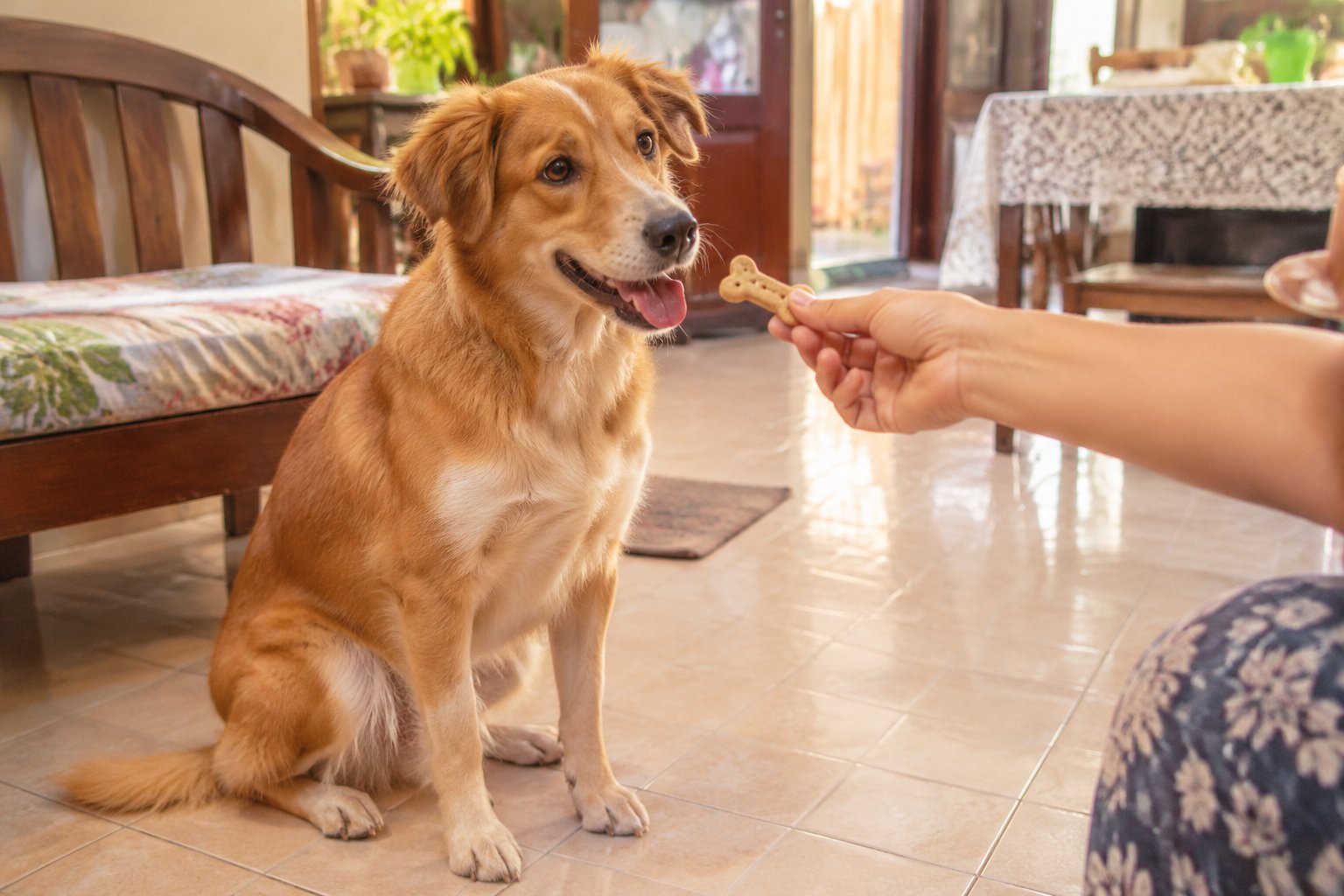
Training treats are a tool, not a snack. Their job is to deliver a quick, clear "yes" the moment your cat or dog does the right thing, then disappear so the lesson can continue. That is why the physical qualities of the treat matter as much as the flavour: training treats should be tiny, soft, and quick to eat so your pet stays focused. Pea-sized pieces are enough for most dogs; for cats, even smaller. Everything below builds on that principle for real Malaysian homes — apartments, corridors, lifts, humid afternoons, and pets who share close quarters with neighbours.
Sizing and choosing treats for apartment life
In Malaysian apartments, where space is limited, short frequent sessions work better than long ones, and high-value treats help when teaching recall or settling around lifts and corridors. A two- to three-minute session in the hallway, repeated a few times a day, teaches more than a single long drill that ends in frustration for both of you.
Use a mix: ordinary treats for easy behaviours, something special for difficult ones. Keep the ordinary rewards for things your pet already knows well — sitting before the door opens, coming when called two steps away. Save the special item for the hard stuff: recall past a distraction, or staying calm when the lift doors open and a neighbour steps out. If the special treat appears for everything, it stops being special.
Keep training treats low in calories so a session does not become a meal — break soft chews into quarters. A treat bag that holds a handful of whole chews can quietly turn into a lot of extra food over a week of daily training. Quartering soft chews stretches one treat into four rewards and keeps each reward small enough to swallow in a second.
Avoid hard biscuits during training because crunching slows the session. A biscuit that takes ten seconds to crunch is ten seconds your pet is not learning, and the timing of the reward drifts away from the behaviour you wanted to mark. Soft pieces let you reward, reset, and repeat in a steady rhythm.
Training in Malaysian heat and humidity
In hot weather, train in the cooler early morning or evening, and always have fresh water available. This matters even indoors: a stuffy apartment corridor or a sunny balcony can heat up quickly, and a pet who is panting is not in a learning frame of mind. Soft treats also spoil faster in warm, humid conditions, so carry only what you need for one session and keep the rest sealed and stored properly. If a soft treat has been sitting in a warm pocket or a hot car, throw it out rather than risk a stomach upset.
Watch the floor surface too. Tiled floors in Malaysian homes can be slippery for an excited dog doing quick turns, and a cat chasing a tossed treat across smooth tiles may skid. Short sessions on a non-slip mat or a rug reduce the chance of a slip during enthusiastic reward-chasing.
Managing weight and food-motivated pets
If your pet is food-motivated but overweight, measure out part of the daily ration and use that as training rewards instead of extra treats. This keeps the total intake the same while turning ordinary meals into pay. For cats, a portion of their usual wet or dry food can work well as a low-value reward; reserve a tiny piece of something smellier for the difficult behaviours. For dogs, weighing or scooping the day's ration in the morning and setting aside the training portion makes the swap easy to track.
Food motivation is an advantage, not a problem — it means you have a currency your pet values. The skill is spending it carefully so that training sessions add enrichment without adding weight.
Checklist before each session
- Treats cut to pea-size for dogs, smaller for cats
- A mix of ordinary and high-value rewards ready
- Soft treats only — no hard biscuits during training
- Session planned for early morning or evening in hot weather
- Fresh water available before and after
- Training portion measured out of the daily ration, not added on top
- A short plan: two or three repetitions of one behaviour, then stop
- Non-slip surface for fast-moving rewards
Common mistakes
- Using treats that are too big. A large treat takes longer to eat and fills your pet up, ending the session early.
- Rewarding after the moment has passed. The treat must arrive within a second or two of the behaviour, or your pet learns something else.
- Training during the hot part of the day. Panting pets do not learn well, and heat stress is a real risk.
- Letting the treat bag become a second meal. Always count training rewards against the daily ration.
- Saving the special treat for nothing. If everything earns the top reward, nothing does.
- Long sessions in a small space. In an apartment, several short sessions beat one long one.
When to ask a vet
Talk to your veterinarian before changing how you feed or reward your pet if it is overweight, on a prescription diet, or has a history of stomach upset, allergies, or pancreatitis. Ask for guidance if your pet seems unwell after training treats, refuses food it normally enjoys, or if you are unsure how to split the daily ration safely. If your pet shows signs of heat stress during or after a session — heavy panting that does not settle, drooling, weakness, or confusion — stop training, move to a cool place, offer water, and seek veterinary advice promptly. And if training progress stalls or your pet seems stressed rather than engaged, a vet check is a sensible first step before assuming it is a training problem.