
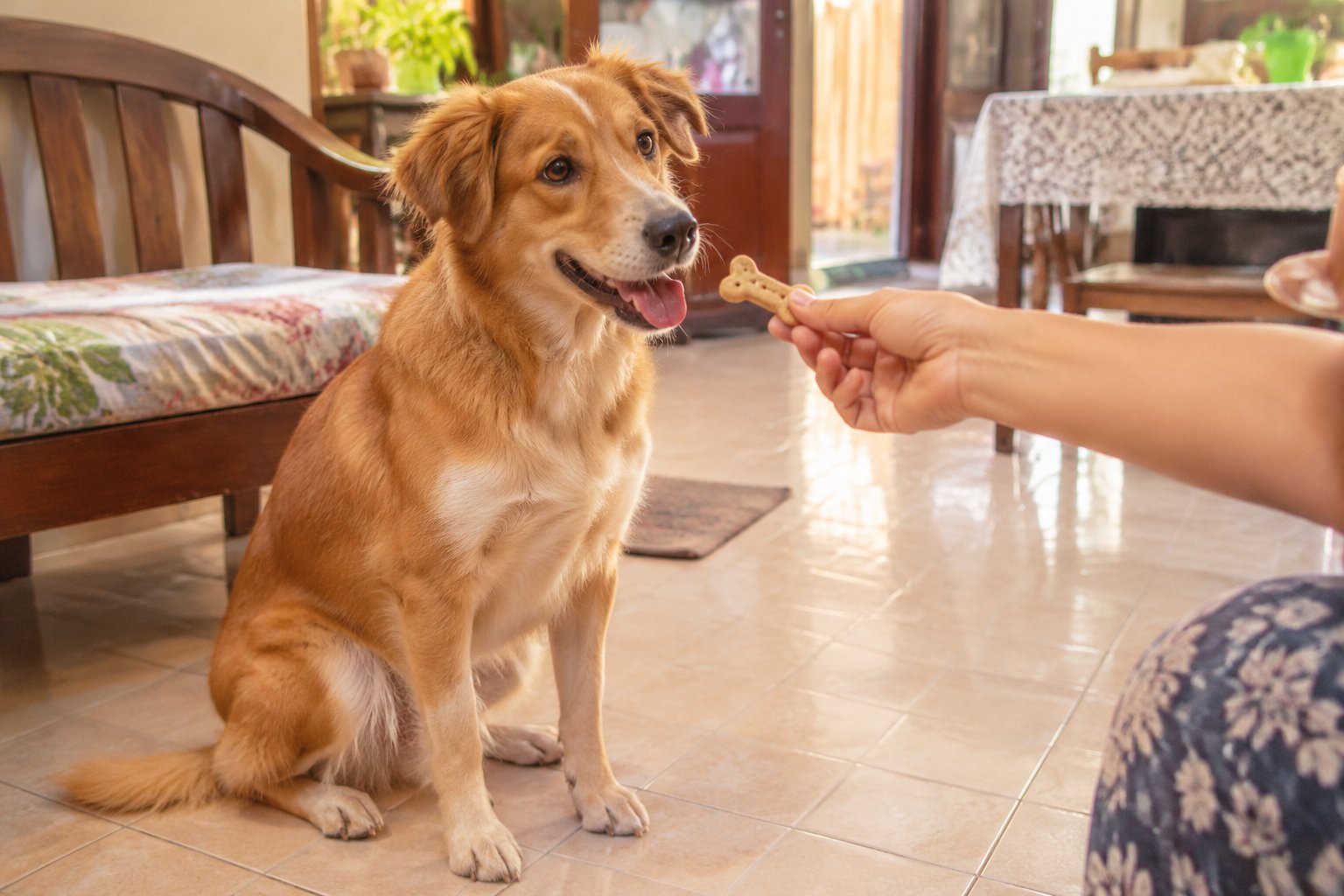
Chapter 5: Dental Treats — Options Beyond Brushing
Dental chews and sticks can help scrape plaque from teeth, but they are not a substitute for brushing, and not all pets can safely use them. Think of them as a small supporting habit — useful on the days brushing doesn't happen, helpful for a pet that tolerates chews well, but never the foundation of dental care. This chapter covers how to choose chews sensibly, how to fit them into a Malaysian routine, and the warning signs that mean you should stop relying on treats and book a vet visit instead.
Choosing a Chew That Fits Your Pet
Choose products with a recognised dental claim and a shape and size matched to your pet. The claim matters because it tells you the product has been formulated and tested for dental use rather than simply marketed as a snack. Match the size to your pet's mouth, not just its weight — a chew that is too small for a large dog can be swallowed whole, and one that is too large for a small dog or cat may be gnawed awkwardly or broken into chunks.
Texture is the other half of the decision. A chew should give slightly under pressure. Too hard a chew can fracture teeth, especially the large upper premolars that do most of the crushing. Avoid antler or hoove chews that are harder than teeth, and never give cooked bones — cooked bone splinters and is far more dangerous than raw bone, which itself is not a routine recommendation for most households.
Cats are not small dogs. Many dog chews are unsuitable for cats in both size and hardness, and most cats do better with a purpose-made feline dental treat or chew than with a scaled-down dog product. If your cat ignores chews entirely, that is normal — brushing and vet checks matter more for cats than any treat.
Fitting Treats Into a Tropical Routine
In Malaysia's humid climate, store dental chews sealed and dry; soft or mouldy chews should be discarded. A chew that has absorbed moisture from the air can go soft, grow mould, or develop an off smell, and feeding it is not worth the risk. Keep the original resealable bag or a tightly closed container, store it away from the kitchen steam and the bathroom, and check each piece before handing it over. If a chew feels damp, looks discoloured, or smells stale, throw it out.
Some dental treats are high in calories, so reduce the main meal slightly on days you give them. This is easy to forget in a household where treats are handed out casually, and it matters most for indoor apartment pets that get limited exercise. A simple habit: give the chew at a set time — often in the evening when the family is home — and scoop a little less kibble into the bowl that same day. For cats and small dogs, even a modest chew can be a meaningful share of daily intake, so check the feeding guidance on the pack and adjust.
Chewing time also needs supervision. Give chews when you can watch, not as a leaving-the-house distraction. Remove the stub once it becomes small enough to swallow. In a warm, humid home, a chew left on the floor overnight will soften and pick up dust and insects — pick it up and bin it.
A Simple Dental-Treat Checklist
- Product carries a recognised dental claim.
- Size and shape match your pet's mouth, not just its weight.
- The chew gives slightly under thumb pressure — not rock hard.
- No cooked bones, antlers, or hooves.
- Stored sealed and dry; each piece checked before feeding.
- Soft, damp, discoloured, or mouldy chews discarded.
- Main meal reduced slightly on chew days.
- Chew given under supervision, stub removed when small.
- Cats given cat-appropriate products, not scaled-down dog chews.
- Brushing still happening on most days.
Common Mistakes
The most common mistake is treating chews as a replacement for brushing. They are not — they help at the margins. The second is choosing by price or packaging rather than by dental claim and fit. The third is leaving a chew down all day, which in a humid home means it softens and becomes a swallowing risk. The fourth is forgetting the calorie adjustment, particularly for apartment pets with limited daily activity. The fifth is ignoring early signs — bad breath dismissed as "normal for pets" is often the first visible sign of gum disease.
When to Ask a Vet
If your pet has bad breath, tartar, or bleeding gums, see your vet — dental disease is common in Malaysian pets and needs proper assessment, not just chews. Also book a visit if your pet drops food, chews on one side, paws at its mouth, drools more than usual, or refuses chews it used to enjoy. Stop giving chews and call the clinic if a piece is swallowed whole, if a tooth chips or loosens, or if your pet gags or coughs while chewing. Pets with known dental disease, missing teeth, or a history of choking should have their chew options cleared by the vet first.