
Short answer: identify what kind of seller you are dealing with, ask for documents you can verify rather than accept, visit the actual place where the kittens are raised, check the parents' health testing, confirm the kitten is at least eight to twelve weeks old and fully weaned, and get every promise in writing. Price is the last thing you should discuss, not the first.
Three ways to get a cat in Malaysia
The word cattery, or cat seller, covers at least three very different operations, and each one gives you a different set of documents and a different level of risk.
A pet shop buys or consigns animals from third parties and sells them over a counter. A home-based breeder mates their own cats and raises the litter in a private home, usually advertising through social media or word of mouth. A rescue group or shelter places animals that it has taken in, typically on a non-profit basis. These three are not interchangeable, and comparing them as if they were one category is the most common mistake new buyers make.
| Where you are buying from | What you can ask to see | What you should confirm | Typical weak point |
|---|---|---|---|
| Pet shop | Business and animal sale documentation, vaccination cards, source records | The licence or permit covers the premises you are standing in | The shop floor may not be where the animals were raised |
| Home-based breeder | Original vaccination card, microchip details, parents' health reports | You are shown the room where the litter actually lives | No external inspection of space, hygiene or record keeping |
| Rescue group or shelter | Adoption contract, vaccination and deworming history, temperament notes | Which vet treated the animal and when | Few breed choices; mostly adults or mixed breeds |
Ask the seller, in their own words, what they are. Then match the answer to the documents you request. A pet shop that cannot show its source records, or a home breeder who will not let you see the mother cat, has told you something important before you have spent a ringgit.
Verify the seller's status before you fall in love with a kitten
The single most effective habit is this: verify before you bond. It is remarkably easy to overlook a missing document once you have held a kitten.
Ask three plain questions. Which authority issued your document? What is the reference number? Who can I contact to confirm it? A confident seller answers immediately and offers to show the original. A hesitant seller changes the subject, sends a blurry screenshot, or insists that everyone in the trade works this way.
Be sceptical of the word licensed on its own, because it is used loosely. It can mean a business registration, a local council permit, a veterinary authority approval, or a breed registry listing. Each proves something different, and none of them automatically proves that the animal in front of you was raised legally and healthily. Write down exactly what the document is before you treat it as reassurance.
Where a seller claims a licence or registration, take the reference number and confirm it yourself with the Department of Veterinary Services or your local authority, rather than accepting a photograph. If a seller refuses to give a number at all, or tells you that checks are unnecessary because their social media following is large, treat that as a red flag, not as reassurance.
It also pays to ask who actually owns the mother cat. A kitten bred from a cat the seller does not own raises questions about where it came from and who is accountable for its early care.
Cattery registration is not a health guarantee
Many buyers assume that a registered cattery equals a healthy cat. It does not, and this confusion costs people money every day.
International registries such as CFA and TICA allow a breeder to register a cattery name. That registration gives the breeder the right to issue pedigree documentation under that name and to enter cats in shows. It is a naming and record-keeping system. It does not inspect living conditions, review health testing, audit record keeping, or evaluate how kittens are socialised.
So a registered cattery name is neither a guarantee of health nor a reason to distrust a seller. What matters is what the parents have been tested for, and whether you can see the reports. For most breeds, the sensible questions are straightforward: has the father or mother been screened for genetic conditions common to the breed, has a veterinarian examined the heart, and are there dated reports you can photograph?
Ask to see originals, not typed summaries. A typed page with no clinic name, no date and no signature tells you very little. If a seller says the reports are with a vet overseas or cannot be produced, ask yourself what evidence you actually have, then decide accordingly.
The same logic applies to the kitten itself. Papers describe lineage; they do not describe the respiratory infection the kitten may be carrying home with it.
The six-step verification checklist
Work through these steps in order and do not skip ahead to price. Each step is cheap to ask and expensive to discover later.
| Step | Question to ask | What a good answer looks like | Red flag |
|---|---|---|---|
| 1. Identify the seller | Are you a shop, a home breeder or a rescue? | Clear answer, matching documents offered voluntarily | Evasive, or claims not to need any documentation |
| 2. Verify documents | Can I have the reference number and confirm it myself? | Number given happily, contact details provided | Screenshot only, or refuses to give a number |
| 3. Visit the real location | May I see where the kittens are actually raised? | Invited to the home or facility, same day or soon | Photos only, or handover at a car park or station |
| 4. Check the vaccination card | Which clinic issued this card, and on what dates? | Original card from a registered clinic, dated, matching the microchip number | Handwritten card, no clinic details, mismatched numbers |
| 5. Ask about the parents | May I see the mother, and the parents' health reports? | Mother present and calm, dated reports available | Refusal, or parents always conveniently elsewhere |
| 6. Confirm age and terms | How old is the kitten, and what happens if it falls ill? | Eight to twelve weeks, weaned, written health terms | Six weeks or younger, or promises only made verbally |
What a good visit actually looks like
Step three is the one buyers skip most often, and it is worth more than any certificate. When you arrive, you are not only looking at the kitten. You are looking at the mother cat's condition, the littermates, the ventilation, the water bowls, and whether there is a separate area for isolating a sick animal.
Use your nose. A space with strong ammonia sting from accumulated urine, densely packed cages, or a mother cat who is visibly thin and stressed tells you more than a stack of paperwork. A healthy setup rarely smells pleasant, but it should not make you recoil.
If the seller refuses an in-person visit on hygiene grounds, ask for a live video walk-through rather than a recorded clip. The call should show the whole room, the cages, the food and water, and the mother cat moving around. If the camera will only ever show one kitten on a sofa, you are seeing a marketing image, not a breeding environment.
Two practical notes for Malaysian buyers. In a Kuala Lumpur apartment, agree in advance who is meeting you and where: ask about lift access and building rules, and be alert if a seller insists on meeting only in a lobby or a café rather than the flat where the litter lives. And always match the microchip number on the kitten against the number written on the vaccination card, on the spot, before you pay.
Why cat prices vary so much
Two kittens of the same breed, same age and same colour family can be quoted at very different figures, and the difference is rarely arbitrary. Understanding the drivers stops you paying a premium for nothing, or underpaying for a kitten that has had no veterinary care at all.
| Factor | What to ask for | Why it changes the price |
|---|---|---|
| Colour and pattern rarity | Is this colour common in the current litter? | Scarcer coat colours attract higher demand |
| Pedigree documentation | Are papers included, and under which registry? | Documentation takes effort and enables future breeding rights |
| Parents' health testing | Which tests, done when, by which clinic? | More screening means higher upstream cost |
| Vaccination and deworming progress | How many doses, on what dates? | Each visit to a clinic has a cost and a record |
| Age and socialisation at handover | How many weeks with the mother and littermates? | Longer rearing means more food, space and time |
| After-sales terms | What is covered, for how long, and how is it handled? | A written guarantee has real value when problems arise |
Prices vary widely between sellers, regions and seasons, so treat any figure you hear as a starting point rather than a market rate. Ask a Malaysian veterinarian or a reputable pet retailer what current local prices look like for the breed you want, and what routine care costs in the first year.
A quote far below what others are asking usually means a corner has been cut somewhere, most often on veterinary care, deworming or the time the kitten spent with its mother. A quote far above the rest is not automatically wrong, but it does oblige the seller to explain what the premium buys. If the answer is only rarity or social media popularity, you are paying for marketing.
Buying a cat online or over social media
Social media is where most people now find kittens, and it is also where the least verifiable transactions happen. An advertisement is a claim, not evidence: there is no requirement for a post to display any licence or registration reference, so a polished account proves nothing about the animal behind it.
The specific risks are easy to list and easy to underestimate. You cannot see the environment. A vaccination card can be photographed, copied or edited, so a picture of it verifies nothing. The kitten in the photos may not be the kitten you receive, a mismatch people discover only after handover. And once money has changed hands informally, pursuing a health problem afterwards is difficult at best.
Practical rules that reduce the risk substantially:
- Insist on visiting the location where the litter is raised before any payment.
- Check the microchip number against the vaccination card the same day you visit.
- Keep a written record of every payment, including date, amount, method and what it covered.
- Make sure a written agreement states the health guarantee period and what happens if a covered problem appears.
- Never pay the full amount before you have seen the kitten in person.
A seller who demands full payment upfront, wants to meet only at a station or a parking lot, or pushes you to decide within the hour is applying pressure in place of transparency. Genuine breeders expect you to ask questions, because they have answers.
Adoption is a genuine alternative
If you want a cat rather than a specific breed, adoption is usually the lowest-cost and most controllable route available to you.
Shelters and rescue organisations such as the SPCA place kittens and adult cats that have been health-checked, vaccinated, dewormed and microchipped, often with a documented history of what the animal has been through. The fee, where one applies, generally covers those services, which you would otherwise pay for separately.
The trade-off is straightforward: breed selection is narrower, and most available animals are adults or mixed breeds. For a first-time owner, though, an adult cat with a settled temperament can be easier to match to your household than a high-energy kitten, and you will have a clearer picture of size, personality and health before you commit.
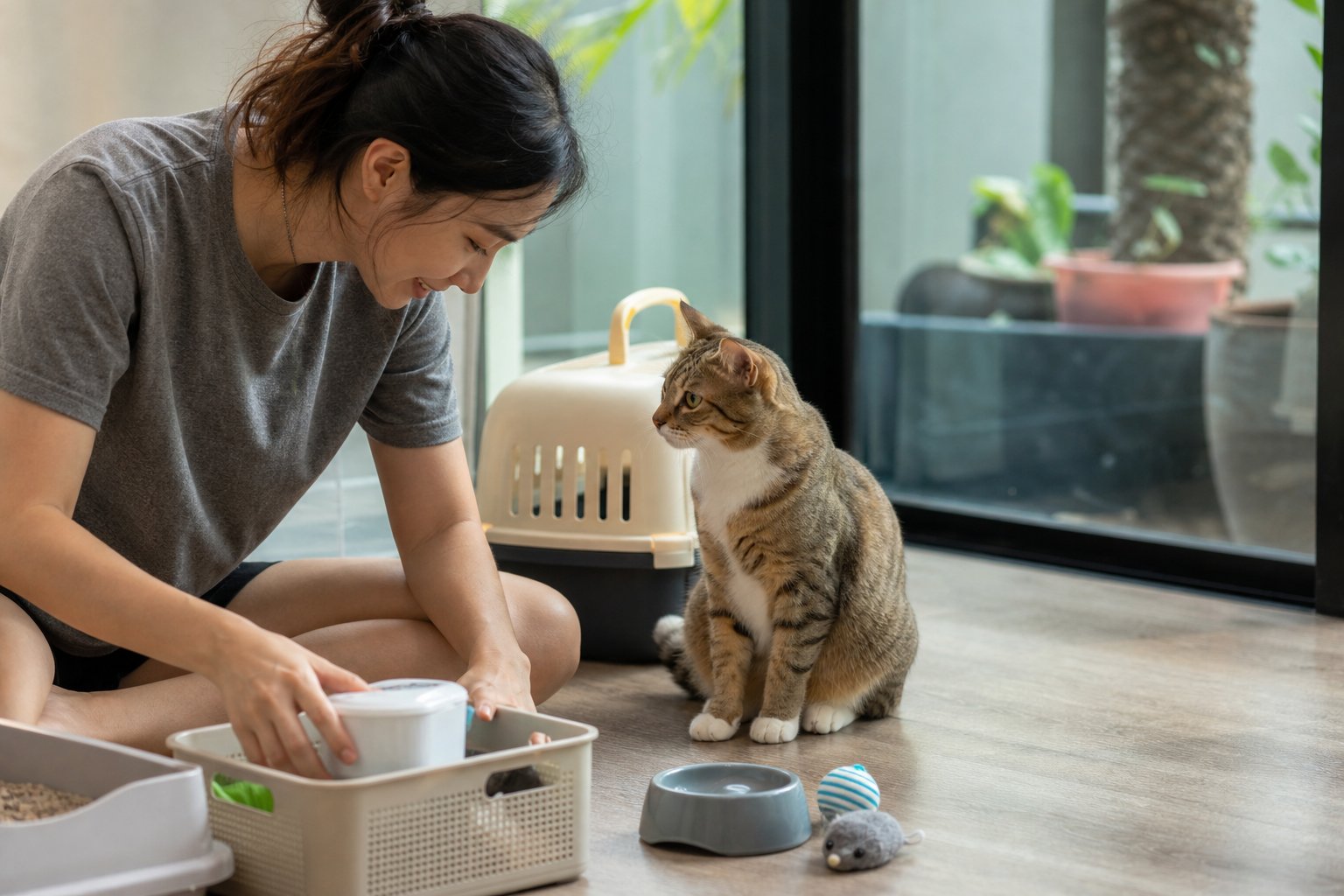
Whichever route you choose, prepare the home first: a low-entry litter tray in a quiet spot, a safe room for the first few days, food and water away from the tray, and a vet appointment booked before the kitten arrives.
When to see a vet
Arrange a veterinary check within the first few days of a kitten arriving home, even if the animal looks perfectly well. A new owner's checklist at that visit should include a full physical examination, confirmation that the microchip is registered to you, a review of the vaccination and deworming dates on the card you were given, and an agreed schedule for the remaining doses.
Do not wait for a scheduled appointment if any of these appear:
- Not eating for more than a day, or repeated vomiting.
- Diarrhoea, especially with lethargy or a bloated belly; kittens dehydrate quickly.
- Nasal or eye discharge, sneezing fits, or laboured breathing.
- Sudden lameness, hiding, or a kitten that will not interact.
- Parasites visible in the fur or stool, or blood in the stool or urine.
Also ask your vet to explain which conditions are common in young kittens locally, what each vaccination protects against, and what warning signs should prompt an out-of-hours call. Knowing that in advance is far calmer than searching for answers at midnight.
Key takeaways
- Identify the seller first: pet shop, home breeder or rescue, because each gives you different documents.
- Verify reference numbers yourself with the Department of Veterinary Services or your local authority; never rely on a screenshot.
- Remember that a registered cattery name records lineage, not health. Ask for the parents' dated test reports instead.
- Visit the real raising location, check the mother and littermates, and match the microchip number to the vaccination card the same day.
- Expect the kitten to be eight to twelve weeks old, weaned and partly vaccinated before handover.
- Keep payments and health terms in writing, and book a vet check within the first few days.
This article is for general guidance only and does not replace veterinary advice or legal opinion. For health concerns about a kitten or cat, consult a registered Malaysian veterinarian.
Related reading
- New Pet Owner Guide Malaysia: Choosing and Caring for Cats, Dogs, Small Pets, Fish, Reptiles and Birds
- Buying a Cat in Malaysia: A New Owner's 6-Step Verification Guide
- Chartreux Cat Care in Malaysia: Temperament, Grooming, Health and New-Owner Tips
- Norwegian Forest Cat Malaysia: Grooming, Vertical Space and Health Basics for New Owners
- Turkish Van Cat Malaysia: Care, Grooming, Space and Health Risks for New Owners
- Australian Shepherd Care in Malaysia: Exercise, Double Coat and Health Basics for New Owners
- Beagle Care in Malaysia: Feeding, Exercise, Ear Care and Heat Safety for New Owners
- Border Collie Malaysia: Exercise, Mental Stimulation and Care for New Owners
- Budgie Care in Malaysia: Cage Setup, Diet, Toxic Foods and Daily Routine for New Owners
- Canary Care in Malaysia: Housing, Feeding and Moulting for New Owners