
Quick answer
A Turkish Van is a large, muscular, semi-longhaired cat with colour confined to its head and tail, famous for an unusual fascination with water. To keep one well in Malaysia you need three things: plenty of vertical space, a fixed daily play routine, and early health screening. Add weekly brushing, dehumidified indoor air and heavy water bowls, and the breed is a healthy, rewarding companion rather than a handful. Below is the full new-owner checklist.
What a Turkish Van actually is
The breed traces its origins to the Lake Van region in eastern Turkey, and general breed records place its first arrival in Britain around 1955. The defining look is straightforward: a white body with colour allowed only on the head and the tail, and no patches anywhere on the torso. The coat is semi-long, silky and noticeably water-repellent, and it sits over a single layer rather than a dense double coat.
Eyes may be blue, amber, or one of each. The frame is medium-to-large with solid bone and muscle, and the breed matures slowly — full development can take three to five years, so a lanky teenager at eight months is normal, not a sign of poor condition. Reference weights are roughly four to seven kilogrammes for males with females lighter, and typical lifespan figures run from twelve to seventeen years. Treat all those numbers as orientation rather than targets; your own vet's assessment of your individual cat matters more.
Temperament: high energy, high curiosity
Turkish Vans sit at the active end of the cat spectrum. They climb, jump, patrol every high point in the house and investigate every closed door. Many learn to hook a door handle open or bat a running tap, which is why owners describe them as dog-like: they can learn simple cues, enjoy fetch, and follow you from room to room.
They are social and curious without being clingy, and most want to be involved in whatever you are doing. Two caveats. First, many dislike being picked up and will wriggle or object rather than tolerate it — respect that instead of forcing contact. Second, they tend to be sensitive to sudden loud noise, so a household with unpredictable banging or a very young, noisy family warrants honest thought before you commit.
The practical translation of this temperament is simple: without a scheduled outlet, a Van will invent one. Typical self-made entertainment includes sweeping items off counters, opening cupboards, and sprinting through the house at night. Two structured play sessions a day of ten to fifteen minutes, using a wand toy or a thrown soft toy, plus a puzzle feeder or treat ball at meal time, prevent most of that behaviour before it starts.
Setting up a Malaysian home for a Van
You do not need a large house; you need a tall one. The goal is a continuous vertical circuit: a cat tree that reaches close to the ceiling, wall-mounted shelves, the top of a sturdy bookcase, and a clear jumping path between them. From a high perch a Van can survey its territory, which is exactly what this breed wants.
Floor area is secondary. A compact unit with a well-planned vertical run will keep a Van happier than a spacious flat with nothing to climb. Without it, boredom quickly becomes destructive scratching, excessive vocalising and nighttime activity.
Windows need secure grilles or screens. A Van's jumping power combined with curiosity makes an unsecured upper-floor window genuinely dangerous, and assuming a cat will not try is not a safety plan. Fix any gap wide enough for a head to pass through.
Because of the breed's water fixation, separate the drinking area from play areas. Use a heavy ceramic bowl or a non-tip design; a light plastic bowl will be overturned daily. If you keep an aquarium, fit a secure lid and anchor it, and keep the toilet lid down.
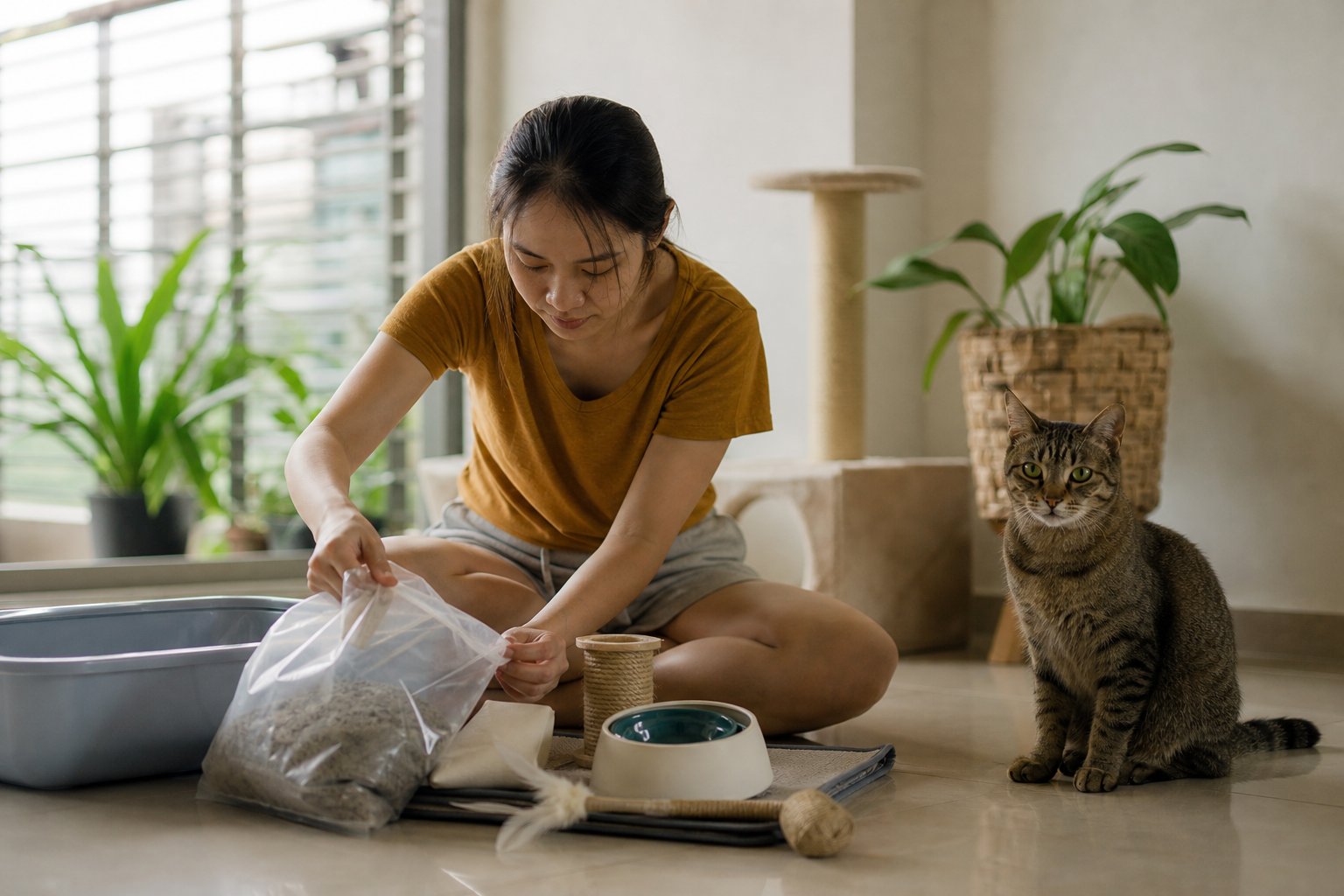
Checklist: before your Van arrives
- Tall cat tree or floor-to-ceiling scratching post
- Wall shelves or a clear route across furniture tops
- Window grilles or screens fitted and checked
- Heavy, non-tip water bowls in two or more locations
- Two litter boxes for one cat, plus one extra per additional cat
- Wand toy, soft throw toys and a puzzle feeder
- A grooming kit: metal comb, slicker brush and a pet-safe detangler
- A quiet, low-traffic resting spot the cat can retreat to
Coat care in heat and humidity
The single-layer semi-long coat is one of the easier longhaired coats to maintain, but shedding is strongly seasonal: thicker in cooler months, thinner in summer, with a heavy moult twice a year. Aim for a full comb-through at least once a week, rising to two or three sessions a week during a moult. Concentrate on the armpits, the inner hind legs and the base of the tail, where tangles form first.
Malaysia's year-round humidity is the bigger challenge. Keep indoor air moving and use a dehumidifier in rooms where the cat sleeps, because damp fur and skin invite irritation and fungal problems. If the coat gets soaked — from rain, a tipped bowl or an adventurous bath-time splash — dry it properly with a dryer on a cool setting rather than leaving it to air-dry for hours. Mats that stay damp become skin problems quickly.
Bathing is rarely necessary; cats self-groom effectively. If you do bathe, use a cat-specific shampoo and rinse thoroughly. Beyond the coat, check the ears weekly for discharge or odour, and brush teeth several times a week — dental disease is common and preventable, and a Van with sore gums will quietly stop eating.
Health risks worth screening early
Breed information generally describes the Turkish Van as a robust, healthy cat with a modest hereditary risk load, but three items deserve attention from day one.
Heart disease. Hypertrophic cardiomyopathy (HCM) is the most common heart condition in cats, and breed references list it among the issues to watch for in Vans. Early stages can be completely symptom-free, so diagnosis relies on veterinary auscultation, blood work and echocardiography rather than owner observation alone. One home measure is genuinely useful: count your cat's breaths while it is fully asleep. A sustained rise above roughly thirty per minute warrants a veterinary visit.
Hearing. Cats that are wholly white with blue eyes have a higher-than-average rate of congenital deafness. A BAER test (brainstem auditory evoked response) performed by a vet confirms whether hearing is present in each ear. A deaf cat can live happily, but you must adapt: use visual signals instead of recall, keep it indoors, and avoid startling it from behind.
Tail vertebrae. Some breed references note developmental abnormalities of the tail vertebrae in kittens, which can affect bowel and bladder control. X-rays in the first year can identify the problem early, when management options are still open.
Also relevant for anyone breeding: mismatched blood types between queen and kittens can trigger neonatal isoerythrolysis, a serious newborn condition. If you plan to breed, blood-type testing beforehand is basic responsible practice.
Food, water and weight
Turkish Vans are obligate carnivores and do best on a diet built around animal protein. Wet food contributes useful moisture, which matters for urinary health in a warm climate where cats may not drink enough on their own.
Because the breed is large and active, appetite is higher than average, but free-feeding is a mistake. Excess weight adds load to joints and stress to the heart — and cardiac health is precisely the risk area for this breed. Feed measured meals at set times, weigh your cat monthly, and score its body condition by feel rather than by eye. A cat should have a visible waist when viewed from above and a tucked abdomen from the side; you should be able to feel ribs without pressing hard.
Water deserves its own plan. A water-loving cat may still drink poorly if the bowl is unappealing or sits next to its food. Offer several heavy bowls placed away from feeding stations, consider a fountain, and refresh the water daily. Bowls that keep tipping over are a sign to change the design, not a behaviour to scold.
Supplements never replace prescribed medication. If your cat is diagnosed with heart disease, follow the vet's dosing schedule exactly and never stop or adjust drugs because the cat seems well.
Home health warning signs
| Condition | What you can observe at home | What to do |
|---|---|---|
| Heart disease (HCM) | Fast breathing during deep sleep, tiring easily, reluctance to move, distended abdomen | Arrange a veterinary exam promptly; echocardiography may be needed |
| Blood clot (aortic thromboembolism) | Sudden inability to use the hind legs, cold paws, crying out | Emergency — go to a clinic with after-hours service immediately |
| Congenital deafness | No response to sounds, unusually loud vocalising | BAER test to confirm; adjust household safety and communication |
| Tail vertebra abnormality | Incontinence, difficulty defecating, a hopping gait | Vet examination with X-ray assessment |
| Ear canal problem | Scratching, head shaking, discharge or odour from the ear | Do not buy eardrops over the counter; see a vet first |
| Skin and coat | Localised hair loss, redness, scratching, heavy dander | Rule out fungal infection or parasites with a skin test |
| Dental disease | Bad breath, tartar, red gums, dropping food or reduced appetite | Book a dental assessment and cleaning consultation |
When to see a vet
Book a routine check within the first few weeks of bringing a kitten or rescue cat home, even if it appears perfectly healthy. Use that visit to discuss a vaccination and deworming schedule, microchipping, and — for a white, blue-eyed cat — a BAER hearing test. Ask your vet when baseline heart screening should happen and what it will involve.
Seek veterinary advice sooner if you notice any of the following: breathing rate staying above roughly thirty per minute while asleep, open-mouth breathing, repeated fainting, sudden hind-leg paralysis or cold paws, vomiting that persists beyond a day, refusal to eat for more than twenty-four hours, straining in the litter box, unexplained weight loss, or a coat that becomes progressively matted despite regular combing. Urinary straining in particular is an emergency in male cats.
Keep a simple health record: monthly weights, sleeping respiratory rates, and dates of grooming, dental checks and vaccinations. That log gives a vet real data instead of guesswork, and it makes subtle changes visible long before they become crises.
Mistakes new owners make
The most common errors are predictable. Buying a cat tree that stops at shoulder height, treating the water bowl as a toy, skipping the daily play session, feeding dry food exclusively while ignoring hydration, physically restraining a cat that dislikes being held, and postponing cardiac screening until symptoms appear. Every one of them is avoidable with an hour of planning before the cat arrives.
A second cluster of mistakes comes from underestimating the breed's intelligence. A bored Van is a problem-solving cat, and the solutions it finds will be yours: latches, lidded bins, unsecured windows, open taps.-proofing is cheaper than repairing.
The final mistake is comparing your cat to internet videos. Not every Turkish Van swims, fetches or tolerates being carried. Breed tendencies are a starting point; your individual cat's preferences, learned in its first few months, are what you actually live with.
Key takeaways
- Colour belongs only on the head and tail; the body should be clean white
- Vertical space and daily play are non-negotiable, however small the floor area
- Window grilles, heavy water bowls and covered aquariums prevent most household accidents
- Brush weekly, two to three times a week during moulting, and keep the coat dry
- Screen for HCM, congenital deafness and tail vertebra issues early
- Measure portions and monitor weight — extra kilos stress the heart and joints
Local sources and further reading
- Department of Veterinary Services Malaysia: https://www.dvs.gov.my/
- SPCA Selangor: https://www.spca.org.my/
- My Vet Clinic portal: https://mvc.gov.my/
This article is general information only and does not replace veterinary diagnosis or treatment. Sudden breathing difficulty, collapse, hind-leg paralysis or straining to urinate are emergencies — contact your veterinarian immediately.
Related reading
- New Pet Owner Guide Malaysia: Choosing and Caring for Cats, Dogs, Small Pets, Fish, Reptiles and Birds
- Chartreux Cat Care in Malaysia: Temperament, Grooming, Health and New-Owner Tips
- Buying a Cat in Malaysia: A New Owner's 6-Step Verification Guide
- How to Buy a Cat in Malaysia: A 6-Step Verification Checklist for First-Time Owners
- Doberman in Malaysia: A New Owner's Guide to Exercise, Heart Health and Housing
- Beagle Care in Malaysia: Feeding, Exercise, Ear Care and Heat Safety for New Owners
- Border Collie Malaysia: Exercise, Mental Stimulation and Care for New Owners
- Budgie Care in Malaysia: Cage Setup, Diet, Toxic Foods and Daily Routine for New Owners
- Canary Care in Malaysia: Housing, Feeding and Moulting for New Owners