
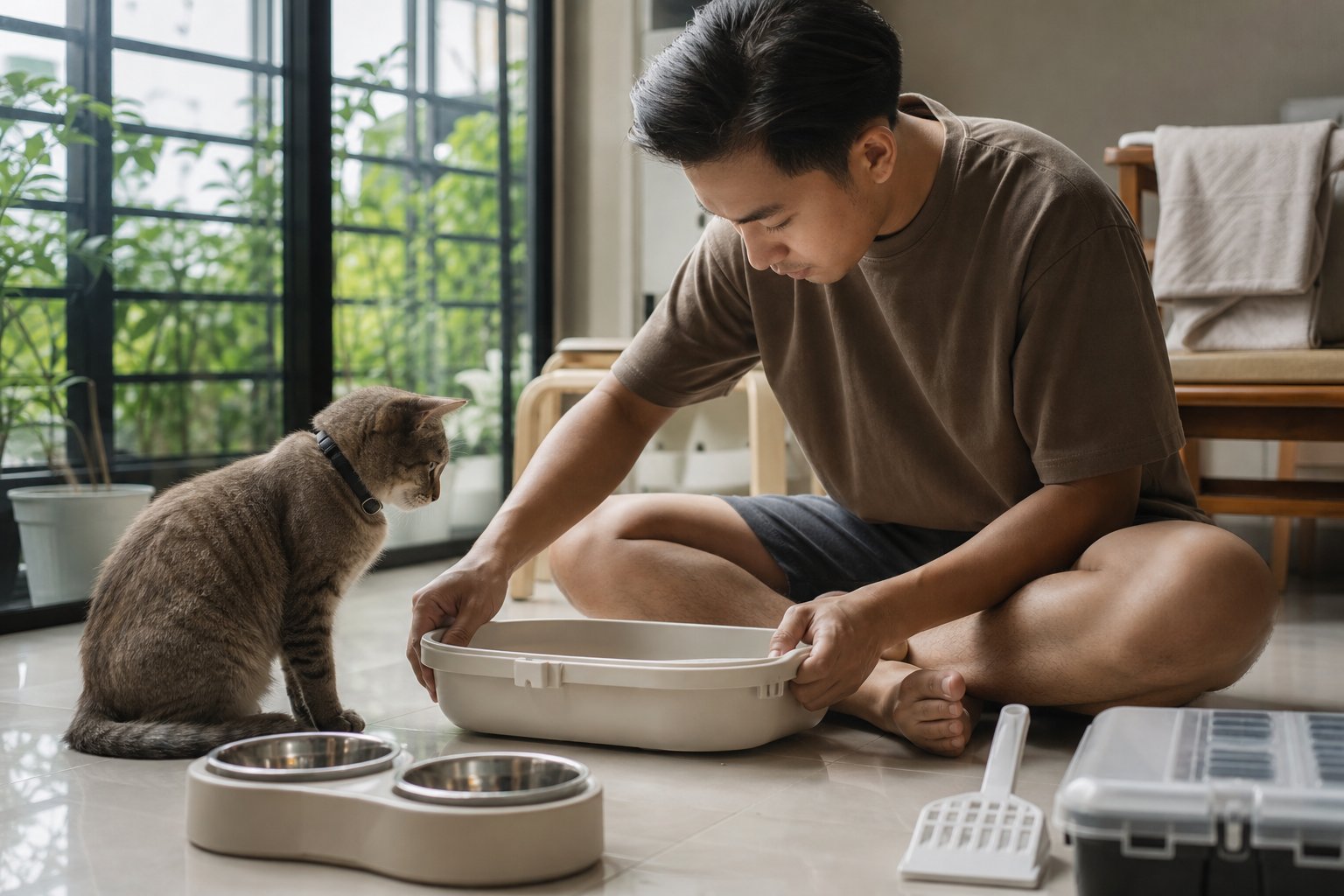
Quick answer: Before you bring a pet home in Malaysia, confirm your household and tenancy allow it, set aside an upfront budget plus a monthly running budget, adopt from a shelter where you can, and childproof the room your pet will stay in for the first week. Exact prices vary by state and retailer, so verify every figure with a Malaysian vet or pet shop.
Four honest questions before you commit
A cat or dog is a ten to twenty year commitment, not a weekend project. Ask yourself these four questions and answer them honestly — if even one answer wobbles, wait.
Time. A cat typically needs around half an hour of direct interaction plus litter and feeding chores each day. A dog needs one to two hours: walks, training, play and cleaning. If nobody in the house is home during the day and there is no reliable person to step in, a dog is a poor fit.
Money. You need two budgets, not one: an upfront setup budget that covers the first veterinary visit, vaccination course, desexing, microchipping and starter supplies, and a monthly running budget for food, litter or pads, grooming, preventives and a veterinary savings contribution. Emergency care is separate and unpredictable, which is exactly why the savings pot matters.
Space and safety. Walk through your home and look for the dangers you have stopped noticing: reachable windows without screens, dangling blind cords, toxic plants like lilies for cats, accessible rubbish, and small gaps behind appliances. Cats in particular must not have access to unscreened windows or balconies — falls are a common first-month emergency.
Household agreement. Everyone living with the pet must agree, including anyone with animal allergies. Also think two years ahead: marriage, a new baby, a job change, a move overseas. Who feeds the pet during Hari Raya travel? If nobody can answer that, you are not ready.
Impulse arrivals — a cute animal brought home on a whim — are one of the root causes of abandoned pets. Four questions, four honest answers, then decide.
Build the budget in two buckets
New owners routinely under-budget because they only price the animal itself. Think instead in two buckets: one-off setup costs, and recurring monthly costs. The table below is a framework rather than a price list, because charges differ between states, clinics and retailers.
| Bucket | Line item | What to confirm locally |
|---|---|---|
| One-off | Adoption or purchase fee | What is included: vaccination, desexing, microchip, health check |
| One-off | Initial veterinary examination | Consultation fee and whether a first-visit package exists |
| One-off | Vaccination course | Number of doses, intervals, annual boosters |
| One-off | Desexing surgery | Price by size and sex, what post-operative care is included |
| One-off | Microchip and registration | Implanting fee and any council registration tied to it |
| One-off | Starter supplies | Food, bowls, litter box and litter, bed, carrier, scratcher, grooming tools |
| Monthly | Food | Dry or wet, quantity per kilogram of body weight |
| Monthly | Litter or training pads | Usage per month and whether you switch types |
| Monthly | Grooming and parasite control | Flea, tick and worm preventives on a schedule |
| Monthly | Treats and toys | Replacement cost as items wear out |
| Monthly | Veterinary savings | A fixed transfer you never spend on anything else |
The veterinary savings line is not optional. Set up a standing transfer on payday — any amount you can sustain — so that an unexpected illness does not become a choice between treatment and rent. Ask your clinic for their current fees rather than relying on figures you saw online, and ask whether they offer instalment or pet insurance options.
Adopt first, or buy carefully?
Adopting costs less, saves a life, and often comes with the practical work already done: vaccination, desexing and microchipping are frequently completed before the animal goes home. The trade-offs are real too — the animal's breed may be unknown, its early history incomplete, and some shelter pets carry behavioural baggage that needs patient work.
Start with the SPCA in your state, your local council shelter, and established rescue groups that list animals online. The screening process — an application form describing your home, an interview about your experience, sometimes a home visit — exists to protect the animal, not to obstruct you. Expect to be asked about your landlord's position, who else lives with you, and how long the pet will be alone each day.
Buying gives you breed predictability and a documented health history from a responsible breeder, but at a much higher price and with a real risk of supporting poor breeding if you choose badly. If you go this route, visit the premises in person, meet at least one parent animal, and ask for vaccination and health records in writing. A seller who will only take cash, refuses a visit, or pushes you to collect immediately is a seller you walk away from.
A simple five-step adoption flow: browse and shortlist; submit an application describing your household; complete the interview; take a short fostering period if the group offers one, so you can test the match; then finalise paperwork and transfer vaccination and microchip records into your name.
Starter shopping list: buy in stages
The biggest budgeting mistake is buying everything at once on a speculative list. Week one needs four things only: food and water bowls, a litter box with litter (or a toilet area for a puppy), a secure hiding place, and a safe enclosed room. Everything else follows.
| Category | Items to buy first | Why it matters |
|---|---|---|
| Feeding | Food, two bowls, fresh water station | Consistent diet from day one prevents stomach upsets |
| Toileting | Litter box, litter, scoop (cats); pads and a playpen (puppies) | Placed away from food, in a quiet accessible spot |
| Rest and retreat | Carrier, bed or covered crate | A hiding place reduces stress in the first week |
| Scratching and play | Scratcher, one wand toy, one chew toy | Protects furniture and gives an appropriate outlet |
| Grooming | Brush, nail clippers, pet-safe shampoo | Introduced slowly from week two or three |
| Records | Vaccination card, microchip details, vet contact | Keep everything in one folder, paper and digital |
Add vertical space — a cat tree, wall shelves or a sturdy perch — once you know the animal's habits, usually within the first month. Add a second litter box for multi-cat homes, following the general rule of one box per cat plus one spare. Buy consumables in modest quantities at first: you will discover quickly whether your cat prefers fine litter over pellets, or whether your puppy chews through plush beds.
Rules, registration and paperwork
Requirements in Malaysia vary by state and local council, so treat this as a checklist to verify rather than a fixed rulebook.
Licensing and identification. Dog licensing, where it applies, is handled at local level; fees, renewal cycles and vaccination conditions differ between councils. Confirm the current process with your city or municipal council before you bring a puppy home, and keep the renewal date in your calendar. Microchipping gives your pet a permanent identifier — register the chip with your current phone number and address, and update it the moment you move.
Health records. Keep a single folder for the vaccination card, deworming and flea treatment dates, desexing certificate, microchip number and vet invoices. The Department of Veterinary Services provides resources for owners, including an animal passport facility for recording identifying and health information — worth using so that a new vet, a pet sitter or a boarding facility can see the full history at a glance.
Housing rules. Check your tenancy agreement and, if you live in a stratified building, the house rules or by-laws on pets before you commit. Some landlords and managements restrict species, size or number. Arranging permission afterwards, after the animal has already arrived, is how pets end up surrendered.
Welfare obligations. Owners are expected to provide adequate food, water, shelter and veterinary attention, and to keep animals secure so they do not become a nuisance or a road hazard. Abandoning a pet is not an acceptable solution to a change in circumstances — rehoming through a shelter or rescue is.
For local guidance, the Department of Veterinary Services publishes owner-facing information, and the Malaysian Veterinary Council is the professional regulator you can check for practitioner credentials if you need a second opinion.
The first week and the first month
Days one to two. Confine the new arrival to one small room or a large crate with the door open: food, water, litter box and a hiding spot. Let the animal explore on its own terms. Do not pick it up, do not invite visitors over, and do not let other household pets in. Night-time crying is a normal adjustment response; it usually settles within days.
Days three to seven. Keep interaction short and quiet — ten minutes at a time, on the floor, at the animal's level. Watch appetite, energy, urination and stool. Arrange the first veterinary appointment for around day seven, after the initial settling period, and ask the clinic to plan the vaccination schedule.
Before day seven, complete: window screens and balcony grilles checked, toxic plants removed, cords tidied, rubbish bins secured, and a designated quiet zone established.
Weeks two to four. Fix the routine: feed at the same times, play twice a day for ten minutes each, and groom briefly. Cats do not cope well with sudden diet changes — if a switch is necessary, mix the new food into the old over seven to ten days and watch stool consistency. Keep the litter box in the same quiet spot, well away from the food bowls; most refusal-to-use problems are placement or cleanliness problems, not defiance.
Month two onward. Begin handling exercises: touch the paws, then clip a single nail tip, then reward. Short, positive repetitions build tolerance far faster than restraint. Brushing becomes a two or three times weekly habit for short-haired pets and daily for long-haired ones.
Your 90-day roadmap
Tick these off in order; nothing here needs to be bought on day one.
| Stage | What to do | What to buy | What to watch |
|---|---|---|---|
| Day 1 | Settle into the safe room; no cuddling, no guests | Bowls, litter box and litter, hiding spot | First drink, first toilet, hiding duration |
| Week 1 | Short 10-minute sessions; book the vet | Scratcher beside the sleeping area, wand toy | Appetite, stool, energy; hiding beyond 48 hours |
| Week 2–4 | Fixed feeding and play times; two play sessions daily | Cat tree or shelf, extra litter box if needed | Toileting outside the box, night crying easing |
| Month 2 | Vaccination course progressing; handling and nail training | Nail clippers, brush, reward treats | Acceptance of touch, skin condition |
| Month 3 | Discuss desexing timing with your vet; review home setup | Secure carrier for follow-up visits | Mating behaviour, weight, toileting habits |
| Ongoing | Monthly parasite prevention, annual health check | Replacement toys, scratchers, consumables | Weight, water intake, sudden behaviour change |
Five mistakes new owners make
Bringing an animal home impulsively. Cuteness is not a plan. Complete the four readiness questions first.
Choosing the wrong species or breed for your lifestyle. A high-energy breed in a small flat with a ten-hour workday is a mismatch that shows up as destroyed furniture and a stressed animal. Match the animal to your routine, not to a photograph.
Skipping desexing. Unwanted litters are the direct route to overcrowded shelters. Talk to your vet about timing — commonly around six months, adjusted for size, breed and health.
Missing the socialisation window. Young animals benefit from gentle exposure to different people, sounds and surfaces during their first weeks. Overdo it and you cause fear; underdo it and you get an adult that panics at everything.
Waiting for obvious illness before seeing a vet. Annual checks catch weight drift, dental disease and parasite load before they become expensive. Prevention is almost always cheaper than treatment.
When to see a vet
Treat these as same-day or emergency signs — do not wait until morning:
- Not eating for more than 24 hours, or refusing water entirely
- Repeated vomiting, bloody diarrhoea, or a persistently distended abdomen
- Rapid breathing, open-mouth breathing, or pale gums
- Hiding for more than 48 hours with very low energy
- Straining to urinate, crying in the litter box, or going in small frequent attempts — a blockage is a genuine emergency, especially in male cats
- Seizures, sudden hind-leg weakness, or a body temperature that feels abnormally low
Before you drive, call the clinic: describe the sign, confirm they are open, and ask whether you should bring a stool sample or the vaccination record. Keep the carrier accessible — a pet that has never been crated will be harder to handle when it is already unwell.
Five things you can do today: check your tenancy or building rules on pets; open a dedicated savings transfer for veterinary costs; shortlist one shelter and one vet clinic near your home; draft a staged shopping list with only the four week-one essentials; and block out the first seven days in your calendar as a quiet, visitor-free settling period.
This article is general information for new pet owners and is not veterinary advice. Every animal's needs differ — consult a licensed Malaysian veterinarian for diagnosis, vaccination schedules, desexing timing and emergency care.
Related reading
- New Pet Owner Guide Malaysia: Choosing and Caring for Cats, Dogs, Small Pets, Fish, Reptiles and Birds
- Budgie Care in Malaysia: Cage Setup, Diet, Toxic Foods and Daily Routine for New Owners
- Australian Shepherd Care in Malaysia: Exercise, Double Coat and Health Basics for New Owners
- Beagle Care in Malaysia: Feeding, Exercise, Ear Care and Heat Safety for New Owners
- Border Collie Malaysia: Exercise, Mental Stimulation and Care for New Owners
- Buying a Cat in Malaysia: A New Owner's 6-Step Verification Guide
- How to Buy a Cat in Malaysia: A 6-Step Verification Checklist for First-Time Owners
- Canary Care in Malaysia: Housing, Feeding and Moulting for New Owners
- Chartreux Cat Care in Malaysia: Temperament, Grooming, Health and New-Owner Tips
- Dachshund Care in Malaysia: Protecting a Long Back from Condo Floors to Terraces
- Doberman in Malaysia: A New Owner's Guide to Exercise, Heart Health and Housing