
Quick answer
Malaysia's pet choices are wider than most new owners expect: cats, dogs, small animals, aquarium fish, reptiles and birds. The six groups differ enormously in space, heat, humidity and vet availability, so one household that manages a cat well may struggle with a rabbit or a gecko. Start with the species whose needs your home can already meet steadily — not the one that looks easiest on paper.
The six categories at a glance
Before falling for a face, compare what each group actually demands. Difficulty below refers to how little room for error you have: when water quality or tank temperature goes wrong, fish and reptiles can deteriorate within a day or two, while a dog's problem usually announces itself as behaviour first.
| Pet type | Space needed | Temperature & humidity | Diet focus | Buffer time when things go wrong |
|---|---|---|---|---|
| Cats | Vertical space, secure windows and screens | Avoid cold air-conditioning blowing directly on them | Mostly animal protein | Fairly forgiving |
| Dogs | Daily walks and exercise outdoors | Heatstroke risk in hot weather | Measured meals at set times | Fairly forgiving |
| Small animals | Well-ventilated cage or pen | Sensitive to heat and damp | Hay-based or mixed pellets | Short — they decline fast |
| Aquarium | Stable position with reliable power | Water temperature must stay steady | Quality flake or pellets, feed sparingly | Short |
| Reptiles & amphibians | Glass or plastic enclosure with heating | Needs a warm-to-cool gradient and a humid zone | Live, frozen or prepared feeds | Short |
| Birds | Room to actually fly | Stable room temperature | Formula pellets as the base | Moderate |
Look at your home's most stable conditions first. If you run air-conditioning all day in a dry room, a high-humidity species will struggle. If you cannot install lamps, choose an animal with low UVB needs. That single filter removes half the options before you spend anything.
Five checks before you commit
- Daily time. Dogs need walks twice a day regardless of weather. Birds need out-of-cage interaction. Fish and reptiles need short daily checks plus weekly maintenance. If nobody home during the day, species that tolerate solitude are safer.
- Money beyond the purchase. Food, bedding, substrate, lamps, bulbs that expire, filters, and a reserve for vet care. Equipment often costs more than the animal itself, and heat lamps or filters run continuously on your electricity bill.
- Stable space. Enclosures should not be moved around constantly, and must be away from direct sun through a window, which can cook an enclosure within an afternoon.
- Household agreement. Everyone living with the animal should agree, and there should be a named backup person for holidays or work travel.
- Species-suitable vet. Not every clinic treats birds, reptiles or rabbits. Confirm before buying, not after an emergency. The Department of Veterinary Services maintains official guidance on animal health and responsible keeping at https://www.dvs.gov.my/.
Cats: the most common first pet in smaller homes
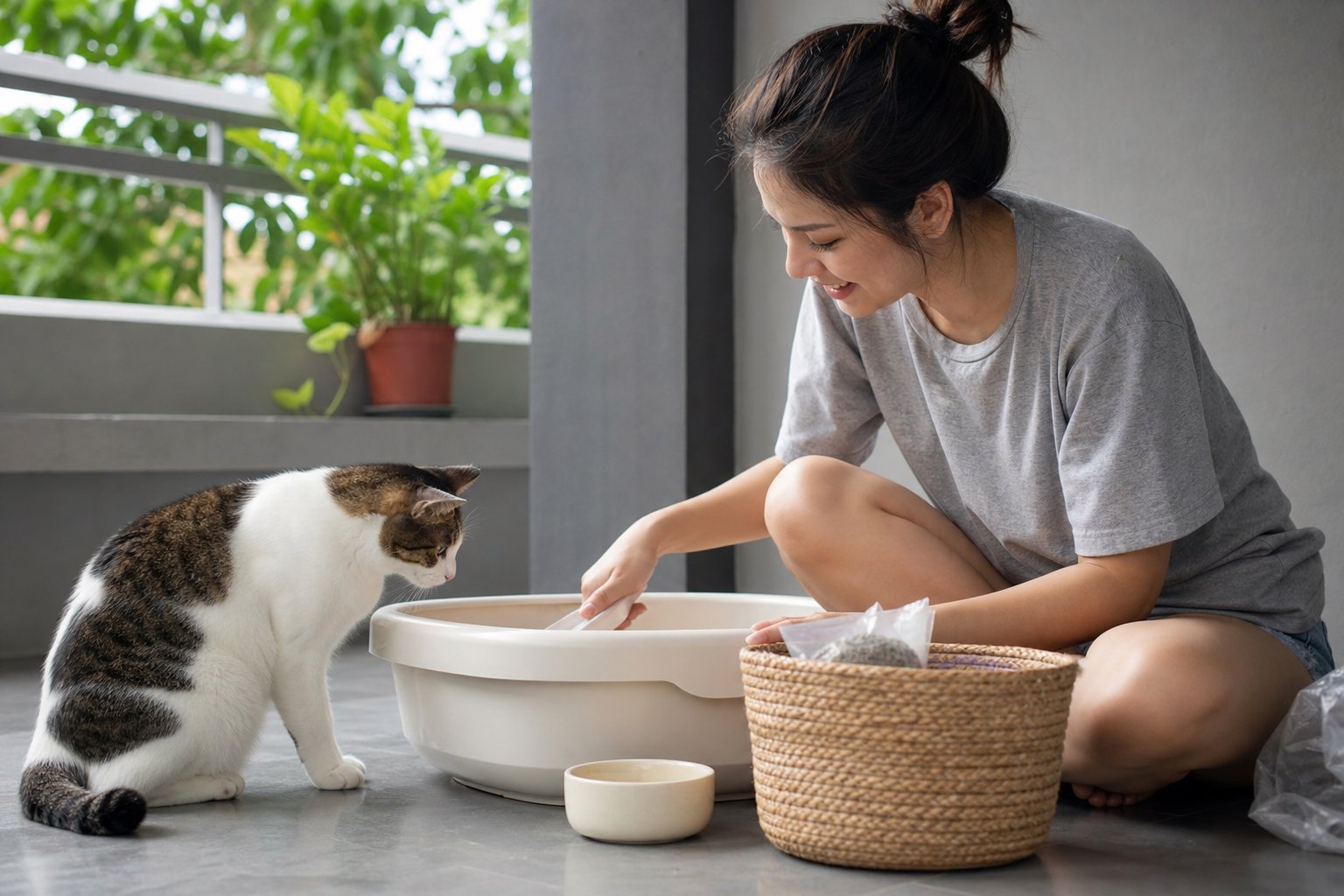
Cats suit apartments well because they do not need outdoor walks and manage litter indoors. But "no walks" does not mean "no space": cats need somewhere to climb, somewhere to hide, and a window they can watch. A home with only floor space and a food bowl tends to produce stress, which shows up as over-grooming or inappropriate toileting. Fit window grilles or screens on any balcony or high window before the cat arrives — not after.
Diet-wise, cats are obligate carnivores, so animal protein should form the core of the diet. Wet food helps water intake; whatever you choose, feed at set times rather than leaving a full bowl out, and watch water intake and urine output. Changes there are early signals of urinary or kidney problems.
Dogs: the daily walk is the real commitment
A dog's core need is daily outdoor exercise, and that is the variable most households underestimate. Medium and large dogs need walk duration plus sniffing opportunities; insufficient exercise tends to convert into chewing, barking and pulling. Small dogs are easier to house, but they still need walks — a smaller body does not mean a smaller requirement.
Hot weather matters twice over: midday pavement can burn paw pads, and enclosed spaces without airflow become dangerous quickly. Walk in the early morning or evening, carry water, and test the ground with the back of your hand for a few seconds before setting off. If your dog pants heavily, slows down or seems uncoordinated in heat, stop and cool them down immediately.
Adoption is a solid route for first-time owners, and rehoming groups and shelters can match energy level to your lifestyle. Whatever the source, plan for vaccinations, parasite control and identification from day one.
Small animals: rabbits, hamsters and guinea pigs
Small animals share one trait: they are small, have fast metabolisms, and react strongly to environmental change. The same room temperature that feels slightly cool to you may already be stress for a hamster or rabbit. The first requirement is not food — it is a cool, well-ventilated spot away from direct sun and air-conditioning drafts.
Space and social needs differ. Rabbits and guinea pigs are social and generally do better with companionship and a larger run. Hamsters are solitary: adults housed together often fight, so plan for separate enclosures if you keep more than one.
Practical setup points:
- Deep, dust-free bedding and a litter area, spot-cleaned daily and fully changed on a set schedule.
- A hideaway on each side so the animal never feels exposed crossing its own enclosure.
- Chew items for rodents and rabbits; teeth grow continuously.
- Food stored sealed and dry, because tropical humidity spoils pellets and hay quickly.
Their weakness is buffer time. A rabbit or guinea pig that stops eating is already in trouble — gut stasis can become serious within hours. Note the last time you saw them eat, because that detail helps a vet enormously.
Aquarium: cycle the tank before you buy fish
The most common beginner mistake is not choosing the wrong fish — it is adding fish to a tank that has not finished its nitrogen cycle. Beneficial bacteria need time to establish in the filter media, and until then ammonia and nitrite spike. Skipping this step leads to rotting fins, white spot and sudden deaths that look like "bad luck".
Guppies are the classic starter fish: they tolerate parameter swings, handle harder water, and are livebearers that breed readily. That last point is a warning as much as a benefit — one pair can become dozens, so decide in advance how you will rehome surplus fish. Releasing them into drains or ponds is never the answer.
Routine care is simple but non-negotiable:
- Partial water changes of roughly 20–30% on a regular schedule.
- Feed small amounts that finish within a couple of minutes; leftover food rots.
- Monitor water temperature, especially during warm spells when room temperature climbs.
- Keep a small reserve of dechlorinator and test kits, because timing matters more than brand.
Position the tank away from windows (algae from direct sun) and air-conditioning outlets (rapid temperature swings), on a stand that can take the full weight when full.
Reptiles and amphibians: recreate the habitat, not the room
The core of reptile keeping is using equipment to reproduce the animal's native conditions. Get the temperature gradient and humidity zones right inside the enclosure and the room itself matters far less. The standard is what a thermometer and hygrometer inside the tank say — never what feels comfortable to you.
- Geckos such as the leopard gecko are desert-type, active at dawn, dusk and night. Provide belly heat, a moist hide to assist shedding, and live or frozen prey dusted with calcium powder containing D3.
- Horned frogs are terrestrial and largely aquatic-avoidant. Moist substrate, a shallow water dish, higher humidity, stable moderate temperatures, no UVB, and minimal handling.
- Skinks are mostly day-active and typically need a UVB lamp plus a hotter basking area.
- Corn snakes need a warm end and a cool end plus secure escape-proofing; a snake that gets out is a household crisis.
- Insects such as praying mantises need ventilation and climbing branches.
Because parameters differ so much between species, research the exact temperature, humidity and UVB figures for that species before buying. Do not assume a setup that works for a gecko suits a frog.
Birds: small, but demanding on social time and air quality
Birds are the group most often underestimated. They look simple — a small animal in a cage — but their social and air-quality needs are high. Budgerigars are flock birds; kept alone they need daily human interaction. Canaries tolerate solitude better.
Birds need genuine flight room. A cage that only allows perching leads to muscle and feather problems; if you cannot provide flight space, plan more out-of-cage time in a secured room. Noise is a real consideration too — most birds vocalise loudest at dawn and dusk, which is exactly when neighbours are home.
Air quality is the hidden risk. Birds' respiratory systems react sharply to cooking fumes, aerosol sprays, scented candles and the fumes released by overheated non-stick pans. Keep cages well away from the kitchen, never above the stove, and open windows or use extraction when cooking.
Tropical humidity, air-conditioning and housing
Local climate shapes pet care more than most guides admit. High humidity year-round encourages mould, skin problems and spoiled food; air-conditioned rooms bring the opposite problem — dry air and temperature swings that hit reptiles, fish and small animals hardest.
- Damp: Monitor with a hygrometer rather than guessing. Persistently high humidity causes mould and skin issues; too dry causes failed sheds. Replace substrate regularly and keep air moving through the enclosure.
- Food and bedding: Store pellets, hay and dried insect feed sealed and off the floor. Humidity ruins them faster than most owners expect.
- Air-conditioning: Avoid a direct cold draught on any enclosure. Rotating temperature stress is a common trigger for respiratory problems in small animals and reptiles.
- Ventilation: An aquarium plus a small-animal cage in a closed room adds moisture and ammonia. An exhaust fan and a dehumidifier are a practical combination.
- Power: Fish and reptiles depend on heaters and filters. Know what happens during a power interruption — a battery air pump or a plan for a neighbour's help buys time.
A Penang rainy season stretches, or a Kuala Lumpur apartment with the blinds closed all day to keep the heat out, both create the same trap: the enclosure ends up hotter, damper and less ventilated than the room feels to you. Check inside the enclosure, not the room.
Before signing a tenancy or buying a unit, confirm the building's rules allow pets and that your layout can hold an aquarium or large enclosure safely. Community guidance on responsible ownership is available from the SPCA at https://www.spca.org.my/, and national animal welfare information from https://mvc.gov.my/.
When to see a vet
Contact a vet promptly — same day where possible — if you notice any of the following:
- A rabbit, guinea pig or hamster that has not eaten for several hours, or has produced no droppings.
- A dog that pants excessively, drools, seems uncoordinated or collapses in heat.
- A cat straining in the litter box, crying while urinating, or a sudden change in drinking or urination.
- Fish gasping at the surface, sitting at the bottom, or white spots and frayed fins spreading through the tank.
- A reptile that will not eat, has retained shed around toes or eyes, or has swollen jaws or eyes.
- A bird sitting fluffed at the bottom of the cage, tail bobbing, or a sudden change in droppings.
- Any bleeding, injury, seizures, or a pet that hides and refuses interaction.
Small animals and birds decline faster than dogs and cats, so waiting a day is often the difference between a simple fix and a crisis. Find a clinic that treats your species in advance and save the number in your phone.
This article is for general guidance only and does not replace veterinary diagnosis. For any health concern or emergency, please consult a qualified veterinarian.
Related reading
- Holland Lop Rabbit Care in Malaysia: Hay-First Diet, Ear Checks and Heat Safety
- Australian Shepherd Care in Malaysia: Exercise, Double Coat and Health Basics for New Owners
- Beagle Care in Malaysia: Feeding, Exercise, Ear Care and Heat Safety for New Owners
- Border Collie Malaysia: Exercise, Mental Stimulation and Care for New Owners
- Budgie Care in Malaysia: Cage Setup, Diet, Toxic Foods and Daily Routine for New Owners
- Buying a Cat in Malaysia: A New Owner's 6-Step Verification Guide
- Canary Care in Malaysia: Housing, Feeding and Moulting for New Owners
- Chartreux Cat Care in Malaysia: Temperament, Grooming, Health and New-Owner Tips