
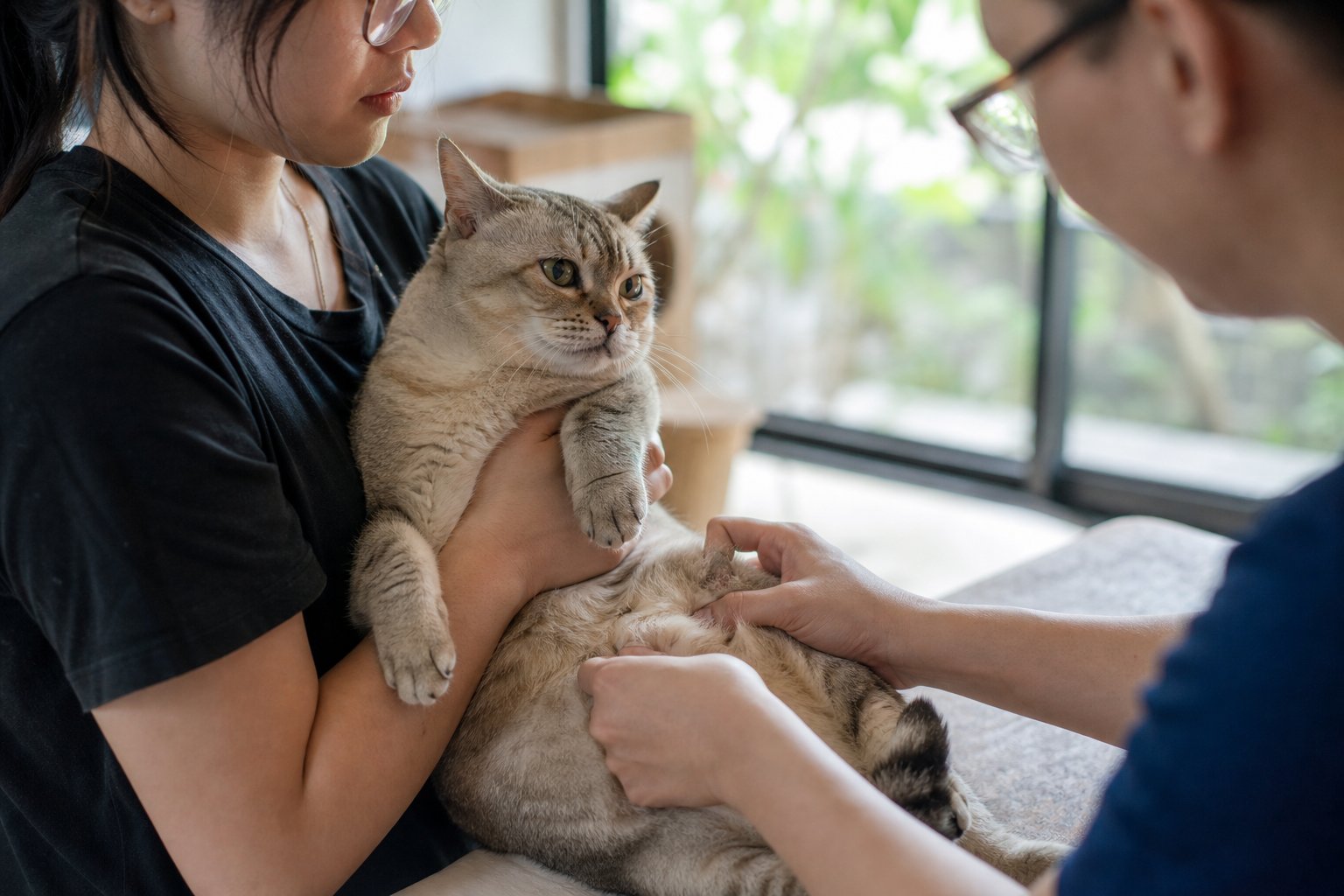
First, do not stop the medicine. Continue every dose exactly as the vet directed, then log daily stool count and consistency, add water to wet food, and feed small frequent meals. Space probiotics about two hours from the dose. Blood, watery stool past 24 hours, repeated vomiting, refusing food, or 48 hours with no stool means calling a vet today.
Antibiotics are deliberately broad. They knock out the organism causing the infection, and they also disturb the gut bacteria living there, so loose stool is the most common side effect while constipation is less common but equally real. This guide separates the two directions, sets the observation window for each, and shows the home steps that genuinely help versus the ones that only feel productive.
Why antibiotics unsettle the gut
Understanding the mechanism tells you which home measures are worth the effort.
Diarrhoea usually follows one of three routes:
- Microbial imbalance. A broad-spectrum drug reduces the diversity of gut flora, lowering metabolites such as short-chain fatty acids. The intestine then handles water and electrolytes differently, and stool turns soft or watery.
- Faster transit. Some antibiotics change how quickly contents move along the bowel, so absorption is incomplete before the material is passed.
- Opportunistic overgrowth. With the normal bacterial barrier thinned, certain organisms can multiply and produce diarrhoea that is bloody or slimy. That needs laboratory testing, not guesswork.
Constipation is usually indirect:
- Eating less. A bitter tablet or an unsettled stomach cuts intake, so there is less stool volume to stimulate the bowel.
- Drinking less. Reduced eating often means reduced drinking, and the colon reabsorbs more water from a smaller stool, making it dry and hard.
- Stress and routine change. Daily dosing, clinic visits, or a short stay away from home can make a cat hold stool or shift its toilet timing.
One caution: never assume every sign is a side effect. Diarrhoea combined with fever, repeated vomiting, a visibly distended or painful abdomen, rapidly worsening demeanour, or straining with nothing produced could indicate a blockage, pancreatitis, or another illness. Persistent or systemically unwell cases should be examined before diet or supplements are changed.
Grade the situation before you act
The same phrase, "loose stool on antibiotics", covers very different urgency levels. Use this table to place your cat, but treat it as an aid rather than a diagnosis.
| What you observe | Home care while continuing as directed | Vet within 24 hours | Emergency now |
|---|---|---|---|
| Stool form | Soft but still formed, one to three times daily | Watery, more than three to four times daily | Fresh blood, black stool, or jelly-like bloody mucus |
| Time without stool | 24 to 48 hours, otherwise bright | Over 48 hours with no stool | Over 72 hours, or straining with nothing plus bloating |
| Demeanour and appetite | Eating and playing normally, stool just soft | Half the usual intake, quieter than normal | Refusing food entirely, dull, unwilling to move |
| Other signs | No vomiting, no fever | One or two vomits | Repeated vomiting, fever, obvious abdominal pain |
| Drinking and urine | Normal drinking and urination | Clearly drinking less | No urine at all, or frequent tray visits with only drips |
The last row is the most often underestimated. Producing no urine is not a gut problem; it is a urinary obstruction emergency, and a cat that is blocked can deteriorate within hours. For constipation the red line is time: more than 48 hours without stool warrants a visit, more than 72 hours is urgent, and repeated prolonged episodes can progress to a dilated colon that becomes harder to treat the longer it is left.
Diarrhoea: five practical home steps
These steps assume you are continuing the course as directed. None of them involves adjusting the dose.
- Keep a medication and symptom timeline. Note the dosing time, when soft stool started, and how many stools passed each day with a rough form score. This record directly shapes whether the vet changes the drug, orders a stool test, or adds dietary support.
- Water first. Stir two to three tablespoons of warm water into each wet meal, and set out several bowls in quiet spots away from the litter tray and food bowl. Dry food alone cannot rehydrate a cat that is already losing fluid.
- Hold the diet steady, feed little and often. Do not switch brands mid-course. Move to three or four small meals a day and avoid rich, high-fat tins and new treats, which confound the picture further.
- Use a cat-specific probiotic. Give it roughly two hours away from the antibiotic. It is support, not a substitute for treatment or examination.
- Call the clinic if there is no improvement. Watery diarrhoea persisting beyond 24 hours, or anything in the emergency column, means phoning with your log and the packaging in hand.
Three things to avoid:
- Stopping, reducing, or skipping doses yourself. An unfinished course risks unresolved infection and selection of resistant organisms.
- Reaching for human anti-diarrhoeal or laxative products. Some ingredients are toxic to cats, and even safe ones need weight-based dosing.
- Doubling the probiotic dose to speed recovery. Excess does not hasten healing and can add wind and discomfort.
Constipation: water, fibre, activity
Constipation management runs almost opposite to diarrhoea management, so first confirm the cat is genuinely constipated rather than straining with little to pass. Do the following with the vet's agreement.
| Area | What to do | Why it matters |
|---|---|---|
| Moisture | Make wet food the base, add warm water to tins, offer bowls or a fountain | The foundation; nearly every constipated cat needs this |
| Fibre | Moderate psyllium, or a vet-recommended gastrointestinal diet | Fibre must be paired with more water or stool hardens further |
| Activity | Two to three wand-play sessions of 10 to 15 minutes daily | Encourages motility, especially for indoor-only cats |
| Litter setup | Number of trays equals number of cats plus one, quiet, cleaned daily | Holding stool is a common behavioural cause of constipation |
| Hairballs | Regular brushing, daily for long coats | Matting of hair can produce constipation alongside vomiting |
| Medication | Laxatives and motility drugs only by prescription | Unsafe to self-dose; amounts must follow body weight |
During an antibiotic course the best entry point is moisture and appetite. If the cat is eating and drinking, constipation usually eases as the course finishes. If the taste of the medicine puts the cat off food, discuss the delivery method with the vet, such as a dosing syringe with a little wet food, rather than stopping treatment. Cats with a history of chronic constipation or a previously diagnosed dilated colon should be flagged to the vet early, not after the 72-hour mark.
Probiotics: product choice and timing
Probiotics are the most questioned supplement during antibiotics, and wrong timing makes them pointless.
| Item | Recommended practice | Reason |
|---|---|---|
| Timing | At least about two hours from the antibiotic | The drug kills bacteria indiscriminately; simultaneous dosing cuts survival of the supplement |
| Format | Cat-specific powder or chewable | Human formulas often contain dairy and sugars unsuitable for cats |
| Label | Read the strain names and colony counts; ignore marketing hype | Strain selection and storage matter more than a big number |
| Storage | Cool, dry place, follow pack instructions after opening | Heat and humidity reduce viable organisms |
| Role | Support only, never a replacement for the course or diagnosis | Severe diarrhoea still needs testing and treatment |
In practice, if the vet has prescribed morning and evening doses, place the probiotic between them, for example dose at breakfast and probiotic at midday, which naturally creates the gap. After starting, watch the response: if wind or vomiting increases, pause the supplement and report it.
Feeding during the course
The dietary rule during antibiotics is short: stability first, change as little as possible. Diarrhoea and constipation need different fibre profiles, so the direction of any prescription diet comes from the vet rather than trial and error at home.
- Diarrhoea-leaning cases: easily digestible, lower fat, small frequent meals. Water added to wet food is the most direct rehydration step, because wet food is roughly 75 to 80 per cent water while dry kibble is only about 6 to 10 per cent.
- Constipation-leaning cases: raise moisture and a moderate fibre share together with daily movement. Increase water whenever fibre goes up.
- Sensitive appetites: a formula labelled for digestive sensitivity can be transitioned in gradually, but confirm suitability with the vet for the current illness.
- Avoid a new main diet mid-course. Changing food can itself cause soft stool, and stacking it on a drug effect makes the cause impossible to separate, which slows the whole assessment.
Two Malaysian situations
- A Kuala Lumpur apartment with one indoor cat: counter space and ventilation are limited, so place extra water bowls on a shelf away from the litter tray and the food corner, and run two short play sessions in the living room each evening to keep the bowel moving while the course runs.
- Penang during the rainy season: high humidity can spoil opened probiotic powder and soften kibble, so keep the supplement sealed in a cool dry cupboard, check the expiry and storage line on the pack, and lean harder on wet food for moisture.
When to see a vet
Contact your veterinary clinic promptly, and treat the same day as an emergency, when any of the following appear:
- Blood in stool, black tarry stool, or jelly-like bloody mucus
- Watery diarrhoea lasting beyond 24 hours, or more than three to four unformed stools a day
- More than 48 hours with no stool; beyond 72 hours, or straining with nothing passed plus bloating
- Repeated vomiting, fever, or a painful distended abdomen
- Refusing food for 24 hours, or marked dullness and unwillingness to move
- No urine at all, or frequent tray visits with only drops passed
Bring the medicine packaging, the dosing times, and your stool log. Those three items usually decide the next step faster than any description alone.
After the course and common questions
Stool typically settles within several days to two weeks of the last dose, while the gut community takes longer to rebalance. Keep the wet food share, water, and probiotic support going through that window. Return to the vet if soft stool, vomiting, weight loss, or low energy persists one to two weeks after finishing, so parasites, food intolerance, or chronic bowel disease can be ruled out.
Q: What is the single most important rule during the course? Continue every dose as prescribed while you log symptoms and hydrate. Any decision to stop, reduce, or switch belongs to the vet.
Q: Can probiotics and antibiotics be given together? No. Separate them by about two hours, or slot the probiotic between morning and evening doses.
Q: May I use a human laxative for my cat? No. Several human ingredients are toxic to cats, and doses must be calculated on body weight by a vet.
Q: When is constipation an emergency? No stool for 72 hours, or straining with nothing produced plus bloating, repeated vomiting, or pain.
Q: Does a little soft stool mean the drug is wrong? Not necessarily. One to three soft but formed stools a day can be observed while continuing, provided energy and appetite stay normal.
Q: Should I change food during the course? Only on the vet's advice. Changing brands mid-course adds a second cause of soft stool and muddies the assessment.
This article is general information only and does not replace a veterinary examination. If your cat is unwell, contact a licensed Malaysian veterinarian promptly.
Related reading
- Cat Antibiotic Diarrhea & Constipation in Malaysia: What to Do
- Cat Mucus in Stool in Malaysia: When It's Normal and When to See a Vet
- Cat Stomach Upset: What Actually Belongs in Your Home Medicine Kit in Malaysia
- Cat and Dog Digestive Health in Malaysia: Vomiting, Diarrhoea, Soft Stools, Mucus and Probiotics Explained
- Cat Stool With Blood or Mucus: What It Means and When to See a Vet in Malaysia
- Blood or Mucus in Your Cat's Stool: What the Colour Means and When to See a Vet in Malaysia
- Cat Swallowing Noises and Vomiting in Malaysia: Causes, Home Steps and When to See a Vet
- Cat Vomiting: When to Watch at Home and When to See a Vet
- Cat Vomiting, Seizures & Loss of Balance: Emergency Signs Every Malaysian Owner Should Know
- Cat Vomiting, Seizures and Loss of Balance: When to See a Vet Immediately in Malaysia