
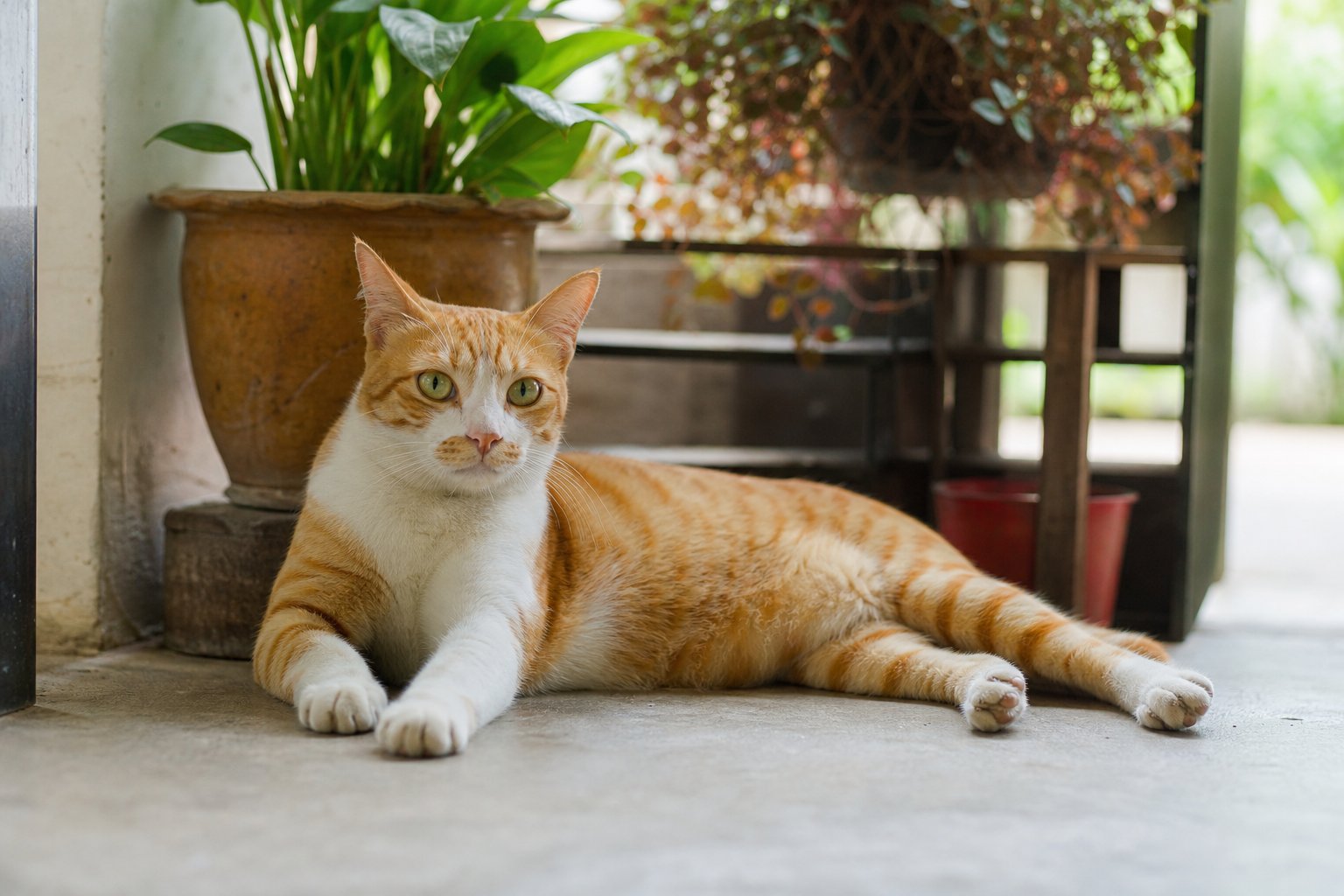
If your senior cat has gone weak in the limbs while on steroids, do not reach for potassium supplements first — get a blood test. Steroid-related muscle wasting, low blood potassium, kidney disease and joint pain all look almost identical, and only bloodwork separates them. Meanwhile, track jump height, weight, muscle condition and bowel habits for seven days, and never stop a steroid abruptly.
Why steroids can weaken an older cat: four pathways
Corticosteroids such as prednisolone and dexamethasone are everyday tools in feline medicine. Vets prescribe them for allergic skin disease, feline asthma, inflammatory bowel disease, immune-mediated conditions and some cancers. They genuinely save lives, but long-term or higher-dose use carries a cost, and an older cat has less organ reserve to absorb it.
Pathway one: steroid myopathy. Glucocorticoids speed up muscle protein breakdown, so the hindquarters, back and abdomen gradually waste away. Cats tolerate steroids better than dogs do, yet prolonged high doses can still produce this pattern. The typical picture is a cat whose jumping height quietly drops, who takes stairs slowly, but who still walks reasonably steadily.
Pathway two: low blood potassium. Corticosteroids have a mild mineralocorticoid-like action, and the kidneys consequently lose more potassium in the urine. Add reduced intake from poor appetite, vomiting or diarrhoea, plus the chronic kidney disease so common in senior cats, and the blood level falls. The signature is weakness of the hind limbs and neck — a cat that cannot hold its head up — together with dullness and constipation.
Pathway three: insufficient protein and age-related muscle loss. Older cats digest and absorb less efficiently, lose smell and taste, and may have sore mouths. Occasionally an owner restricts protein too aggressively because of a kidney diagnosis, and muscle disappears faster still. This route has nothing to do with potassium, yet it resembles steroid myopathy closely.
Pathway four: other metabolic disease. Steroids can trigger or worsen diabetes, which shows as increased drinking and urination while weight drops. Chronic kidney disease and an overactive thyroid are also frequent causes of weakness in senior cats. Only blood and urine testing sorts these out.
All four look alike to the naked eye, which is precisely why guessing is unsafe and measuring is not.
Telling the four apart
Use the table below as a communication aid for your consultation, not as a diagnosis.
| Possible cause | Typical pattern | What bloodwork shows | What you can do at home |
|---|---|---|---|
| Steroid myopathy | Symmetrical, slow decline; hind and back muscles thin; jumping height drops steadily; walking stays steady | Potassium and kidney values usually normal | Record muscle condition and jump height weekly; raise dose review with your vet |
| Low blood potassium | Noticeable worsening over a few days; dragging; neck droops; dull; constipated | Potassium below the usual laboratory reference of about 3.5–5.5 mmol/L | Log food intake and stools; request blood testing promptly |
| Muscle wasting or low protein | Overall thin; spine and hips prominent; small appetite | Albumin or total protein low; kidney values may also rise | Weigh every two weeks; make diet changes only with vet approval |
| Diabetes, kidney disease, hyperthyroidism | Drinking and urinating more; eating well but losing weight; sudden decline | Blood glucose, kidney values (creatinine, SDMA), total T4 | Measure daily water intake; arrange blood and urine testing soon |
One point deserves emphasis: low blood potassium is one of the few causes you can confirm and treat quickly. That makes testing even more important, not less. Too much potassium disturbs the heart's rhythm and can be fatal, so potassium replacement belongs in a vet's hands, guided by laboratory results and kidney function.
What to monitor at home
Long-term steroid therapy deserves a simple written log. The table below is its practical core.
| What to track | How often | Expected change | Warning sign | Action |
|---|---|---|---|---|
| Abdominal girth at the widest point | Every 2 weeks | Slow, soft enlargement as fat redistributes | More than 2 cm gain in one week, or a tight drum-like belly | Contact your vet the same day |
| Belly sensitivity | Weekly | Soft, no reaction | Cries, bites, arches or dodges when touched | Stop pressing; call the clinic |
| Mood and interaction | Daily | Slight dip in activity | Hides, ignores you, no interest in toys | Record food, water and greeting behaviour |
| Breathing rate at rest | Daily, during sleep | Even and quiet | Over 30 breaths per minute, or open-mouth breathing | Seek care immediately |
| Weight and muscle | Every 2 weeks | Minor fluctuation | More than 2–3% lost in a month | Contact your vet within a week |
| Potassium and electrolytes | Every 3–6 months | May drift low | Hindlimb weakness, drooping neck | Vet-arranged blood test only |
| Glucose, kidney and liver values | Every 3–6 months | May rise | Drinking more, eating more but thinner | Arrange blood and urine testing |
Measuring the belly is the easiest objective check. Use a soft tape at the same spot, at the same time — ideally before meals — every two weeks. A gain of more than 2 cm within a week, or an abdomen that feels tight or shows a fluid wave, means something other than extra fat may be present, and imaging plus bloodwork is needed to clarify it.
Steroids often make cats hungrier and more animated at first, then sleepier later, so judge mood against your own cat's baseline rather than one quiet evening. Spend a minute each night noting three things: whether your cat comes to greet you, whether she jumps onto her usual perch, and how she responds to her name. Three consecutive days of decline is a reason to pick up the phone.
Your seven-day observation plan
Older cats naturally slow down, but the speed and shape of the change can be measured. This takes a week and travels straight into the consultation room.
- Record jump height. Choose one fixed target, such as a 30 cm step, and at the same time each day tempt your cat up with a treat. Note success or failure and how she lands. Never force it — stop after a failure to avoid a fall.
- Assess muscle. Run your fingers along both sides of the spine, over the hips and along the upper forelimbs. Note whether you feel a muscle pad or obvious bone, and compare weekly.
- Weigh. Same scale, same time of day, every two weeks. Losing more than 2–3% of body weight within a month warrants a call.
- Measure food and water. Use the same bowls and write approximate daily amounts. A general guide is roughly 40–60 ml of water per kg of body weight each day; a clear excess points towards diabetes or kidney disease.
- Watch the litter tray. Both low potassium and dehydration slow the gut, so constipation can be the earliest clue. No stool for more than 48 hours is not something to sit on.
- Check neck posture. When your cat stands or walks, does the neck droop as if the head is too heavy to lift? That sign points towards low potassium.
- Bring the evidence. Film ten seconds of her gait on your phone and carry the seven days of numbers. Vets make far better decisions from data than from the sentence that she seems weak.
Tests and follow-up schedules
For a senior cat on long-term oral steroids, vets generally arrange the following, with the exact panel and interval set case by case.
- Electrolytes (sodium, potassium, chloride): once before long-term therapy starts, then every three to six months.
- Kidney values (creatinine, BUN, SDMA): every three to six months, more often if kidney disease is already diagnosed.
- Blood glucose and urine glucose: every three to six months; immediately if drinking and urinating increase.
- Liver enzymes (ALT, ALP): every three to six months.
- Urinalysis (concentration, protein): usually alongside blood sampling.
- Blood pressure: at each review, at least every six months.
Cats at higher risk need testing sooner: those with existing kidney disease, heart disease or diabetes; those also taking diuretics or other drugs that shift electrolytes; those with recent vomiting, diarrhoea or appetite loss; and any cat losing more than 2–3% of body weight in a month. Their potassium and kidney values can swing quickly, so waiting for a routine six-month visit is unwise.
Local fees for blood panels, supplements and dewormers differ between practices and shops, so ask your Malaysian vet or retailer what applies to your cat.
Three things you must never do yourself
Never stop, reduce or skip doses. After prolonged glucocorticoid use the adrenal glands have downregulated their own production. Stopping abruptly can precipitate an adrenal crisis, a life-threatening emergency. Dose reduction must be tapered by your vet, often with blood monitoring alongside.
Never supplement potassium on your own. Supplements, electrolyte drinks and high-potassium foods must be selected against blood results and kidney function, because excess potassium disrupts heart rhythm. The popular advice to feed potassium whenever a cat is on steroids has the sequence backwards: test first, treat second.
Never add human painkillers or muscle supplements. Cats metabolise drugs differently, and some human anti-inflammatories are toxic to them. Whether the weakness involves pain at all is a judgement for your vet. Cats eating a complete premium diet usually need no extra vitamins or minerals, and any supplement should be cleared first, particularly when kidney disease or several medications are involved.
Supporting care while treatment continues
Around the home. Fit ramps or low steps so your cat can reach the sofa, bed or windowsill without jumping. Offer a low-entry litter tray or a step-in board to reduce the lift required. Put non-slip mats along the usual walking routes and landing spots. Move water, food and litter closer together and leave several water bowls around the house. In cool weather, a low-temperature heat mat helps, because thin older cats struggle to hold body heat.
Food and weight. Senior cats need quality protein to hold muscle, but if kidney disease is present the protein and phosphorus balance must be set by your vet according to the stage — do not copy an online recipe. Appetite is the pivot: if the taste of medication puts your cat off, discuss the administration method or slightly warming the food to release aroma rather than stopping treatment. Weighing every fortnight and recording muscle condition shows whether your support plan is actually working.
Parasite control. Corticosteroids dampen immune responses, so the skin barrier is weaker and flea, tick and internal parasite problems escalate more readily, while wounds and skin infections heal more slowly. Even an indoor cat should generally continue parasite prevention as your vet advises; do not pause it because your cat is unwell. Spot-on pipettes and sprays differ in the weight range they cover and how they are applied, so confirm your cat's current weight, age and other medications before choosing. International brands such as Frontline and Advantage are widely available, but product choice, dosing intervals and local prices should come from your vet or a Malaysian retailer.
Digestive signs matter too. If diarrhoea or constipation appears alongside long-term medication, keep the same priorities: never stop the drug yourself, maintain hydration, feed small frequent meals, and record every stool. Older cats showing both patterns should have that stool history mentioned at the next review.
When to see a vet
Treat these as red lines that do not wait for a routine appointment:
- Sudden dragging of the hind legs, inability to stand, circling or a noticeably tilted gait.
- A visibly dropped neck, or fast breathing with the mouth open.
- Refusing all food for more than 24 hours, repeated vomiting, or no longer taking water.
- Seizures, an obviously irregular heartbeat, or profound dullness where your cat does not respond.
These may reflect severe low potassium or a rhythm disturbance and are emergencies. Bring your seven-day log, the medication box and any recent test results. Same-day contact is also right when jump height drops sharply, the belly tightens within a week, or stools stop for over 48 hours.
This article is general information only and does not replace veterinary diagnosis or treatment. Never change your cat's medication without consulting a registered veterinarian.
Related reading
- Pet Medication Safety Guide Malaysia: Dosage, Antibiotics, Deworming & Poisoning First Aid
- Antibiotics and Your Cat's Appetite: A Malaysian Owner's Guide to What's Normal, What's Not
- Why Your Cat Loses Appetite on Antibiotics: Causes, Timeline and What to Do
- Can You Give a Cat Anti-Vomiting or Anti-Diarrhoea Medicine? Safety Rules for Malaysian Cat Owners
- Cat Ate a Grape? Emergency Steps Malaysian Pet Owners Must Follow
- Cat Ate a Grape? Emergency Steps Every Malaysian Cat Owner Should Take
- Dog Ear Infection Drops in Malaysia: What Is Gentle, What Needs a Vet, and How to Use It
- Emergency Pet Drug Dose Calculator Malaysia: How to Work Out a Safe Dose
- Long-Term Appetite Stimulants for Pets in Malaysia: Hidden Risks Every Owner Should Know