
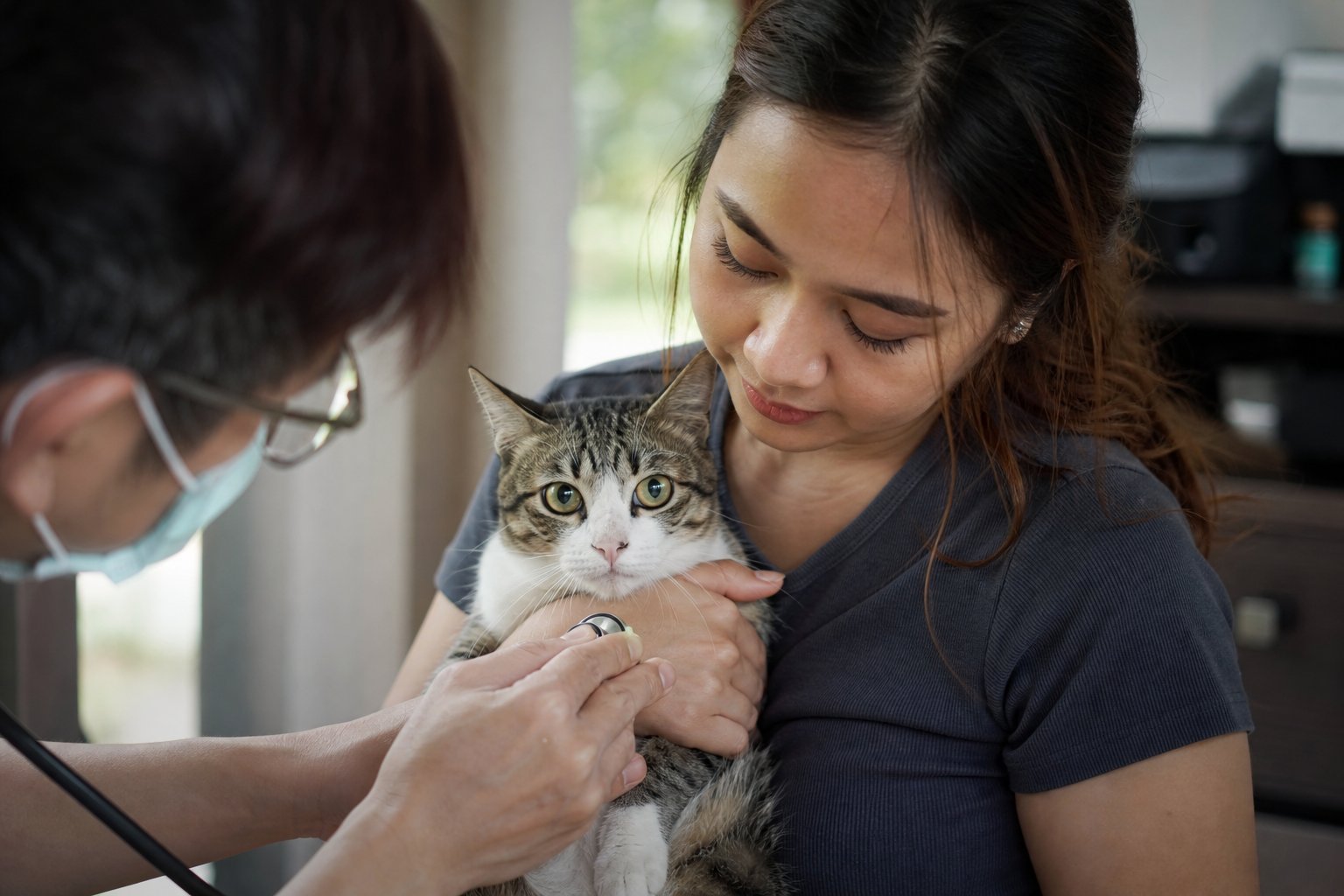
Appetite stimulants such as mirtazapine, cyproheptadine and capromorelin are prescription medicines, not supplements. Used long-term they create four main problems: they hide the real disease, side effects accumulate, the liver and kidneys carry a growing load, and hormonal options raise diabetes and mammary tumour risk. Treat them as a short, monitored tool — most cases need a vet reassessment within one to two weeks.
What an appetite stimulant actually does
An appetite stimulant works through the central nervous system or hormonal pathways to make a pet feel hungry and eat voluntarily. That is a completely different category from a prescription gastrointestinal diet or a nutritional paste, which are foods or supplements. A stimulant is a drug, and it requires a vet's assessment and prescription.
Before prescribing, a good consultation should have three elements in place. First, basic investigation has been done — at minimum bloodwork — so the cause is known, or an emergency has at least been ruled out. Second, the pet has actually lost weight because of prolonged poor intake. Third, there is a clear expiry date on the plan and a booked review appointment.
Ask your vet directly if those three conditions are missing. "Not eating" is a sign, not a diagnosis. Reduced intake can come from a food change or a stressful household event, which are usually harmless and self-limiting, or from chronic kidney disease, pancreatitis, oral pain or a tumour, which needs same-day investigation. A stimulant tells the brain it is hungry; it treats none of those conditions.
Six risks of long-term use
These six are what the word "long-term" really brings. A correctly bounded short course usually will not produce all of them.
1. It masks the underlying cause. This is the most serious risk. A cat with dental pain stops eating because chewing hurts; on a stimulant it starts eating again while the diseased teeth continue to deteriorate, eventually becoming a complicated procedure under general anaesthetic. A cat with chronic kidney disease that receives only a stimulant, without fluids and a prescription renal diet, keeps losing kidney function until signs appear at a late stage.
2. Side effects accumulate and confuse the picture. Mirtazapine can cause lethargy, unsteady walking and restlessness or vocalising; cyproheptadine tends to cause sedation, dry mouth and constipation. These usually show up within one to three days of the first dose. Over a long course they become the new normal, and an owner can easily mistake a drug effect for the disease getting worse.
3. Drug interactions and serotonin-related problems. Mirtazapine acts on serotonin pathways. Combined with other serotonergic medicines — certain painkillers and anti-nausea drugs — it can trigger tremors, elevated body temperature, a fast heartbeat and disorientation, which are emergencies. Always tell your vet the full list of what your pet is taking before any new medicine is added.
4. Liver and kidney burden. Most medicines are metabolised in the liver and excreted by the kidneys. A pet with existing kidney or liver disease clears drugs more slowly, so accumulation is much more likely than in a healthy pet, and the effect worsens when several medicines are given together. The sensible approach is bloodwork before prescribing and repeat testing during the course — never "it looks fine, so keep going."
5. Appetite improves while weight still falls. This is the most overlooked scenario. The pet eats visibly, but malabsorption, chronic intestinal disease or a tumour keeps consuming calories, so the scale keeps dropping. How much food disappears from the bowl is not evidence; the weekly weight is the only number that does not lie.
6. Hormonal drugs carry their own profile. Megestrol acetate is a synthetic progestogen that stimulates appetite well, but long-term use is associated with diabetes, mammary tumours and uterine accumulation of infection, so vets generally restrict it to short courses and avoid it in unspayed females. Diazepam can briefly trigger appetite in cats but has been linked to acute liver problems, so it is rarely a first choice now.
One related question: stimulants do not create drug-style addiction and there are no withdrawal signs. What does occur is behavioural dependence — every review visit becomes "add a bit more" instead of "find the cause". Keep the medicine on a deadline.
Common stimulants and how they compare
| Medicine | How it works | Often used for | Common side effects | Concern with long use | Self-medicate? |
|---|---|---|---|---|---|
| Mirtazapine | Acts on serotonin and histamine pathways to stimulate the appetite centre | Persistent appetite loss in cats with chronic illness; some anti-nausea support | Lethargy, unsteady gait, restlessness or vocalising, behaviour change | Ongoing side effects; serotonin-related interactions with other drugs | No — vet prescription |
| Cyproheptadine | Antihistamine with anti-serotonin action that also nudges appetite | Short-term support in some cats and dogs | Sedation, dry mouth, constipation | Anticholinergic effects build up; older pets tolerate it less well | No — vet assessment |
| Capromorelin | Ghrelin receptor agonist that mimics the hunger signal | Mainly dogs with poor appetite | Vomiting, drooling, over-excitement | Long-term data is limited, so short courses are typical | No — vet prescription |
| Megestrol acetate | Synthetic progestogen with a strong appetite effect | A small number of short-term cases; usually avoided in unspayed females | Increased thirst, large appetite, mood change | Linked to diabetes, mammary tumours and uterine infection | No — higher-risk drug |
| Diazepam | Sedative that briefly stimulates appetite in cats | Rarely a first-line choice nowadays | Lethargy, unsteady gait | Associated with acute liver injury in cats | No — seldom used |
The key message from this table is that risk levels differ widely. Capromorelin and cyproheptadine are comparatively gentle but still prescription products; megestrol acetate and diazepam are higher-risk options a vet reaches for only after weighing alternatives. No version of these is something to buy casually and trial at home — and dose is where the danger is sharpest, because feline doses are measured in small milligram amounts that bear no resemblance to a standard human tablet.
What stimulants cannot fix: eight hidden causes
Whether long-term use is dangerous depends less on the drug than on what is behind the sign.
| What you see | Possible underlying cause | Can a stimulant help? | What happens if it is left untreated |
|---|---|---|---|
| Slowly eating less, drinking and urinating more | Chronic kidney disease, diabetes | Only a temporary lift in intake | Kidney function or glucose control keeps deteriorating |
| Comes and goes, with steady weight loss | Chronic intestinal disease, intestinal lymphoma | Very little | Worsening malnutrition, delayed diagnosis |
| Wants to eat but pulls away, drops food, drools | Dental pain, gum disease, tooth resorption | No — the pain remains | Spreading oral infection, higher anaesthetic risk |
| Suddenly refuses everything, hunched, dull | Pancreatitis, acute abdominal problem | Should not be used | Needs same-day fluids and pain relief |
| Good appetite, still losing weight | Overactive thyroid, diabetes, parasites | Not needed — the direction is wrong | Metabolic strain continues, extra load on the heart |
| Off-and-on refusal with vomiting | Foreign body, hairballs, gastritis | Risk of hiding the sign | May progress to intestinal blockage |
| Older pet eating less, coat worsening | Chronic disease, tumour, kidney problems | Superficial improvement only | Missed window for early intervention |
| Total refusal followed by yellow gums | Fatty liver, liver disease | Should not be used | Emergency requiring hospital feeding |
The point of this table is simple: a stimulant addresses "not willing to eat", not "why it will not eat". Anything in that list needs blood tests, urine tests, imaging or an oral exam — not another box of tablets. Searching for an "appetite pill" first costs money and, more importantly, burns the hours when diagnosis is easiest.
The real cost of not eating: cats, dogs and seniors
Some owners wait it out, convinced hunger will win eventually. Others rush to medicate so the bowl looks empty. Neither extreme serves the pet.
Cats carry the highest risk. Two to three days of complete refusal is already a clinical warning. A cat's metabolism is not designed for fasting: prolonged anorexia mobilises fat to the liver, and if the liver cannot process it the result is hepatic lipidosis. That condition means hospitalisation and a feeding tube, with treatment stretching over weeks. Overweight cats are at greater risk. The safe rule for cats is not to wait — two consecutive days of sharply reduced intake deserves action.
Dogs tolerate less eating for longer, but there are still limits. Once a dog drops 5% to 10% of its body weight, a full work-up is warranted. Puppies have almost no reserves: more than 12 to 24 hours without food is a reason to see a vet, because low blood sugar and dehydration develop quickly.
Seniors and babies get half the normal window. Pets over ten and kittens or puppies under six months have smaller metabolic reserves and dehydrate faster, so the observation period must be shortened. This is exactly the group where propping things up with a stimulant instead of investigating carries the most risk. Prolonged fasting also thins the gut lining and lowers immunity, producing a vicious cycle where the less a pet eats, the less able it becomes to eat.
A five-step safe-use framework
If your vet concludes a stimulant is genuinely needed, these five steps separate careful use from risky drift.
- Diagnose before dosing. At least basic bloodwork, plus urine tests, imaging or an oral exam where indicated, to rule out emergencies. This step is not optional.
- Set an end date. Most cases are reassessed within one to two weeks. Book the review on the day you collect the medicine.
- Record intake daily. Use the same bowl and the same food, and log actual grams — not "looked like half".
- Weigh weekly. Same time, same scale. Weight is the only objective measure of nutritional status.
- Re-test blood as directed. Liver and kidney values, electrolytes and glucose, typically every one to four weeks during treatment and again after stopping.
| What to track | Suggested frequency | Warning line — contact the vet promptly |
|---|---|---|
| Body weight | Once a week | A 5% drop or more within a week |
| Food intake | Daily record | Two consecutive days below half of normal |
| Demeanour and behaviour | Daily | Lethargy, tremors or non-stop vocalising after dosing |
| Drinking and urination | Daily | Sudden marked increase or decrease |
| Blood tests | As your vet sets, usually every 1–4 weeks | Values drifting noticeably from the previous round |
| Mouth check | Weekly | Drooling, avoiding hard food, chewing on one side |
Four mistakes that turn a short course into a long problem
Using human medicine. Human mirtazapine or cyproheptadine tablets are adult human doses, many times what a small pet needs; even halving a tablet can overshoot.
Treating a supplement as a treatment. Appetite powders and nutritional gels can support a plan your vet has agreed, but they cannot diagnose anything and should never delay investigation.
Reusing leftovers. Medicine left from a previous episode may not match this weight or this condition, and storage and expiry are uncertain.
Dosing up on your own. "Eating well, so I'll keep it going" is one of the commonest routes to a missed diagnosis. When the course ends, the review happens.
Also tell your vet before adding any new product — including spot-on flea and tick treatments chosen for your pet's weight band, since some ingredients interact with other medicines. Local prices and stock vary, so check with your Malaysian vet or pet retailer rather than assuming a figure you saw elsewhere applies here.
When to see a vet
Seek veterinary care immediately if your pet refuses food completely for two to three days (cats), more than 12 to 24 hours (puppies), or shows any of the following: hunched posture suggesting abdominal pain, vomiting alongside refused meals, yellowing of the gums or skin, drooling and avoiding hard food, tremors or a very fast heartbeat after a dose, marked lethargy, or a rapid weight drop. Book a routine review within one to two weeks of starting any stimulant, and bring your written intake and weight records to the appointment.
Related reading
- Pet Medication Safety Guide Malaysia: Dosage, Antibiotics, Deworming & Poisoning First Aid
- Why Your Cat Loses Appetite on Antibiotics: Causes, Timeline and What to Do
- Antibiotics and Your Cat's Appetite: A Malaysian Owner's Guide to What's Normal, What's Not
- Can You Give a Cat Anti-Vomiting or Anti-Diarrhoea Medicine? Safety Rules for Malaysian Cat Owners
- Cat Ate a Grape? Emergency Steps Malaysian Pet Owners Must Follow