
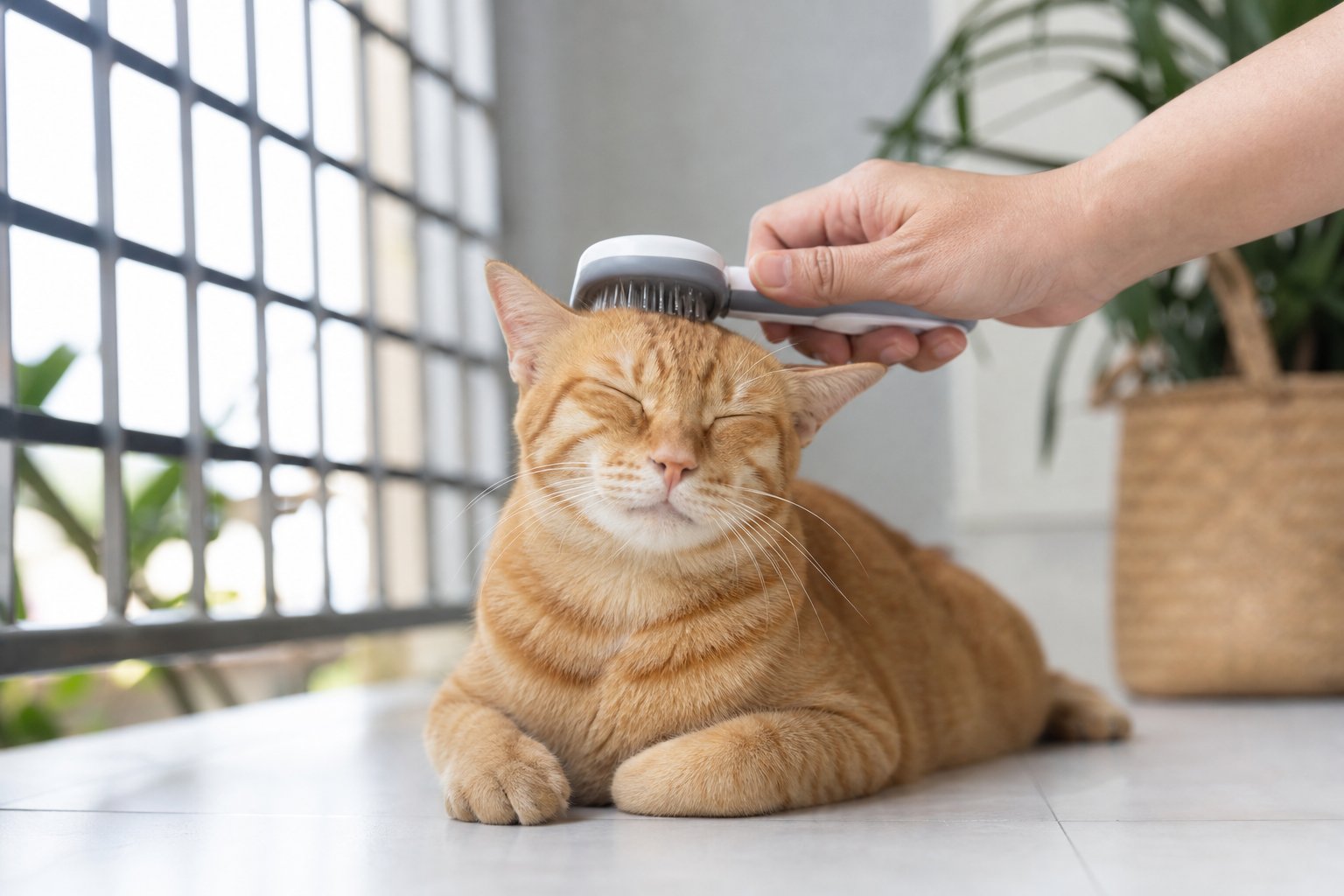
Quick answer: Persistent itching in dogs and cats is usually triggered by three things — fleas, food, and environmental allergens such as dust mites and mould. Lasting relief comes from finding the trigger first (flea control, a proper food elimination trial, humidity and housekeeping control), then easing the itch with veterinary treatment. Creams alone only hide the symptom, and broken, weeping skin needs a vet.
Why your pet scratches: three allergen groups
Skin allergy is the immune system reacting to something genuinely harmless — a flea bite, a protein in dinner, a grain of pollen. The reaction shows up as itch, redness and inflammation. Humid weather works against pets: mould and dust mites thrive in warm, damp conditions, so skin problems tend to flare and recur rather than settle.
Most cases fall into one of three buckets.
Fleas — the most common trigger. Flea saliva is one of the strongest allergens a pet can meet. A single flea is enough to set off a full-body itch response in a sensitised dog or cat, which is why owners often cannot find any flea yet the scratching is relentless. Flea-related itch concentrates on the tail base, the back of the thighs and the inner thighs. Run a fine comb through those areas and look for tiny black specks.
Food. Chicken, beef, grains and dairy are the usual suspects. Food allergy tends to be a year-round, recurring problem rather than a seasonal one, and it shows up around the head, ear flaps and paw pads. Some pets also get soft stools, wind or a bloated belly alongside the skin signs. Only an elimination trial confirms it — guessing never will.
Environmental. Dust mites, pollen, mould spores, household dust and human skin flakes all qualify. Where humidity stays high, mites and mould become the dominant environmental triggers. Environmental allergy often follows a pattern: worse at certain times of year, worse in certain rooms, worse after a long spell of wet weather.
Hold on to that trio — fleas, food, environment. If you never identify the trigger, every treatment is a temporary patch and the itch returns within weeks.
The signs: what an allergic pet actually looks like
Most allergic skin disease announces itself as itch first, and only later as visible damage. Watch for these signals:
- Scratching, licking, chewing — the direct signal. An animal that repeatedly works on one spot, or licks a paw until it stays wet, is itchy.
- Thinning or missing fur — repeated licking wears the hair down to bald patches, especially on the belly, inner legs and around the ankles.
- Redness and swelling — inflamed skin, often warm to the touch; scratching soon breaks the surface.
- Rashes and crusts — small red bumps that turn into scabs once scratched open.
- Recurring ear inflammation — a red, smelly ear canal, head shaking, scratching at the ears. Ears are often the first place allergy shows itself.
- Licking and chewing at the paws — a dog that stops mid-walk to lick its feet is handing you a clue.
- Dull coat and dandruff — dry, flaky skin with a coat that has lost its shine.
One thing worth knowing: allergic skin disease does not spread to people or to other pets. What it does do is make the animal scratch harder, which damages the skin and invites a secondary bacterial infection. That infection, rather than the allergy itself, is usually what turns a manageable annoyance into an urgent problem. If your pet's scratching frequency has clearly climbed compared with a month ago, take it seriously even before any patch of skin looks bad.
Telling them apart: comparison table and home checks
Different triggers call for different fixes, so your first job is detective work. This is what to look for at home:
| Observation | Flea allergy | Food allergy | Environmental allergy |
|---|---|---|---|
| Typical itch sites | Tail base, thighs, lower back | Head, neck, ear flaps, paw pads | Paws, belly, armpits |
| Timing pattern | Year-round, worse in warm humid spells | Year-round and linked to meals | Seasonal, or worse in damp weather |
| Common extras | Black specks, scabs, crusts | Soft stool, wind, bloated belly, ear infections | Sneezing, watery eyes, head shaking |
| First check to do | Wet cotton test for flea dirt | Supervised elimination diet | Improve the home, then watch |
No single row settles the case, but two or three matching clues give your vet a strong starting point.
The wet cotton test. Comb off a few of the tiny black specks you find on the coat and press them onto a damp cotton pad. If they smear into a reddish-brown colour, that is dried blood — flea dirt, which means fleas are living in your house. If the specks stay black and crumbly, they are more likely ordinary dirt or dried scab.
The itch diary. On your phone, note the time of day scratching starts, the body area involved and how severe it looks, plus meals, outings and weather. Over a week or two, that record is far more useful at a consultation than a general "he's always scratching".
Six steps to relieve the itch — in the right order
Order matters. Treating the surface while the trigger keeps firing is exactly why allergies seem never to go away.
1. Deal with fleas first. If fleas are suspected, flea control is the anti-itch treatment. Use a veterinary-recommended spot-on or oral product and treat every dog and cat in the household at the same time — treating only the one that is visibly scratching leaves reservoirs of reinfestation. Continue for the full course even after the scratching eases.
2. Run a proper food elimination trial. Under your vet's direction, feed a single new protein source or a prescription diet for a defined period. No treats, no table scraps, no chews, no flavoured supplements or leftovers. Then reintroduce the old ingredients one at a time and watch for the itch to return. One sneaky snack invalidates the whole test, and you start over. Expect this to take patience: it is a structured process with a strict feeding discipline, not a quick switch of kibble brands.
3. Control the environment. Wash and thoroughly dry pet bedding weekly, vacuum carpets and the crevices of sofas and mattresses, run a dehumidifier or air-conditioner to keep indoor humidity down, and cut back on grass outings on high-pollen days.
4. Get veterinary relief. A vet can prescribe antihistamines, medicated creams or sprays, and antibiotics if the skin has become infected. Never apply human creams or ointments to a pet without advice — several common ingredients are genuinely toxic to cats, and what soothes human skin can make a pet worse.
5. Bathe gently. A mild, pet-specific shampoo rinses away surface allergens, scales and crusts and soothes the skin. Keep the water lukewarm rather than hot, and dry the coat completely afterwards; leftover dampness in the coat tends to trigger the next flare.
6. Break the itch–scratch loop. Scratching thickens the skin, which makes it itch more, and the cycle accelerates. A cone or a protective suit gives the skin a chance to heal while the medication works, and keeping nails short reduces the damage each scratch does.
Living with humidity: mites, mould and a damp house
The principle behind every environmental trigger is simple: warm, humid spaces breed mites and mould, dry and clean ones do not. That logic applies wherever you live in a tropical climate.
Practical measures:
- Run a dehumidifier or keep the air-conditioner on during the wettest stretches, especially in bedrooms where pets sleep.
- Wash pet bedding every week and dry it fully — a bed that stays damp is a mite hotel.
- Vacuum thoroughly, paying attention to carpet edges, sofa seams and the area under beds, and empty the canister outside the living space.
- Wipe paws and belly after outings, which cuts down on pollen and dust carried indoors.
- Do not let a pet sleep in a damp corner — beside the bathroom, under a staircase, or in a storage area that smells of mildew.
- Groom regularly, which lets you spot black specks, red bumps and bald patches early rather than late.
In a Kuala Lumpur apartment, the biggest offenders are usually the laundry corner beside the bathroom and bedding that never quite dries between washes. During the Penang rainy season, expect a flare unless you actively dry both the air and the bedding. A terrace house with a garden brings more pollen and more contact with soil, so paw-wiping after every outing pays for itself.
Myths that keep pets itchy
"My cat never goes out, so it can't have fleas." Flea eggs and larvae arrive on shoes, clothing, carpets and second-hand furniture. Indoor-only pets still benefit from regular flea prevention.
"I'll just use the cream from my medicine cabinet." Some human topical products are dangerous for cats and unwise for dogs. Ask a vet first.
"Itching must mean an infection." Infection is usually a complication of scratching, not the original cause. Treating only the infection leaves the allergy untouched and the itch to return.
"One itchy patch is probably mites or a fungal infection." Possibly, but flea allergy, food allergy and environmental allergy are far more common causes of widespread, recurring itch. A vet can distinguish them with skin scrapes, a Wood's lamp examination, a flea control trial or a structured diet trial.
"If the cream works, the problem is solved." Relief is not a diagnosis. Any product that calms the itch while the trigger stays in place will buy you days at most.
When to see a vet
Do not wait and self-treat if any of these appear:
- Skin is broken, bleeding or oozing pus, or has a strong odour
- Itching is so severe the pet will not eat or sleeps poorly
- Hair loss or redness spreads quickly over a few days
- Ear canals are red and swollen with dark discharge, or the pet shakes its head repeatedly
- Swelling around the eyes or lips, rapid breathing, or a sudden whole-body itch — a possible acute allergic reaction, which is an emergency
- No improvement after one to two weeks of home care, or the problem keeps coming back
A vet may perform a skin scrape, a Wood's lamp check, a flea control trial or a structured elimination diet before settling on treatment. Getting the diagnosis right is what actually stops the cycle instead of rotating through products.
What you can do today
- Treat every pet in the household for fleas and record the date for a monthly routine
- Comb your pet and run the wet cotton test on any black specks you find
- Start the dehumidifier, then wash and fully dry all pet bedding
- Begin an itch diary on your phone: timing, location, severity
- Review feeding — pause unrecorded treats while you decide on a diet trial
- Book a vet visit if the skin is broken or the itch is severe
Frequently asked questions
What are the signs of skin allergies in dogs and cats? Constant scratching, licking and chewing, thinning or bald patches, red or swollen skin, rashes and crusts, recurring ear infections, and paw licking. The core sign is itch — if scratching rises noticeably or skin breaks open, see a vet.
What are the most common allergens for pets? Three groups: flea saliva, where a single flea can trigger severe itch; foods such as chicken, beef, grains and dairy; and environmental triggers like dust mites, pollen and mould. Warm, humid indoor spaces raise mite and mould exposure.
How do I stop my pet's itching? Remove the trigger first — flea control, a supervised elimination diet, or drier and cleaner bedding and floors — then add vet-prescribed medication, a gentle pet shampoo and a cone to stop licking. Creams alone only mask the itch.
How is a food allergy confirmed? By an elimination trial under veterinary guidance: one new protein or a prescription diet for several weeks, with no treats or table scraps, then reintroduce old foods one at a time. Itch that returns identifies the culprit.
Can an indoor-only cat still get fleas? Yes. Eggs and larvae arrive on shoes, clothing, carpets and second-hand furniture. Indoor-only pets should still follow a regular flea prevention routine recommended by a vet, rather than waiting until fleas are actually seen.
When should I see a vet for itchy skin? See a vet if skin is broken, bleeding or oozing; if sleep or appetite suffers; if ears are repeatedly inflamed; if swelling or breathing trouble appears; or if home care shows no improvement after one to two weeks.
This article is for general education only and is not a diagnosis. Skin disease, ear infections and allergic reactions need a proper examination — please consult your registered veterinarian for advice tailored to your pet.
Related reading
- Pet Health Guide Malaysia: Annual Checkups, Blood Tests and When to Worry
- Cat Fleas in Malaysia: Symptoms, Treatment and Year-Round Prevention
- Cat & Dog Urinary and Kidney Health in Malaysia: Prevention, Warning Signs and Emergency Red Flags
- Cat Dental Care in Malaysia: Brushing, Tartar, Bad Breath and Gum Disease Guide
- Cat Deworming in Malaysia: Schedules, Spot-Ons, Tablets and Red Flags
- Cat Diabetes in Malaysia: Warning Signs, Blood Sugar Control and Remission
- Cat Hyperthyroidism in Malaysia: Early Signs, Tests and Treatment Options
- Cat Neutering in Malaysia: Timing, Surgery Prep and a 7-Day Recovery Plan
- Cat Stomatitis (FCGS) in Malaysia: Symptoms, Full-Mouth Extraction and Recovery
- Cat Vaccines in Malaysia: FVRCP, Rabies & Kitten Schedule Explained