
Quick answer: Fleas thrive in Malaysia's warm, humid weather, and the giveaway sign is a cat scratching hard while black pepper-like specks drop out of the coat during combing. Clearing them for good means treating the cat and the home at the same time, then dosing every month without stopping.
Fleas are among the most common external parasites cats here face. Adults feed on your cat's blood and lay eggs, the eggs fall into carpets, bedding and sofa seams, and larvae hatch and hide in dark crevices. The whole cycle can run in as little as two to three weeks, which is why a small problem can suddenly involve the entire house.
Why Malaysian cats keep picking up fleas
Fleas favour warm, humid conditions, and much of the country delivers that weather for most or all of the year. In a place like Kuala Lumpur, where humidity rarely drops far, the flea does not really take a season off the way it might in a cold climate. That single fact shapes everything else in this guide: prevention here is a year-round habit, not a summer job.
One myth is worth killing straight away: an indoor-only cat can still get fleas. Eggs and adults travel in on the soles of shoes, on trouser cuffs, in a gym bag left by the door, on a windowsill, or from another pet that goes outdoors. Kittens adopted from a rescue group, second-hand upholstered furniture, and contact with neighbourhood or community cats are other common entry routes.
In multi-cat households, one affected cat usually means the others are already carrying fleas even if you have not seen a single insect. Grooming hides evidence too, because cats are efficient at eating what they find in their fur. And in a Penang rainy season, when everyone stays indoors with the windows shut, a flea population can build quietly while you assume the wet weather is washing the problem away. It is not.
Recognising the symptoms
Cats rarely tell you something is wrong. You have to read the behaviour and the coat:
- Persistent scratching and licking, concentrated on the neck, the base of the tail and the inner thighs, sometimes to the point of bald patches
- Black specks resembling ground pepper in the fur, on the sleeping spot, or on white fabric after grooming
- Red spots and bite marks, small raised welts that may scab over if the cat keeps attacking them
- Thinned, dull fur and rough skin from weeks of self-trauma
- Flea allergy dermatitis — a cat allergic to flea saliva can react explosively to a single bite, with intense itching and weeping, eczema-like wounds
- Visible insects, small, brown and quick to jump, moving through the coat
The wet cotton test
This one trick separates real flea dirt from ordinary grime. Place the black specks on a white tissue or cotton pad dampened with a little water. If the specks dissolve into a red-brown stain, they are dried blood passed by a flea, and the case is confirmed. No waiting, no guessing.
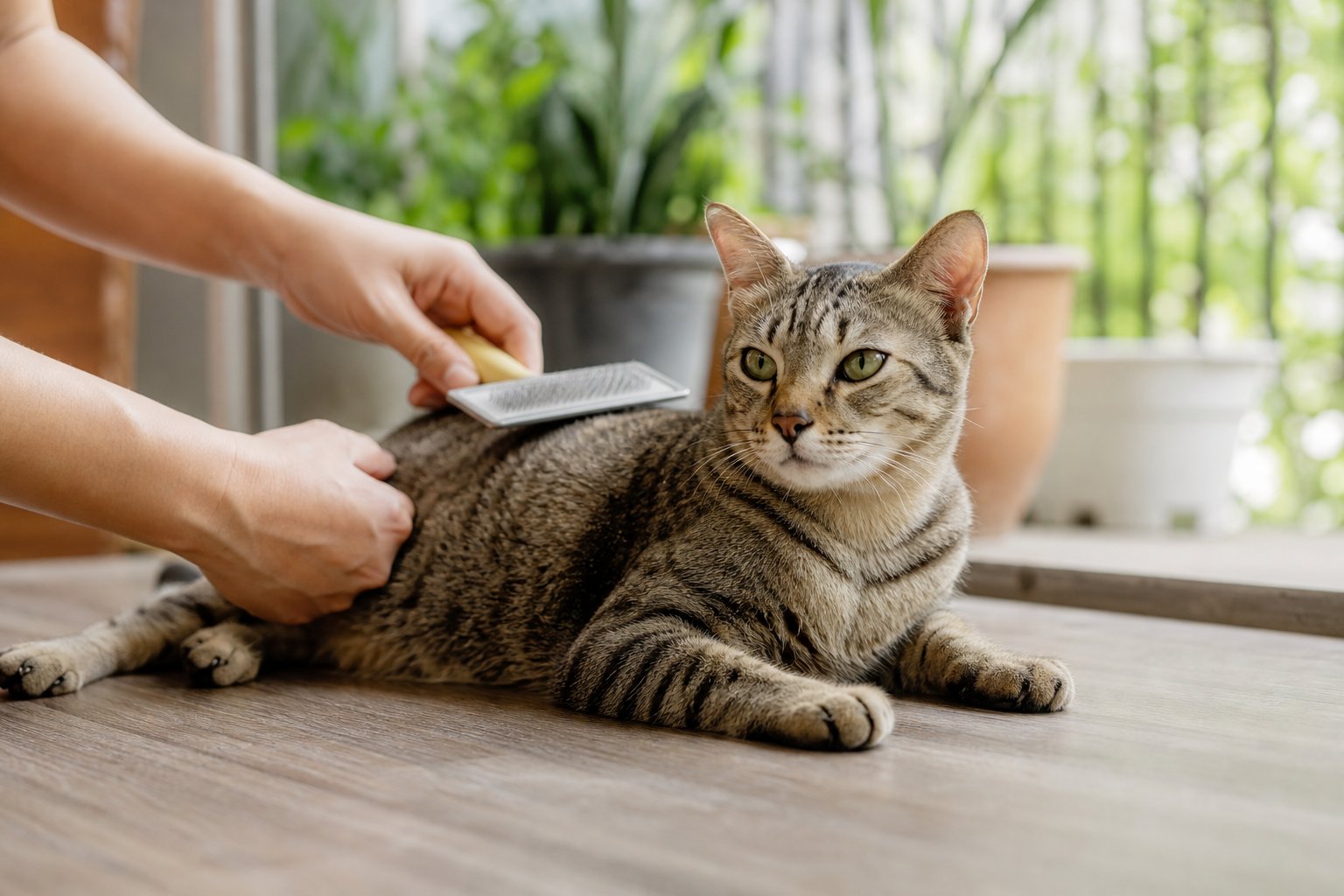
Do the test with a fine-toothed comb, working from the neck down to the tail base with a sheet of white paper held underneath. Comb after a nap or after grooming, when debris is loosest.
Fleas also serve as an intermediate host for tapeworms. A cat that swallows a flea carrying tapeworm larvae during grooming can end up with intestinal tapeworms as well, so flea control and a deworming schedule should be discussed together with your vet. Very young, old or unwell cats suffering heavy infestations can develop anaemia from blood loss, and that is a genuine emergency rather than a cosmetic nuisance.
The flea life cycle: why one treatment is never enough
What you see on your cat is only a fraction of the population. Most of the insects exist as eggs, larvae and pupae scattered through the home.
| Stage | Where it hides | Why it is hard to kill |
|---|---|---|
| Eggs | Drop off the cat onto floors, carpets and bedding | Tiny, produced daily in large numbers, invisible to the eye |
| Larvae | Dark cracks and fabric gaps, feeding on organic debris | Avoid light and burrow deep, so surface spraying misses them |
| Pupae | Inside a silken cocoon, sometimes for weeks | The cocoon blocks insecticides; it waits for vibration to trigger hatching |
| Adults | On the cat, feeding on blood | Begin laying eggs within days of the first meal |
The pupal stage is the reason owners swear the fleas "came back". Cocoons stay dormant until footsteps, a person sitting down or a cat settling on the cushion signal that a host is nearby, and a fresh batch emerges almost overnight. The product did not fail; the next generation simply hatched. The correct response is to keep vacuuming, keep following the treatment schedule, and not stop early.
Treatment: the cat and the environment, one plan
Step 1 — treat your cat
| Product form | How it is given | Notes |
|---|---|---|
| Spot-on drops | Applied to the skin at the back of the neck | Widely used; typically protects for about one to four weeks |
| Tablets | Swallowed | Works quickly; follow the vet's instructions on timing |
| Collar | Worn continuously | Mostly for prevention; check the fit and check it has not dropped off |
Dose must match body weight and age, which is why a veterinary consultation is worth it, especially for kittens, seniors, pregnant queens or cats with existing health problems. Budget products sold without guidance may under-dose or use unverified ingredients, and dog flea products can contain compounds that are dangerous for cats. Never improvise with dog medication or with human anti-itch remedies — many human repellents, including certain pyrethroid formulations, are toxic to cats.
Step 2 — clear the home
Without this step you are refilling a leaking bucket.
- Vacuum thoroughly — sofa crevices, under beds, along skirting boards, around the feeding area and wherever the cat likes to nap. Vacuuming physically removes eggs and larvae and stimulates pupae to hatch, which makes them vulnerable. Empty or change the dust container immediately into a sealed bag outside the house.
- Wash hot — cat beds, blankets, cushion covers and fabric toys at around 60 °C and tumble dry on high heat if you have a dryer. For foam or memory-foam pads that cannot be washed, wipe down and air them in strong sunlight.
- Treat cracks and seams — a card wrapped in a damp cloth can sweep larvae out of the gap where the floor meets the wall, under cupboards and along curtain hems.
- Follow up — vacuum daily for the first week, then several times a week for a month, because pupae keep hatching long after the first pass.
Some owners also run a dehumidifier. Flea larvae do best in damp organic material, so keeping indoor humidity moderate can slow their development while you are breaking the cycle.
Do fleas bite people?
They can. Fleas commonly bite around the ankles and lower legs, leaving a cluster of itchy red marks that people often mistake for mosquito bites. However, humans are a poor host for cat fleas; they will not settle and reproduce on human skin, so bites should decrease once the cat and home are under control.
During treatment, keep the family comfortable: wash hands after vacuuming, launder clothing and floor mats used by children, and let sensitive household members leave the room while any household insecticide is applied, returning once the area is ventilated. If bites stay itchy or become infected from scratching, see a medical professional.
Never apply human insect repellent, anti-itch cream or essential oils to a cat because someone in the house was bitten. The flea problem is managed on the cat with cat-safe, veterinary-approved products, and nowhere else.
When to see a vet
- Scratching has broken the skin, or the area is oozing, crusty or smells — there may be a bacterial infection needing treatment
- You suspect flea allergy dermatitis, or the itching continues despite correct dosing
- A kitten, senior or unwell cat is heavily infested — pale gums, low energy, poor appetite or fast breathing suggest anaemia and should be treated as urgent
- Several cats or dogs in the home are scratching at once and you need a coordinated plan
- Your cat reacts badly to a flea product — drooling, vomiting, tremors or uncoordinated movement means stop using it and contact a vet immediately
- You want a full-year schedule covering both flea prevention and intestinal deworming
Veterinary note: This article is general information only and is not a substitute for a diagnosis. If your cat is unwell or the skin is damaged, please consult a registered veterinarian.
Prevention: monthly, all year
- Dose every month — on the date set by your vet, whether a spot-on or a tablet, without waiting for warm weather
- Never stop when fleas disappear — stopping early lets the residual population rebound; prevention is cheaper and calmer than eradication
- Clean regularly — routine vacuuming and hot-washing bedding keep environmental numbers down
- Inspect after outings — comb the coat after walks, vet visits or contact with other animals
- Treat newcomers first — new kittens, adopted cats and fosters should complete flea treatment before joining the household
- Treat every animal together — dogs and cats in the same home need a synchronised plan, or they will keep reinfecting each other
Write the application date on the fridge calendar or set a phone reminder. Missed months are the single most common reason an apparently solved flea problem returns.
A practical two-week action plan
This works for a compact Kuala Lumpur apartment where furniture sits close to walls and floor space is limited.
Day 1 — confirm and treat
- Comb the coat over white paper from neck to tail base; dampen any black specks to confirm flea dirt.
- Book a vet visit the same day and weigh the cat so the dose is correct.
- Apply the prescribed spot-on or tablet that evening, following the instructions, and keep the cat dry for the period your vet advises.
Days 1–2 — household clear-out
- Vacuum the one-metre radius around the cat's bed, sofa seams, under the bed, shoe cabinet base and curtain hems. Dispose of the collected debris outside immediately.
- Hot-wash all bedding, throws and cushion covers, and dry on high heat where possible.
- Sweep skirting gaps and cupboard corners with a damp cloth, and wipe plastic floor mats with hot water.
Days 3–14 — hold the line
- Vacuum the cat's favourite resting spots daily and discard the dust each time.
- Wash the bedding again around day seven, when delayed pupae begin to hatch.
- Set a reminder for the next monthly dose so there is no gap in cover.
Today's checklist
- Comb the cat over white paper and run the wet cotton test
- If confirmed, arrange a veterinary prescription and take the cat's weight along
- Hot-wash every soft furnishing the cat touches, then vacuum the whole floor area
- Ask the vet to build a combined flea and deworming calendar for the year
- Mark every dose date on a shared calendar at home
Consistency beats intensity. Two weeks of steady work plus a monthly routine will do more than one dramatic clean-out followed by nothing.
Related reading
- Pet Health Guide Malaysia: Annual Checkups, Blood Tests and When to Worry
- Pet Skin Allergy and Itch in Malaysia: Flea, Food and Environmental Triggers
- Cat Dental Care in Malaysia: Brushing, Tartar, Bad Breath and Gum Disease Guide
- Cat Deworming in Malaysia: Schedules, Spot-Ons, Tablets and Red Flags
- Cat Diabetes in Malaysia: Warning Signs, Blood Sugar Control and Remission
- Cat Hyperthyroidism in Malaysia: Early Signs, Tests and Treatment Options
- Cat Neutering in Malaysia: Timing, Surgery Prep and a 7-Day Recovery Plan
- Cat Stomatitis (FCGS) in Malaysia: Symptoms, Full-Mouth Extraction and Recovery
- Cat Vaccines in Malaysia: FVRCP, Rabies & Kitten Schedule Explained
- Cat Vaccines in Malaysia: Core Shots, Kitten Schedule and What to Watch
- Dog Heartworm Prevention in Malaysia: Year-Round Mosquito Protection, Medication Types and Screening Schedule