
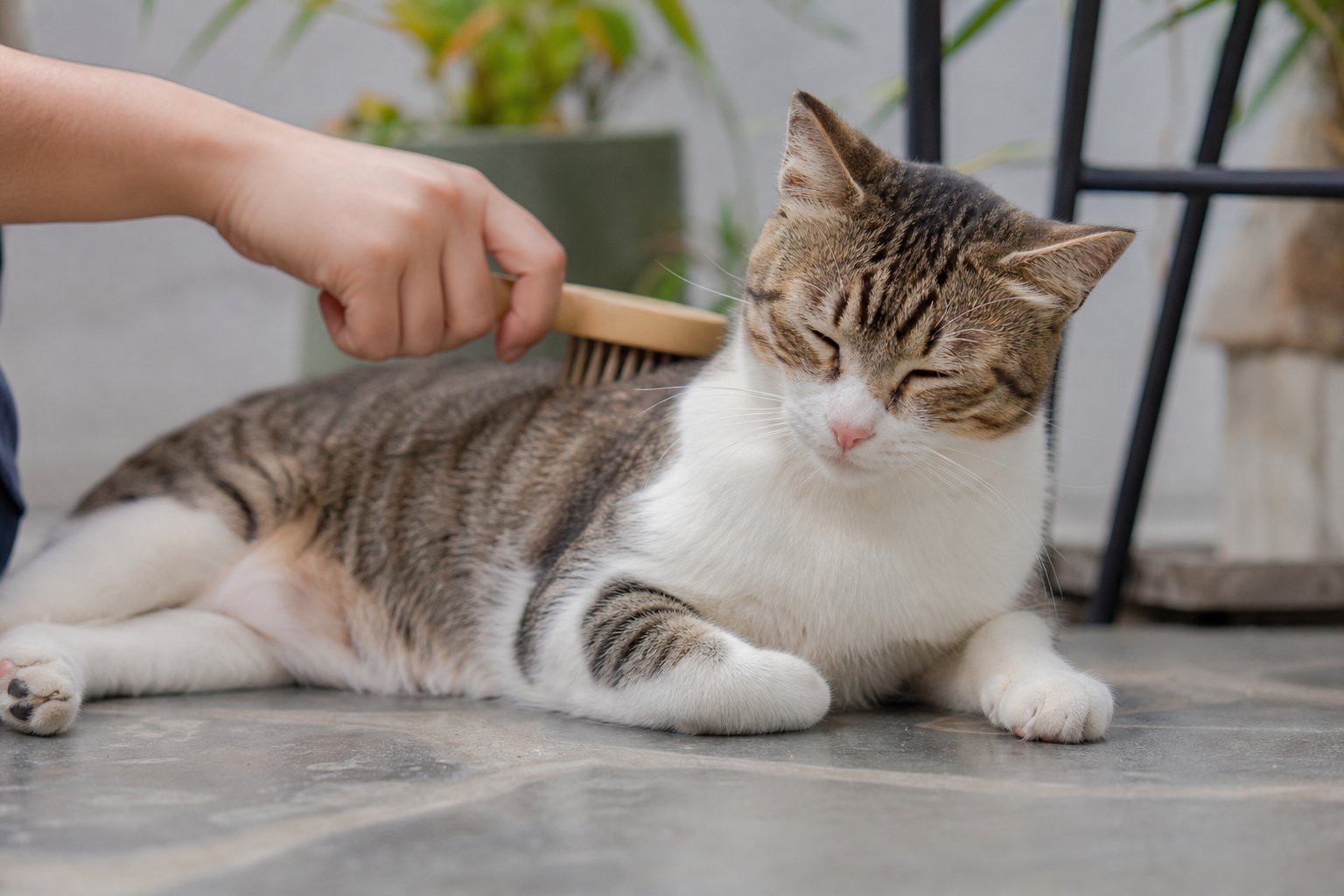
Feline diabetes is a manageable — and often reversible — condition. Most cats develop type 2 diabetes, driven by obesity and long-term high-carbohydrate food. The classic home signal is 'three more, one less': drinking more, urinating more, eating more, yet losing weight. Early testing, insulin where needed and a low-carbohydrate diet give your cat the best shot at remission. This guide covers the warning signs, diagnosis, emergency red lines and daily routines that suit Malaysian homes.
What feline diabetes actually is
Think of insulin as a key. Carbohydrates in food are broken down into glucose, and glucose needs that key to unlock your cat's cells so it can be used for energy. Diabetes is what happens when this key system fails.
There are two versions. In type 1, the pancreas stops producing insulin — this is the common form in dogs but rare in cats. In type 2, cells respond poorly to insulin, and the pancreas compensates at first before eventually wearing out. The overwhelming majority of diabetic cats fall into the type 2 category, closely mirroring type 2 diabetes in humans.
Type 2 carries better news than it sounds. While the pancreas still has some reserve, reducing insulin resistance and easing its workload can let the system return to normal function. That is the mechanism behind remission. Diabetes in cats is therefore not an automatic life sentence — it is a race you can win if you start early.
Which cats are at higher risk
Not every cat develops diabetes, but certain profiles show up repeatedly:
- Overweight cats — the single biggest risk factor. Excess body fat promotes insulin resistance, and cats above ideal weight carry several times the risk of a cat at healthy weight.
- Indoor, neutered, middle-aged cats — risk climbs after roughly eight years of age. Males appear slightly more vulnerable.
- Long-term high-carbohydrate diets — cats are obligate carnivores. Their metabolism handles protein and fat well but handles large carbohydrate loads poorly. Years of carb-heavy food keep the pancreas working overtime.
- Certain breeds — Burmese cats are noted in regional research as carrying higher risk.
- Long-term steroid medication — repeated or sustained steroid therapy pushes blood glucose upward.
- Other hormonal conditions — acromegaly and Cushing's disease can arrive alongside diabetes.
A simple self-check: your cat's ideal body condition means you can feel the ribs under a thin layer of fat and see a waist when viewed from above. Can't feel the ribs? Book a weighing and ask your veterinarian for a body condition score (BCS). Make it a habit — weigh your cat every few months at home if you own a pet scale, or at each clinic visit.
The home warning signs: three more, one less
The most reliable clues happen at home, where your cat is relaxed. Learn the combination:
- Urinating more — when blood glucose exceeds what the kidneys can reabsorb, sugar spills into urine and drags water with it. Expect larger, heavier clumps in the litter box, a box that fills faster, and occasionally toileting outside it.
- Drinking more — with all that fluid leaving the body, your cat compensates by drinking heavily. Watch for the water bowl emptying unusually fast or your cat lingering at the tap or fountain.
- Eating more — cells are not receiving glucose, so the body behaves as if it is starving and appetite surges.
- Losing weight anyway — food goes in, but the sugar cannot be used, so the body starts breaking down muscle and fat. A cat that eats heartily yet looks thinner is the classic picture.
Why does this catch owners off guard? Each change happens gradually, in tiny daily increments. A cat that 'just likes water' or has 'slimmed down nicely' often turns out to be early diabetes. The key is the combination: a single signal is worth observing, but three or more appearing together means book a blood test now.
More discreet signals include low energy, reluctance to jump (nerve damage in the hind legs can flatten the foot pads into a plantigrade, palm-like stance) and a dull, rough coat.
Owner's observation checklist — tick anything you notice across two weeks:
- Litter clumps noticeably larger or heavier
- Water bowl refilled far more often
- Begging for food or finishing meals in minutes
- Weight down but appetite up
- Sleeping more, playing less
- Hesitant to jump onto beds or counters
- Hind feet slapping flat when walking
How a vet confirms it — and why fructosamine matters
A single blood glucose number rarely settles the diagnosis, for one important reason: cats get stressed at clinics, and stress alone can push glucose high. This 'stress hyperglycaemia' produces false alarms, which is why one alarming reading is never a diagnosis.
Veterinarians therefore combine several pieces of evidence:
- Blood glucose — the baseline measurement, useful but not conclusive on its own.
- Fructosamine — a marker reflecting average blood sugar over the previous one to two weeks. Because it is not affected by the cat's momentary panic in the consulting room, it is the cornerstone of both initial diagnosis and follow-up monitoring.
- Urinalysis — sugar appears in urine only once blood glucose passes the kidney threshold, supporting the diagnosis.
- Screening for companion illness — diabetes often travels with pancreatitis, chronic kidney disease or hyperthyroidism, so a fuller blood panel makes sense.
Your vet will interpret all of this alongside the clinical signs you report from home. After diagnosis, early follow-ups tend to be frequent while insulin doses are fine-tuned; once stable, the schedule settles into periodic fructosamine and glucose checks as advised.
When to see a vet: triage and emergency red lines
Use this table to judge urgency:
| Situation | Level | What to do |
|---|---|---|
| Overweight cat, no symptoms | 🟢 Prevent | Start a weight plan and review the diet |
| Drinking or urinating more (one sign) | 🟡 Book | Request glucose and fructosamine testing |
| Three or more signs together | 🟡 Urgent | High suspicion — get diagnosed promptly |
| Diagnosed and stable on treatment | 🟢 Manage | Keep to the monitoring schedule |
| Not eating, vomiting, dull | 🔴 Emergency | Possible insulin overdose or ketoacidosis — go now |
| Breath smells like nail polish remover or overripe fruit | 🔴 Emergency | Classic sign of diabetic ketoacidosis (DKA) |
| Tremors, weakness or seizures after an injection | 🔴 Critical | Hypoglycaemia — follow your vet's instructions and rush in |
How DKA develops: cells are starved of glucose for too long, so the body frantically breaks down fat, producing ketones that acidify the blood. Without treatment it can become fatal within days. For a cat already diagnosed with diabetes, the combination of not eating, vomiting and flatness is never 'just an upset stomach' — treat it as an emergency.
Low blood sugar is equally urgent. If insulin is given but the cat skips the meal, or the dose is too high, glucose can drop to dangerous levels — shaking, weakness, collapse, seizures. Your vet should teach you the home response: while the cat is still conscious, rub a little sugar syrup or honey onto the gums and head straight to the clinic. This underpins the first rule of home care — your cat must eat before every injection.
The treatment triangle and the truth about remission
Diabetes management rests on three pillars.
1. Insulin injections. This is the mainstay for most cats, usually twice daily as a tiny subcutaneous injection. The needles are extremely fine and cats adapt quickly; most owners master the technique within a week. Never adjust the dose on your own — insulin is prescription-only, and changes must be driven by your veterinarian reading the monitoring data.
2. Dietary overhaul. The target is low carbohydrate (under 10% of calories, calculated on a dry matter basis) and high protein. Wet food does most of the heavy lifting because it naturally contains far fewer carbs than dry kibble, and many cats need noticeably less insulin once switched. This pillar does more for remission than almost anything else.
3. Glucose monitoring. Clinic glucose curves (several readings across a day) plus fructosamine give the dose its direction. Where appropriate, your vet may train you in home glucose testing from the ear or paw, or discuss a continuous glucose monitor. The fuller the data, the more precisely the dose can be tuned.
Weight loss in overweight cats should be done under veterinary guidance — crash dieting risks hepatic lipidosis (fatty liver disease). A sensible pace is roughly 1–2% of body weight per week, confirmed by regular weigh-ins.
Remission, explained honestly. A meaningful share of cats achieve clinical remission: normal blood glucose with no further injections, but only under early, aggressive treatment. Remission is not a cure. The pancreas remains fragile, and loosening the diet or letting weight creep back can trigger a relapse. Because remission odds are tightly linked to how early diagnosis happens, the strategy is clear: test at the first warning signs, and start full management immediately.
Feeding and daily routines that work in Malaysian homes
Reading the label. Look at the carbohydrate figure (sometimes listed as NFE — nitrogen-free extract) and calculate on a dry matter basis. Wet foods vary widely; some regular cans already sit below the 10% target, while prescription diabetic diets are one option rather than the only one. Prices and stock differ between clinics and pet retailers, so ask your veterinarian or local store for current options rather than assuming a brand is available.
Fixed times, fixed amounts. Tie meals to injections: the cat must eat before the needle. Build a repeatable script — same bowl, same spot, same clock time — because consistency keeps glucose steady from day to day.
A realistic schedule for working owners. Two injections 12 hours apart suits many people's routines: one before leaving in the morning, one on returning at night. If your shift pattern makes that impossible, tell your vet early — the plan can sometimes be restructured rather than abandoned.
Treats count. Sugary or flour-based treats can wreck a day's control. Choose plain freeze-dried meat treats and account for them in the daily carb budget.
Multi-cat homes. Diabetes is not contagious — no isolation is needed. Feed the diabetic cat separately and on schedule so housemates cannot graze from its bowl.
Context one: a Kuala Lumpur apartment. Space is tight, so place the water station, litter box and feeding area in fixed, quiet corners away from kitchen heat. Apartment living makes it easy to miss subtle changes — weigh your cat monthly and keep a written log of water use and litter clump size. A short daily note beats memory when you eventually sit down with the vet.
Context two: a Penang home in the rainy season. Humid stretches change how quickly water evaporates from bowls, which can make intake look different day to day. Record actual drinking rather than eyeballing, keep the litter tray dry and fresh, and remember that a diabetic cat's routine should not shift just because the weather does.
Travel and holidays. Arrange a cat sitter or boarding well in advance, and hand over a written schedule: injection times, meal amounts, what to watch for and your vet's contact number. It is far better to postpone a trip than to skip doses or improvise them.
Prevention. Three habits cover most of it: keep your cat at a healthy weight (you should feel ribs and see a waist); favour wet food over an all-dry diet; and include blood glucose in routine check-ups once your cat passes around eight years — earlier and more often if overweight. Diabetic pre-states are usually silent, so testing is the only reliable way to catch them.
Related reading
- Pet Health Guide Malaysia: Annual Checkups, Blood Tests and When to Worry
- Cat Neutering in Malaysia: Timing, Surgery Prep and a 7-Day Recovery Plan
- Pet Skin Allergy and Itch in Malaysia: Flea, Food and Environmental Triggers
- Cat Chronic Disease: The Vet Visit Checklist for Malaysian Cat Owners
- Cat Dental Care in Malaysia: Brushing, Tartar, Bad Breath and Gum Disease Guide
- Cat Deworming in Malaysia: Schedules, Spot-Ons, Tablets and Red Flags
- Cat Fleas in Malaysia: Symptoms, Treatment and Year-Round Prevention
- Cat Hyperthyroidism in Malaysia: Early Signs, Tests and Treatment Options
- Cat Stomatitis (FCGS) in Malaysia: Symptoms, Full-Mouth Extraction and Recovery
- Cat Vaccines in Malaysia: FVRCP, Rabies & Kitten Schedule Explained
- Cat Vaccines in Malaysia: Core Shots, Kitten Schedule and What to Watch