
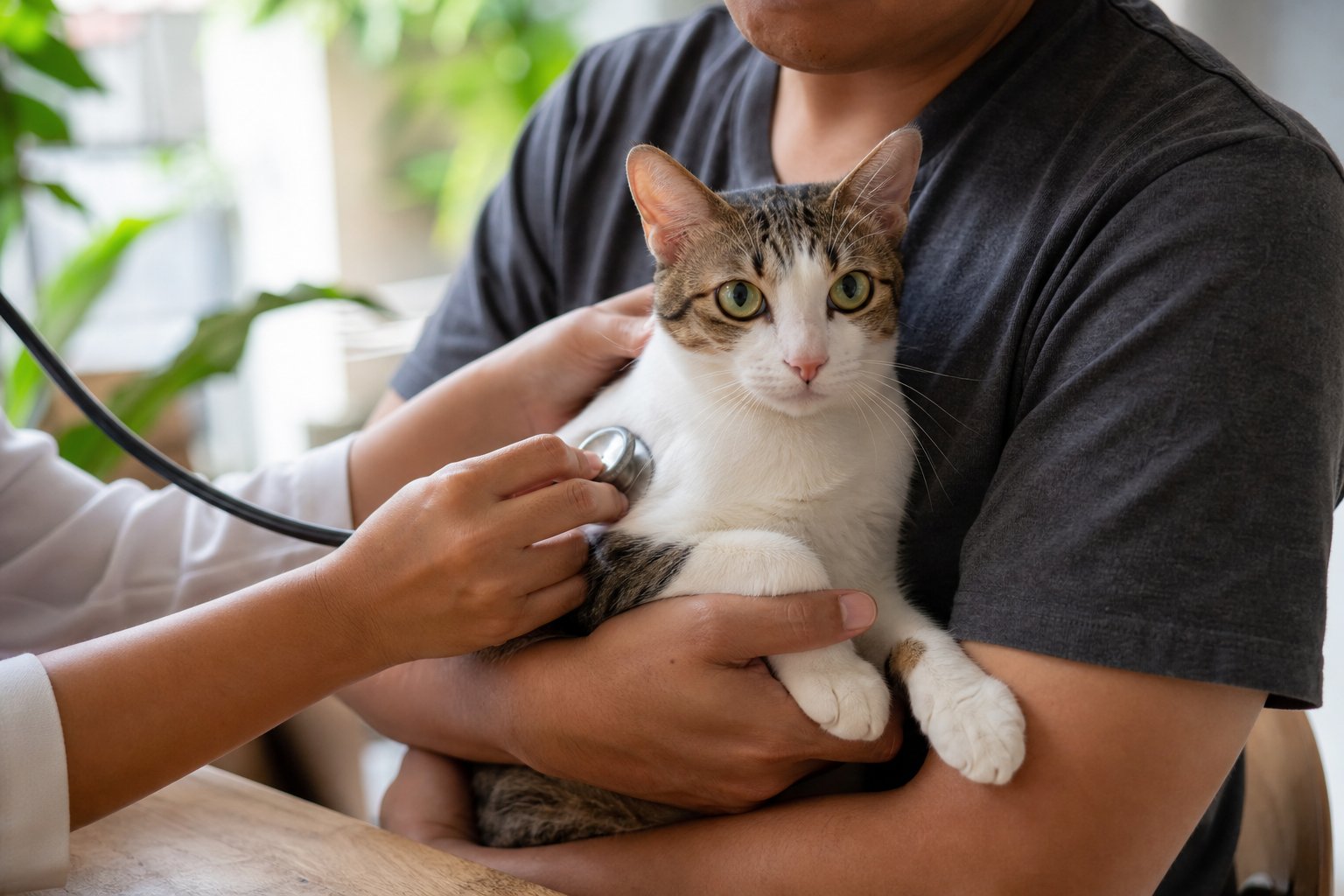
Quick answer: Feline chronic kidney disease cannot be reversed, but steady care can slow it substantially. Three habits do most of the work: feed a low-phosphorus diet that carries more water, weigh your cat weekly and count urine clumps daily, and run blood and urine tests every three to six months once the condition is stable. Refusing food, repeated vomiting or profound lethargy means calling a vet today, not waiting for the next appointment.
Chronic kidney disease is not the same as sudden kidney failure
Acute kidney failure is a rapid collapse in kidney function over hours or days, usually with an obvious trigger — chewing a lily, eating grapes, severe dehydration, or complications around anaesthesia. Because it is sudden, it may respond to aggressive treatment and, in some cases, recover partly.
Chronic kidney disease follows a different script. Kidney tissue is gradually replaced by scar tissue across months and years, and that scarring does not grow back. What treatment and diet can realistically do is slow the pace, protect appetite and muscle mass, and keep the cat comfortable for as long as possible. It is a management condition, not a short crisis.
Owners often miss the earliest clue: cats are not natural big drinkers. If the water bowl empties noticeably faster and the litter tray fills with larger or more frequent clumps, treat it as a clinical sign rather than warm weather. Persistent increases in drinking and urinating can point to kidney impairment, diabetes, a hormonal disorder, or an infected uterus in an unspayed female — all of which need ruling out.
Ask about inherited risk too. Polycystic kidney disease, seen in Persian and related lines, can produce kidney failure before a cat reaches four years old, with fluid-filled cysts pressing on and damaging both kidneys simultaneously. Cysts cannot currently be dissolved or removed, so ultrasound screening and genetic blood testing are the practical route to catching it early. If you bought a Persian-type cat, check whether the breeder screened for the condition.
The pace also differs widely between cats. Two cats with identical blood values may decline at very different speeds, which is why trends over successive visits — not one isolated result — drive most decisions.
Building a follow-up rhythm after diagnosis
Diagnosis is only the starting line. The real value comes from a fixed routine you can actually keep repeating for years.
| Stage | Blood and urine checks | What the vet reviews |
|---|---|---|
| Early and stable | Every 3 to 6 months | Creatinine, BUN, phosphorus, urine specific gravity |
| Middle stage | Every 2 to 3 months | The above, plus blood pressure and the weight trend |
| Changing or complicated | Monthly or as directed | Electrolytes, potassium, red cell figures, appetite |
Three practical notes about results.
First, dehydration inflates kidney readings because the blood becomes concentrated. That is why vets pair a blood panel with urine specific gravity: together they show whether a high figure reflects genuine kidney disease or simply a lack of fluid. Reference ranges also differ between laboratories, so learn what your own clinic's report means instead of comparing numbers found online. Some feline reference texts quote a BUN window of roughly 15 to 29, but interpretation always depends on hydration status and the rest of the picture.
Second, ask at every visit which tests were run and when you should return, then write the date on a calendar before you leave the clinic. A vague intention to "check again soon" is how three months quietly becomes nine.
Third, confirm fasting requirements by phone before you travel. Kidney panels do not always require a long fast, but clinics commonly request six to eight hours so food does not distort glucose and fat readings. Arriving with a cat that has not fasted when it did not need to — or feeding one that should have — both waste the appointment.
Before every appointment, pack a short list:
- The weight log from the past weeks, including dates
- Notes on appetite, vomiting episodes and stool consistency
- Questions you meant to ask but forgot last time
- A fresh stool sample if your clinic has asked for one
- The exact food label or product photo, so the vet sees the phosphorus claim you are relying on
Diet: phosphorus control comes first
Kidney diets have two jobs, and most owners get the priorities backwards.
Phosphorus is the main target. Phosphorus accumulation drives much of the remaining kidney damage, and restricting it is one of the few interventions shown to slow progression. Prescription renal foods are formulated to limit phosphorus. Stirring in ordinary tinned food to make the meal more tempting quietly cancels that benefit.
Protein is a balancing act, not a race to the bottom. Cats are obligate carnivores. Push protein too low for too long and the cat loses muscle instead of gaining comfort. The appropriate amount depends on the disease stage and the latest blood results, which is a veterinary decision rather than something to read off a package.
Water belongs in the food. Wet food and broths are the easiest hydration tools you own. A cat eating mostly dry kibble is frequently short of water even with a full bowl standing nearby.
Change foods gradually over roughly seven to ten days, stepping from mostly old to mostly new — for example 75/25, then 50/50, then 25/75 — and watch stools and appetite at each step. An abrupt switch often triggers refusal, creating a bigger problem than the one you started with.
When comparing products, check four things on the label: whether it is a complete diet rather than a treat or complementary pouch, the stated phosphorus level, the protein level, and the batch or expiry date. Many renal diets require veterinary confirmation before purchase, and formulas vary between brands and life stages, so confirm the exact product with your clinic instead of ordering by name alone. Local prices vary between clinics and retailers — ask your vet or pet shop for current pricing.
If the new food is rejected, rule out oral pain, nausea and constipation first. Warming it to around body temperature, stirring in a spoonful of warm water or broth, or switching texture from pâté to chunks frequently helps. If intake stays below half of normal for two consecutive days, contact the vet rather than bridging the gap with treats indefinitely.
Water: practical tactics for small homes
Cats evolved in arid landscapes and drink reluctantly, so hydration has to be engineered rather than hoped for.
- Spread the bowls. One in the living area, one near where your cat sleeps, one beside the climbing tree — each well away from the litter tray and the food bowls. Cats instinctively avoid drinking near where they toilet.
- Consider a fountain. Moving water attracts some cats more than a static dish. Pick a quiet model; a pump that whirs or drips through the night may scare the cat away from water entirely.
- Add water to meals. One or two tablespoons of warm — never boiling — water stirred into wet food adds fluid without altering the diet's balance.
- Use a syringe only on instruction. Syringe-feeding water is a veterinary technique. Squirt too quickly and the cat can aspirate into the lungs. Do it only as demonstrated by your clinic.
- Measure rather than guess. Mark the water level at a fixed time each day, or read the tank line on a fountain. It is the cheapest monitoring device in the house.
Rotate bowls occasionally and wash them daily. A slimy film or a stale smell is enough to put a sensitive cat off drinking for hours.
Three-minute daily monitoring at home
| Item | Frequency | How to record it |
|---|---|---|
| Weight | Same day and time each week | Weigh yourself, then weigh holding the cat, and subtract |
| Urine clumps | Daily | Count after refreshing the litter |
| Water intake | Daily | Marked bowl level or fountain tank reading |
| Appetite | Daily | Note the proportion left behind |
| Energy and grooming | Daily | Whether the cat still jumps, plays and keeps its coat tidy |
Weight is the most honest number you own. The classic pattern of feline kidney disease is "drinks more, urinates more, slowly loses weight." Losing one per cent or more of body weight in each of two consecutive weeks is a reason to phone the clinic. Weigh before feeding, at the same time of day, using the same scale — inconsistency manufactures false alarms.
Counting urine clumps works well at home. Refresh the tray completely, then tally clumps over the following day. In a multi-cat household this becomes ambiguous, so use separate trays in separate locations and note which tray is being counted, or briefly confine the patient to one room with its own tray during monitoring weeks.
Keep the log simple: a notes app, a wall calendar, a spreadsheet — anything you will actually update. Bring it to every appointment. Weeks of trends tell your vet far more than one snapshot taken in a consulting room.
Subcutaneous fluids at home
When dehydration appears or values drift, your vet may prescribe fluid injected under the skin. It sounds alarming and is usually far easier than owners expect: the needle is fine, and most cats settle more quickly than the person holding the bag.
- The vet sets the recipe — fluid type, volume and frequency, whether daily or every other day.
- The first session happens at the clinic, where a nurse shows the correct site, angle and depth. Do not attempt the first one alone at home.
- Prepare a home kit: a hook or clothes rack to hang the bag, a clean towel, alcohol swabs, and a container for used needles. Ask your clinic how they prefer sharps to be returned or disposed of, and never re-use a needle.
- For a restless cat, placing it inside a carrier with a towel underneath usually makes the whole procedure calmer and faster.
- Afterwards, check for swelling or leakage at the site. If you see any, photograph it and send it to the clinic.
Schedule fluids at an hour you can repeat every day; evenings suit many working owners. Consistency matters more than the exact clock time. Expect a temporary bulge under the skin that the cat absorbs over several hours — that is normal. Fluids are also one of the most reliable ways to keep a kidney patient eating, because mild dehydration commonly suppresses appetite.
Myths and mistakes worth correcting
| Myth | Reality |
|---|---|
| "A normal blood test means healthy kidneys" | Early disease can sit inside the reference range; trends and urine concentration reveal more |
| "Drinking more water is always a good sign" | A sudden rise in drinking is itself an abnormal signal worth investigating |
| "Buying prescription food from the cheapest seller is fine" | The wrong or unverified formula can undermine the entire plan |
| "Supplements can replace prescription food" | Supplements are adjuncts; they do not reduce phosphorus load or change the disease course |
| "Old cats lose weight because they are just ageing" | Age alone does not explain progressive weight loss; investigate it |
| "Wet food alone fixes dehydration" | Fluid therapy may still be needed alongside dietary changes |
| "One good week means the disease has stopped" | Kidney disease fluctuates; a single good reading does not end monitoring |
Two further habits are worth correcting. First, avoid treating every refusal with a different new food each week — rotating constantly makes it impossible to tell whether the kidney diet itself is working, and it teaches the cat that refusing dinner produces a better offer. Second, never give human medicines to a kidney cat without explicit veterinary instruction; many common painkillers and anti-nausea drugs are dangerous when kidney clearance is impaired.
When to see a vet
Do not wait for the next scheduled appointment if any of these appear:
- Refusing all food for more than 24 hours
- Repeated vomiting, or vomiting on consecutive days
- Profound lethargy — not moving, not responding, not grooming
- Rapid, open-mouth or laboured breathing
- No urine passed in 24 hours
- Sudden weakness or collapse in the hind legs
- Breath that smells strongly of urine, or a sweet, acetone-like odour
- Sudden disorientation, circling or seizures
- Weight loss continuing despite dietary changes
- Mouth ulcers, drooling or pawing at the face
Earlier contact is always cheaper and kinder than a crisis visit. If you are unsure, phone — most clinics would rather answer a short question than treat an emergency that could have been spotted weeks sooner. Ask in advance which after-hours arrangements apply in your area, so you are not searching for one at midnight.
Everyday situations and key takeaways
A Kuala Lumpur apartment with little floor space. Multiple water stations still fit: on a kitchen counter edge where they will not be kicked, on a bedside table, on the top platform of a cat tree. The rules are distance from the litter tray and food bowl, plus a fresh refill at a fixed time each day. If you add a fountain, choose a quiet one — a humming pump in a small flat keeps everyone awake, and the cat may simply avoid it. Counter-height bowls also reduce the chance of a dog or toddler investigating them.
A Johor terrace house with several cats. Feeding one cat a prescription diet while the others eat normally is the hardest part of the routine. Separate the patient into one room for meals, use a timed feeder with measured portions, and let the others back in only after the renal meal is finished. If full separation is impossible, ask your vet about a compromise — renal food as the patient's main ration, with the other cats' food limited to scheduled windows. Remember the double risk: free access lets healthy cats grow overweight while the sick cat under-eats. Keep separate litter trays so urine counts stay meaningful.
If you work long hours. Move fluids, medication and the main meal to a repeatable evening block, use a timed feeder for the daytime ration, and teach the routine to one trusted household member or pet carer before you need them. Book appointments at consistent times and put recheck dates in your phone with a reminder a week ahead.
Key takeaways
- Chronic kidney disease cannot be reversed, but diet and check-ups can slow it.
- Weekly weigh-ins and daily urine counts are the most useful home tools you have.
- Phosphorus control is central; protein must not be pushed too low.
- Once stable, blood and urine testing every three to six months is the usual rhythm.
- Subcutaneous fluids are safe at home only after the clinic has demonstrated the technique.
- Never add supplements or human medicines without asking your vet.
- Never wait until the cat has stopped eating entirely before seeking help.
The essentials in one line: low phosphorus, more water, weekly weight, daily urine count, regular tests, immediate vet contact for red flags.
This article is general information and does not replace veterinary diagnosis or treatment. If your cat has symptoms of illness or a confirmed kidney condition, please consult a registered veterinarian.
Related reading
- Cat Health Guide Malaysia: Symptom Check, Red-Flag Triage & When to See a Vet
- Cat Arthritis in Malaysia: 5 Home Signs Your Cat Is in Pain — and What to Do
- Cat Dehydration in Malaysia: Home Skin-Turgor Test, 7 Causes and Emergency Signs
- Cat Heart Disease in Malaysia: Sleep Breathing Count, HCM Early Signs and When to Rush to the Vet
- Cat Ringworm in Malaysia: Symptoms, Treatment and Home Cleaning Guide
- Cat Chronic Disease Early Signs in Malaysia: 7 Daily Checks and a 4-Week Log
- Early Signs of Chronic Disease in Cats: 7 Daily Checks and a 4-Week Record Sheet
- Cat Pancreatitis in Malaysia: Symptoms, fPLI Testing, Treatment and Home Recovery
- Cat Ringworm in Malaysia: Signs, Treatment and Home Cleaning Guide
- Cat Symptom Checker Malaysia: 12 Common Signs and a Green-Amber-Red Triage Table