
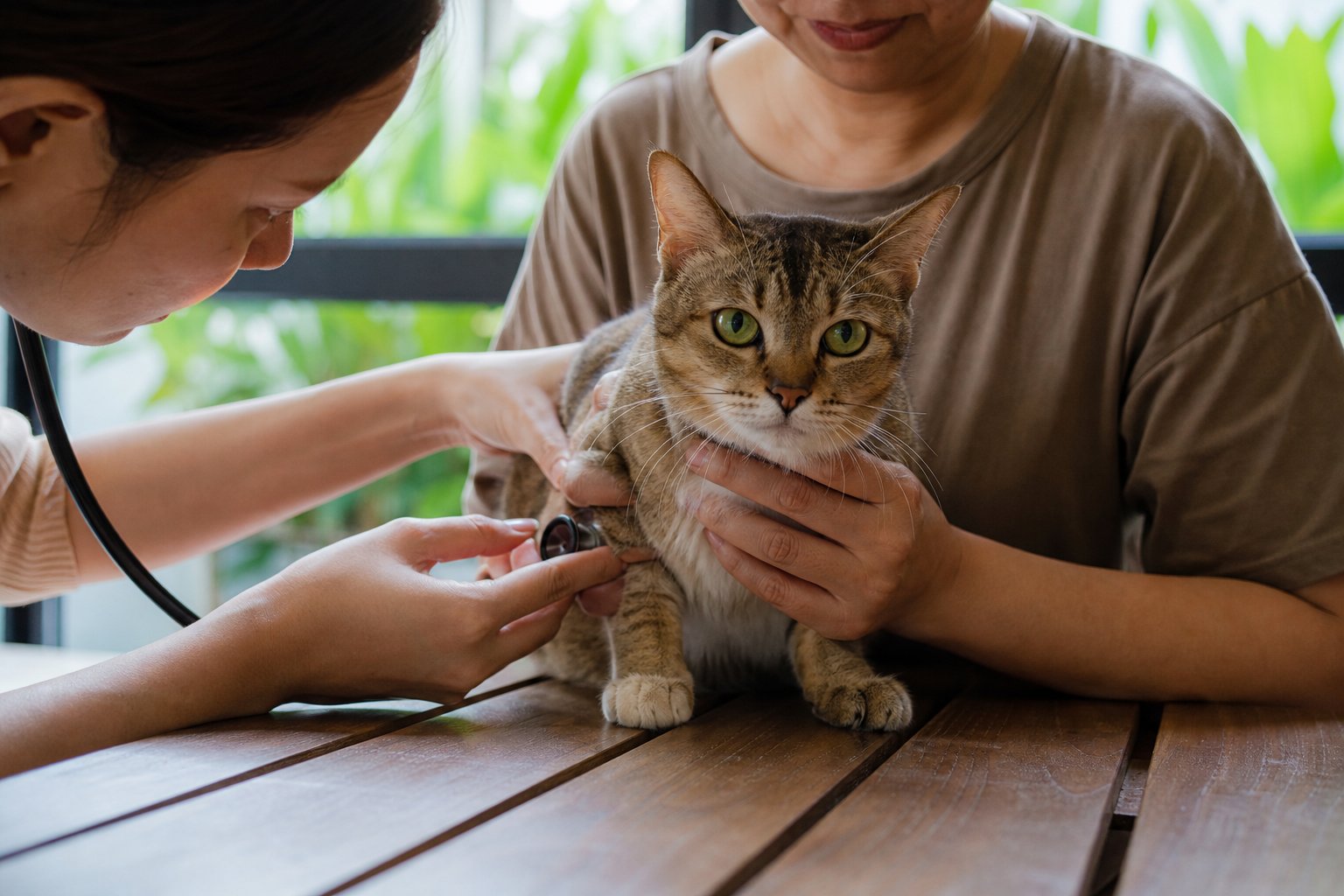
Quick answer: Compare Malaysian pet insurance quotes on eight points — coverage, per-claim limit, annual limit, excess, waiting period, exclusions, renewal terms and claim process. Then run two scenarios (one surgery, one long-running follow-up) to see what you would pay out of pocket. A cheap premium usually means a higher excess or lower limits; the policy wording decides your payout, not the advert.
Start with a 30-second comparison grid
Before you ring anyone, write down four facts about your pet: breed, age, any existing conditions or past surgery, and daily lifestyle (indoor-only, walks, travel). Insurers price and underwrite on these details, so a quote given without them is guesswork.
Next, request the latest policy wording and premium illustration from two or three insurers or licensed brokers. Ask for the full document rather than a one-page summary — the exclusions page is where the real comparison happens.
Fill this grid with every quote you receive. Any cell you cannot fill is a question you still have to ask, not a cell you may skip.
| Comparison point | What you need to find out | What commonly happens |
|---|---|---|
| Coverage | Which of accident, illness, surgery, hospitalisation and outpatient treatment are included | Most plans centre on accident and illness; hereditary and congenital conditions are often excluded |
| Per-claim limit | The maximum paid for a single episode of treatment | Often far smaller than the annual limit |
| Annual limit | The maximum paid across one policy year | Both limits squeeze the same claim at the same time |
| Excess (deductible) | What you pay first on each claim | A higher excess usually buys a lower premium |
| Waiting period | How long cover starts after inception, and whether accidents and illnesses are timed separately | A pet falling ill right after signing may not be covered yet |
| Exclusions | How pre-existing conditions, hereditary disease and preventive care are treated | Full and honest disclosure at application is essential |
| Renewal terms | How premiums move after a claim, and whether renewal can be refused | An attractive first-year price is not the long-term cost |
| Claim method | Whether you pay the clinic first, which documents are needed, how long assessment takes | Some plans settle directly with the clinic; many do not |
Three bottom lines. A cheap premium is usually bought with a higher excess, a lower limit or a narrower scope. Every plan must be tested against the same medical scenario to count as a fair comparison. And you are buying the wording, so treat every marketing claim as unverified until the policy states it.
What is usually covered — and what needs asking
The coverage row is where most misunderstandings start. The table below maps what is commonly offered in the market. It is a list of questions to take to each insurer, not a statement of any single plan.
| Benefit | Common position | What to confirm |
|---|---|---|
| Accidental injury | Standard entry-level benefit | How "accident" is defined, and whether a per-claim cap applies |
| Illness treatment | Common, but scope varies widely between plans | Whether outpatient visits, specialist referrals and hospitalisation are all included |
| Surgery | Usually a core benefit | Whether it is paid per claim or drawn from the annual limit |
| Hospitalisation | Often tied to surgical terms | Daily room limits, and whether surgery and boarding fees are paid separately |
| Third-party liability | Sometimes an optional rider | The payout cap, and whether a dog that injures a person on a walk is covered |
| Loss or theft | Sometimes an optional rider | Police report requirements, and any allowance for searching for a missing pet |
| Vaccination, check-ups, neutering | Usually paid extras | Whether they are riders, and any per-year or per-life limits |
| Dental disease | The widest variation of all | Traumatic tooth injury is normally handled differently from gum and dental disease |
Three distinctions keep the grid honest. First, an accident is normally defined as sudden, external and unintended — chronic wear and tear rarely qualifies, so ask how a repetitive-strain injury would be classified. Second, one claim is squeezed by two numbers simultaneously: the per-claim cap and the annual cap. Third, "included" and "available as an add-on" are different answers; a rider costs extra and may carry its own waiting period.
Local context matters. During the Penang rainy season, flooding and standing water raise the chance of gastrointestinal upsets and skin infections. Ask directly whether water-related illness counts as an ordinary illness claim, how long its waiting period runs, and whether damage to your own home is handled separately from your pet's treatment costs.
Match your household to an approach
Identify your row before you study plans; it saves half the comparison time.
| Your situation | Direction to consider | Rows to scrutinise |
|---|---|---|
| Young, healthy pet with no history | Compare while the entry-age window is open | Waiting period, renewal terms |
| Breed known for hereditary problems | Ask about disease cover line by line | Exclusions, illness scope |
| Thin emergency savings | Favour genuine cover over the lowest premium | Annual limit, excess |
| Older pet or existing conditions | Check eligibility first, then cover | Age limits, pre-existing condition terms |
| Very tight budget | Do not buy a plan whose excess you could not pay | Excess, claim method |
A useful rule: insurance is bought for sudden large expenses, not routine small ones. If you are transferring a fixed amount into a medical reserve each month and the balance would comfortably cover one hospitalisation plus surgery, either insurance or saving is enough — doing both stacks cost without stacking protection.
In a Kuala Lumpur apartment, an indoor-only cat still faces illness, and a fall from a balcony or a dash out of a lift lobby is a genuine risk, so "never goes outdoors" is not the same as "no accident risk".
Five terms that decide what you actually receive
Get these five words straight before you open any policy, otherwise every document will blur.
| Term | What it means | Why it matters |
|---|---|---|
| Premium | What you pay each policy year | Sets your ongoing cost; local premiums vary with pet, breed, age and cover level, so request a written quote for your own pet |
| Excess / deductible | The first amount you pay per claim | A higher excess lowers the premium but raises your bill at the moment you claim |
| Annual limit | Most payable in one policy year | Caps a year of repeated treatment |
| Per-claim limit | Most payable for one episode | Can be far lower than the annual figure, which catches owners out |
| Waiting period | Delay before cover becomes active | Illness and accident periods are often counted separately |
Prices are not standardised, so treat any figure you see as indicative only and ask your insurer or licensed intermediary to quote in writing. A plan that looks cheap in a good year is often expensive in a bad one — the excess and the limits decide which of those you get.
The claim process, and where it usually goes wrong
Process differs between insurers, but the skeleton is consistent. Compare each plan against these five steps:
- Notify first. Some plans require prior authorisation, especially for hospitalisation and surgery; skipping it can affect payment.
- Keep every document. Consultation receipts, itemised medication lists and laboratory reports — missing paperwork means resubmitting the whole file.
- Complete the claim form. A vet's summary and signature are usually required, and document requirements differ between insurers.
- Wait for assessment. From a few working days to several weeks depending on complexity; ask for a typical timeframe.
- Get paid, or have the clinic settled. Paying upfront and being reimbursed hits cash flow much harder than direct settlement with the clinic.
Also ask about the claim deadline: how long after treatment must the file be complete, and does a late submission lapse? Most owners discover that answer only when it is too late.
Common traps to clear before signing: assuming cover starts the day you pay, when waiting periods say otherwise; understating a pre-existing condition at application, which invites rejection later; reading the annual limit as the per-claim limit; assuming vaccination, check-ups and neutering are basic benefits when they are usually paid extras; and choosing on premium alone. Every trap points to the same action — read page by page and confirm in writing, because a verbal assurance at the counter is not a policy term.
Ten-point checklist, then two simulations
Run this list line by line before you sign:
- Record breed, age, health history and any past surgery.
- Confirm exactly what is covered: accident, illness, surgery, hospitalisation, outpatient visits and prescribed medication.
- Obtain both numbers — the per-claim limit and the annual limit.
- Note the excess and check it against your cash flow.
- Note the waiting period, and whether illness and accident are counted separately.
- Read the exclusions: pre-existing, congenital and hereditary conditions.
- Ask how renewal works — premium loading after a claim, and whether renewal can be declined.
- Check the minimum and maximum entry ages against your pet's current age.
- Ask about claims: whether you must pay first, which documents are required, how long assessment takes.
- Collect two or three current policy wordings and run both simulations below on each.
Simulation A — one surgery. Take the cost of a surgical case quoted in your area and work out the arithmetic: you pay the excess first, then anything above the per-claim limit, then anything beyond what remains of the annual limit. Whatever is left is the insurer's share. If your own share is still more than you could produce on the day, that plan's excess or limit does not suit you.
Simulation B — a long-running follow-up condition. Use a recurring condition needing repeated visits and medication over months. Add up the excess payable on every visit: a per-claim excess applied to each consultation can quietly cost more than one large surgical excess. This is the scenario where cheap-looking plans most often disappoint.
If both simulations leave you comfortably within your means, you have a realistic picture of the plan. If not, adjust the excess or the cover level and repeat the exercise.
Seven questions to ask before you commit
Ask these in writing. If any goes unanswered, you are not ready to sign.
- How long is the waiting period, and are illness and accident timed separately?
- What are the per-claim and annual limits?
- Is the excess a fixed amount or a percentage of the bill?
- How are pre-existing, congenital and hereditary conditions handled?
- How does my premium change after a claim, and can renewal be refused?
- What is the maximum entry age, and does my pet still qualify?
- Must I pay the clinic first, which documents are required, and how long does assessment take?
Question five is the one owners most often skip. Cover only becomes valuable when it lasts into your pet's senior years, so a plan with vague renewal terms deserves scrutiny even if it is the cheapest quote on your desk.
Insurance, or a savings pot? A household budget that can absorb a dedicated monthly transfer gives you full control through a vet savings fund, with no exclusions and no waiting period — but the fund starts empty and can be outrun by a single large bill. Insurance costs a predictable amount and protects you from the start, subject to limits and conditions. Many owners pair a modest plan with a small reserve: insurance for the catastrophic, the fund for the excess.
When to see a vet
Insurance decisions should never delay treatment. Seek veterinary care promptly if your pet shows any of the following: breathing difficulty, collapse or unresponsiveness, repeated vomiting or diarrhoea, straining without passing urine, a bloated or painful abdomen, bleeding that will not stop, suspected poisoning, an obvious fracture or inability to bear weight, eye injury, seizures, or any sudden change in a senior pet's behaviour or appetite.
Also book a routine examination while you are comparing plans: a recent check gives you an accurate health history to declare at application, which reduces the chance of a claim being disputed later. Preventive care — vaccination, parasite control, dental checks and suitable nutrition — lowers the chance of needing to claim at all. General pet health guidance and announcements from the Department of Veterinary Services Malaysia (dvs.gov.my) are useful starting points, and the SPCA (spca.org.my) shares practical resources on responsible ownership and preventive care.
This article is general information only and is not insurance or medical advice. For anything affecting your pet's health, consult a registered Malaysian veterinarian; for policy decisions, read the full wording and speak to a licensed insurance intermediary.
Related reading
- Cat Health Guide Malaysia: Symptom Check, Red-Flag Triage & When to See a Vet
- Cat Arthritis in Malaysia: 5 Home Signs Your Cat Is in Pain — and What to Do
- Cat Chronic Disease Early Signs in Malaysia: 7 Daily Checks and a 4-Week Log
- Early Signs of Chronic Disease in Cats: 7 Daily Checks and a 4-Week Record Sheet
- Cat Chronic Kidney Disease in Malaysia: The Daily Care Routine That Actually Slows It Down
- Cat Constipation in Malaysia: The 48-Hour Rule, Red Flags and What Actually Helps
- Cat Dehydration in Malaysia: Home Skin-Turgor Test, 7 Causes and Emergency Signs
- Cat Heart Disease in Malaysia: Sleep Breathing Count, HCM Early Signs and When to Rush to the Vet
- Cat Kidney Disease in Malaysia: Early Signs, Prevention and Everyday Care
- Cat Pancreatitis in Malaysia: Symptoms, fPLI Testing, Treatment and Home Recovery
- Cat Ringworm in Malaysia: Symptoms, Treatment and Home Cleaning Guide
- Cat Ringworm in Malaysia: Signs, Treatment and Home Cleaning Guide