
Quick answer: Cats with chronic kidney disease usually start drinking more, producing larger urine clumps and losing weight — often before owners notice anything is wrong. Blood and urine tests from around seven years of age catch it early. Daily prevention comes down to water intake, quality food, healthy weight and keeping toxins such as lilies and human painkillers out of reach. After diagnosis, prescription renal food, steady hydration and regular rechecks can slow the decline and keep your cat comfortable.
What chronic kidney disease actually is
Kidneys do far more than make urine. They filter waste products out of the blood, hold water and electrolytes in balance, help regulate blood pressure, and support red blood cell production. Chronic kidney disease (CKD) means this filtering tissue is gradually lost over months or years, and the remaining tissue cannot keep up. Waste that should be cleared builds up in the bloodstream, the cat becomes increasingly dehydrated, and appetite and weight slide.
It is one of the most common serious conditions in older cats, and it is a leading cause of death in senior cats — not because nothing can be done, but because it is usually found late.
The reason it is found late is the kidney's remarkable reserve. Healthy kidneys carry far more capacity than a cat needs at rest. As individual filtering units are damaged, the survivors simply work harder. The cat looks, eats and behaves normally right up to the point where compensation fails. By the time thirst, vomiting and weight loss are obvious, a large proportion of function has already been lost. That is why CKD is often called a silent disease, and why early detection depends entirely on routine testing plus an owner who watches the water bowl.
There is also an important distinction between chronic and acute kidney injury. Acute injury appears suddenly — often after a toxin, a blockage, or severe dehydration — and may be partly reversible if treated immediately. Chronic disease is the slow, long-term form described here. Both are emergencies in their own way, but only one gives you years of warning.
The early signs worth watching for
Early signs are easy to dismiss as normal ageing. Individually, most of them are vague. In combination, and tracked over a few weeks, they are meaningful.
- Drinking noticeably more — the water bowl empties faster, or a fountain needs topping up several times a day.
- Passing more urine — litter clumps become larger and heavier, or the tray needs cleaning out more often.
- Appetite changes — eating less, picking at food, or losing interest in favourite flavours.
- Gradual weight loss — the backbone and hips become more prominent; the waist narrows even if the cat still looks round from above.
- Vomiting — occasional, sometimes clear liquid, often written off as a hairball.
- Bad breath — a sour or ammonia-like odour as waste products accumulate.
- Coat changes — fur looks dull, spiky or flaky, and the cat stops grooming as thoroughly.
- Behaviour changes — sleeping more, hiding, no longer jumping onto high perches or greeting you at the door.
A practical way to catch these early is to measure instead of guess. Mark the water level in the bowl each morning and note it. Weigh your cat every two or three weeks on a pet scale and write the number down — a trend across months tells you far more than one number on the vet's table, and it gives the vet something concrete to work with. Keep a simple weekly note of appetite, vomiting episodes and litter clump size. Four weeks of that log is more useful at a consultation than an owner's memory of "seems a bit off lately."
How the disease is screened and staged
CKD cannot be diagnosed by eye. Two core tests are needed.
Blood tests measure waste markers such as creatinine and urea (BUN), along with SDMA, electrolytes, phosphorus and other values. These show whether toxins are accumulating and how the rest of the body is coping.
Urine tests assess how well the kidneys can concentrate urine. A falling urine specific gravity is often the earliest measurable change, and a urine protein-to-creatinine ratio (UPC) tells the vet whether protein is leaking through damaged filters.
Blood pressure measurement and a body weight check round out the picture, since high blood pressure both damages kidneys further and is a common complication of existing disease.
| Age or situation | What to arrange |
|---|---|
| Under 7 years, no symptoms | Annual wellness examination |
| 7 years and over | Annual blood and urine screening; ask your vet about six-monthly checks from 10 years |
| Already diagnosed with CKD | Recheck every 3 to 6 months, or on the schedule your vet sets |
| Any age with increased thirst or urination | Test promptly — do not wait for the next annual visit |
Once CKD is confirmed, vets use the IRIS staging framework (International Renal Interest Society) to describe severity and guide treatment. Staging relies mainly on blood creatinine and SDMA, then sub-stages using blood pressure and urine protein.
| Stage | What it means | Management focus |
|---|---|---|
| Stage 1 | Abnormality present, no waste build-up yet | Monitor, control risk factors, recheck regularly |
| Stage 2 | Mild reduction in kidney function | Start renal diet, watch blood pressure and urine protein |
| Stage 3 | Moderate reduction | Actively manage complications such as anaemia and electrolyte imbalance |
| Stage 4 | Severe reduction | Intensive support care, quality of life comes first |
The specific numbers behind each stage are updated periodically and must be interpreted by your vet against the current criteria — an owner should never stage a cat from a single lab figure read online. Staging matters because it shapes the plan: what to feed, what to monitor and how often, and what to expect ahead.
Prevention and risk reduction
Nothing prevents every case of CKD, but owners control a surprising amount of the risk.
1. Water, water, water. This is the single biggest lever. Cats evolved on a prey-heavy, moisture-rich diet and many do not drink enough to compensate for dry food. Offer a fountain if your cat likes running water, keep several bowls around the house, refresh them daily, and feed wet food as a regular part of the diet.
2. Quality food with phosphorus in mind. Feeding a consistent, nutritionally complete diet avoids the hidden burden of cheap or inconsistent food. Check phosphorus levels where information is available, and avoid heavy supplementation without advice.
3. Healthy weight. Both obesity and being underweight strain the body. Portion control, measured meals and regular weigh-ins keep your cat in a comfortable range — and a weight that drifts down month after month is itself an early warning.
4. Keep toxins away. Lilies are strongly toxic to cats and can cause acute kidney damage from even small exposures — pollen licked off fur is enough. Keep lilies out of the home entirely, including gifted bouquets. Human painkillers such as paracetamol and ibuprofen are dangerous for cats; never dose a cat with human medication. Ethylene glycol in antifreeze has a sweet taste and a tiny lick can be fatal, so clean any garage or workshop spills immediately.
5. Stability and stress control. Moves, renovations and new household members can quietly reduce a cat's eating and drinking. Keep litter trays, feeding stations and resting spots in predictable places, and give anxious cats a safe room they can retreat to.
6. Routine screening. All the prevention in the world does not catch a disease that hides. Annual blood and urine tests from seven years of age are what turn a silent condition into a manageable one.
In a Kuala Lumpur apartment where the aircon runs warm and food bowls sit near a busy kitchen, these basics matter more than people expect: clean water in two rooms, a feeding schedule rather than a constantly topped-up dry bowl, and absolutely no lilies on the dining table during festive gifting season.
Food and hydration: what actually helps
Think of diet in two phases — protecting a healthy cat, and supporting a diagnosed one.
For a cat without kidney disease: lean towards wet food or a mixed wet-and-dry routine, since canned food is roughly three-quarters water and every meal becomes a hydration session. Choose complete, quality food rather than the cheapest option, keep treats minimal, and never feed salty human food — seasoning made for people is far too much sodium for a cat's kidneys.
For a diagnosed cat: the aims are to reduce phosphorus, keep protein adequate but not excessive, increase water intake, and maintain enough calories to prevent muscle wasting.
| Goal | Why it matters | How owners help |
|---|---|---|
| Lower phosphorus | Slows further kidney damage | Transition to a veterinary renal diet over 7 to 10 days |
| Adequate, not extreme, protein | Limits waste products without causing muscle loss | Do not restrict protein on your own — follow the vet's guidance |
| More water | Counters dehydration and helps kidneys work | Wet food, warm water stirred in, multiple bowls |
| Enough calories | Prevents weight and muscle loss | Small, frequent meals; weigh weekly |
Transitioning matters. A cat with CKD often has a poor appetite already, and a sudden full switch to a new kibble can end with a cat that simply stops eating. Mix old and new food gradually over a week or more. If your cat rejects the renal diet outright, do not wage a battle — contact your vet about alternatives, a different texture, or warming the food to release its smell.
On hydration: place bowls away from the litter tray and the food bowl (cats instinctively avoid contaminating their water), use wide shallow dishes so whiskers do not touch the sides, and add water or unsalted broth to meals. Some cats prefer drinking from a mug on the counter — let them. Subcutaneous fluids under the skin may be recommended later; more on that below.
In Penang during the rainy season, humidity and heat still drive up thirst even when it is pouring outside, and a fountain left to get grimy will put cats off drinking entirely — clean the filter on schedule, because a stale fountain is worse than a plain bowl.
Daily care after diagnosis
Chronic kidney disease cannot be reversed, but staged management means many cats maintain a good quality of life for a long stretch. Your role works on three levels.
Every day: watch four things — drinking, urinating, appetite and energy — and note anything that changes. Keep water available in several spots, mix warm water into wet food, and offer small meals more often rather than two large ones. Weight maintenance is the headline target.
Every week to month: weigh your cat on the same scale at roughly the same time; the trend matters more than a single reading. Give any prescribed medication or fluids exactly as directed, with no self-adjustment of dose or frequency. Keep all lab reports together, physical or in a folder on your phone, so decisions are made on evidence rather than memory.
Over the long term: accept that this is a marathon. Compare your cat to how it was last month, not to a young healthy cat. Adjust the home so life is easier — a low-entry litter tray, a warm and quiet bed, water within easy reach, no need to jump for anything. For an older cat, an easy environment is not indulgence; it is treatment.
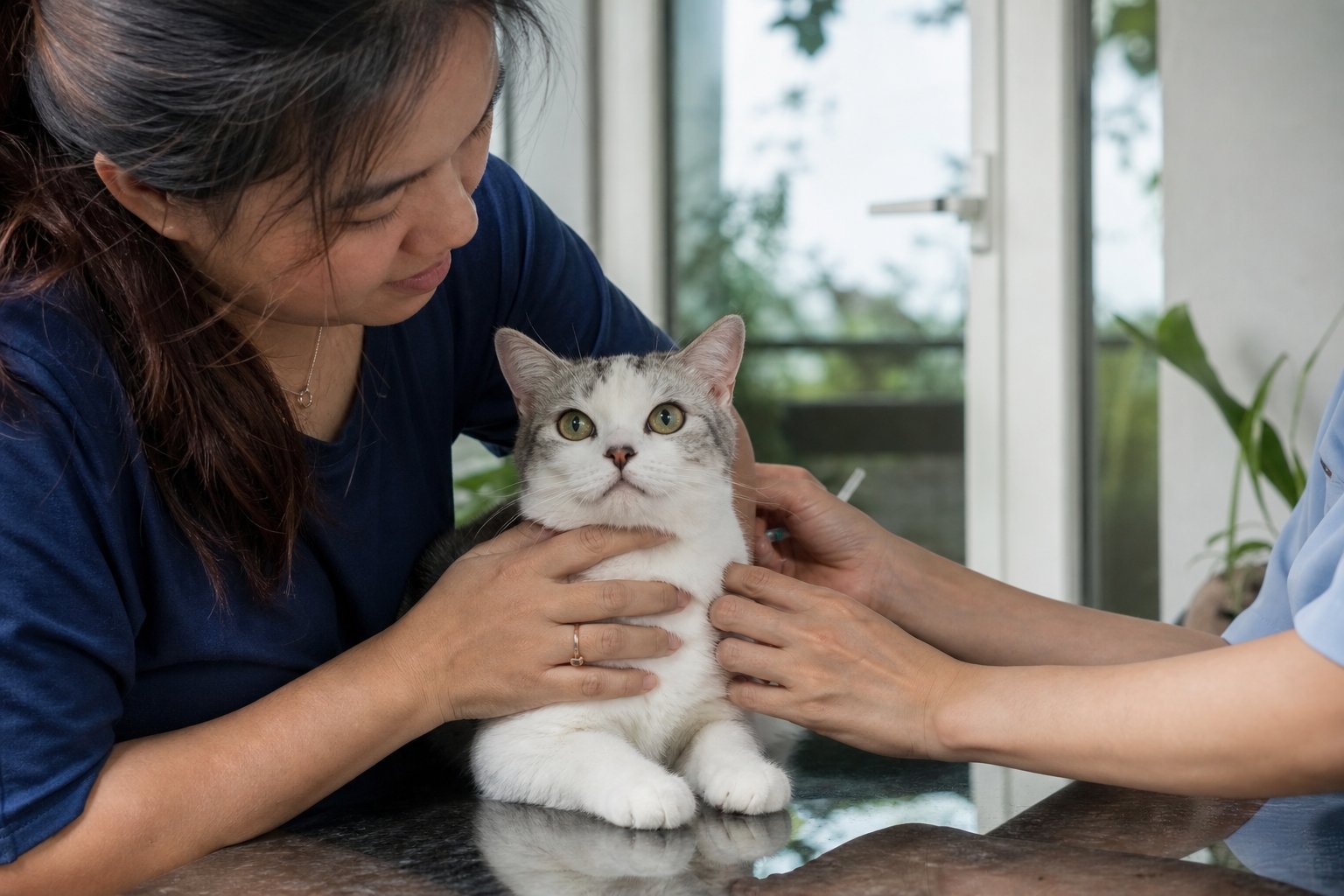
Subcutaneous fluids deserve their own note. If the vet recommends them, they will demonstrate the technique, specify the fluid, the volume and the frequency, and show you the site between the shoulder blades where the fluid sits under the skin rather than in a vein. Watch for leakage, swelling, pain or infection afterwards, and record each session so the vet can judge whether it is helping. Never source fluids or needles yourself or decide the amount independently — overfilling can strain the heart and fluid can accumulate in the lungs.
Red-flag triage: when each symptom needs action
| Observation | 🟢 Monitor and keep routine checks | 🟡 See a vet within 24–48 hours | 🔴 Emergency now |
|---|---|---|---|
| Drinking and urination | Slightly more than usual | Clearly increased, urine output doubled | No urine passed, or only a few drops |
| Weight | Stable | More than 5% lost over 3 months | Rapid wasting, ribs and spine clearly visible |
| Appetite | Normal or slightly reduced | Noticeable drop, food left behind | Nothing eaten for over 24 hours |
| Energy | Normal | Lethargic, less active | Too weak to stand, cannot be roused |
| Mouth and breath | Mild odour | Strong foul or ammonia-like breath | Severe ulcers, bleeding, drooling, refusing food |
| Vomiting | Occasional single episode | Repeated vomiting after meals | Continuous vomiting, or blood/coffee-ground material |
| Coat and skin | Slightly dull | Matted coat, more dandruff | Skin tents when pinched, sunken eyes — dehydration |
| Neurological | None | Hind legs weak or unsteady | Seizures, collapse, disorientation |
When to see a vet
Do not wait a few more days if you notice any of the following: drinking and urination that increase sharply and persist for more than a week; steady weight loss; appetite below half normal for more than a day; repeated vomiting; breath that smells of urine; a cat that hides, stops jumping or seems genuinely weak.
For a cat already diagnosed with kidney disease, bring the appointment forward rather than waiting for the scheduled date if the cat refuses food, vomits more often, or becomes markedly quieter.
Treat the red column as an immediate trip to a veterinary clinic: no urine passed (which may indicate a urinary blockage, a same-day emergency), continuous vomiting, nothing eaten for over 24 hours, inability to stand, seizures or loss of consciousness, or severe mouth ulcers with bleeding. These can signal acute deterioration or dangerous electrolyte disturbances that need fluids and urgent correction.
A useful habit: when you call the clinic, bring your weight log and your notes on drinking, eating and vomiting. Vets can act far faster on a written timeline than on a description like "she's been off for a while."
Frequently asked questions
Q: Is there a cure for cat kidney disease? A: No cure exists for chronic kidney disease. Treatment focuses on slowing progression, controlling complications and protecting quality of life. Cats diagnosed early and monitored regularly often live comfortably for years with diet, hydration and medication in place.
Q: Will a water fountain alone protect my cat's kidneys? A: A fountain helps, but it is one piece. Pair it with wet food, multiple fresh bowls placed away from the litter tray, and routine screening from seven years of age. No single product replaces testing and a balanced diet.
Q: Should I change my cat's food before a diagnosis? A: Do not put a healthy cat on a renal diet on your own — restricted phosphorus and protein are not appropriate without confirmed disease and can cause muscle loss. Feed a complete, quality diet and let testing decide whether a therapeutic food is needed.
Q: Can young cats get kidney disease? A: Yes, though it is far less common. Kittens can be born with malformed kidneys, and infections, blockages or toxins can injure kidneys at any age. Persistent increased thirst or urination in a young cat still warrants blood and urine tests.
Q: Does kidney disease cause high blood pressure? A: Frequently, yes. Damaged kidneys and hypertension feed into each other, and untreated high blood pressure can harm the eyes, heart and brain. That is why vets check blood pressure alongside kidney values and recheck it at follow-ups.
Q: What should I prepare for a kidney check-up? A: Bring your weight records, notes on drinking and urination, a list of all foods and treats given, and any medications or supplements. Ask in advance whether the cat should be fasted, since some tests need it and others do not.
Key takeaways
- Increased thirst, larger urine clumps and slow weight loss are the earliest practical signals.
- Screening from seven years of age — blood, urine and weight — is what catches CKD while it is still silent.
- Prevention is mostly daily habits: water, quality food, healthy weight and strict toxin avoidance.
- After diagnosis, renal food, hydration and regular rechecks slow the decline; transition food gradually and never force it.
- Keep a written log and act on the red flags rather than waiting for the next appointment.
This article is general pet health information and is not a diagnosis or treatment plan. Kidney disease staging, prescription diets, medications and any fluid therapy must be decided by a registered veterinarian after examining your cat and reviewing blood and urine results. If your cat passes no urine, vomits continuously, refuses food for more than 24 hours, or has seizures or collapse, seek veterinary care immediately.
Related reading
- Cat Arthritis in Malaysia: 5 Home Signs Your Cat Is in Pain — and What to Do
- Cat Dehydration in Malaysia: Home Skin-Turgor Test, 7 Causes and Emergency Signs
- Cat Symptom Checker Malaysia: 12 Common Signs and a Green-Amber-Red Triage Table
- Early Signs of Chronic Disease in Cats: 7 Daily Checks and a 4-Week Record Sheet
- Cat Pancreatitis in Malaysia: Symptoms, fPLI Testing, Treatment and Home Recovery
- Cat Ringworm in Malaysia: Symptoms, Treatment and Home Cleaning Guide
- Cat Ringworm in Malaysia: Signs, Treatment and Home Cleaning Guide