
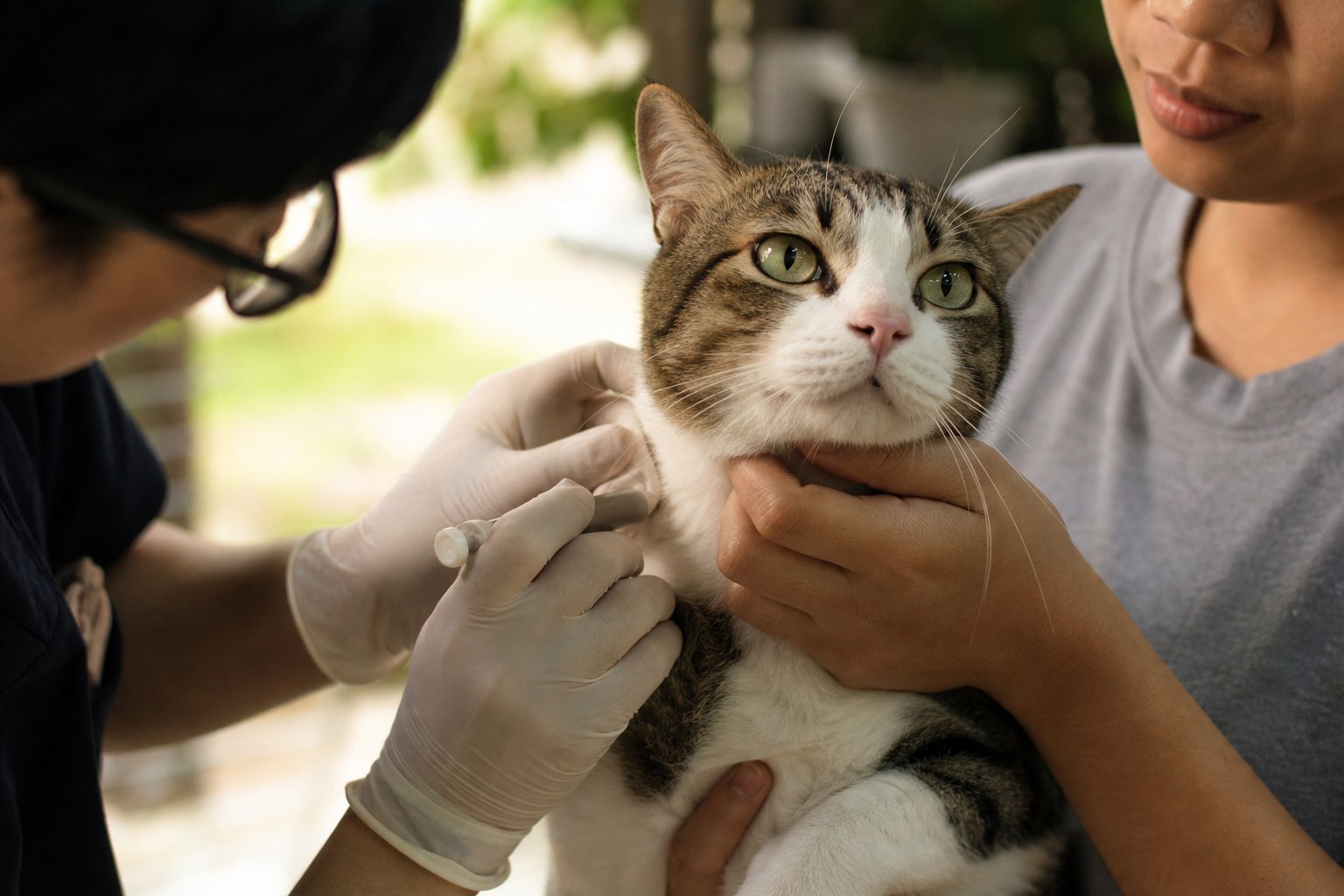
If your cat or dog has swallowed something suspicious, do not try to make it vomit at home. Three steps come first: move your pet away from the source, keep the packaging or a plant sample, then call your own vet or a 24-hour emergency clinic. Home-induced vomiting is unsafe with corrosive drain cleaners, petroleum products, sharp or stringy objects, and pets already vomiting, fitting, struggling to breathe or bleeding.
Why inducing vomiting is not always the answer
There is no standard number of minutes within which vomiting must be triggered. The decision depends on what was swallowed, roughly how much, how long ago, and your pet's age, weight and existing conditions. It is a clinical judgement that belongs to a vet, not a home experiment.
Vomiting is not a neutral act. Bringing corrosive liquid back up can burn the mouth and oesophagus a second time; a sharp object travelling upward can lacerate on the way; and any vomited material can be inhaled into the airway, triggering a serious lung reaction. Pets that are already unconscious, fitting or struggling to swallow have almost no safe margin for this.
Home remedies add their own danger. Salt solutions, oil, milk, hydrogen peroxide and activated charcoal all carry risks, and dosing changes with body weight and the substance involved. If the amount is unknown, guessing can be worse than doing nothing. Save your energy for the phone call.
The three immediate actions are always the same: separate your pet from the remaining material, preserve the container, label, receipt or plant part, and contact a vet. Note the time of exposure, your pet's weight, and any medicines it is taking, because that information shortens the vet's decision time considerably.
| Situation | Why vomiting must be avoided | What to do instead |
|---|---|---|
| Drain cleaner, bleach, strong acid or alkali, mould remover | The corrosive agent would burn the throat and mouth a second time, possibly perforating tissue | Do not give water or milk. Go straight to a clinic and bring the bottle. |
| Petrol, kerosene, turpentine, undiluted essential oil | Vapour reaching the airway can cause severe lung inflammation | Keep the area ventilated, do not induce vomiting, call the vet or emergency clinic. |
| Glass, needles, bones, string, thread, fishing line | Retching or pulling can cut or puncture the intestines | Remove remaining pieces, take your pet in, and bring an example of the object. |
| Pet already vomiting, unconscious, fitting or struggling to breathe | Very high risk of choking, aspiration and airway obstruction | Keep the airway clear, travel to a 24-hour emergency clinic immediately. |
| Uncontrolled bleeding or suspected clotting problem | Vomiting worsens bleeding and delays proper treatment | Transport calmly and warmly, note when bleeding began and any rodenticide contact. |
| Heart disease, epilepsy, pregnancy, recent abdominal surgery | These cases are high risk and need individual assessment | Phone the vet first, explain the history, then follow instructions. |
Even when a vet induces vomiting, the case is not closed at the clinic door. Watch mental state, breathing, gum colour, further vomiting and toileting at home, and follow the recommended recheck or blood test. Keep any abnormal vomit or stool sample in a clean container. Many toxins act with a delay, so a pet that looks bright afterwards still needs follow-up.
Spices, garlic and onion in human food
Allium foods — garlic, onion, spring onion, leeks, chives, shallots, garlic powder and onion powder — contain sulphur compounds that damage red blood cells and cause haemolytic anaemia in both cats and dogs, with cats generally considered more sensitive. The usual mistake is missing the hidden sources: hotpot soup bases, braising liquids, meatball and dumpling fillings, sausages, canned soups, instant noodle seasoning sachets, satay marinades, and even some home-cooked pet meals. Powdered forms are concentrated and hard to measure, so they are often riskier than a fresh slice.
Sichuan pepper, star anise, five-spice powder, curry powder and chilli powder are irritants to the mouth and gut. They rarely travel alone: the dishes they appear in — spicy broths, braised snacks, grilled skewers, cold salads — usually carry high salt and high oil as well, plus garlic or onion. Treat the whole plate as the exposure, not just the single spice.
If your pet gets into such food: separate the pet from the remaining dish, soup and packaging; do not induce vomiting; keep the wrapper, menu name or a photo; call your vet and describe every seasoning used; then watch for a delayed reaction, because red blood cell damage from allium foods may only become obvious one to several days later. A blood test may be advised even if your pet seems fine.
| Food or spice | Main risk | Common signs | Immediate action |
|---|---|---|---|
| Garlic, onion, leek, chives, shallot | Sulphur compounds destroy red blood cells | Dullness, pale gums, rapid breathing, dark urine | Do not induce vomiting; call the vet with amount and time. |
| Garlic powder, onion powder, seasoning sachets | High concentration, difficult to estimate | Vomiting, diarrhoea, appetite loss, weakness | Keep the packet, call the vet; blood work may be needed. |
| Sichuan pepper, star anise, five-spice, chilli | Irritates mouth and gut, usually with salt and oil | Drooling, vomiting, abdominal pain, diarrhoea | Remove food, no water or milk by force, call the vet. |
| Spicy broths, braising sauce, marinades | Several spices plus high salt, risk stacks up | Thirst, vomiting, unsteadiness, dullness | Treat as urgent; bring the dish name or receipt. |
Cosmetics and skincare on the dressing table
Dressing tables, bedside cabinets and bathroom counters are favourite perching spots, and cats routinely walk across them. Several ingredients deserve attention.
- Sodium benzoate and benzyl alcohol: preservers found in toners, serums, wet wipes, mouthwash and some hand washes. A cat's liver handles these poorly, so repeated skin contact or accidental ingestion may show as drooling, vomiting, dullness or skin irritation.
- Salicylic acid: used in exfoliating and acne products, some shampoos and even certain medicated pet washes. Contact happens when a pet licks treated skin or chews a bottle.
- Alcohol: toners, alcohol swabs, sanitisers and mouthwash affect the nervous system, blood sugar and body temperature. Wait until sanitisers are fully dry before touching your pet.
- Fragrance and essential oils: lavender, tea tree, eucalyptus, peppermint and citrus appear in massage oils, room sprays and skincare. Diffused products are the highest risk for cats.
- Nail polish, remover and hair dye: solvent-based, strongly scented, and the bottles are easy to knock over or bite through.
- Toothpaste and mouthwash: some contain fluoride, xylitol or alcohol, none of which should be licked off your hands.
The practical fix is storage. Keep skincare in lidded drawers or high cabinets, recap and wipe counters after use, wait until anything you apply is fully dry before handling your pet, avoid letting pets lick your hands or face, and drop used wipes and cotton pads straight into a covered bin. If ingestion happens, do not give anything to neutralise it — call the vet and take the bottle or ingredient list with you.
| Ingredient | Where it turns up | Why it matters | Prevention |
|---|---|---|---|
| Sodium benzoate, benzyl alcohol | Toners, serums, wet wipes, mouthwash | Preservatives a cat struggles to process | Store in lidded drawers; carry the label to the vet. |
| Salicylic acid | Exfoliants, acne products, shampoos | Licking treated skin or chewing bottles | Do not let pets lick your hands; keep products enclosed. |
| Alcohol | Toners, swabs, sanitisers, mouthwash | Affects nerves, blood sugar and temperature | Wait until dry before touching your pet. |
| Fragrance and essential oils | Massage oils, room sprays, skincare | Inhalation and skin contact both cause problems | Keep out of pet areas; ventilate thoroughly. |
| Toothpaste, mouthwash | Bathroom counter | Fluoride, xylitol or alcohol content | Put away immediately after use. |
Local prices for pet-safe cleaning and storage products vary widely, so ask a Malaysian vet or retailer what they recommend rather than assuming a brand is suitable.
Mothballs, insect repellents and essential oils
These hazards work through the air as much as through the mouth. Mothballs and anti-moth balls release volatile compounds for weeks; a pet sleeping beside treated clothes or inside a shoe cabinet can inhale them or pick them up on its coat and then swallow it during grooming. Cats sit low and close to the floor, so their exposure tends to be heavier than a person's. Repellent sachets, moth flakes for timber and herbal insect blocks behave the same way — the smell is the delivery route.
Typical signs include drooling, vomiting, dullness, unsteadiness and tremors; severe cases progress to seizures, rapid breathing or abnormal body temperature. If you have just done seasonal clothes storage or opened a treated cupboard and your pet then acts strangely, tell the vet about it straight away. Timing and product identity change the advice.
For essential oils, cats lack the enzymes to process many plant compounds effectively. Eucalyptus, tea tree, peppermint, citrus and turpentine-type oils are the frequent offenders. Exposure routes are broader than people expect: ultrasonic diffusers and mist makers, massage oil, scented candles, repellent collars or spot-ons, oil-based cleaning sprays, and a knocked-over bottle that wets the coat. Signs include drooling, vomiting, dullness, unsteadiness, tremors and red or itchy skin; rapid or open-mouth breathing is an emergency.
One rule cuts through the marketing: natural does not mean safe. International veterinary bodies such as the AVMA warn that products labelled natural can still harm pets, and that animals should be kept out of treated rooms until surfaces and air have normalised. Check the ingredient list before buying, and choose simpler formulations.
| Product | Exposure route | Common signs | Home protection |
|---|---|---|---|
| Mothballs, anti-moth balls | Inhaled vapour, skin contact, grooming | Drooling, vomiting, unsteadiness, tremors | Keep wardrobes and shoe cabinets closed; never let pets sleep on treated clothes. |
| Repellent sachets, timber moth flakes | Continuous odour, chewing | Drooling, vomiting, dullness, skin irritation | Seal them in storage your pet cannot reach. |
| Eucalyptus, tea tree, peppermint oils | Diffuser mist, skin contact, swallowed concentrate | Vomiting, unsteadiness, tremors, breathing changes | Do not diffuse in pet areas; lock away the bottles. |
| Citrus and turpentine-type oils | Cleaning sprays, candles, spot-on products | Red, itchy skin; drooling; dullness | Use plainer products and ventilate after cleaning. |
Houseplants that can poison cats and dogs
Window ledges and small balconies make potted plants an easy choice, but several common species are risky:
- Fig: leaves and sap irritate the skin, and chewing leaves or twigs can cause drooling, vomiting and gut upset. After pruning a fig tree or plant, clear fallen leaves at once.
- Avocado: skin, leaves, seed and the plant itself are a concern, and the flesh should not be fed either. Watch for vomiting, diarrhoea, dullness and breathing changes.
- Lilies, dieffenbachia, calla lily: high-risk plants, with some lily species especially dangerous for cats. Households with cats are better off not keeping them.
- Aloe, pothos, monstera: contain calcium oxalate crystals or anthraquinone compounds that cause a burning mouth, intense drooling and vomiting after chewing.
- Vase water and cut stems: water collects compounds leaching from the stems, so drinking from the vase is nearly as risky as chewing the leaves. Empty it daily and bin cuttings in a covered bin.
Protection is mostly structural: hang pots or fit mesh, add a barrier to balcony doors, change vase water daily, and keep scented products out of plant areas. If your cat is a chewer, offer cat grass as a safe alternative. After any plant ingestion, remove the plant, note which part and roughly how much was eaten, and call the vet with a sample or photo — do not induce vomiting yourself.
| Plant | Risky part | Common [signs | Prevention](/articles/cat-kidney-disease-malaysia "mylink") |
|---|---|---|---|
| Fig | Leaves, twig sap | Dermatitis, drooling, vomiting, gut upset | Clear prunings immediately; move pots out of reach. |
| Avocado | Skin, leaves, seed, flesh | Vomiting, diarrhoea, dullness, breathing changes | Never feed it; keep the plant away from pets. |
| Lilies, dieffenbachia, calla lily | Whole plant, especially leaves and flowers | Drooling, vomiting, dullness; some species are severe | Avoid keeping them in cat households. |
| Aloe, pothos, monstera | Leaf flesh and sap | Mouth burning, heavy drooling, vomiting | Hang or net them; keep off low furniture. |
| Vase water, cut stems | Water and discarded foliage | Gut upset, contact irritation | Change water daily; bin cuttings in a covered bin. |
When to see a vet
Treat the following as emergencies. Do not wait overnight and do not decide to "watch it first":
- Seizures, loss of balance, wobbly walking, abnormal pupils or a weak light reflex — neurological signs that may follow essential oils, mothballs, repellents or other toxins.
- Rapid breathing, open-mouth breathing, persistent cough or discoloured gums — possible inhalation injury, anaemia or oxygen shortage.
- Repeated vomiting, blood in vomit, heavy drooling, difficulty swallowing or obvious mouth pain — suggests a corrosive chemical or a strong irritant.
- Bleeding that will not stop, wounds that keep oozing, bleeding gums or nosebleed — possible clotting failure and always an emergency.
- Any ingestion of plants, essential oils, mothballs, cosmetics, garlic-and-onion food, or any formulation of cleaner — even with no symptoms yet, because reactions can be delayed.
- Dullness, no response, abnormal temperature, persistent diarrhoea or no passing of stool — signs of whole-body involvement.
If you are unsure which category applies, treat it as an emergency. Malaysia has no dedicated pet poison hotline, so the working sequence is: call your regular vet first; if the clinic is closed, ring a 24-hour emergency practice; if your pet is fitting, struggling to breathe or unconscious, go directly, keeping the airway clear and your pet warm. Overseas services such as the ASPCA Animal Poison Control Center offer round-the-clock advice but operate from abroad, so a local vet remains your first call.
Have these ready before you dial or arrive: the product container or label, a plant sample or photo, a vomit sample if available, the route of exposure and the time it happened, your pet's weight and age, and any chronic conditions or current medicines. That is the most useful contribution an owner can make.
Prevention: a room-by-room habit check
- Kitchen and store: keep cleaners, drain openers and insect treatments inside lidded cabinets; never mix different cleaning products; wipe surfaces with plain water afterwards and ventilate.
- Bedroom and wardrobe: mothballs and repellents go into sealed storage well away from pet sleeping spots; do not let pets lie on freshly treated clothes.
- Bathroom and dressing table: skincare, toothpaste, sanitisers and hair products live in drawers; wait for anything applied to dry before handling your pet.
- Living and balcony areas: hang or net pots, add a barrier to balcony doors, empty vases daily, and put cut stems straight into a covered bin.
- Air: skip continuous diffusers in rooms where pets spend time; ventilate after cleaning and after using sprays.
Two everyday Malaysian settings make these checks worth repeating. In a Kuala Lumpur apartment with low open shelving, a curious cat can reach a dressing table and a shoe cabinet in the same evening, so lidded drawers and closed wardrobe doors do more work than any warning sign. During the Penang rainy season, clothes are stored longer and moth treatments stay in place for weeks, which means vapour exposure continues quietly in the same room your pet sleeps in — check the wardrobe before you blame a new food for sudden drooling or unsteadiness.
Finally, assemble a small emergency file: your vet's number, the nearest 24-hour clinic, your pet's weight and medical history, and a clear bag with sample labels for keeping packaging. When minutes matter, hunting for a phone number costs more than any other step in this guide.
This article is for general information only and does not replace veterinary diagnosis, prescription or treatment. For any suspected poisoning, contact your veterinarian or an emergency clinic immediately.
Related reading
- Cat Health Guide Malaysia: Symptom Check, Red-Flag Triage & When to See a Vet
- Pet Poisoning at Home: Household Chemicals, Insecticides and Toxic Plants (Malaysia, Part 1)
- Cat Arthritis in Malaysia: 5 Home Signs Your Cat Is in Pain — and What to Do
- Cat Chronic Disease Early Signs in Malaysia: 7 Daily Checks and a 4-Week Log
- Early Signs of Chronic Disease in Cats: 7 Daily Checks and a 4-Week Record Sheet
- Cat Chronic Kidney Disease in Malaysia: The Daily Care Routine That Actually Slows It Down
- Cat Constipation in Malaysia: The 48-Hour Rule, Red Flags and What Actually Helps
- Cat Dehydration in Malaysia: Home Skin-Turgor Test, 7 Causes and Emergency Signs
- Cat Pancreatitis in Malaysia: Symptoms, fPLI Testing, Treatment and Home Recovery