
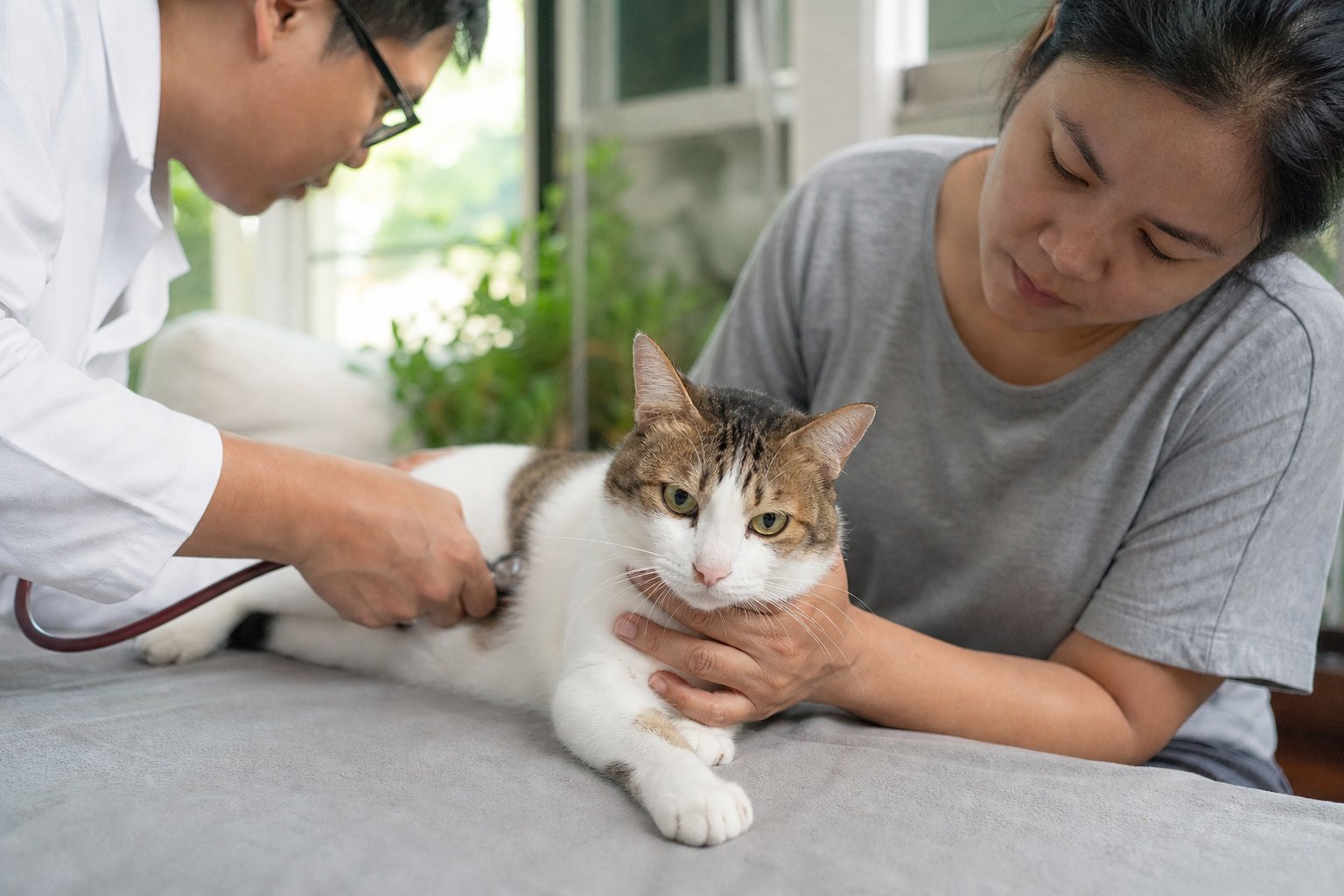
Quick answer: Ringworm is a contagious fungal skin infection in cats, and it passes to people. If you find a circular bald patch with a red rim and flaky skin, put on gloves, keep the cat separate, and book a vet visit that same week. Treat the cat and clean the house at the same time — treating only one side is the usual reason the problem returns.
What Ringworm Actually Is (and Why Damp Weather Matters)
Despite the name, ringworm has nothing to do with worms. It is a superficial fungal infection of the skin and hair, medically called dermatophytosis, caused by fungi that feed on keratin — the protein in hair, claws and the outer layer of skin. The fungus grows along the hair shaft, weakens it, and the hair snaps off close to the skin. That breakage is what produces the classic bald patch.
The spores are tough. They can sit on fabric, carpet, furniture and grooming tools for a long time, waiting for a suitable host, and ordinary wiping does not reliably destroy them. Warm, humid conditions favour fungal survival, which is why households that stay moist — poor ventilation, air-conditioning units that never dry out, laundry drying indoors near the cat's favourite resting spot — tend to see more cases.
Not every cat is equally at risk:
| Higher-risk cat | Why the risk is greater |
|---|---|
| Kittens and seniors | Immature or declining immune systems fight infection less effectively |
| Cats recovering from illness or stress | Immune resources are diverted; stress itself suppresses skin defence |
| Long-haired cats | Dense coats stay damp longer and hide early patches |
| Newly adopted or boarded cats | May carry the fungus with no visible signs during the incubation period |
| Multi-cat or cattery-style homes | Close contact, shared trays and bedding speed transmission |
A healthy indoor adult cat is lower risk, but never zero: spores arrive on shoes, clothing and hands. The practical goal is a dry environment plus early detection, not perfection.
How to Spot Ringworm: The Circular Bald Patch
The most recognisable sign is a round or roughly circular area of hair loss, often starting small and expanding outward. The centre may look pale and scaly while the edge stays red and raised, giving it a ring-like appearance. Fine flaky skin, broken hairs around the margin, and crusts are common. Some cats itch noticeably; others show no discomfort at all, which is precisely why owners miss early cases.
Typical locations include:
- Head, ears and muzzle — the most frequent sites, often feeling rough or crusty to the touch
- Forelegs and paws — areas the cat licks and rubs often
- Base of the whiskers and the bridge of the nose — sometimes only slight redness and thinning
- Across the back or flanks in more extensive cases, where patches enlarge and merge into irregular shapes
Ringworm is not the only explanation for hair loss, and guessing wrong delays treatment:
| What you see | Ringworm pattern | Other common possibilities |
|---|---|---|
| Shape | Round patch, expanding margin | Irregular or symmetrical thinning (allergies, over-grooming) |
| Skin surface | Flaky, scaly, sometimes crusted | Usually normal, or greasy/odorous in some skin conditions |
| Itch level | Variable, from none to moderate | Flea allergy and mites often itch intensely |
| Distribution | Head, ears, limbs first | Back and tail-base thinning points toward fleas |
| Other pets affected | Often, within weeks | Allergies tend to affect one animal |
Confirmation requires a veterinarian: a microscope examination of plucked hairs, a fungal culture, or both. Some clinics also use a Wood's lamp, but a negative glow does not rule the infection out. Never reach for a human antifungal cream before diagnosis — it can mask the signs, irritate the skin, and, if licked, expose the cat to ingredients meant for people.
Ringworm Spreads to People Too
Ringworm is a recognised zoonosis, meaning it jumps from animals to humans. In people it usually appears as an itchy, red, clearly defined circular patch, sometimes with a clearer centre — and it is frequently mistaken for eczema, leading to weeks of inappropriate self-treatment.
Higher-risk family members:
- Young children, who cuddle cats closely and have immature immune systems
- Older adults and people with chronic conditions, including those on immunosuppressive medication
- Anyone handling the cat directly, especially during medicating, bathing or wound care
Two transmission routes matter:
- Direct contact — touching infected hairs, scales or crusts on the cat's body
- Indirect contact — picking up spores from combs, bedding, carpets, sofas, carrier crates and litter trays
Household protection, in order of importance:
- Wash hands thoroughly before and after handling the cat, its food, litter or bedding
- Wear disposable gloves when applying medication or cleaning lesions, and bin them afterwards
- Keep the affected cat in an easy-to-clean room with hard flooring during treatment, away from fabric sofas, curtains and children's play areas
- Never share blankets, combs, brushes or towels between the affected cat and the rest of the household
- Vacuum the treatment room daily, emptying the canister or bag straight into an outside bin
- If any family member develops a red itchy ring, see a human doctor — human ringworm needs human medicine, not leftover pet cream
Diagnosis and Treatment: Four Steps, No Shortcuts
Effective treatment is a package. Drop one element and the infection tends to circle back.
- Veterinary confirmation. Microscopy or culture confirms dermatophytosis and rules out mites, bacterial infection and allergic hair loss.
- Topical therapy. Antifungal cream, medicated dips or soaks applied to lesions to reduce surface fungal load.
- Oral medication. Prescribed for widespread, deep or repeatedly relapsing cases, dosed by body weight.
- Clipping the affected area. Trimming around lesions lets medication reach the skin and removes infected hairs that would otherwise shed around the house — follow your vet's guidance on how wide to clip.
A typical timeline looks like this, though your vet will set the real schedule:
| Stage | Approximate period | What happens | The misunderstanding to avoid |
|---|---|---|---|
| Diagnosis | Week 0 | Exam, sampling, medication started, cleaning begins | "I'll try cream first and see" — delays confirmation |
| Early treatment | Weeks 1–2 | Doses given on schedule, daily vacuuming, cat confined | "It stopped spreading, so I'll stop" — spores remain |
| Improvement | Weeks 2–4 | New hair grows, patch shrinks, treatment continues | "Fur is back, we're cured" — appearance ≠ clearance |
| Consolidation | Weeks 4–8 | Continued medication, recheck visit, repeat culture in some cases | "It looked fine, no need to go back" |
| Stopping | Case-dependent | Vet decides based on exam and culture results | Stopping early is the top cause of relapse |
Finish the full course even when the skin looks normal, and attend the review appointment. Until your vet confirms clearance, the cat may still be infectious to people and other pets.
Ask at each visit: when to recheck, whether other cats need examination, how often to bathe, and how your cleaning routine should change as treatment progresses.
Cleaning the Environment: Treating the Cat Alone Is Half the Job
Spores surviving on bedding, carpets and grooming tools are the classic reason a "finished" case relapses or a second cat falls ill weeks later. Build a cleaning routine alongside the medication:
- Wash in hot water every blanket, bed cover, soft toy and removable fabric liner the cat has used
- Vacuum daily — sofa seams, under furniture, carpet edges, cat trees, window ledges — and dispose of the collected debris immediately in a sealed bag
- Clean combs, brushes, carriers and food bowls in hot soapy water, then disinfect; keep them exclusively for the affected cat until cleared
- Wipe hard floors and surfaces with a disinfectant proven against fungal spores, following the product label, then rinse with clean water and let everything dry fully before the cat walks on it
- Keep the area dry and ventilated — run a dehumidifier or air-conditioner in humid spells, and never dry laundry next to the cat's sleeping spot
- Confine during cleaning — move the cat to another room while chemicals are wet, and keep it off freshly cleaned floors until dry
If your home has deep-pile carpets, heavy curtains or fabric-covered cat trees that cannot be washed, discuss alternatives with your vet; sometimes removing or isolating those items is the fastest route to breaking the cycle.
Multi-Cat Households and Preventing Recurrence
When one cat tests positive, examine all of them. Cats sharing a litter tray, bedding, grooming each other and chasing the same toy pick up spores quickly, and infected-but-symptomatic cats are common. Your vet may recommend treating every cat in the home or checking them at intervals.
Practical steps for multi-cat homes:
- Provide separate litter trays, bowls, combs and bedding during treatment
- Increase litter tray cleaning — scoop twice daily and wash trays regularly
- Separate the infected cat in a wipeable room, with its own supplies
- Handle the affected cat last when caring for the household, and wash hands between animals
- Reduce stress where possible — predictable routines, vertical space and quiet feeding areas support immune function
Prevention is mostly environmental and immune-focused:
- Keep the home dry and airy; humidity is the fungus's best friend
- Inspect the skin weekly during cuddles: run your fingers along the ears, forelegs and ruff, checking for bald spots, redness or flakes
- Feed a complete, balanced diet with adequate protein and essential fatty acids to support the skin barrier
- Quarantine new arrivals — keep a newly adopted or fostered cat separate until a skin check shows nothing abnormal, and arrange a veterinary examination before introducing it to your resident cats
- Groom regularly with each cat's own comb, so you notice changes early
- If ringworm keeps returning, ask your vet to investigate an underlying health problem that may be weakening immunity
Official guidance on responsible pet ownership and health records is available from the Department of Veterinary Services Malaysia (dvs.gov.my), and the SPCA's adoption resources (spca.org.my) outline sensible quarantine steps for newly rehomed animals. The Department's Animal Passport portal (animalpassport.dvs.gov.my) is also a useful reference when registering and tracking your cat's health history.
When to See a Vet
Use this triage table to judge urgency. Green cases can wait for a routine appointment while you start cleaning; yellow cases need a booking within a few days; red cases require same-day attention.
| Observation | 🟢 Home care alongside vet advice | 🟡 Book the vet within 1–3 days | 🔴 Seek care the same day |
|---|---|---|---|
| Hair loss | One small patch, under about 1 cm | Multiple patches, spreading margin | Extensive loss over face or body |
| Skin appearance | Mild flakes, no swelling | Red rim, crusting, thickened skin | Wide redness, oozing, pus, obvious pain |
| Itching | Occasional scratching | Frequent scratching, licking, head shaking | Scratching until bleeding, restlessness, crying |
| Appetite and energy | Normal | Slightly subdued, eating less | Refusing food, very dull, feverish |
| Family members | Nobody affected | Someone has a suspected ring rash | A child, older adult or immunocompromised person has symptoms |
| Other pets | All well | Another pet develops a patch | Several pets affected at once |
| Age and condition | Healthy adult cat | Kitten, senior or unwell cat | Kitten with widespread infection or not eating |
| Response to treatment | Improving within about two weeks | Little change after two to four weeks | Spreading or worsening despite medication |
Book a visit promptly when you see a circular bald patch with a red rim and scales, when patches multiply quickly, when the cat scratches until the skin bleeds or oozes, when lesions sit near the eyes, ears or nose, or when a family member develops a matching rash.
What to Do This Week
- Pick up your cat and check the ears, forehead, forelegs and ruff for bald spots or flakes
- Run a dehumidifier or ventilate the room during humid weather; move drying laundry away from the cat's bed
- If a new cat is arriving, set up a separate room with its own tray, bowl and comb before it enters the house
- At the first suspicious patch: gloves on, no bare-handed contact, and call the vet
- Make handwashing after handling the cat a household rule, especially for children
Consultation fees, medication and laboratory tests vary across Malaysia, so ask your veterinary clinic for a written estimate before treatment begins, and check with local retailers for any cleaning or dehumidifying products you need.
This article is general pet health information and does not replace veterinary diagnosis or treatment. Every cat's condition, medical history and medication sensitivities differ — any assessment or treatment plan, including drug choice, dosage and duration, must come from a registered veterinary practitioner after an examination. If your cat shows the red-flag signs above, contact a veterinary clinic or emergency animal hospital immediately.
Related reading
- Cat Health Guide Malaysia: Symptom Check, Red-Flag Triage & When to See a Vet
- Cat Ringworm in Malaysia: Symptoms, Treatment and Home Cleaning Guide
- Cat Constipation in Malaysia: The 48-Hour Rule, Red Flags and What Actually Helps
- Cat Dehydration in Malaysia: Home Skin-Turgor Test, 7 Causes and Emergency Signs
- Cat Pancreatitis in Malaysia: Symptoms, fPLI Testing, Treatment and Home Recovery
- Pet Health in Malaysia: A Practical Prevention Guide for Cats and Dogs
- Pet Health Malaysia 2026: Common Cat and Dog Illnesses, Prevention Care and Vet Guidance
- Pet Poisoning at Home: Household Chemicals, Insecticides and Toxic Plants (Malaysia, Part 1)
- Cat Arthritis in Malaysia: 5 Home Signs Your Cat Is in Pain — and What to Do
- Cat Chronic Disease Early Signs in Malaysia: 7 Daily Checks and a 4-Week Log
- Early Signs of Chronic Disease in Cats: 7 Daily Checks and a 4-Week Record Sheet