
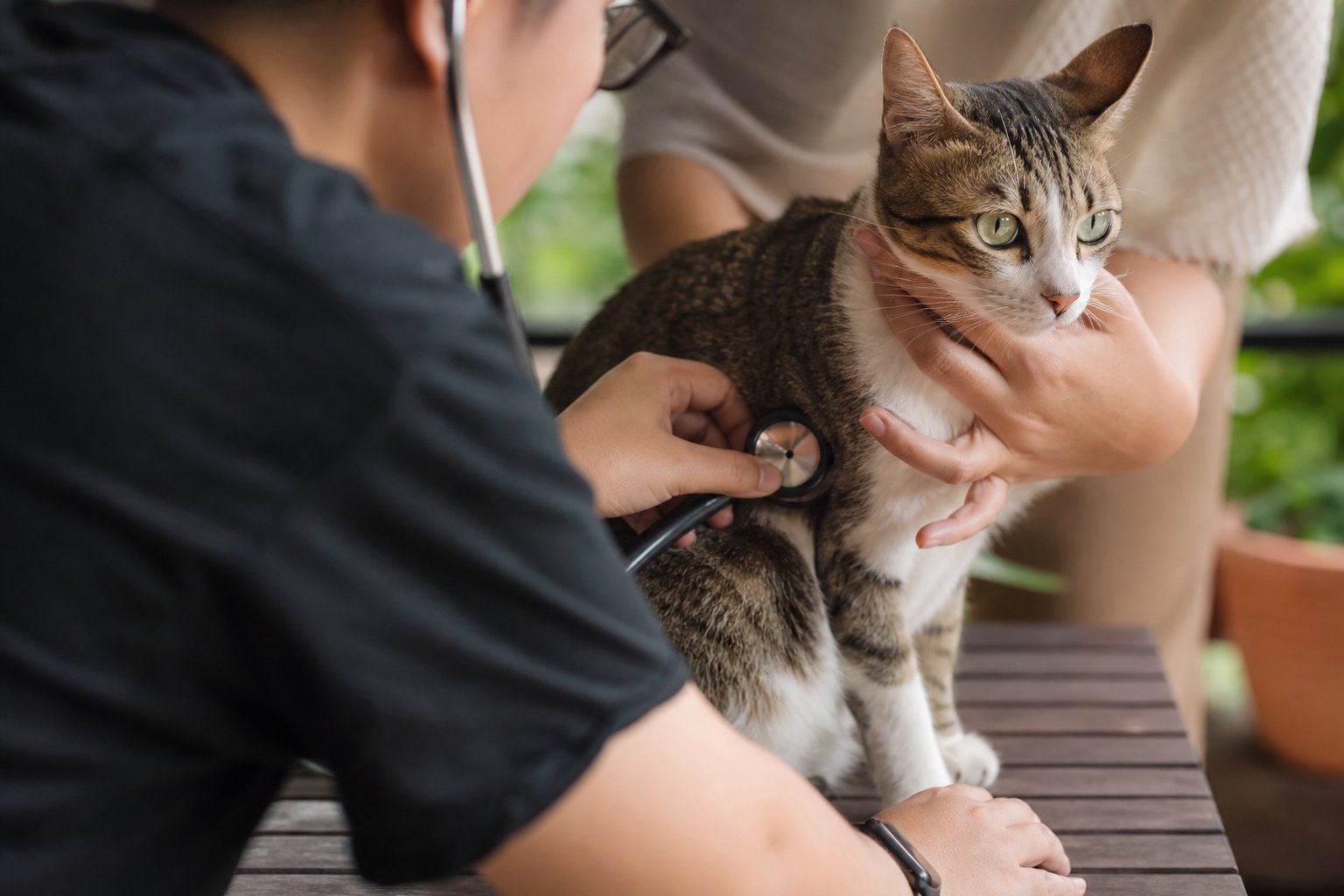
Feline pancreatitis usually announces itself quietly: appetite drops, energy sags, and vomit appears on and off — not with dramatic belly pain. If your cat refuses all food for more than 24 hours, treat it as an emergency. Diagnosis relies on a blood test called fPLI or Spec fPL together with ultrasound, while treatment is supportive: fluids, pain relief, anti-nausea medication and careful nutrition. Here is what Malaysian cat owners need to know, from the earliest warning signs through to home recovery.
The classic triad: poor appetite, low energy, intermittent vomiting
The pancreas sits near the stomach and intestines and does two jobs: it releases digestive enzymes into the gut and produces insulin. When it becomes inflamed, those enzymes effectively start irritating the organ itself, and the cat feels genuinely unwell — often in pain.
The pattern owners most often notice is a trio: the cat eats noticeably less or stops altogether, sleeps far more than usual, and brings up food every now and then. Some cats also pass soft or loose stools. Crucially, cats do not present the way dogs do. A dog with pancreatitis may arch its back, cry out when the belly is touched and vomit repeatedly. A cat will usually just withdraw.
Because cats are skilled at masking discomfort, the earliest clues are behavioural rather than digestive:
- Sleeping in a new or hidden spot, or staying in one place all day
- Less interest in people, play or grooming; the coat may look dull
- Not coming forward at mealtime, or walking away after a few bites
- Crouching low, reserving energy, or reacting when you lift the abdomen
- Using the litter box less, or passing smaller, softer stools
A cat that eats a little but far less than normal belongs in the amber category. A cat that swallows nothing at all for 24 hours is a red flag — not only because the pancreatitis may be severe, but because a fasting cat is at risk of hepatic lipidosis, or fatty liver disease, a serious complication in its own right.
Why feline pancreatitis is so easy to miss
Three factors keep this condition under the radar.
Symptoms are vague. Reduced appetite, low energy and occasional vomiting are also the signs of a stomach upset, a hairball or a stressed cat. Owners frequently assume the cat has eaten something unsuitable or is simply in a mood.
Cats hide pain. Veterinary guidance on feline medicine emphasises that pancreatitis can be very painful while the cat shows almost nothing. Withdrawal and reduced grooming may be the only outward evidence.
Many cases are subclinical. A post-mortem study of 115 cats cited in a veterinary consensus report found histological pancreatitis in 66.1 per cent of them, including evidence in 45 per cent of cats that had appeared healthy. Clinical diagnoses are far fewer, which tells us a proportion of cases simply never come to attention.
A small clinical study of 21 cats with suspected pancreatitis recorded how often each sign appeared. Use it as a reality check rather than a checklist:
| Symptom | Frequency recorded |
|---|---|
| Lethargy | 95.2% |
| Reduced appetite | 90.5% |
| Vomiting | 90.5% |
| Dehydration | 81.0% |
| Diarrhoea | 57.1% |
| Abdominal pain | 47.6% |
| Weight loss | 47.6% |
The key reading: lethargy and appetite loss are near-universal, while visible abdominal pain occurs in only about half of cases. Never wait for your cat to cry out before seeking help.
Red-flag triage: what to do today
Use this table to decide how urgently to act.
| Area | Green: monitor at home | Amber: see a vet within 24 hours | Red: emergency now |
|---|---|---|---|
| Appetite | Eating less but still eating | Clearly refusing food, uninterested in favourite treats | Refuses everything for more than 24 hours |
| Energy | Sleepier than usual | Hiding, ignoring the family, not grooming, sleeping in new places | Too weak to stand, difficult to rouse |
| Vomiting | One-off vomit | Repeated vomiting, vomit after meals | Cannot stop vomiting, or vomit contains blood or coffee-ground material |
| Abdomen | Feels normal | Resents being touched around the belly, hunches | Distended and painful, crying when handled |
| Hydration | Skin snaps back quickly | Slower skin tent, slightly dry gums | Skin stays tented, eyes appear sunken |
| Weight | Steady | Clear drop over several days | Rapid wasting plus yellow gums or eyes |
A practical example: in a Kuala Lumpur apartment, a cat going through renovation noise next door may stop eating for a day and hide behind the sofa. Stress can suppress appetite, but if the refusal passes the 24-hour mark, or vomit appears more than twice, the safest move is a veterinary visit rather than a wait-and-see approach — dehydration and liver complications develop quickly in small cats.
Causes, triaditis and complications
In most cases no single cause is ever identified, and veterinary consensus notes that pancreatitis in cats shows no clear link to age, sex, breed, body condition or a particular dietary mistake. Known contributing factors include:
- Abdominal trauma, such as a road accident or a fall from height — a real risk for a Johor terrace house cat allowed onto balconies, walls or rooftops
- Infection, rarely, with organisms such as Toxoplasma or certain viruses
- Concurrent inflammation elsewhere in the gut or biliary system
- Certain drug reactions or metabolic disease, assessed case by case by your vet
Triaditis deserves special attention. In cats the pancreatic duct, bile duct and intestine are closely connected, so inflammation in one readily involves the others. A cat diagnosed with pancreatitis will often be assessed for bile duct inflammation and intestinal inflammation at the same time, and treatment covers all three rather than one in isolation.
Long-term complications of repeated or chronic episodes include diabetes mellitus — showing as increased thirst, increased urination and weight loss — and digestive enzyme insufficiency, which causes weight loss with loose stools. This is why follow-up matters even after the cat seems well again.
How your vet diagnoses it
| Test | What it does | Notes |
|---|---|---|
| History and physical exam | Maps the signs, checks hydration, gently palpates the abdomen | Pain may not be obvious on touch |
| Blood count and biochemistry | Assesses dehydration, liver and kidney function, electrolytes | Rules out other causes of the same signs |
| fPLI / Spec fPL (feline pancreatic lipase) | The core blood test for pancreatitis | Widely used standard reference test |
| SNAP fPL (in-clinic rapid test) | Quick screening | Gives normal or abnormal only; does not grade severity |
| Abdominal ultrasound | Shows pancreatic shape, surrounding fluid and neighbouring organs | Best interpreted by an experienced operator |
Published reference ranges for Spec fPL are: negative at 3.5 µg/L or below, mildly raised between 3.6 and 5.3 µg/L, and positive at 5.4 µg/L or above. These figures must be read together with the clinical picture and imaging — never in isolation. Mild pancreatitis is genuinely hard to confirm, and vets will sometimes start treatment on strong suspicion alone. In a small number of cases, a tissue sample taken during surgery provides the answer.
Ask your clinic which test they use, whether ultrasound is available on site or referred elsewhere, and how soon results return. Prices vary between Malaysian clinics and between peninsular and East Malaysia, so request a written estimate covering consultation, blood work, the fPLI test, imaging and any hospitalisation before you proceed.
Treatment: supportive care, not a miracle cure
There is no specific cure-all medicine for feline pancreatitis. Care focuses on supportive therapy and managing complications, all prescribed and monitored by a registered veterinarian.
| Focus | What is done | Purpose |
|---|---|---|
| Fluid therapy | Intravenous fluids, often with an overnight stay | Corrects dehydration and electrolyte imbalance |
| Pain relief | Vet-prescribed analgesics | Pancreatitis can be severely painful |
| Anti-nausea medication | Vet-prescribed antiemetics | Reduces vomiting and makes eating possible |
| Nutritional support | Appetite stimulants; a feeding tube if needed | Prevents prolonged fasting and liver fat buildup |
| Treating linked disease | Managing bile duct and intestinal inflammation together | Triaditis requires whole-patient treatment |
| Diet changes | Only on veterinary instruction | Some cats need a specific prescription diet |
Two rules are non-negotiable.
Never force-feed. International feline medicine guidance states that force-feeding has a strongly negative effect on a cat's appetite and still fails to meet nutritional needs. Appetite is a medical problem to be solved with treatment, not overcome by syringing food past a resistant cat.
Never give human painkillers. Common human medicines such as paracetamol and ibuprofen are highly toxic to cats; a tiny dose can be fatal. No medication, supplement or herbal remedy should be given unless your vet has prescribed it.
Diet, fat and recovery at home
The old rule was that pancreatitis equals a low-fat diet. The evidence in cats is more nuanced. Veterinary consensus notes that restricting fat in cats with pancreatitis has not been proven beneficial the way it sometimes is in dogs. The first priority is simply that the cat eats: the risk from not eating outweighs the risk from dietary fat.
There are exceptions. If your cat also has raised blood lipids or intestinal disease, your vet may recommend a specific prescription diet, including a gastrointestinal formula with controlled fat. Any diet change should follow veterinary advice and happen gradually — mix old and new food over seven to ten days to avoid upsetting the stomach further. Do not combine several prescription diets on your own initiative.
During recovery at home:
- Warm the food slightly to bring out its smell, and offer small amounts more often
- Use a shallow dish so the whiskers are not pressed against the sides
- Record daily food and water intake, vomit count and stool condition in a note on your phone
- Offer several quiet resting places; a recovering cat often wants to hide
- Weigh your cat weekly at home and note the trend rather than one reading
- Give every dose exactly as prescribed — do not stop early or adjust the amount yourself
- Keep the environment calm and predictable while the cat recovers
In a Penang rainy season, humidity accelerates spoilage: uneaten wet food should not sit out for hours. Serve small portions, refrigerate the remainder within an hour, and wash bowls daily to prevent a gut upset from compounding the recovery.
When to see a vet
Emergency immediately: complete refusal of food for more than 24 hours, non-stop vomiting, severe abdominal pain, collapse or inability to stand, or yellowing of the gums or eyes.
Within 24 hours: clear appetite loss combined with low energy, repeated vomiting, diarrhoea, or skin that tents and returns slowly.
Within a few days: eating noticeably less for several days, quiet withdrawal, or gradual weight loss — book a check-up and blood work.
Long term: any cat already diagnosed needs scheduled follow-up visits, repeat blood tests as advised, and prompt attention if appetite drops again. Keep the number of a 24-hour emergency animal hospital saved in your phone before you need it; most major Malaysian cities have one, and response times are far better when you are not searching in a panic.
Consultation fees, blood panels, fPLI testing, ultrasound and drip hospitalisation are normally quoted as separate items, and Malaysian prices vary by clinic and location. Ask for a written estimate, and check with your vet or a pet retailer about recovery diets and feeding equipment suited to your cat's stage of recovery.
This article is general information only and is not a substitute for veterinary diagnosis or treatment. Feline pancreatitis is confirmed through a combination of clinical signs, blood tests such as fPLI or Spec fPL, and imaging; all results must be interpreted by a registered veterinarian. Never medicate, force-feed or fast your cat without veterinary advice. If your cat refuses food for more than 24 hours, vomits repeatedly, shows severe abdominal pain or develops jaundice, seek emergency veterinary care immediately.
Related reading
- Cat Symptom Checker Malaysia: 12 Common Signs and a Green-Amber-Red Triage Table
- Cat Constipation in Malaysia: The 48-Hour Rule, Red Flags and What Actually Helps
- Cat Dehydration in Malaysia: Home Skin-Turgor Test, 7 Causes and Emergency Signs
- Cat Ringworm in Malaysia: Signs, Treatment and Home Cleaning Guide
- Pet Health in Malaysia: A Practical Prevention Guide for Cats and Dogs
- Pet Health Malaysia 2026: Common Cat and Dog Illnesses, Prevention Care and Vet Guidance
- Pet Poisoning at Home: Household Chemicals, Insecticides and Toxic Plants (Malaysia, Part 1)
- Cat Arthritis in Malaysia: 5 Home Signs Your Cat Is in Pain — and What to Do
- Cat Chronic Disease Early Signs in Malaysia: 7 Daily Checks and a 4-Week Log
- Early Signs of Chronic Disease in Cats: 7 Daily Checks and a 4-Week Record Sheet