
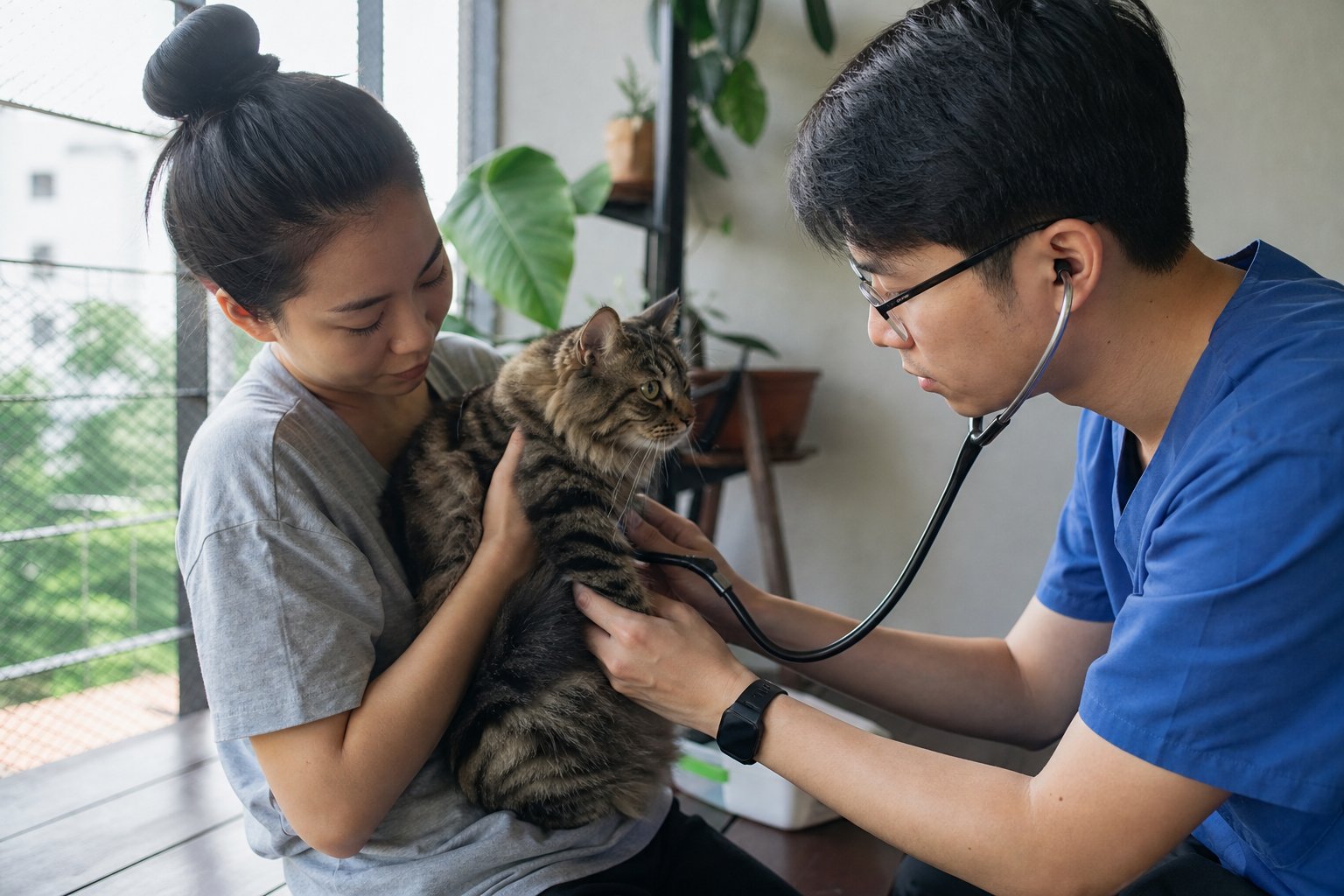
Gut upset in cats and dogs usually comes back to three triggers: stress, medication, and food changed too quickly. The fixes are simple but specific — transition slowly, feed a low-fat, low-residue diet while the gut settles, never stop antibiotics on your own, and treat probiotics as vet-directed support rather than a cure. Below is a meal-by-meal plan you can actually follow, plus the warning signs that mean you should stop waiting and call a vet.
What gut imbalance actually looks like
The gut and the brain are connected in both directions, so emotional stress shows up as digestive symptoms more often than as obvious anxiety. A cat hiding during renovation works, a dog unsettled by a new baby, or a pet left alone for long stretches may protest through stool changes long before behaviour changes are noticed.
Watch for these patterns:
- Stool form shifting — soft stool, watery diarrhoea and constipation alternating, frequency rising or dropping, or a cat suddenly soiling outside the litter tray.
- Mucus or streaks of blood — recurring mucus means a faecal test, not a wait-and-see approach.
- Vomiting — a small amount after food or on an empty stomach is common; repeated vomiting is not.
- Appetite loss — a cat that eats nothing for over 24 hours is at risk of hepatic lipidosis and must not be left overnight "just in case".
- Bloating, flatulence, a belly that resents touch — signs of gas and pain.
- Behavioural clues — hiding, excessive grooming of the belly, or prolonged crouching.
The tricky part is that parasites, food intolerance and chronic bowel disease produce almost identical signs. Use this triage table as a starting point, not a diagnosis.
| What you observe | Likely direction | When to contact a vet |
|---|---|---|
| Soft stool, normal energy and appetite | Stress, transition too fast, mild intolerance | No improvement within 1–2 days, or it keeps recurring |
| Straining, no stool passed | Low water intake, fibre or hairball issues, pain | Over a day without a bowel movement, or vomiting alongside |
| Alternating soft stool and constipation with multipart mucus | Microbiome imbalance, chronic gut inflammation | Recurring — book a faecal test |
| Vomiting plus diarrhoea with clearly reduced appetite | Infection, gastroenteritis, foreign body or drug reaction | Contact a vet the same day |
Gut, skin and ear problems are assessed together because the immune system and skin barrier interact with gut flora. Once gut issues are resolved, some pets do scratch less and produce less ear discharge — but that does not mean probiotics treat a skin disease or ear infection. A foul-smelling, red or repeatedly shaken ear needs a vet check for mites, yeast or bacteria first.
Keep a daily log during any episode: stool score, number of stools, meals eaten, vomiting count. This single habit is what lets a vet spot a trend in seconds instead of guessing.
Diarrhoea during an antibiotic course
Antibiotics do not distinguish between the organism they are targeting and the resident gut flora, so colony numbers and variety both shift during treatment. Diarrhoea, soft stool and reduced appetite are common reactions. The important principle in current veterinary thinking is that diarrhoea is not automatically a reason for more antibiotics — the priorities are finding the cause and restoring the gut environment.
What you should do during a course:
- Never stop, reduce or double a dose on your own. Stopping midway risks leaving infection unresolved and encourages resistance; a missed dose is not something to make up with a double amount — ask the vet.
- Record three things daily — stool form and count, food eaten per meal, and any vomiting or drooling.
- Keep water available constantly. Diarrhoea loses fluid and electrolytes; in some cases the vet will suggest an electrolytic solution rather than plain water alone.
- Add nothing new — no treats, supplements or human food, or you will never know which change caused the reaction.
- Ask before adding a probiotic. If approved, it is usually given a few hours apart from the antibiotic so the two do not neutralise each other.
Tetracycline-class drugs such as doxycycline are well known for gastrointestinal side effects, and there is no single percentage that fits every case — risk depends on dose, length of treatment and the individual's gut health. What matters is monitoring and reporting promptly. Give the tablet with water or food as the vet instructed to reduce oesophageal and stomach irritation.
Appetite stimulants are not appetite tonics. Metoclopramide works on gut motility and nerve signalling to speed gastric emptying and reduce vomiting, which is why it is used for delayed emptying or repeated vomiting. It is a prescription medicine for specific clinical situations, not a general "make my cat eat" supplement, and it is not for long-term self-administration. Possible adverse effects include vomiting, diarrhoea, abdominal discomfort and restlessness or behaviour changes. If vomiting persists during use, contact the vet rather than stopping or increasing the dose yourself — long-term use can also mask the underlying problem.
Combining medicines — an appetite stimulant with an antibiotic such as a penicillin or cephalosporin, for instance — can raise the chance of interactions, so every combination should be assessed and scheduled by your vet. Do not crush two medicines into the same meal.
Anti-inflammatory drugs and dietary changes are not alternatives to each other. Prescription steroids or non-steroidal anti-inflammatories control genuine intestinal inflammation in conditions such as severe gastroenteritis, but carry side effects and contraindications, particularly around stomach ulceration and kidney function. A low-fat, easy-to-digest or hydrolysed diet is gentler and better suited to longer-term management, yet it cannot control acute severe inflammation. The two approaches usually work together, and only your vet decides what is needed and for how long.
Low-fat, low-residue feeding: what it means in practice
Fat slows gastric emptying and increases intestinal secretion, so during diarrhoea the diet is usually lowered in fat. "Easy to digest" generally means a single, well-processed protein and carbohydrate source that the gut can absorb with less effort.
In practice:
- Feed plain food, unseasoned, at room temperature to slightly warm.
- Offer small, frequent meals rather than one large one.
- Keep the feeding rhythm you already have — do not shift mealtimes as well as the food.
- Introduce nothing else alongside: no new treats, no supplements, no table scraps.
Low residue refers to cutting the parts of food the gut cannot break down — skins, seeds, connective tissue, coarse insoluble fibre. Those components add stool bulk and stimulate motility, so reducing them briefly gives the intestine room to recover. It suits acute diarrhoea, intestinal inflammation and post-operative recovery. Note that low residue does not mean zero fibre; long-term fibre-free feeding causes constipation instead. How long to keep it up is a vet decision.
Prescription food mixing is possible but should be authorised. Blending changes the ratio the formula was built around, blurs the evidence if symptoms return, and is actively counterproductive for hydrolysed-protein diets where any second protein source undermines the effect. If your cat refuses the prescription food, discuss a flavour change or a structured transition with the clinic rather than topping it with meat purée or treats.
For everyday feeding, there is no universal dry-to-wet ratio. Kittens and puppies need higher energy and more frequent meals; adult cats often do well with a mix; older cats and those with kidney or urinary conditions generally benefit from a higher wet-food share because cats naturally drink little. Milk replacer and freeze-dried products are low in moisture, so if they form the main diet, watch total water intake closely. Low-protein formulas are for specific conditions such as kidney disease and must never be fed to a healthy cat on a hunch.
How long a food transition should take
The gut needs time to adjust its enzymes and flora to new protein, fat and fibre levels. Reactions are often quick — soft stool can appear within the first one or two meals, while frequency and consistency may only shift a day or several later. That is why you log every meal instead of waiting until the switch is finished.
Seven to ten days is the common plan, but it is a guideline, not a law. Do not compress it into one or two meals. Sensitive guts, a history of chronic bowel disease, or a vet-directed switch to prescription food may need a considerably longer schedule with progress reviewed at follow-up visits. The timetable is set by your pet's response, not by the calendar.
| Phase | Old food | New food | What to watch and do |
|---|---|---|---|
| Days 1–2 | ~75% | ~25% | Log stool form; step back immediately on soft stool |
| Days 3–4 | ~50% | ~50% | Track appetite and energy; add no treats |
| Days 5–6 | ~25% | ~75% | Hold here if diarrhoea or constipation appears |
| Day 7 onward | 0% | 100% | Keep observing for another week; investigate any abnormality |
Dogs follow the same rules: pause at the current ratio, step back, keep water up, serve smaller meals, and suspend all new treats and supplements. Plain yoghurt intended for humans is not a good transitional food — lactose and added sugar tend to worsen soft stool.
Stool colour is a useful clue:
- Normal: medium to dark brown, formed, lifts without smearing.
- Black and tarry: suggests bleeding high in the digestive tract — an emergency.
- Pale, grey or greasy: may involve bile, fat malabsorption or the pancreas — see a vet.
- Bright red: usually lower bowel or anal bleeding; heavy bleeding is urgent.
- Deep green or containing undigested food: may reflect fast eating, a diet change or rapid transit; persistent cases need a faecal check.
These are directions only, never a self-diagnosis.
Probiotics: what to check before you buy
Probiotics are live microorganisms; prebiotics are food for the beneficial bacteria. Both are adjuncts. They can support a treatment plan for diarrhoea but never replace diagnosis and treatment.
Check four things on the label:
- A numbered strain — a species name alone tells you little.
- Stated viable count and expiry date.
- Storage instructions — some require refrigeration, which is a real consideration in a warm kitchen.
- Intended species — cat and dog formulas are not automatically interchangeable.
Products such as Pro Kolin Advanced are commonly used in clinics as gel or powder support during diarrhoea, but they are not suitable for every cat. Kittens, pets with chronic illness such as kidney disease or diabetes, immunosuppressed animals, those vomiting severely, pets on multiple medications, and cases where diarrhoea comes with fever or blood all need veterinary assessment first. Dosing and duration follow the vet's instructions; stop and call if vomiting worsens, eating stops or energy drops.
After an antibiotic course, recovery usually begins once treatment finishes, but there is no guaranteed timeline. If soft stool persists long after the last dose, book a faecal test and further investigation instead of adding ever more probiotic.
A quick note on fresh food toppers and soup packs: check the label for "complete meal" versus "complementary". A pack marked as a complete nutrition meal can be fed as the main diet per its instructions; one marked soup, complementary or supplementary is for hydration or mixing and must not be the only meal long term, or the diet becomes unbalanced. Prescription cans follow your vet's directions for the same reason.
Storing wet food, toppers and prescription cans in the tropics
Warm, humid conditions accelerate spoilage, so opened wet food deserves stricter handling here than in cooler climates. Work in three stages: unopened, opened, and leftovers.
| Product type | Unopened | After opening | Time limit and notes |
|---|---|---|---|
| Soup or complementary topper | Cool, dry spot away from sunlight and the hob | Squeeze out the meal portion; refrigerate the rest immediately, covered | Never the sole main meal; warm to room temperature before serving |
| Complete meal pack | Same, watch the date | Refrigerate at once and portion out | Feed per label; do not leave standing at room temperature |
| Fresh meal pouch | Refrigerate or store as directed | Refrigerate; never keep the open pouch at room temperature | Warm before serving; avoid repeated freeze–thaw cycles |
| Prescription can | Cool, dry, away from heat | Cover and refrigerate the moment it is opened; take out only one meal's worth | Vet-directed use; do not blend with other foods on your own |
Practical habits that prevent most problems: open one can rather than three, never return uneaten food to the can, and use a clean lid or a separate container instead of leaving a spoon inside. Discard anything left out for more than a short while rather than hoping it is still fine.
In a Kuala Lumpur apartment where renovation noise runs through the day, stress-related soft stool often appears alongside the noise — keep feeding times, litter tray positions and resting spots unchanged while the work happens, and log stools so you can tell stress from a real dietary problem.
In Penang during the rainy season, humidity makes opened toppers and wet packs turn faster; a small silicone lid and a habit of portioning straight into a bowl before refrigerating saves wasted food and avoids an avoidable stomach upset.
When to see a vet
Stop waiting and get professional help if any of these appear:
- A large amount of fresh blood, or black tarry stool — the latter indicates bleeding high in the digestive tract.
- Repeated vomiting or blood in vomit, especially during medication; contact the clinic instead of stopping the drug yourself.
- Nothing eaten for over 24 hours, or a clear drop in drinking. Cats risk hepatic lipidosis; young animals dehydrate quickly.
- Dull, weak, unsteady or persistently hiding.
- A hard, swollen abdomen that resists touch, particularly with vomiting or no stool — a possible obstruction.
- No improvement after following the vet's medication instructions, or diarrhoea lasting several days with fever or weight loss.
- Swallowed foreign objects, medication overdose or contact with a toxin — do not induce vomiting; take the packaging with you.
Frequently asked questions
How soon after a food change can diarrhoea appear?
As early as the first one or two meals, though stool changes often take one to several days. Log every meal during the switch; the moment stools soften, step back to the previous ratio and wait until they firm up before increasing again.
Should I stop antibiotics if my cat develops diarrhoea?
No. Stopping early can leave the infection untreated and contributes to resistance. Keep dosing as prescribed, record stool form and appetite daily, and contact the vet. Only your vet decides whether to adjust, continue or add supportive care.
What does low-residue feeding mean for a cat with diarrhoea?
It means temporarily cutting indigestible fibre — skins, seeds, husks and coarse bran — so less bulk reaches the colon. It is paired with low fat, kept short term, and never made fibre-free for long, since that causes constipation.
Can I mix prescription gastrointestinal food with regular food?
Only with your vet's instruction. Mixing dilutes the formula's designed nutrient balance, makes any reaction impossible to trace, and can ruin hydrolysed-protein diets that depend on a single protein source. If your cat refuses it, ask the vet about flavour or transition method instead.
Is human yoghurt a safe probiotic for my cat?
Not recommended. It carries lactose many adult pets tolerate poorly, often contains added sugar, and its strains and colony counts are not formulated for animals, so intake cannot be controlled. Choose a labelled pet formulation and follow vet or label dosing.
Who should not receive a probiotic supplement without vet approval?
Kittens and puppies, pets with chronic illness such as kidney disease or diabetes, immunosuppressed animals, those vomiting severely, and pets on multiple medications. If vomiting worsens or appetite disappears after starting, stop and contact your vet.
This article is for general information only and does not replace veterinary diagnosis, prescription or treatment. If your pet is unwell, please consult a registered veterinarian.
Related reading
- Gut Health, Probiotics & Food Transition Part 2: Practical Malaysia Guide
- Pet Gut Health in Malaysia: Probiotics, Food Transitions and Stool Troubles (Part 2)
- Cat Arthritis in Malaysia: 5 Home Signs Your Cat Is in Pain — and What to Do
- Cat Chronic Disease Early Signs in Malaysia: 7 Daily Checks and a 4-Week Log
- Early Signs of Chronic Disease in Cats: 7 Daily Checks and a 4-Week Record Sheet
- Cat Constipation in Malaysia: The 48-Hour Rule, Red Flags and What Actually Helps
- Cat Dehydration in Malaysia: Home Skin-Turgor Test, 7 Causes and Emergency Signs