
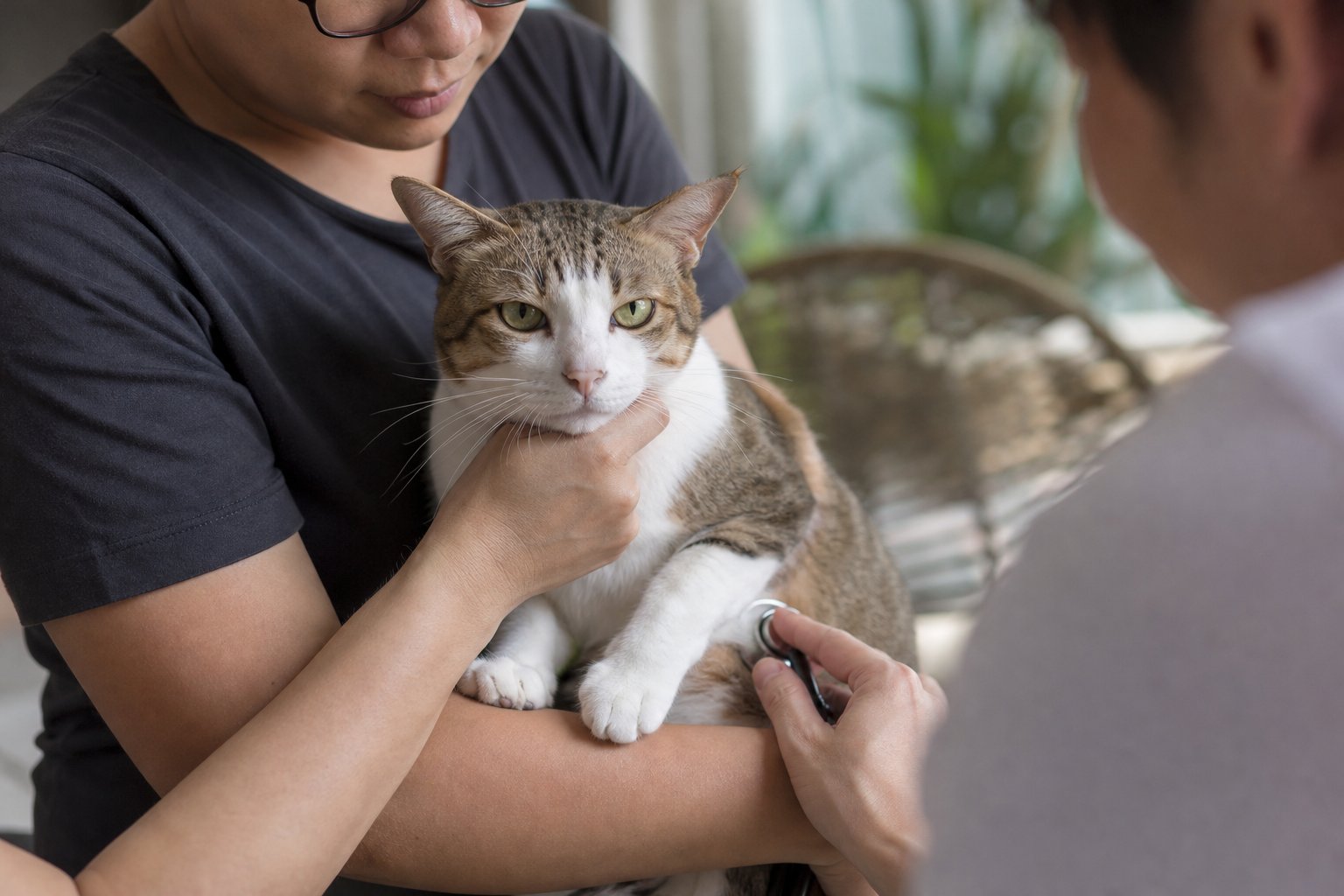
Quick answer: feline arthritis usually does not look like a limp. The common clues are a cat that stops jumping up, hesitates at the edge before jumping down, grooms less, becomes grumpier when touched, or stalls at the litter tray. The three highest-impact steps are controlling weight, adding non-slip surfaces and low steps, and using joint supplements only after a vet assessment. If your cat suddenly cannot walk or drags a hind leg, see a vet immediately.
Why arthritis is easy to miss in cats
Cats are hunters, and hunters hide weakness. A cat in pain will not cry or limp dramatically in front of you; instead it quietly withdraws from anything that hurts. This is why owners often describe an arthritic cat as having "slowed down" or "become lazier" rather than recognising pain.
The joints most commonly affected are the elbows, hips and spine. Degeneration tends to build up slowly over years, so there is rarely the obvious swelling people expect. Risk rises with age — cats from around seven years onwards are more vulnerable — and every extra gram of body weight multiplies the load those joints carry with each jump.
Pain also does not always sit where you expect. A cat that suddenly refuses to be picked up, snaps when you touch its lower back, or no longer tolerates brushing along the hips may be protecting a sore area rather than acting out. Behaviour change is often the earliest — and only — clue you will get.
Five signs you can spot at home
You live with your cat every day, so your observations are genuinely useful diagnostic material. Look for these five patterns:
| Sign | What it actually looks like | Often mistaken for |
|---|---|---|
| Stops jumping up | Used to reach the top of a wardrobe or shelf, now settles only on the sofa or floor | "Getting old means getting quiet" |
| Hesitates before jumping down | Stands at the edge, looks down for several seconds, then climbs or jumps awkwardly | "Scared of heights" |
| Grooms less | Matted, greasy or unkempt fur along the back and base of the tail, especially in long-haired cats | "Too lazy to clean" |
| Mood changes | Snaps when the back or hips are touched, no longer tolerates being lifted or held | "Bad temperament" |
| Litter tray trouble | Pauses before stepping over a high rim, avoids the tray, or toilets beside it | "Being naughty or defiant" |
Two or more of these appearing together is worth a vet conversation. Film your cat walking across the room and jumping down from a sofa — short clips taken at home are often far more revealing than anything your cat will do in a consulting room, where nervous cats frequently freeze or hide.
A practical tip: keep a simple note on your phone. Jot down the date you first noticed the change, which jumps were abandoned, and any handling reactions. Two weeks of notes give your vet a timeline that a rushed appointment never could.
How your vet confirms the diagnosis
There is no single blood test for arthritis, so vets build the picture from several layers:
- History and video. When did the change start? Any falls, slips or injuries? Your home footage fills in what the clinic cannot see.
- Physical examination. The vet watches gait and spine curvature, gently flexes each joint to check range of motion and pain response, and feels for muscle wasting in limbs the cat has been favouring.
- X-rays. These show joint space narrowing, bone spurs and the degree of degeneration, and help rule out fractures, infection or tumours. Sedation is sometimes needed to position a sore cat comfortably for clear images.
- Blood and urine tests. Particularly important before starting any long-term medication or supplement, to confirm liver and kidney function.
Arthritis is generally not cured, and honest vets will say so. The goals are to reduce pain, keep the cat moving, and slow further deterioration. Reassessments matter as much as the first visit: pain scoring is compared visit against visit, which is why periodic home videos are so valuable.
Home upgrades that work in Malaysian homes
Most local homes feature polished tile or porcelain flooring, which is cool and easy to clean but genuinely slippery under a cat's claws. Every skidding landing forces the joints to brace hard, and the extra strain adds up over months. Humid, wet periods — think of a Penang rainy season where floors stay damp — make the surface even more treacherous.
You do not need a renovation. Prioritise these changes:
- Non-slip mats or short-pile rugs along the routes your cat uses most: the landing zone below its favourite perch, in front of the litter tray, and beside food and water bowls. You do not need to cover every floor — cover the two or three spots where landings happen.
- Low steps or a small stool between the floor and the sofa, or between a stool and a desk. Splitting one big jump into two small ones cuts peak impact dramatically.
- A low-entry litter tray. Many trays have rims 15 cm or higher, which an arthritic cat must haul itself over. Swap to a low-sided model or add a ramp in front, and place the tray where no jumping is required to reach it.
- A supportive bed. A thin memory foam mat beats a hard floor, particularly during cooler nights when stiff joints take longer to loosen up.
- Floor-level water and food. Reducing upward jumps throughout the day reduces total joint load.
In a Kuala Lumpur apartment with limited space, stack the changes vertically: one mat under the sofa landing, one step beside it, the tray in the same room, and a bed in a quiet corner. Everything the cat needs on one level turns a painful obstacle course into a single flat loop.
Multi-cat households need extra planning. A slow, sore cat can be bullied away from prime spots by younger, faster housemates. Duplicate resources — at least two litter trays, two water stations, more than one resting place — and keep the older cat's bed in a low, undisturbed corner it can reach without competing for it.
Weight management: the most underrated treatment
For an arthritic cat, controlled weight loss often outperforms supplements. Limbs carry body weight through tiny joint surfaces, so every kilogram shed translates directly into easier movement and less daily pain.
Do it scientifically rather than simply halving the food bowl:
- Calculate a daily calorie target appropriate for your cat's ideal weight, then feed to that target.
- Aim to lose weight gradually over four to eight weeks, not in days.
- Weigh your cat every two weeks to confirm the trend is steady rather than stalled.
- Never crash-diet a cat: rapid weight loss can trigger serious liver problems in felines.
If your cat is already a healthy weight, focus instead on maintaining muscle through gentle daily play — muscle is the shock absorber joints rely on.
Supplements, medication and what never to give
Joint products sold for cats tend to share a similar ingredient list:
- Glucosamine and chondroitin — building blocks of cartilage matrix, though feline-specific research remains limited.
- Green-lipped mussel — contains naturally occurring compounds associated with inflammation control; some cat foods already include it.
- Omega-3 fatty acids (fish oil) — may help modulate inflammatory pathways; the correct dose should be vet-approved.
- Collagen and MSM — generally supportive rather than primary treatments.
Expect four to eight weeks of consistent use before judging whether a supplement helps. If nothing changes after eight weeks, discuss a different approach with your vet rather than doubling the dose yourself. Cats with kidney disease, diabetes or heart conditions need ingredient checks first, especially products high in protein or minerals.
Local pricing varies widely between brands and retailers, so ask your vet or pet shop for current prices rather than budgeting from an old figure.
Never give human painkillers. Paracetamol and ibuprofen are toxic to cats and can cause severe, sometimes fatal organ damage. Steroids and anti-inflammatory drugs are also prescription-only decisions: the choice and dose depend on body weight, age, and liver and kidney status. Never share your own medication with a cat, however small the tablet.
Supplements support comfort; they do not replace a diagnosis or prescribed pain relief.
Everyday handling, play and grooming
The most painful moment for many arthritic cats is not walking — it is being picked up. Adjust how you handle them:
- Support the body horizontally. One hand under the chest, one under the hindquarters, so no leg dangles and the spine stays level.
- Lift from low down. Squat rather than pulling the cat upward from the floor.
- Use a towel or carrier instead of hands when the cat resists, and never restrain a struggling cat.
- Be cautious with nail trims. Twisting sore limbs hurts; ask your vet or a groomer if your cat objects.
Play stays on the ground: drag a wand toy along the floor in short, frequent bursts instead of long sessions that demand leaping. Gentle stroking is fine, but skip the lower back and hips if your cat reacts, and stop massage immediately if a touch draws a flinch or a bite.
When to see a vet
Arrange a prompt appointment if you notice any of the following:
- Sudden inability or unwillingness to walk, or one hind leg dragging
- Visible lameness, a swollen joint, or crying out when touched
- Refusing to stand, struggling to get into the litter tray, or toileting outside it
- Loss of appetite, vomiting, or weight loss alongside mobility changes
- A fall or slip followed by abnormal movement
- Two or more of the five home signs persisting for more than a couple of weeks
If home modifications and supplements are all in place but your cat still shows clear pain, refuses to move, or its appetite and toileting are affected, ask your vet about escalating care — prescription pain relief, and where available, complementary options such as laser therapy or acupuncture.
Key takeaways
- ✅ Arthritis in cats shows up as behaviour change, not necessarily a limp
- ✅ Two weeks of avoided jumps or hesitant landings justifies a check-up
- ✅ Non-slip mats and low steps are the cheapest, fastest fixes
- ✅ Steady, gradual weight loss relieves joints directly
- ✅ Supplements are an add-on — check with your vet first
- ❌ Never give a cat human painkillers such as paracetamol or ibuprofen
- ❌ Do not dismiss persistent discomfort as "just getting old"
Related reading
- Cat Constipation in Malaysia: The 48-Hour Rule, Red Flags and What Actually Helps
- Cat Heart Disease in Malaysia: Sleep Breathing Count, HCM Early Signs and When to Rush to the Vet
- Cat Kidney Disease in Malaysia: Early Signs, Prevention and Everyday Care
- Cat Chronic Disease Early Signs in Malaysia: 7 Daily Checks and a 4-Week Log
- Early Signs of Chronic Disease in Cats: 7 Daily Checks and a 4-Week Record Sheet
- Cat Dehydration in Malaysia: Home Skin-Turgor Test, 7 Causes and Emergency Signs
- Cat Pancreatitis in Malaysia: Symptoms, fPLI Testing, Treatment and Home Recovery
- Cat Ringworm in Malaysia: Symptoms, Treatment and Home Cleaning Guide
- Cat Ringworm in Malaysia: Signs, Treatment and Home Cleaning Guide
- Cat Symptom Checker Malaysia: 12 Common Signs and a Green-Amber-Red Triage Table