
If your cat is eating more and still getting thinner, hyperthyroidism is the first condition to rule out. It is one of the most common hormonal disorders in cats aged eight and over, caused by an overactive thyroid gland that speeds up the whole body's metabolism. A blood test confirms it, four treatment routes exist, and early action protects your cat's kidneys and heart.
What hyperthyroidism actually does to a cat
The thyroid is a small gland sitting on either side of the cat's neck. Its job is to release hormones that set the pace of metabolism, controlling how quickly the body burns energy, how fast the heart beats and how quickly food moves through the gut.
When that gland becomes overactive, the body's pace is turned up and stays up. Food is burned faster than it is absorbed, so appetite rises while body fat and muscle are used up. The heart works harder, the cat feels permanently warm and wired, and the gut speeds along, sometimes leading to vomiting or loose stools. Nutrients arrive in good quantity but are spent almost immediately, which is why the coat often suffers even though the cat is eating well.
This condition is strongly associated with middle-aged and older cats, typically those eight years and older, and around one in ten senior cats shows thyroid-related problems. Cats that live entirely indoors are often reported as being affected a little more often, and some purebred lines may also be slightly over-represented. None of that matters much at home: what matters is that a cat past the age of eight who changes in appetite, weight or temperament deserves a blood test rather than a shrug.
Five early warning signs
Symptoms creep up gradually, which is exactly why owners miss them. The cat still plays, still greets you, still finishes dinner. Here are the signals that matter, in the order you are most likely to notice them.
1. Eating more but losing weight. This is the textbook sign. The food bowl empties faster, the cat may beg or hover at meal times, yet the backbone and hip bones become easier to feel over the following weeks. If you have ever thought "good appetite, must be healthy", stop and weigh the cat instead.
2. Drinking more and passing more urine. A water bowl that used to last a day now lasts half a day. The litter tray feels heavier, clumps are bigger, or the tray is noticeably wetter. Track both together, because thirst alone has many causes but thirst plus weight loss narrows things down quickly.
3. Restlessness and overactivity. Some cats become jittery, unable to settle, pacing at night or yowling more than usual. Older cats get written off as "just cranky" or "going senile" when they are actually over-medicated by their own hormones.
4. Dull, rough coat and extra moult. Fur loses its gloss, feels dry to the hand, and you find more hair on the sofa or bedding. The diet may look generous, but the body is spending its nutrients on keeping the engine running rather than on skin and coat.
5. Vomiting and diarrhoea. An irritated gut speeds through food, so hairballs, vomit and soft stools may increase. When digestive upset sits alongside weight loss and thirst, the picture becomes much more concerning.
A simple way to monitor at home is to keep a one-line weekly record:
- Weigh the cat at the same time, on the same scale, and write the number down.
- Mark the water bowl with tape at the morning level and check it at night.
- Count litter clumps on an average day once a week.
- Note appetite, energy and any vomit on the same sheet.
- Take a short video of anything odd, such as night-time vocalising, to show the vet.
That sheet is worth more than memory at a consultation, because change is easier to see on paper than in your head.
How a vet confirms the diagnosis
Suspecting the disease and proving it are different steps. A consultation usually starts with a physical exam: the vet feels the neck area, listens to the heart, checks body condition and looks for muscle wasting.
The key test is a blood sample measuring thyroid hormone, most commonly total T4. Most cats with clear hyperthyroidism show an elevated level. Some early or mild cases sit in a borderline zone, in which case your vet may repeat the blood test after a short interval rather than treat on an uncertain result. Because symptoms overlap with several other conditions, a broader panel usually runs alongside it, including kidney values and blood sugar, so the vet can see the whole picture instead of one number.
Diabetes is the condition most often confused with hyperthyroidism, since both increase drinking and appetite. The differences help but never settle it: hyperthyroid cats tend to lose weight more sharply and have a faster heart rate, while diabetic cats may walk with their hind feet flat on the floor rather than on their toes. Blood testing is what separates them, and a cat showing both patterns needs treatment quickly rather than a guess.
Bring your home notes to that appointment. Weight trend, water intake, appetite changes and a video of restless behaviour give the vet a head start, especially with a cat that sits calmly in the consulting room and shows none of its usual tricks.
The four treatment options, compared
There is no single right answer for every cat. Age, kidney function, temperament, how easily you can give a daily tablet and how your cat handles handling all shape the decision. The general principles of each route look like this:
| Treatment | How it works | Strengths | Limitations | Often chosen when |
|---|---|---|---|---|
| Anti-thyroid medication | Slows hormone production day by day | Non-invasive, dose adjustable | Long-term daily dosing, regular blood tests needed | First diagnosis, mild to moderate cases, or when kidney function is unsettled |
| Surgery | Removes the enlarged thyroid tissue | One-off procedure, fast result | Requires general anaesthesia, recurrence is possible | Medication not tolerated, gland clearly enlarged, cat otherwise stable |
| Radioactive iodine | Selectively destroys overactive thyroid tissue | High success rate, low relapse rate | Needs a facility with the right equipment, plus isolation afterwards | Owner wants a definitive answer, or other routes have failed |
| Low-iodine prescription food | Cuts the raw material for hormone production | Non-invasive, easy to feed | Must be the only food given, no mixing | Alongside medication, or for mild cases the vet selects it for |
A few practical points on each.
Medication is the most common starting point because it is reversible and adjustable. Cats usually take it once or twice daily, in tablet or liquid form. Consistency matters more than anything: a skipped week can send hormone levels swinging back up. Blood tests in the first two to four weeks confirm the dose is right before things settle into a longer interval.
Surgery removes the abnormal tissue and can produce a rapid improvement, but it needs a full anaesthetic, so the cat must be well enough to tolerate it. Some cats regrow thyroid tissue later, which means blood tests remain part of life afterwards.
Radioactive iodine is taken by mouth or injection and concentrates in the overactive cells, leaving most other tissue alone. It is highly effective, but it requires a facility licensed and equipped to handle it, so expect a referral rather than a same-clinic appointment. Afterwards the cat must stay isolated until the radiation has dropped to safe levels, commonly around seven to fourteen days, with no home visits during that period.
Low-iodine food is the gentlest option, but it only works if it is your cat's entire diet. One treat, one scrap from the table or one mouthful of a housemate's bowl can undermine it. If your cat is fussy, ask your vet about a gradual transition instead of a sudden swap.
Costs differ between clinics, regions and facilities, so treat any figure you see online as indicative only and ask a Malaysian vet or pet retailer directly for current pricing on food, medication and any referral procedure.
The kidney link, and why monitoring never stops
Thyroid hormone and the kidneys are tightly coupled. While hormone levels are high, the kidneys receive a boosted blood flow that can prop up their function and hide underlying disease. Once treatment brings the thyroid back to normal, that boost disappears, and kidney values on the blood panel can rise.
This is not a reason to avoid treatment. It is a reason to monitor. A sensible plan checks thyroid levels and kidney values together, so any change in kidney function is caught early and the dose or approach is adjusted. Cats that start with already-weak kidneys may be handled more cautiously, often with medication first rather than a permanent route, because the response needs to be watched closely.
Medication also deserves a short word about side effects. Some cats vomit or lose appetite in the first weeks, and in rare cases the drug affects white blood cell counts. This is why the early blood recheck exists: it catches both an under-dosed cat and an adverse reaction. Most cats settle once the dose matches their body. Never stop tablets or change the amount on your own, even if your cat seems perfectly fine, because hormone levels can rebound quickly.
Feeding, hydration and daily care at home
While diagnosis and treatment belong to the clinic, everything around them happens at home.
Do not simply feed more. Hand-feeding a cat that is losing weight feels caring, but if the cause is hormonal, extra food mostly feeds a sped-up metabolism. Get the blood test first, then feed to the plan your vet sets.
Make the diet unambiguous. In a multi-cat household, cats graze off each other's bowls, so a prescription diet can quietly fail. Feed measured portions in separate spots, pick the bowls up afterwards, and keep a note of who ate what. In a small Kuala Lumpur apartment where two or three cats share one feeding area, a raised baby gate or feeding in separate rooms is often the simplest way to be sure each cat gets its own food.
Track water honestly. Mark the bowl in the morning and read it at night. In Penang's humid rainy season, a cat's drinking pattern can shift for ordinary environmental reasons, so build a normal baseline during calm weather rather than trying to interpret a single odd week. Sudden, sustained increases that coincide with weight loss still warrant a vet visit.
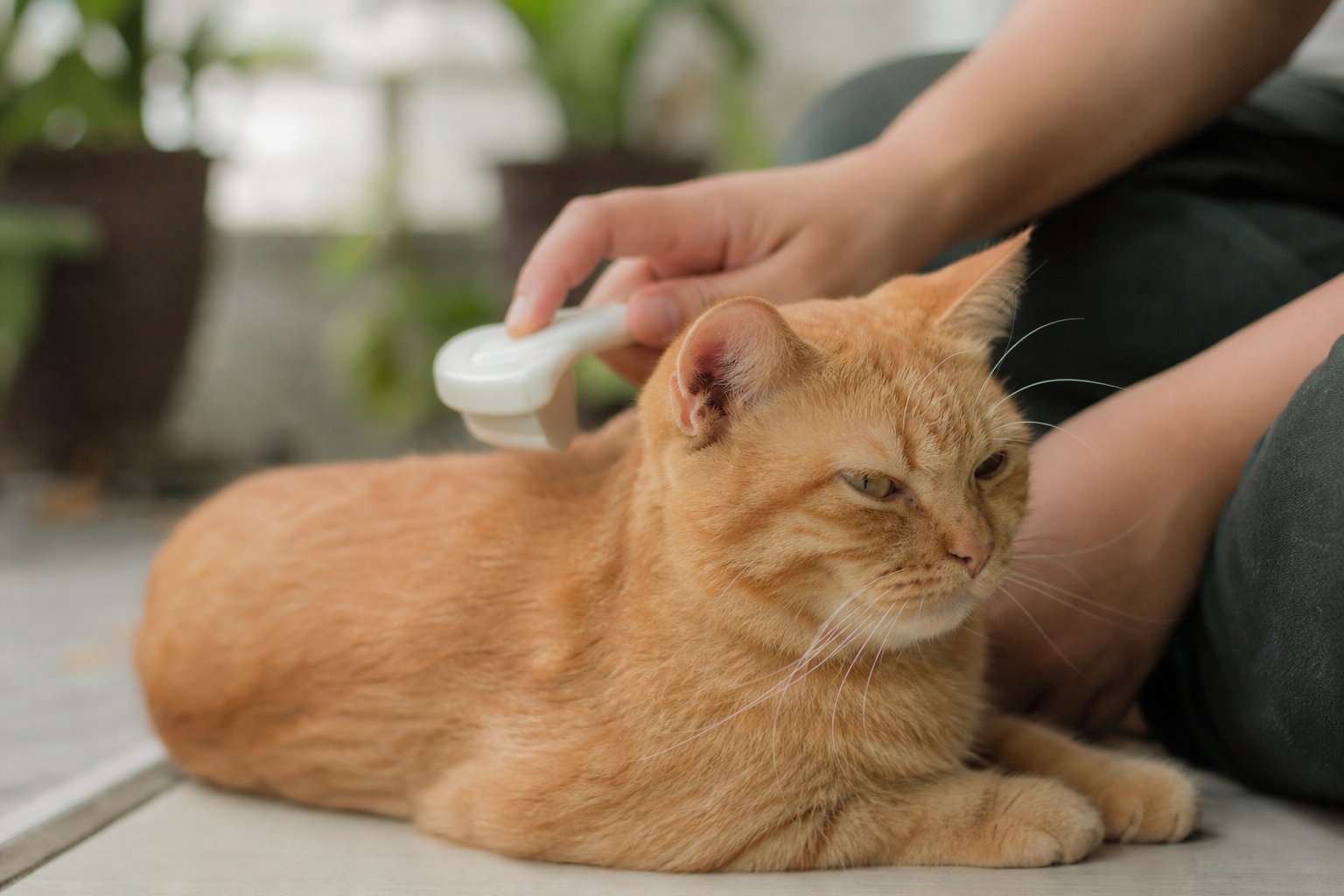
Keep the coat workable. A soft brush most days removes loose fur, gives you hands-on contact for feeling weight changes, and lets you notice skin condition early. Cats with rough, moulting coats benefit from the routine even when the underlying issue is being treated elsewhere.
Watch meal behaviour. Time how long your cat eats, note whether it finishes, and record any vomit with the time and roughly what came up. These small details often explain more at a follow-up visit than a general statement that "the appetite is off".
Screening routine for cats aged eight and above
Hyperthyroidism cannot be prevented, but it can be found early, and early finding is what turns a scary diagnosis into a manageable one. A workable routine for an older cat:
- A basic health check every six months for cats aged eight and over.
- A full health screen once a year, including a thyroid hormone test.
- A weight recorded at every check, plus a home log between visits.
- Kidney values checked alongside thyroid values at each monitoring round.
- An immediate test whenever appetite, weight or thirst changes noticeably, rather than waiting for the next scheduled visit.
Before each appointment, write down your observations: current weight and trend, water intake, appetite, energy, vomiting or stool changes, and any medicines or supplements given. Bring the cat in with its normal food history, and mention every treat, as those matter more than owners usually expect.
When to see a vet
Book an appointment promptly if your cat shows any of the following, especially together:
- Appetite up while weight keeps dropping.
- Noticeably more drinking and far wetter litter clumps.
- Restlessness, night-time pacing or constant vocalising.
- A coat that has gone rough, dull or patchy.
- Repeated vomiting or diarrhoea lasting more than a day or two.
- Any of the above in a cat aged eight or older.
Seek urgent care the same day if your cat is panting, very weak, collapsed, refusing food entirely, or vomiting repeatedly, as these signs should not wait for a routine slot. For milder changes, do not sit on them for months; the longer hyperthyroidism runs untreated, the more strain it places on the heart and kidneys.
This article is general information only and is not a diagnosis or a substitute for an examination. Please consult your own veterinarian about your cat's condition, testing and treatment choices.
Related reading
- Pet Skin Allergy and Itch in Malaysia: Flea, Food and Environmental Triggers
- Cat Dental Care in Malaysia: Brushing, Tartar, Bad Breath and Gum Disease Guide
- Cat Deworming in Malaysia: Schedules, Spot-Ons, Tablets and Red Flags
- Cat Fleas in Malaysia: Symptoms, Treatment and Year-Round Prevention
- Cat Neutering in Malaysia: Timing, Surgery Prep and a 7-Day Recovery Plan
- Cat Stomatitis (FCGS) in Malaysia: Symptoms, Full-Mouth Extraction and Recovery
- Cat Vaccines in Malaysia: FVRCP, Rabies & Kitten Schedule Explained
- Cat Vaccines in Malaysia: Core Shots, Kitten Schedule and What to Watch
- Dog Heartworm Prevention in Malaysia: Year-Round Mosquito Protection, Medication Types and Screening Schedule