
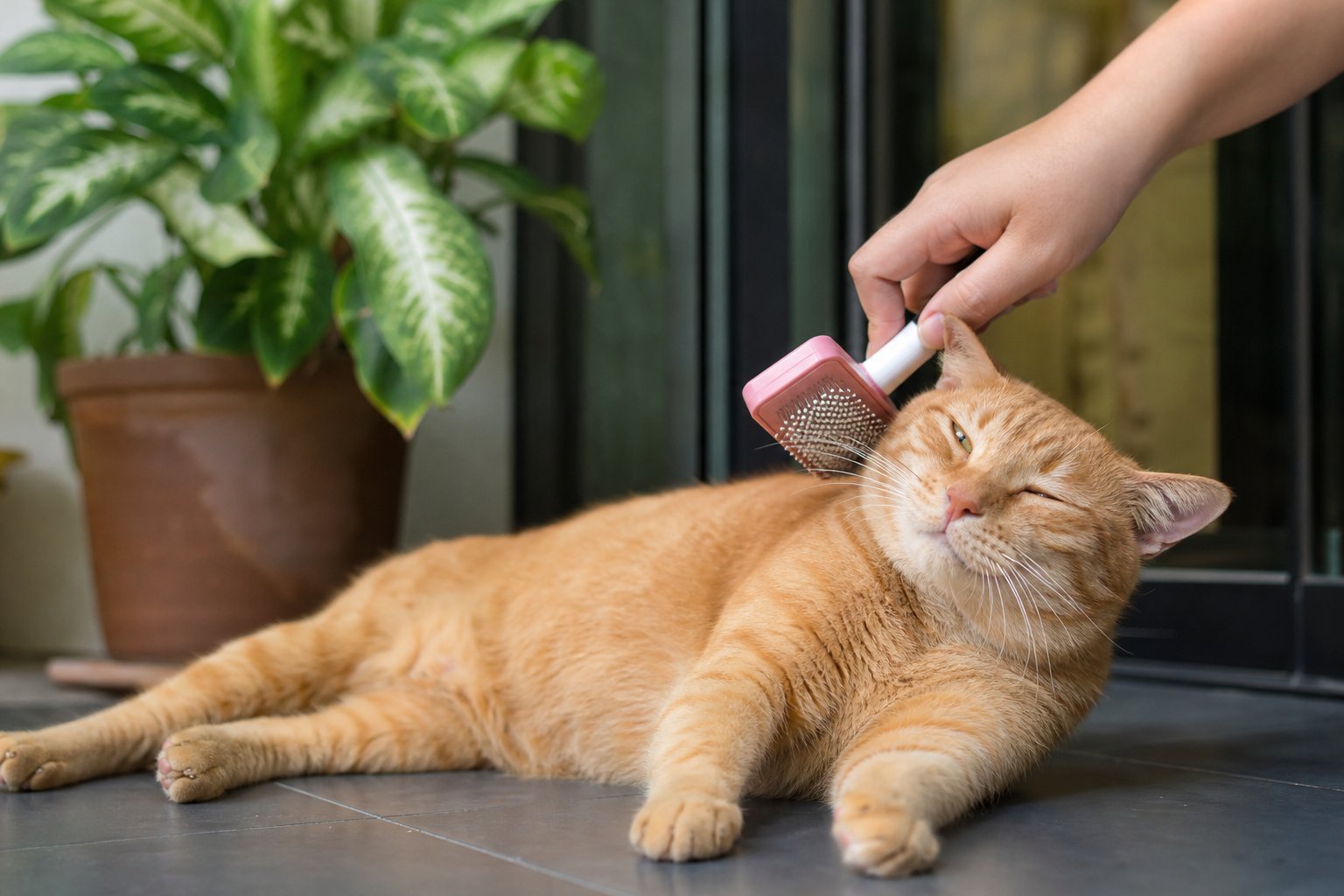
Quick answer: both indoor and outdoor cats need parasite control. A workable baseline for most households is monthly external protection plus internal deworming every three to six months, adjusted by your vet for lifestyle, mosquito activity, multi-pet homes and any raw-meat feeding. Below is the full guide: the parasites that matter, product options, schedules, home cleaning, and the signs that mean same-day veterinary care.
Why indoor cats still need deworming
"My cat never goes out, so he doesn't need deworming" is one of the most common assumptions owners make, and it is also the one that leads to the nastiest surprises. Parasites do not need your cat to open the front door.
They arrive by other routes:
- Shoes, clothing and bags. Eggs and flea larvae are microscopic and stick to fabric and soles, then drop onto floors, rugs and cat beds.
- Mosquitoes. A mosquito that flies through an open window or a gap in a grille can transmit heartworm, a serious and sometimes fatal infection in cats.
- New pets and visitors. A visiting dog, a newly adopted cat, or a foster animal carrying fleas will introduce parasites to everyone in the household.
- Raw or undercooked food. Uncooked meat and organs can carry parasite stages that a normal kibble diet would not.
- Multi-cat contact. Cats that groom each other will share whatever one of them picks up, including tapeworm larvae carried inside fleas.
A high-rise unit limits roaming but does not stop these pathways. In a compact Kuala Lumpur apartment, the practical risk is not a cat hunting in a field; it is eggs arriving on your own shoes from the corridor and settling into the gaps of a fabric sofa.
The main parasites to know
Knowing what you are defending against helps you understand why a product covers some things and not others. Broadly, parasites split into internal (intestinal and organ) and external (skin and coat).
| Parasite | Type | How cats pick it up | What you may notice |
|---|---|---|---|
| Roundworm | Internal | Ingesting eggs from the environment or soil; kittens can get it through milk | Vomiting, loose stools, a swollen belly, white thread-like worms in vomit or stool |
| Hookworm | Internal | Skin contact with contaminated soil; ingestion | Weight loss, anaemia, dark or bloody stools |
| Tapeworm | Internal | Swallowing infected fleas while grooming | Rice-like segments around the anus or in stool; rear-end scooting |
| Giardia | Internal | Contaminated water, soil or contact with other animals | Intermittent diarrhoea, sometimes with mucus |
| Coccidia | Internal | Common in newly adopted kittens from shelter or street backgrounds | Diarrhoea, dehydration, poor growth in kittens |
| Heartworm | Internal | Mosquito bite | Often no early signs; coughing, lethargy, sudden decline in severe cases |
| Fleas | External | Contact with other animals or the environment | Intense scratching, black flea dirt in the coat, allergic skin reactions, anaemia in heavy infestations |
| Ticks | External | Outdoor exposure, walking through vegetation | Visible attached parasites, skin irritation, potential blood-borne infections |
| Ear mites | External | Close contact with an infected animal | Head shaking, scratching, dark waxy discharge in the ears |
Two points deserve emphasis. First, tapeworm is closely linked to fleas: a cat that swallows a flea while grooming can develop tapeworm, so flea control and internal deworming are connected rather than separate jobs. Second, heartworm is mosquito-borne and has no reliable over-the-counter cure in cats, which makes prevention far safer than treatment.
Signs to watch for
Cats are skilled at hiding discomfort, so parasite infections are often missed until they are advanced. Check for:
- Vomiting or diarrhoea that persists beyond a day, especially with mucus or visible worms.
- A belly that looks distended while the rest of the body stays thin, a classic sign in kittens.
- Weight loss despite a normal or increased appetite.
- A dull, rough coat, or a cat that grooms obsessively at one area.
- Scratching at the ears, head shaking, or dark discharge inside the ear canal.
- Black specks in the coat that dissolve into a reddish smear when wiped with a damp tissue, which is dried flea faeces rather than dirt.
- Scooting or licking around the anus, or white rice-like segments on the fur.
- Pale gums, weakness or breathlessness, which suggest anaemia from heavy worm or flea burdens.
- Lethargy and poor appetite in a young kitten, which can escalate quickly.
Keep a simple record. Note the date of the last deworming, the product used, your cat's weight at the time, and anything unusual you saw in the litter tray. A photo of an abnormal stool sample is genuinely useful to a vet and takes seconds to capture.
Spot-on, tablet or combination: choosing a format
There is no single "best" product for every cat. The right choice depends on what you need to cover, how tolerant your cat is of handling, and what your vet recommends for that individual animal.
| Comparison | External spot-on | Tablet or oral treatment | Combination products |
|---|---|---|---|
| How it is given | Applied to the skin at the back of the neck | Swallowed by mouth | One product covering internal and external parasites |
| Main strength | Convenient, no swallowing struggle, good flea and tick cover | Direct action against intestinal worms | Fewer appointments, easier routine for owners |
| Key limitation | No bathing or swimming for around 48 hours; keep away from the mouth | Some cats resist tablets; wrong technique risks oesophageal irritation | Coverage varies by brand; not every product covers every parasite |
| Practical notes | Separate cats for a few hours after dosing so they cannot groom each other | Give with a small amount of water and watch for 10–15 minutes to confirm swallowing | Ask your vet which parasites the specific product actually covers |
| Weight matters | Yes, dose is weight-banded | Yes | Yes |
About tablets. A swallowed tablet needs water to travel properly. If a cat fires a tablet down without adequate liquid, it can lodge in the oesophagus, dissolve there and cause painful inflammation. Give the tablet with a little water, then stay with your cat for ten to fifteen minutes to confirm it actually swallowed rather than quietly holding the tablet in its mouth.
About spot-ons. Part the fur at the back of the neck until you can see skin, apply directly onto the skin rather than onto the coat, and press gently afterwards. Do not bathe or let your cat swim for roughly two days. Use an Elizabethan collar for a couple of hours if your cat tries to lick the site.
Critical safety rules. Never use a dog product on a cat: formulations differ and errors can be fatal. Never dose by guesswork; weigh your cat first. Avoid deworming at the same time as vaccination, leaving about one to two weeks between them. And be careful with household insecticides and some "natural" sprays: certain pyrethroid-type ingredients are toxic to cats, so only use products confirmed as cat-safe and ventilate the room before letting your cat back in.
If a product has been used incorrectly and your cat starts drooling, trembling, seems unsteady on its feet or has a seizure, treat it as an emergency.
Deworming schedules: kittens, adults and high-risk cats
Kittens need a denser starting plan. Parasites can pass from a mother to her kittens, and newly adopted kittens from shelters or street backgrounds carry a higher burden than household-born pets. A typical starter pattern looks like this:
| Age or stage | What usually happens |
|---|---|
| From around six weeks | First internal deworming, arranged by the vet or shelter |
| Around eight weeks | First external parasite treatment if appropriate |
| Repeat every two weeks | Two to three internal deworming rounds in early weeks, to catch larvae as they mature |
| Ongoing | Move onto the regular monthly external and periodic internal routine |
The logic behind repeating at two-week intervals is biological: the first dose kills the worms present, but eggs laid before treatment can hatch afterwards, so a follow-up is needed to catch the newly matured generation. Never extend or shorten this on your own; follow the plan attached to your kitten's weight and product.
Adult cats settle into a maintenance rhythm. For most, external flea and tick prevention is given monthly, while internal deworming is done every three to six months. Cats that live entirely indoors with no raw feeding and no other pets may be able to stretch internal deworming to every six months, but that decision belongs to your vet.
Mosquito season affects heartworm prevention. Because heartworm is transmitted by mosquitoes, prevention is a year-round conversation in a warm climate rather than a summer-only task. In Penang's rainy season, damp floors, standing water around drains and persistent humidity keep mosquitoes busy for extended periods, and a cat with access to a balcony or a window that stays open at night is exposed. Ask your vet whether your cat's situation warrants continuous heartworm prevention.
High-risk cats need more attention, not less:
| Your cat's situation | Risk level | Suggested direction |
|---|---|---|
| Kitten, newly adopted | High | Vet-arranged starter course plus a stool sample check |
| Goes outdoors, balconies or corridors | High | Regular internal and external prevention |
| Hunts birds, lizards or rodents | High | Regular internal and external prevention |
| Eats raw or undercooked meat | Elevated | Vet-guided internal deworming plus strict food hygiene |
| Lives with another pet that has fleas | Elevated | Treat every animal at the same time and clean the home |
| Indoor-only, no other risk factors | Moderate | Annual check-up with prevention reviewed each time |
| Pregnant or nursing | Special | Only vet-specified products; many treatments are unsuitable |
| Currently symptomatic | Urgent | Same-day examination and a stool test before self-treating |
Applying spot-on and giving tablets safely
A four-step routine removes most application errors:
- Part the fur at the back of the neck, an area your cat cannot reach with its tongue, until bare skin is visible.
- Apply onto the skin, not the hair. Empty the whole applicator as directed rather than saving part of it.
- Press gently afterwards to help the product spread, then wash your hands.
- Separate and protect. Keep cats apart for a few hours so they cannot groom the treated spot off each other, fit a collar if needed, and skip bathing for about 48 hours.
For tablets: give with water, do not chase your cat around the house immediately afterwards, and stay present for ten to fifteen minutes. If the tablet comes back up, or your cat keeps swallowing repeatedly without settling, contact your vet rather than quietly repeating the dose.
Breaking the flea and worm cycle at home
Treating the cat without treating the environment is why infestations come back. Adult fleas on the animal are the visible minority; eggs and larvae live in bedding, carpet pile and sofa seams.
- Vacuum thoroughly on treatment day: under the bed, along sofa crevices, carpet edges and inside cat beds. Empty or discard the vacuum bag immediately afterwards.
- Wash bedding hot. Cat blankets, covers and soft toys washed at around 60°C lose eggs that a cold cycle leaves alive. Do this every one to two weeks even when nothing looks wrong.
- Empty and clean litter trays daily. Look for white worms, unusual consistency or blood, and wash the tray itself regularly.
- Treat every pet together. Fleas on a dog will simply move to the cat.
- Use environmental sprays carefully. Only products confirmed safe for cats, ventilated properly, and with your cat kept out of the room until the area is dry.
- Mop hard floors and reduce damp. In prolonged rainy weather, drying floors and bedding promptly reduces the humid microclimates that eggs and larvae prefer.
When to see a vet
Seek veterinary help promptly in any of these situations:
- Visible worms in vomit or stool, or tapeworm segments around the anus.
- Diarrhoea lasting more than a day, especially with blood or mucus, or a cat that stops eating for two consecutive days.
- A distended belly with weight loss, or a kitten that is listless and dehydrated.
- Persistent vomiting, diarrhoea or unsteadiness within 48 hours of applying a spot-on.
- Drooling, trembling, tremors or a seizure after any parasite product, including household sprays, which suggests poisoning.
- Large areas of redness, hair loss, open sores, or relentless scratching.
- Constant head shaking or ear scratching, which may mean an ear mite infection needing prescription ear medication.
- Pale gums, weakness or collapse, which can indicate severe anaemia; heavy flea infestations can be life-threatening in kittens.
- A pregnant or nursing cat needing treatment, since product safety must be confirmed by a vet first.
- A newly adopted cat that has not yet been examined and dewormed.
Bring your records: the product name, the date given, your cat's weight, and a photo or fresh sample of any abnormal stool if you can collect one safely.
Always consult a registered veterinarian for diagnosis and treatment. This article is general information for cat owners and does not replace a veterinary examination, prescription or individual treatment plan for your cat.
Related reading
- Pet Health Guide Malaysia: Annual Checkups, Blood Tests and When to Worry
- Cat Vaccines in Malaysia: FVRCP, Rabies & Kitten Schedule Explained
- Pet Skin Allergy and Itch in Malaysia: Flea, Food and Environmental Triggers
- Cat Chronic Disease: The Vet Visit Checklist for Malaysian Cat Owners
- Cat Dental Care in Malaysia: Brushing, Tartar, Bad Breath and Gum Disease Guide
- Cat Diabetes in Malaysia: Warning Signs, Blood Sugar Control and Remission
- Cat Fleas in Malaysia: Symptoms, Treatment and Year-Round Prevention
- Cat Neutering in Malaysia: Timing, Surgery Prep and a 7-Day Recovery Plan
- Cat Stomatitis (FCGS) in Malaysia: Symptoms, Full-Mouth Extraction and Recovery
- Cat Vaccines in Malaysia: Core Shots, Kitten Schedule and What to Watch