
German Shepherd
German Shepherd · Dog · Malaysia
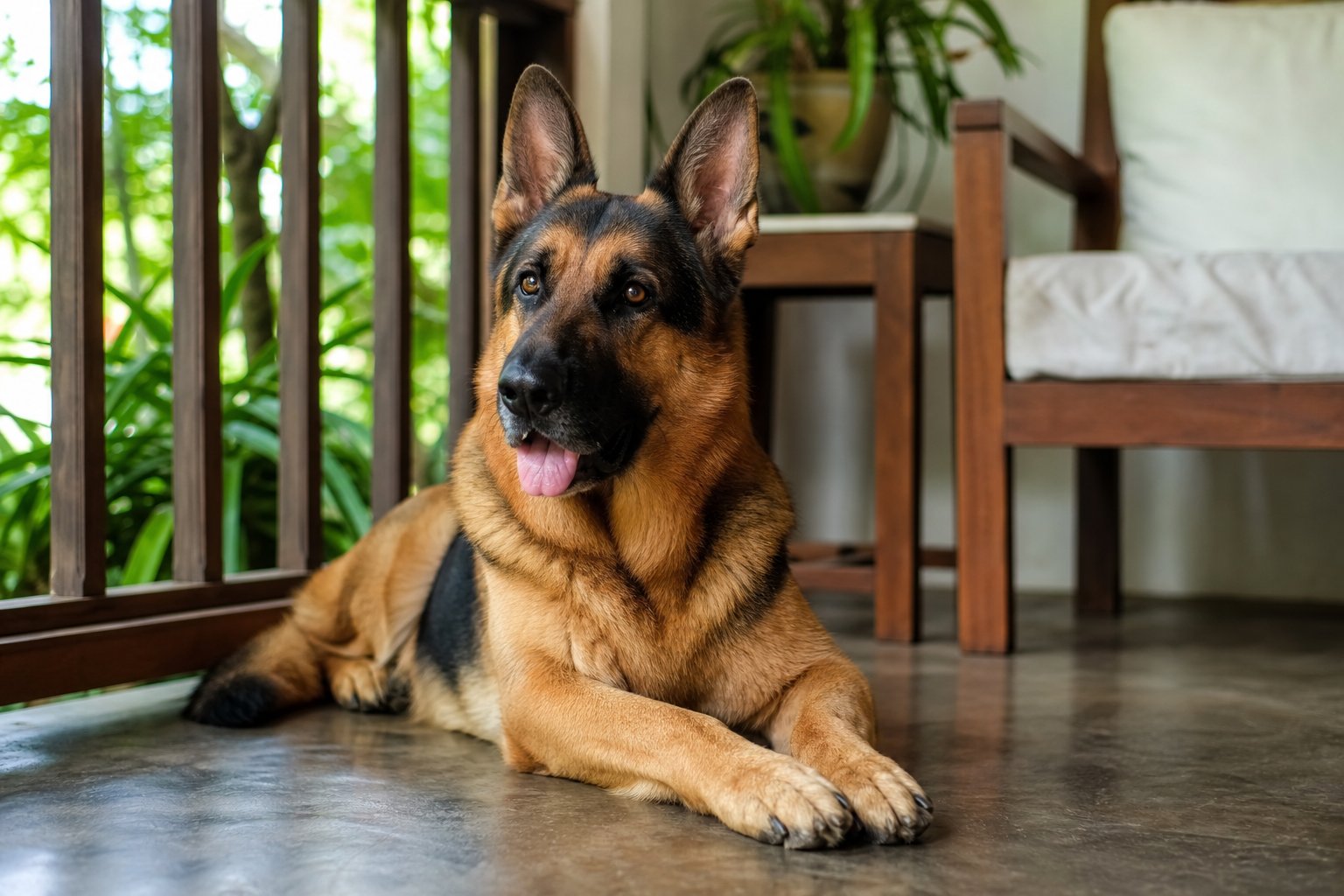
Quick answer
German Shepherds in Malaysia need a cool indoor space, early-morning or evening exercise, and regular grooming to manage their thick double coat in the hot, humid climate. Watch hips, elbows, and digestion closely.
Quick facts
- Origin
- Germany
- Size
- Large
- Lifespan
- 9-13 years
- Weight
- Not documented here; ask your vet to assess body condition rather than guessing
- Coat
- Thick double coat that sheds heavily and traps heat in humid weather
- Price guidance
- Ask local breeders for a current quote; prices vary with papers, colour, size and availability.
Personality
- Loyal
- Alert
- Intelligent
- Confident
- Protective
The German Shepherd is a loyal, intelligent working breed that adapts well to Malaysian homes when owners respect the climate. Heat and humidity shape almost every care decision here, from walk timing to grooming frequency. This guide covers practical, local care for condo and landed-home owners alike.
Temperament in a Malaysian Home
German Shepherds are confident, alert and deeply loyal, forming strong bonds with their families while staying wary of strangers. That protective instinct is useful but needs gentle direction, especially in apartments and condos where neighbours, lift lobbies and shared corridors are part of daily life. They are intelligent enough to learn quickly, which means boredom turns into barking, chewing or pacing. In Malaysia's hot climate, a restless GSD left in a warm room may become irritable, so pair mental work with a cool resting spot. Early socialisation with visitors, other dogs and household sounds keeps their guarding nature balanced. They generally do well with children when introduced calmly and supervised, and they thrive on routine and clear household rules.
Daily Life in Malaysia's Climate
A German Shepherd's day in Malaysia should revolve around avoiding the hottest hours. Keep your dog indoors with fans or air-conditioning and good ventilation, and let them rest on cool tiled floors rather than hot balconies. Short, useful training games and scent work burn energy without overheating. Condo and apartment owners should plan lift trips and toilet breaks carefully, avoiding midday pavement that can burn paws. Because the double coat traps heat, watch for heavy panting, drooling or sluggishness and move the dog somewhere cooler immediately. Never leave a GSD in a parked car, even briefly. A predictable routine of cool rest, early walks and evening activity keeps daily life calm and comfortable.
Grooming for Humidity and Shedding
The German Shepherd's thick double coat is the biggest grooming challenge in Malaysia. Brush several times a week with a slicker or undercoat rake, and daily during moulting, to pull out loose undercoat before it lands on floors and furniture. Regular brushing also improves airflow near the skin, which helps in humid weather. Bathe only when needed, using a dog shampoo, and dry the coat thoroughly because damp undercoat can irritate skin in a humid climate. Check and clean ears regularly, since warmth and moisture encourage wax and odour. Trim nails so walking on hot pavements stays comfortable, and wipe paws after outdoor walks. Inspect skin folds and paws for redness, and keep grooming sessions short and calm.
Exercise Around Heat and City Living
German Shepherds need real daily exercise, but in Malaysia timing matters more than distance. Walk early morning or after sunset when pavements have cooled, and test the ground with your hand before heading out. Mix brisk walks with training drills, scent games and controlled play to tire the mind as well as the body. In condos, use lifts and quiet corridors sensibly, and keep leads short around other residents. Avoid intense fetch or running during the hottest part of the day, and carry fresh water on every outing. Watch for excessive panting, slowing down or reluctance to continue, and stop immediately. Consistent moderate exercise beats occasional intense sessions, especially for growing dogs and older dogs with joint sensitivity.
Training a Thinking Breed
German Shepherds learn fast and enjoy having a job, so short, frequent sessions work better than long drills, particularly in warm weather. Focus on calm obedience, loose-lead walking, recall and settling quietly at home, since these skills matter most in Malaysian apartments and shared spaces. Use positive reinforcement with food, play or praise, and keep sessions brief and cool. Socialise steadily with visitors, delivery riders, other dogs and household noises so their natural wariness stays manageable. Mental work such as scent games, puzzle feeders and simple tricks tires them without heat stress. Be consistent with household rules and involve everyone in the home. If guarding, barking or pulling becomes difficult, seek a qualified local trainer early rather than waiting for habits to harden.
Feeding and Hydration
Feed a complete, balanced diet suited to your dog's age, size and activity level, and measure portions to keep weight healthy, since extra weight strains hips and elbows. In Malaysia's humidity, store dry food in a sealed container in a cool, dry place and check for staleness or pests. Fresh water must be available at all times, and bowls should be refilled more often in hot weather. Some owners feed smaller meals twice daily rather than one large meal, and avoid vigorous exercise right after eating. Treats should be small and counted within the daily ration. If your GSD is a fussy eater in the heat, offer food during cooler hours and speak to your vet before changing diets or adding supplements.
Health Watch in a Tropical Climate
German Shepherds are generally hardy but have well-documented breed tendencies, including hip and elbow dysplasia, which owners should monitor through gait and willingness to move. Heat is a constant factor in Malaysia, so learn the signs of overheating and act quickly. Watch for vomiting, a bloated tense abdomen or drooling, which need immediate veterinary attention. Skin and ear issues are common in humid conditions, so check regularly and keep coats dry. Keep parasite prevention current as advised by your local vet, and schedule routine check-ups. Because the breed can hide discomfort, note small changes in appetite, movement or mood. Early veterinary advice is always better than waiting, especially for joint or digestive concerns.
Hip and elbow dysplasia
Watch for: Limping, hopping on hind legs, stiffness after rest or reluctance to walk or climb.
Care: Keep weight healthy, choose moderate low-impact exercise, avoid rough play on slippery floors, and have your vet assess any lameness early.
Heat stress and overheating
Watch for: Heavy panting, drooling, weakness, confusion or collapse, especially after midday activity.
Care: Exercise in cool hours, provide shade and constant water, keep the dog indoors with ventilation, and never leave them in a parked car.
Bloat and digestive upset
Watch for: Vomiting, a bloated tense abdomen, drooling, restlessness or unproductive retching.
Care: Feed smaller meals, avoid vigorous exercise right after eating, and treat these signs as urgent veterinary matters.
Ear and skin irritation
Watch for: Head shaking, ear odour, scratching, redness or damp patches under the coat.
Care: Dry the coat thoroughly after bathing or rain, clean ears regularly, brush often for airflow, and ask your vet about persistent irritation.
Choosing a German Shepherd in Malaysia
Before choosing a German Shepherd, be honest about your home, schedule and budget for long-term care. These dogs need daily exercise, training and cool indoor space, so a condo owner must plan lift routines and safe outdoor times. Meet the dog or puppy in person, ask about health history and temperament, and observe how they move and interact. Avoid any breeder or seller who cannot show clear records or answer questions openly. Consider rehoming through reputable local rescues, where adult dogs may already have basic training. Confirm your household can commit to grooming, vet visits and heat management for the dog's whole life. Choosing calmly now prevents difficult decisions later.
Caring in Malaysia
- The thick double coat makes GSDs prone to overheating in Malaysia. Keep them indoors with good ventilation, exercise early morning or evening, provide constant fresh water, and never leave them in parked cars.
- Brush several times a week, and daily during moulting, to remove loose undercoat and reduce shedding around the house. Check and clean ears regularly, and keep nails trimmed for walking on hot pavements.
- Watch for limping, hopping on the hind legs or reluctance to move, as hip and elbow dysplasia are common. Also note vomiting, a bloated tense abdomen or drooling, which need immediate vet attention.
Frequently asked questions
Can a German Shepherd live in a Malaysian apartment or condo?
Yes, a German Shepherd can live in an apartment or condo if you provide cool indoor space, daily exercise and mental work. Plan walks for early morning or evening, use lifts and corridors calmly, and train quiet settling at home. Space matters less than routine, ventilation and committed daily effort from the whole household.
How do I stop my German Shepherd overheating in Malaysia?
Keep your German Shepherd indoors with fans or air-conditioning, exercise only in cool hours, and always provide fresh water. Never leave the dog in a parked car. Watch for heavy panting, drooling or weakness, and move them somewhere cooler immediately. Regular brushing also helps airflow through the thick double coat.
How often should I groom a German Shepherd in this humidity?
Brush your German Shepherd several times a week, and daily during moulting, to remove loose undercoat and reduce shedding. Bathe only when needed and dry the coat thoroughly, since damp undercoat in humid weather can irritate skin. Check and clean ears regularly, and keep nails trimmed for hot pavements.
What exercise suits a German Shepherd in hot weather?
Early-morning and evening walks, short training games and scent work suit a German Shepherd in Malaysian heat. Avoid intense activity during the hottest hours and test pavement temperature with your hand first. Carry water, keep sessions moderate, and stop at any sign of heavy panting or reluctance to continue.
What health problems should I watch for in a German Shepherd?
Watch for hip and elbow dysplasia signs such as limping or reluctance to move, plus heat stress, bloat and ear or skin irritation. Keep weight healthy, exercise moderately, dry the coat well and keep parasite prevention current. Seek veterinary advice early for lameness, vomiting, a bloated abdomen or persistent scratching.
How much training does a German Shepherd need?
German Shepherds need regular, short training sessions rather than occasional long ones, ideally several times a week. Focus on calm obedience, loose-lead walking, recall and settling quietly at home, plus steady socialisation. Keep sessions brief in warm weather and use positive reinforcement. Consistent daily practice matters more than formal classes alone.
Related breeds
Dog guides →
Related articles
- German Shepherd Malaysia: Housing, Heat, Exercise and Vet Care
Yes, a German Shepherd can thrive in Malaysia — but only if your home allows a 30–40 kg dog, you manage the heat and humidity, and you commit to 60–90 minutes of exercise plus daily mental work.
- German Shepherd in Malaysia: Climate, Housing and Care Guide
German Shepherds are legal to keep in Malaysia, but they struggle with our heat and humidity. This guide covers cooling strategies, housing checks, daily exercise, grooming, health screening and what to budget before you bring one home.
Related products at PetChill

Sources
Last reviewed: 2026-11-16
For health concerns, consult a licensed veterinarian in Malaysia.