
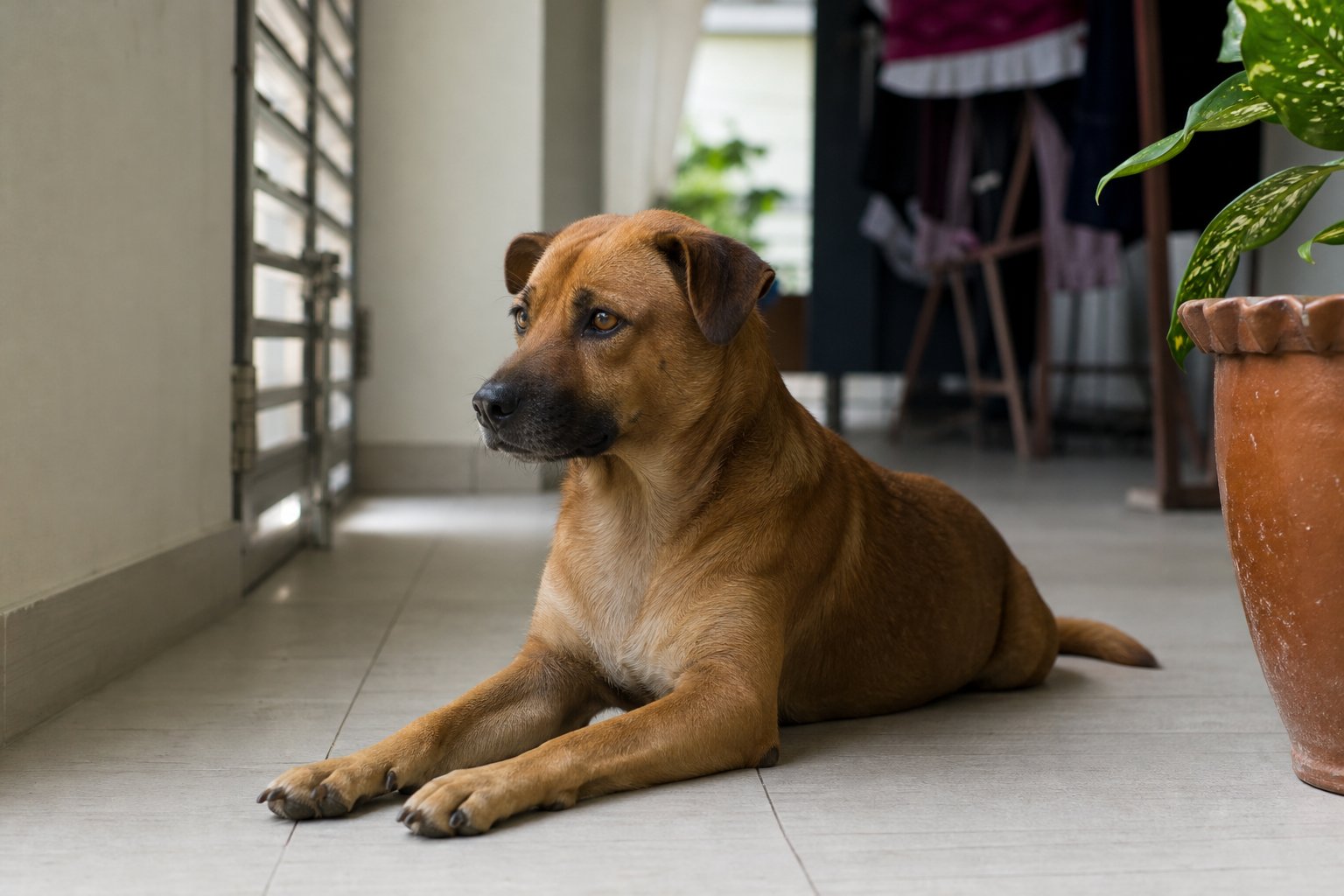
Quick answer: Yes — a German Shepherd can thrive in Malaysia, provided three things line up: your home (and your landlord or management rules) allows a large dog, you manage heat and humidity properly, and you can commit to 60–90 minutes of exercise plus about 15 minutes of mental work every day. Adult males stand 62–66 cm at the shoulder and weigh 30–40 kg, so confirm your housing first, then budget for food, grooming, training and joint care.
What a German Shepherd is — and whether it fits your life
The German Shepherd was systematised as a breed in 1899 by Max von Stephanitz in Germany. He wanted an all-purpose working dog: herding, patrolling, guarding. That heritage has never left the breed. Today the same instincts make Shepherds a first choice for police work, search and rescue and guide-dog programmes worldwide.
The practical consequence for an owner is simple: this is a dog that expects a job. Left with nothing to do, a Shepherd does not relax — it invents its own work, usually barking, pacing or dismantling something you care about.
| Trait | German Shepherd |
|---|---|
| Origin | Germany (1899, Max von Stephanitz) |
| [Lifespan | 9–13 years](/articles/shiba-inu-malaysia-2 "mylink") |
| Weight | Males 30–40 kg; females 22–32 kg |
| Shoulder height | Males 62–66 cm; females 55–60 cm |
| Coat | Double coat in short, long and long-stocking varieties; sheds year-round |
| Temperament | Loyal, alert, biddable, protective, thrives on having a task |
| Daily exercise baseline | 60–90 minutes plus roughly 15 minutes of mental work |
Three things to hold onto before you read further:
- Housing decides everything. Confirm your home legally allows a dog of this size before you fall in love with one.
- Exercise and brainwork are not optional. They are the difference between a calm housemate and a destructive one.
- Joints are a lifetime topic. Ask for the parents' hip (HD) and elbow (ED) grading documents before any deposit changes hands.
Who suits the breed — and who does not
| Owner situation | Fit | Why |
|---|---|---|
| Landed home with a garden and someone around most of the day | Excellent | Space plus companionship keeps a Shepherd settled |
| Experienced owner willing to attend training classes | Very good | A large, strong dog needs clear boundaries from day one |
| Family with children aged six and above | Workable | Protective but powerful; children must be taught interaction rules |
| First-time owner working long hours out of the house | Poor | Solitude plus under-exercise becomes barking and destruction |
| Tiny studio flat with no yard and no exercise routine | Not advisable | The dog's needs cannot be met in that setup |
Three-question self-test. Answer honestly: (1) Does my tenancy or building management allow a dog of 30–40 kg, in writing? (2) Can I block out 90 minutes of walking and training every single day, including rainy days? (3) Can I set aside money monthly for a veterinary reserve? If you cannot answer yes to at least two, wait — or choose a different breed.
For scale, here is how the Shepherd compares with other popular large breeds:
| Breed | Typical weight | Daily exercise | Working-dog intensity |
|---|---|---|---|
| German Shepherd | 30–40 kg | 60–90 min + brainwork | High — needs a job |
| Golden Retriever | 25–34 kg | 60–90 min | Moderate to high — eager but softer |
| Labrador Retriever | 25–36 kg | 60–90 min | Moderate to high — food-driven, trainable |
| Border Collie | 14–20 kg | 90 min+ | Very high — herding intensity in a smaller frame |
| Medium mixed-breed | 15–25 kg | 45–60 min | Varies widely — ask the shelter about the individual |
Where you will keep one: housing, tenancy and neighbours
Sort out accommodation before anything else. A German Shepherd is not a decision you can reverse cheaply once a lease is signed.
Apartments and strata buildings. Read the management by-laws word by word before you commit. Look for four things: weight or breed limits, the number of dogs allowed per unit, rules about dogs in lifts and common areas, and any muzzle requirement. Verbal reassurance from an agent means nothing — if it is not in the documents, assume it does not exist.
Renting. Get your landlord's written consent stating that a dog is permitted. A verbal agreement evaporates the moment a neighbour complains, and you will be negotiating from a very weak position at the end of the lease.
Landed and terrace houses. More space, but check the perimeter first. Shepherds are escape artists when bored: a gap under a gate or a low fence becomes an adventure. You also need a plan for noise — a deep bark carrying into a neighbouring kitchen at 7am is how complaints start.
Practical example — a Kuala Lumpur apartment. Lift etiquette is the daily reality here. From puppyhood, practise a calm routine: dog on a short lead, positioned beside your leg, entering last and exiting first, no rushing the doors. Teach a solid "settle" for corridors and avoid peak hours for longer walks. Then be honest about the exercise deficit — high-rise living means every outing requires a lift ride and a deliberate plan, so schedule morning and evening sessions before your day fills up.
Whatever your housing type, start two habits on day one: quiet training (a reliable "enough" cue before the barking becomes a habit) and being alone (short, calm departures practised deliberately, not a sudden eight-hour absence).
Buying, adopting and the real cost of a German Shepherd
Adoption first. Shelters and rescue groups regularly have adult German Shepherds and Shepherd crosses looking for homes. Adults come with a known temperament and size, and adoption fees are far lower than buying from a breeder; the dog is often already vaccinated, microchipped and desexed.
If you buy, buy on paperwork. A responsible breeder will show you, without hesitation: the pedigree, the parents' hip and elbow grading documents, health screening results for the breeding pair, vaccination and microchip records, and how the puppies were socialised. No documents, no deposit — that single rule prevents most regrets.
Ask three questions in the first conversation: Can I meet the parents? What health tests have they had? What happens if a hereditary problem appears later? Evasion on any of them is your answer.
What you are actually paying for. Since prices differ by region, bloodline and seller, request written quotes from Malaysian breeders and pet retailers rather than relying on online figures. The budget you should build looks like this:
| Budget line | Type | What to cover |
|---|---|---|
| Purchase or adoption fee | One-off | Puppy or adult; adoption usually includes initial vet work |
| Core vaccinations and microchip | One-off, then annual boosters | Puppy series first, boosters on schedule |
| Desexing | One-off | Discuss timing with your vet — large-breed timing is debated |
| Crate, bed, harness, short lead, baby gates | One-off | Buy a harness that fits a deep chest properly |
| Food | Monthly | Large-breed food; feeding quality affects coat and joints |
| Flea, tick and worm control | Monthly | Dose is weight-based, so a 35 kg dog costs more than a 5 kg one |
| Grooming tools | One-off, then replacement | Slicker brush plus an undercoat rake |
| Training course | One-off per course | Money best spent before problems appear |
| Veterinary reserve | Monthly, ongoing | The fund you raid for illness — not optional |
| Pet insurance | Monthly or annual | Get quotes; compare against your own savings pot |
Three ways to budget, choose one in advance. Lean: good-quality kibble, owner does all grooming, medical costs paid from cash as they arise. Standard: better food with joint supplements, an annual checkup, a puppy training course. Robust: everything in Standard plus a dedicated medical fund and insurance, with twice-yearly senior checks. The point is not which tier is "correct" — it is that you pick your tier before an emergency picks it for you.
One rule holds across every tier: the purchase price is the smallest number in this dog's life. Food, prevention and joint care run for a decade.
Heat, humidity and rain: cooling rules for a double-coated dog
A Shepherd's double coat was built for a temperate climate — an insulating undercoat beneath a weather-resistant outer layer. In tropical heat it works against naive assumptions: the coat actually buffers the body against external heat and UV, which is exactly why shaving it is a mistake.
Your cooling checklist:
- Timing. Walk before 7am or after 7pm. At midday, test the pavement with the back of your hand for ten seconds — if it is too hot for your hand, it is too hot for paw pads.
- Water. Fresh water available all day, a bottle and bowl on every walk. After exercise, offer small sips repeatedly rather than one huge gulp.
- Indoors. Air-conditioning or at least a circulating fan; a cooling mat helps on the worst afternoons.
- Post-walk cool-down. A damp towel on the armpits, belly and paw pads brings the temperature down fast. Then dry the coat thoroughly to the skin — trapped moisture in a double coat is a recipe for hot spots.
- Never shave. Clipping the coat removes insulation and sun protection, increasing the risk of sunburn and insect bites while doing nothing for heat dissipation. Neatening the belly fringe is fine; removing the coat is not.
Heatstroke is an emergency. Warning signs include harsh, rapid panting, thick ropey drool, wobbling or stumbling, and glazed eyes. Move the dog to shade or an air-conditioned room, apply cool (not ice-cold) water to the body, and get to a veterinarian immediately.
Second example — Penang during rainy season. Downpours turn every walk into a wet one, and humidity stays high even when the rain stops. Plan indoor alternatives for the worst days: a snuffle mat, scatter-feeding in the living room, short obedience drills in the hallway. Wipe and fully dry the dog after every wet walk, check the ears weekly for infection, and watch for mould-prone corners in your home — damp air aggravates skin problems in double-coated breeds. Rain also means slippery floors, so consider a runner rug where your dog turns sharply.
Daily exercise and mental work
Ninety per cent of problem behaviour in a Shepherd is unspent energy. The formula is fixed: 60–90 minutes of activity plus about 15 minutes of mental work, every day. Consistency beats intensity — a reliable daily routine outperforms one heroic weekend hike.
A workable urban schedule:
- Early morning (around 6.45am): 20–30 minutes of walking before the heat builds.
- Evening (around 7.30pm): 30–40 minutes of proper walking, then 15 minutes of brainwork — a snuffle mat, a puzzle feeder, or a short drill of cues she already knows.
- Weekend: one longer outing — a trail walk, a swim where permitted, or a training class. This doubles as socialisation and physical conditioning.
Brainwork is not a luxury. Ten minutes of nosework can tire a dog as thoroughly as a much longer walk, which matters on a week when the weather or your schedule is against you.
Puppy caution. Young Shepherds are still building. Avoid repeated stair climbs, jumping into vehicles and long runs on hard surfaces until growth plates have closed — today's eager puppy is tomorrow's arthritic senior if joints are hammered early. Scale the adult total down by age and let the puppy set the pace.
Expect an adolescent phase around six to eighteen months: previously learned cues go temporarily "off", and independence surges. This is the stage where people give up. It is precisely the stage where a training class pays for itself.
Coat care, shedding and skin health
German Shepherds shed all year and blow the undercoat heavily once or twice a year. In a warm climate the blow often coincides with seasonal change — expect it, plan for it, do not be alarmed by it.
Grooming routine:
- Daily five-minute brush-through with a slicker brush; during a blow, add an undercoat rake to reach the dense layer beneath.
- Bathe only as needed. Over-bathing strips natural oils and does not reduce shedding — brushing does.
- After every bath or wet walk, dry right down to the skin, especially the belly, armpits and behind the ears.
- Check ears weekly: clean, dry, odourless. A warm, humid climate makes ear infections more likely, so a damp ear gets attention immediately.
- Keep a vacuum on a weekly schedule during a coat blow; prevention is cheaper than archaeology.
Skin red flags. Persistent scratching, hair loss in patches, a musty smell, crusty elbows or recurrent ear infections all need a veterinary diagnosis. Frequent bathing on its own will not fix an underlying allergy or infection, and it can make the skin worse.
Health checks from puppy to senior
Large breeds age on a different timetable, and hip and elbow problems are the Shepherd's signature health issue. Prevention starts with the parents' grading documents and continues with a deliberate checkup schedule:
| Age | Recommended checks | Notes |
|---|---|---|
| 8–16 weeks | Core puppy vaccination series, deworming, microchip | Finish the full course before mixing with other dogs |
| Around 6 months | Pre-desexing bloodwork and desexing discussion | Timing for large breeds is debated — ask your vet |
| 1 year | Full physical exam, booster vaccines, baseline joint check | Establish the annual rhythm here |
| 2–6 years | Annual exam and weight check | Consider hip and elbow X-ray evaluation from about age 4, or sooner if gait changes |
| 7 years and older | Twice-yearly bloodwork, joint assessment, heart check | Senior screening catches problems while they are still manageable |
Three free daily observations:
- How the dog rises. Slow to stand, reluctance to jump into the car, or hind-end weakness are the earliest hip signals.
- The belly after meals. A visibly distended stomach with unproductive retching is a suspected bloat — a same-hour emergency, never a wait-and-see.
- Monthly weight. Weigh once a month. Every kilo of excess weight loads directly onto compromised joints; even a modest loss visibly improves mobility.
Feed smaller meals rather than one large one, and discuss exercise timing around feeding with your vet. Ask for written quotes for any imaging or procedure — costs vary between clinics, and a large-breed joint assessment is the kind of expense worth pricing in advance.
When to see a vet
Do not wait on any of these:
- Suspected bloat: swollen abdomen, unproductive retching, obvious pain — emergency, same hour.
- Heatstroke: collapse, glazed eyes, disorientation — emergency while you cool the dog on the way.
- Sudden lameness or refusal to bear weight after exercise.
- Rapid breathing that does not settle in a cool room, or drooling that turns thick and excessive.
- Persistent vomiting or diarrhoea, especially if the dog stops eating or drinking.
- Skin or ear problems lasting more than a few days, or any sudden patchy hair loss.
- Eye redness, cloudiness or squinting — vision problems progress quickly.
- Behaviour change: sudden withdrawal, confusion or disorientation in a senior dog.
Routine matters too: keep vaccinations on schedule, weigh monthly, and book the senior screens on time. If you are unsure whether something is urgent, call your veterinarian rather than searching at midnight — a five-minute phone call costs nothing compared with a delayed emergency.
Vet disclaimer: This article is general information about breed care and does not replace a consultation with a qualified veterinarian. Individual dogs differ; discuss vaccination, desexing, nutrition, joint screening and emergency plans with your own vet.
Frequently asked questions
Q: Can a German Shepherd live happily in a small home? A: Only if the exercise happens. Space matters less than routine — a dog walked 60–90 minutes daily with brainwork can settle in a modest home. A large house with a bored, unexercised Shepherd will still have problems. Judge your schedule, not your floor area.
Q: How do I cool my dog down safely? A: Shade, cool (not ice-cold) water on the body, a damp towel on the belly and pads, and air-conditioning or a fan. Offer small, frequent sips of water. Never dunk an overheated dog in ice water, and never rely on shaving the coat.
Q: When should a puppy start formal training? A: From the moment it arrives home — basic socialisation, handling and household manners first, then a structured puppy class once the vaccination course is complete. Do not wait for problem behaviours; prevention is always cheaper than correction.
Q: Do I need pet insurance for a large breed? A: It depends on your cash buffer. Get quotes from Malaysian insurers, read the exclusions and annual limits carefully, then compare against a monthly savings pot. Whichever you choose, keep a dedicated medical fund running from day one.
Q: How do I know if a breeder is responsible? A: They let you meet the parents, provide hip and elbow grading documents, share vaccination and microchip records, ask you questions in return, and take the dog back if you ever cannot keep it. Hesitation on any of these is a warning sign.
Q: What is the single most important preparation before getting one? A: Confirm your housing allows a 30–40 kg dog, in writing. Everything else — training, grooming, exercise — can be arranged. A breed restriction discovered after purchase cannot.
Related reading
- Bichon Frise Price in Malaysia 2026: What You'll Pay, Adopt or Buy, and the Costs People Forget
- Chihuahua Disadvantages in Malaysia: The 7 Drawbacks Every Owner Should Read First
- Dog Barking in Malaysia: 4 Reasons Dogs Bark and How to Stop It Without Shouting
- Dog Food Malaysia: How to Pick the Right Bag for Your Dog (2026 Guide)
- Dog Heat Care in Malaysia: Preventing Heatstroke and What to Do in an Emergency
- Dog Training Basics in Malaysia: When to Start, How Long to Practise, and the Five Steps of Positive Reinforcement
- Dog Training Basics in Malaysia: When to Start, How Long to Practise, and the Five-Step Positive Reinforcement Method
- French Bulldog Malaysia: Temperament, Training and Care for Flat-Faced Companions