
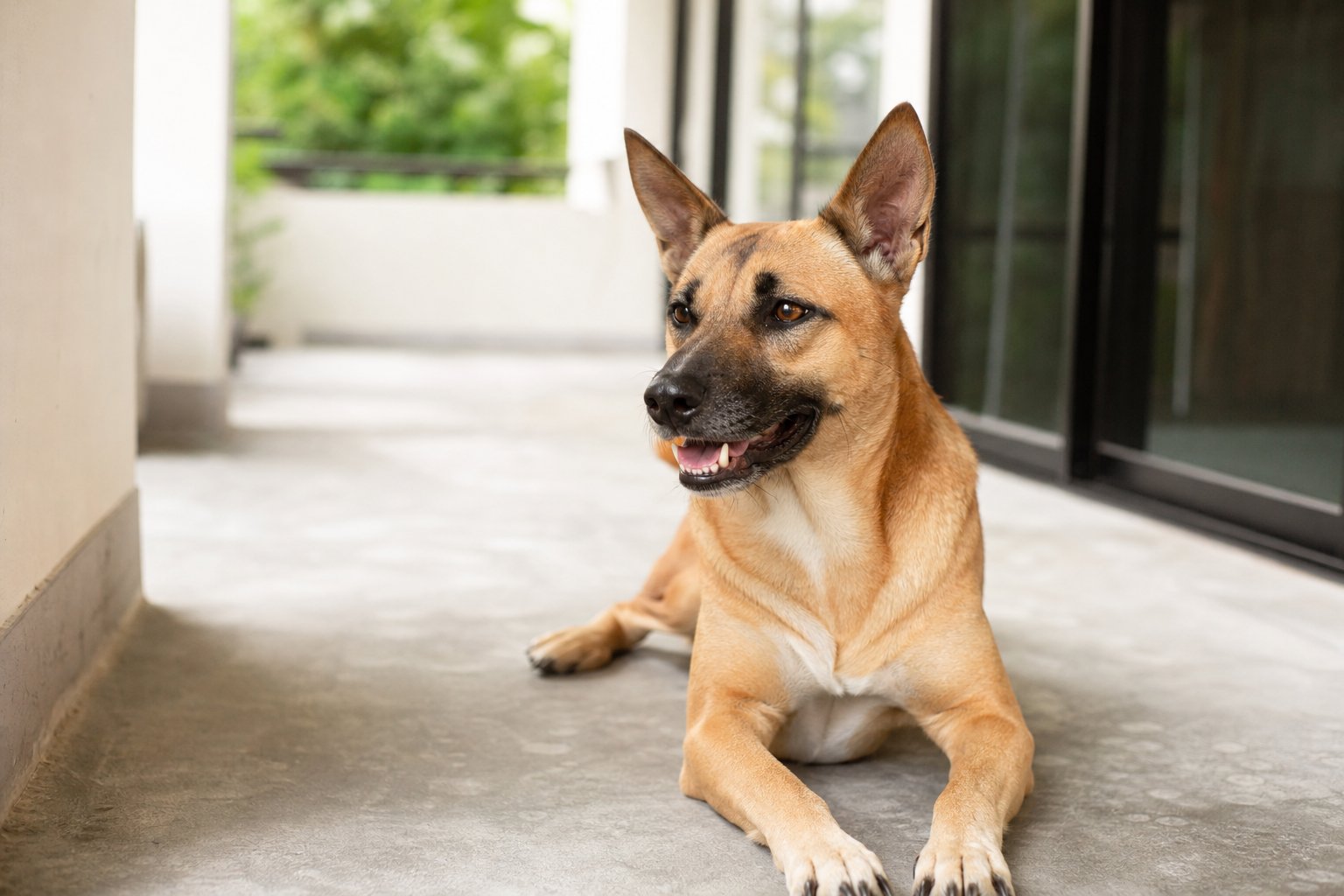
Quick answer: A Shiba Inu is independent, stubborn, fastidiously clean, clever and loyal to its family — the so-called "cat-like dog". It understands you perfectly; deciding whether to obey is entirely its own business. Its low "intelligence rank" measures obedience speed, not understanding. If you want a dog that answers every command with instant enthusiasm, look elsewhere. If you want a quiet, self-possessed companion with clear boundaries of its own, keep reading.
Shiba Inu at a glance
The Shiba is Japan's smallest native spitz-type dog and one of the country's six native breeds. It was bred in mountain country to flush and chase rabbit, bird and small game, sometimes working alongside hunters on larger quarry. That working history explains almost everything about its temperament today: a dog that had to make split-second decisions in thick undergrowth cannot be a dog that waits for human permission.
| Item | Shiba Inu |
|---|---|
| Origin | Japan — mountain hunting dog |
| Typical lifespan | 12–15 years |
| Weight | Males 8–11 kg; females 6.5–9 kg |
| Height at shoulder | Males 38–41 cm; females 35–38 cm |
| Coat | Double short coat; very heavy moult twice yearly |
| Core temperament | Independent, stubborn, clean, loyal, cautious with strangers |
| Daily exercise | 45–60 minutes, in two or three sessions |
| Best matched with | Owners who genuinely enjoy a dog with its own opinions |
Three things worth knowing before you fall for the photographs:
- Do not expect instant recall. Off-leash reliability takes years of patient work and is never guaranteed. Plan every outing around a fenced area, long line or secure lead.
- Moulting is a serious commitment. Twice a year the undercoat blows out over roughly two to three weeks, and daily brushing of 10–15 minutes is the minimum to keep fur off clothing, sofas and air-conditioning filters.
- Cautious is not the same as aggressive. A Shiba that backs away from a stranger is behaving normally. Forcing contact only teaches it that hands mean pressure and stress.
Personality: the dog that behaves like a cat
Shibas are clean by canine standards — they dislike mud, puddles and strong smells, and many instinctively avoid soiling near the house, which makes house training noticeably smoother than with many breeds. They are also low in body odour compared with most medium dogs, so they do not need frequent bathing.
Their loyalty is real but expressed quietly. A Shiba will greet you calmly rather than launching itself at the door, then settle somewhere with a view of the household. This distance is often mistaken for coldness; in practice it is a dog that is content in its own company and does not demand constant reassurance.
The flip side is a strong self-preservation streak. Shibas dislike being restrained, dressed up, hugged tightly or handled when they did not invite it. They are also highly sensitive to sound and unfamiliar smells, and excitement can trigger the breed's famous high-pitched "Shiba scream" — startling the first time, harmless thereafter. Their prey drive remains intact, so small animals on the street, birds in the park and small pets at home all need management rather than optimism.
Why the intelligence ranking is misleading
The list people quote comes from behavioural researcher Stanley Coren's framework, which ranks breeds by working obedience: how quickly a dog performs a known command when asked once. On that scale the Shiba sits around the lower seventies. The number describes compliance, not comprehension.
Consider the difference. A retriever-type dog asked to sit will sit, then wait to be asked again. A Shiba will process the request, assess the payoff and the situation, and then decide. Owners often describe it as "he hears me, he's just not interested". That is not stupidity; it is cost-benefit analysis by an animal bred to work without supervision.
The practical consequences are predictable:
- Shibas do well at nosework, agility and puzzle feeding, where thinking is rewarded and the handler is a partner rather than a boss.
- They struggle in pure obedience drills, where repetition without variety reads as pointless to them.
- Trainers report that the breed solves latches, gates, bins and puzzle feeders faster than expected — excellent for enrichment, inconvenient for a poorly secured rubbish bin.
Treat the ranking as a measure of how easily you can direct a dog, not how smart it is. Once that distinction clicks, training stops feeling like a battle of wills and starts feeling like negotiation.
Sex, colour and temperament: separating fact from myth
Search results are full of claims about black, white, sesame, male and female Shibas. Very little of it survives scrutiny.
| Claim | Verdict | What actually matters |
|---|---|---|
| Males are friendlier and fight other males more | Partially supported | Intact males clash more often; neutering and early socialisation reduce friction substantially |
| Females are calmer and more sensitive | Common saying | Individual variation exceeds sex differences by a wide margin |
| Black Shibas are more aggressive | Unsupported | Breed standards link no colour to temperament; owner expectations create the bias |
| White Shibas are gentle and quiet | Unsupported | Same reasoning — you notice what you already expected to see |
| Shibas become more affectionate with age | Partly true | Well-socialised puppies grow noticeably closer to their families as adults |
Bloodline, early socialisation and consistent training shape temperament. Colour affects price and availability, not personality. If you are choosing between a black and a red Shiba, choose on health screening, breeder transparency and temperament of the parents — not on a colour preference dressed up as a personality prediction.
Is a Shiba right for you?
The most reliable test is a half-day spent with two or three adult Shibas through a friend, a responsible breeder or a rescue group. Watch an ordinary day, not a highlight reel: the walking, the brushing, the ignoring of a recall command.
Three honest questions:
- Can you brush daily for two to three weeks, twice a year, without resenting it?
- Can you accept that off-leash freedom depends on fencing rather than on your voice?
- Can you live with a dog that walks away from your enthusiasm instead of matching it?
If you answered no to two or three, a biddable retriever or poodle-type dog will suit your household far better. That is not a failure of taste — it is a good match.
| Breed | Weight | Temperament | Beginner friendly? |
|---|---|---|---|
| Shiba Inu | 6.5–11 kg | Independent, tidy, strong-willed | Yes, if you accept a dog with opinions |
| Akita | 25–45 kg | Steady, protective, wary of other dogs | Not recommended for first-time owners |
| Standard Poodle | 20–32 kg | Highly biddable, easy to train | Yes |
| Border Collie | 14–20 kg | Extremely active, needs a job | Only for owners with time and energy |
| Local mixed-breed (medium) | 15–25 kg | Variable, generally adaptable | Often a strong first choice |
Prices for puppies, food, grooming and veterinary care differ widely across Malaysia and change over time — check current figures with a licensed retailer or your own veterinary clinic rather than relying on any figure quoted online.
Five rules for living and training a Shiba
- Socialise from the first week you bring it home. The prime window runs roughly 3 to 16 weeks of age. Expose the puppy to different people, surfaces, traffic noise, lifts and handling of paws and ears — calmly, never forced.
- Positive reinforcement is the only reliable currency. Treats, toys and praise buy cooperation. Harsh corrections damage trust with a breed that already questions authority, and they do not accelerate learning.
- Keep sessions short and frequent. Five to ten minutes, twice a day, beats one exhausting half-hour. Rotate cues, locations and rewards so the exercise stays interesting.
- Fence before you unclip. Enclosed grounds, a long line or a secure lead. Recall training continues for the dog's whole life; never stake its safety on it.
- Respect the word "no". If the dog walks away or lies down, the interaction is over. Dragging it back teaches it that approaching humans leads to unwelcome handling.
For owners in a Kuala Lumpur apartment, the constraint is rarely floor area — it is boredom. Two walks plus a 10-minute snuffle mat or frozen-stuffed Kong does more for a Shiba than a larger living room ever will. During the Penang rainy season, when outdoor time collapses for days, rotate indoor options: scent games, a cardboard box with hidden treats, scatter feeding on a towel, or a short training refresher in the hallway. A tired body is easy; a tired brain is the real goal.
On a Johor terrace house with a gated compound, the garden is your best training tool — but check the fence height and gaps first. Shibas are adept climbers and escape artists, and a secure enclosure is what converts a daily power walk into a safe off-lead session.
Children, other pets and household rules
Shibas are usually gentle and patient with children in their own household, provided the household respects them. They dislike being ridden, having tails pulled, or being squeezed in tight hugs — three extremely common behaviours among young children. Teach your children a simple sequence: ask permission, let the dog approach, touch gently, stop when the dog moves away. Supervise every interaction.
With other dogs the typical Shiba attitude is "don't bother me and I won't bother you". Early, repeated introductions to calm dogs work well; rushing greetings at a busy park usually backfire. With cats and small pets, assume the hunting instinct is live. Introduce gradually, feed separately, and never leave a Shiba unsupervised with a hamster, rabbit or bird.
Multi-dog households generally report that females integrate slightly more easily, but early socialisation and clear household structure matter far more than the sex of the dog.
Health checks: what to watch and when to see a vet
Three conditions come up repeatedly in the breed: skin allergies (atopic dermatitis), knee cap displacement (patellar luxation), and raised eye pressure (glaucoma). Routine screening is far cheaper than emergency treatment, and a medium-sized dog costs less to examine and treat than a large one.
| Age | Recommended focus |
|---|---|
| 8–16 weeks | Puppy vaccination course, deworming, first health check |
| Around 6 months | Pre-anaesthetic blood test, desexing discussion with your vet |
| 1 year | Annual check-up, vaccine booster, knee joint assessment |
| 2–6 years | Annual check-up; from about 3 years add skin and eye pressure checks |
| 7 years and over | Six-monthly check-ups: bloodwork, eye pressure, dental assessment |
When to see a vet
- Scratching more than three or four times a day, red or sore paws, hair loss or a recurrent ear infection — a common early sign of skin allergy, especially during humid spells.
- Cloudy eyes, bumping into furniture, pawing at the face, or refusing to walk in dim light — glaucoma is painful and time-critical; same-day examination is warranted.
- Hind legs skipping, a bow-legged sit, or sitting down after a few steps — possible patellar luxation; have the joints checked before it becomes chronic.
- Sudden collapse, repeated vomiting, bloated abdomen, seizures, or an inability to settle after injury — treat as an emergency.
- Any bite wound, lameness lasting more than a day, or loss of appetite beyond 24 hours — prompt veterinary attention is the safer choice.
Do not rely on breed descriptions alone for diagnosis. Your own veterinarian can tell you which screenings are sensible for your dog's age, line and history.
Budgeting for a Shiba in Malaysia
Exact figures vary enormously by state, clinic and brand, so the useful approach is to budget by category rather than by a single number quoted online. Ask your veterinary clinic for a written estimate of vaccination, desexing and annual check-up fees, and ask a licensed pet retailer for current pricing on food, deworming and grooming tools before you commit.
Set up four separate pots:
- Routine care — quality food sized for a medium dog, monthly internal and external parasite control, annual vaccinations and check-ups.
- Grooming — an undercoat rake and a slicker brush bought once will cover every moult; buying tools early is far cheaper than paying for professional de-shedding twice a year.
- Training and enrichment — a harness, long line, treat pouch, puzzle feeders and a few sessions with a certified trainer. These costs are optional but pay for themselves in behaviour.
- Medical reserve — a monthly sum set aside for skin flare-ups, eye checks, dental work and accidents. Owners without this cushion tend to delay care, which raises the final bill.
Three ways to save without cutting corners: brush at home instead of booking frequent grooming; manage itchy skin environmentally first — wash bedding weekly, keep the house dry and reduce dust — before experimenting with expensive food changes; and weigh your Shiba monthly, because even a kilo of extra load stresses the knees of a 7–11 kg dog.
Desexing, vaccination and microchipping costs should be confirmed directly with your clinic. For responsible ownership guidance, the Department of Veterinary Services and the local SPCA branches publish updated advice on licensing, identification and humane care.
Summary
- The Shiba is the cat-like dog: tidy, independent, loyal to family, reserved with strangers.
- Its low intelligence rank measures obedience speed, not brainpower — it understands everything and negotiates everything.
- Coat colour does not determine temperament; sex differences are smaller than individual differences.
- Success depends on early socialisation, short positive training sessions and secure enclosed exercise areas.
- Budget for two heavy moults a year and a standing medical reserve, not just the purchase price.
This article describes general breed tendencies. Individual dogs vary widely, and behaviour or health concerns should be assessed by a licensed Malaysian veterinarian or a certified professional dog trainer.
Related reading
- Dog Care Guide Malaysia: Feeding, Grooming, Health & Daily Routine
- Bichon Frise Price in Malaysia 2026: What You'll Pay, Adopt or Buy, and the Costs People Forget
- Chihuahua Disadvantages in Malaysia: The 7 Drawbacks Every Owner Should Read First
- Dog Barking in Malaysia: 4 Reasons Dogs Bark and How to Stop It Without Shouting
- Dog Food Malaysia: How to Pick the Right Bag for Your Dog (2026 Guide)
- Dog Heat Care in Malaysia: Preventing Heatstroke and What to Do in an Emergency
- Dog Training Basics in Malaysia: When to Start, How Long to Practise, and the Five-Step Positive Reinforcement Method
- French Bulldog Malaysia: Temperament, Training and Care for Flat-Faced Companions
- German Shepherd in Malaysia: Climate, Housing and Care Guide